Francis Ford Coppola was born on April 7, 1939, and has been making films, losing money, winning awards, and dividing critics for well over six decades. Few directors in Hollywood history have had a career quite like his, defined by a genuinely extraordinary peak in the 1970s, followed by years of financial difficulty, commercial misfires, and periodic attempts to recapture something of his earlier ambition. The full arc of his work is messy and uneven, which makes it considerably more interesting than the careers of most of his peers who play it safer.
Coppola’s reputation as a screenwriter preceded his reputation as a director. In 1970, “Patton” won seven Academy Awards, including Best Picture and Best Adapted Screenplay, shared by Coppola with co-writer Edmund H. North. That win bought him enough credibility with Paramount Pictures to direct “The Godfather” two years later — a project the studio was uncertain about and on which, by most accounts, Coppola was nearly fired multiple times during production. Coppola has since won five Academy Awards, received ten Oscar nominations, and won two Cannes Film Festival Palme d’Or Awards — the latter for both “The Conversation” and “Apocalypse Now.”
It’s difficult to summarize Coppola’s body of work because it covers so much tonal and formal ground. He has made sweeping crime epics, intimate character studies, stylised musicals, literary adaptations, teen dramas, horror films, and self-financed personal projects shot in black and white in Buenos Aires. Connecting them is a recurring interest in family — the obligations it creates, the damage it does, the way it shapes identity, alongside a persistent willingness to take formal risks that don’t always pay off. Across a filmography this varied, ranking the best work is necessarily a matter of picking from very different kinds of achievement. What follows is an attempt to do exactly that.
10. The Cotton Club (1984)
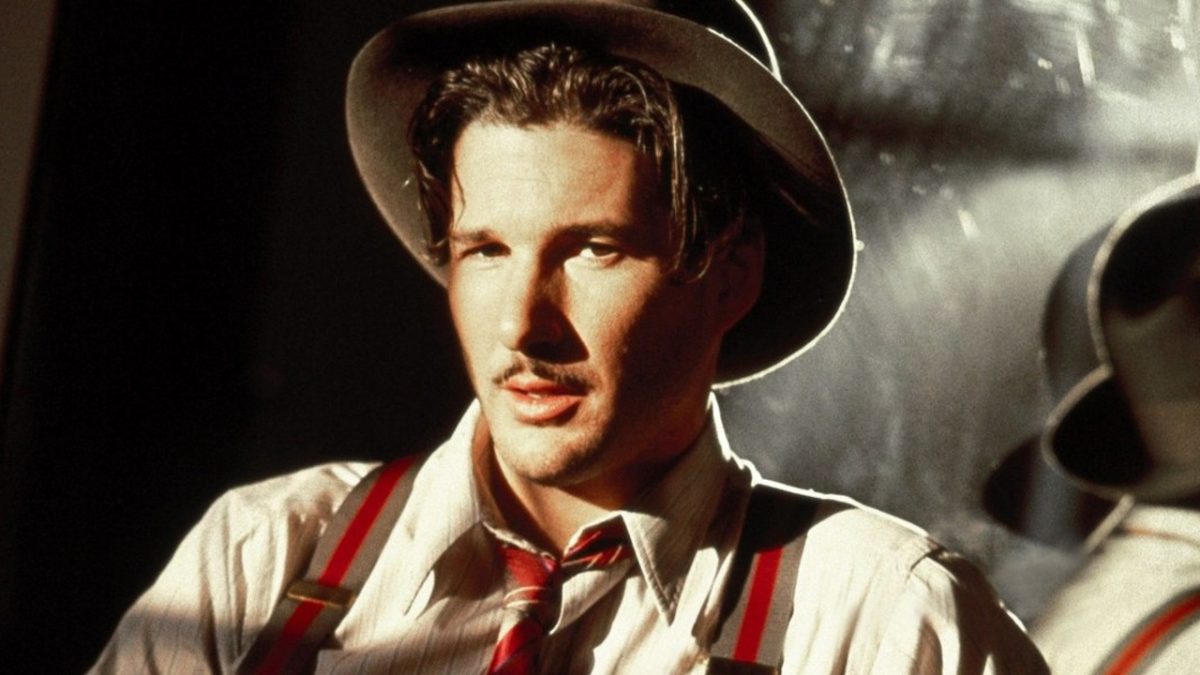
The production history of “The Cotton Club” is almost as dramatic as the film itself. Producer Robert Evans brought Coppola in to rewrite a screenplay that had already gone through numerous drafts, with a story credit shared between Coppola, William Kennedy, and Mario Puzo. The film cost $58 million while grossing only $25.9 million — a significant loss that compounded Coppola’s already strained financial situation in the mid-1980s.
Thirty-five years later, Coppola spent half a million dollars of his own money to re-edit, expand, and release a new version called “The Cotton Club Encore,” reinserting 35 minutes of footage that distributors had cut from the original. The film is based on James Haskins’ 1977 book of the same name and is set in and around the Cotton Club, the famous Harlem jazz venue of the 1930s, which was operated by gangster Owney Madden and featured Black entertainers performing for exclusively white audiences.
The movie’s most consistent achievement must be its production design, from the recreation of the Cotton Club’s interiors, the period costumes, to the musical performances, which are all handled with evident care and genuine craft. As a piece of narrative filmmaking, the film struggles to form strong connective tissue between its multiple plotlines, and the gangster material never develops the weight that Coppola clearly intended. The film sits awkwardly between two different movies, a gangster picture and a celebration of Harlem jazz culture, without fully committing to either. What it gets right, it gets very right. What it doesn’t, it doesn’t by a considerable margin.
9. Peggy Sue Got Married (1986)
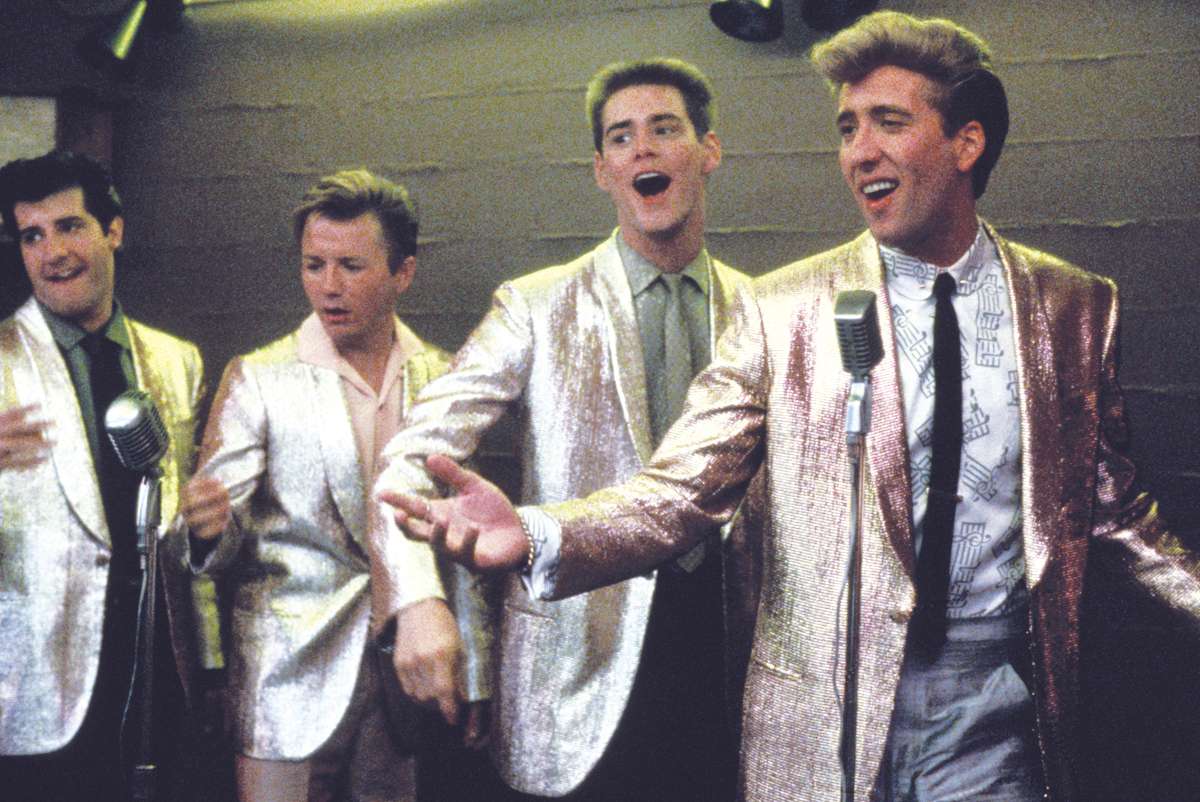
Sandwiched between the financial disaster of “One From the Heart” and a period in which he struggled to regain his former commercial stature, “Peggy Sue Got Married” was not Coppola’s original project, with the filmmaker joining only after the departure of the film’s initial director. Peggy Sue Bodell (Kathleen Turner) attends her 25-year high school reunion after separating from her cheating husband, Charlie (Nicolas Cage). She regrets the decisions she has made in her life, including getting pregnant by Charlie in high school. When she faints at the reunion, she wakes up in 1960 and finds herself back in her senior year, inhabiting her teenage body with her adult knowledge and perspective intact — still wearing her reunion queen’s sash, still carrying everything she knows about how her life turned out.
The film’s most interesting creative decision is that Peggy Sue doesn’t definitively walk away from Charlie even when she has every rational reason to. From her older vantage point, she sees that young Charlie genuinely loves her — that the man who will later disappoint her is not performing affection but actually feeling it. Turner received an Academy Award nomination for Best Actress, and the performance earns it. She physically plays a teenager while maintaining the interiority of someone carrying decades of regret and experience, and the balance is harder to pull off than it looks. Roger Ebert called it one of the best films of the year, and while that may be slightly generous, it is a warm, well-crafted film that Coppola directs with a lightness of touch that his more ambitious projects sometimes lack.
8. The Rainmaker (1997)

By the mid-1990s, John Grisham adaptations had become their own reliable Hollywood subgenre — slick, commercially dependable legal thrillers that rarely asked much of their directors. Coppola’s decision to take on “The Rainmaker,” based on Grisham’s 1995 novel, was not an obvious fit, but the result is widely considered among the best of Hollywood’s many Grisham adaptations — a film that treats its genre material seriously and gets considerably more out of it than most manage to. Rudy Baylor (Matt Damon) is a recent Memphis law school graduate with no job prospects and mounting debt. Desperate, he falls in with J. Lyman “Bruiser” Stone (Mickey Rourke), a flamboyant ambulance-chasing attorney who sends his associates hunting for clients in hospital wards.
Through this arrangement, Rudy picks up two cases: one involving Kelly Riker (Claire Danes), a young woman in an abusive marriage, and the other brought by Dot Black (Mary Kay Place), whose son Danny (Johnny Whitworth) is dying of leukaemia after their insurance company, Great Benefit Life, has systematically denied his every claim.
Damon plays Rudy with the earnestness of an Eagle Scout, which suits a character who enters the legal profession still believing, barely, that it has some relationship to justice. The film’s thematic core is the gap between what legal institutions are supposed to do and what they actually do. “The Rainmaker” performed modestly at the box office, grossing $45.9 million against a $40 million budget, and has since settled into its proper place — not among Coppola’s most ambitious work, but among his most accomplished in the conventional sense.
7. One From the Heart (1981)
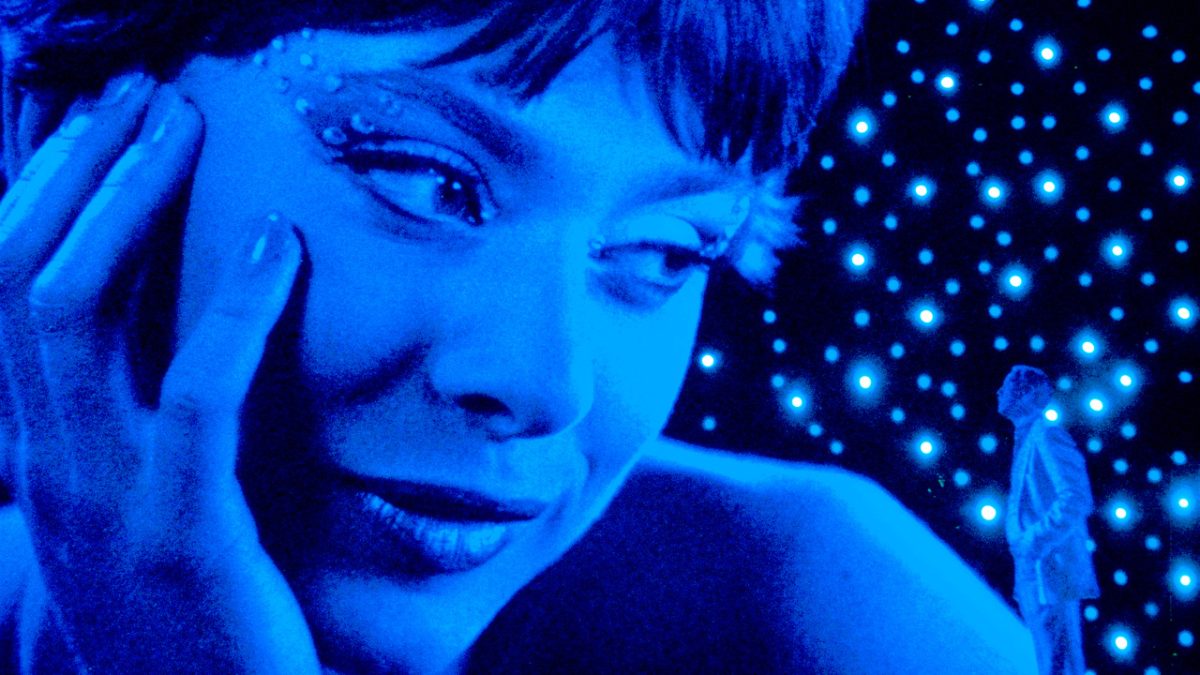
“One From the Heart” is one of the most expensive personal failures in Hollywood history, and also one of the most genuinely interesting. Coppola poured his own money into it, mortgaged his Napa Valley home and his production company Zoetrope Studios, and emerged from the wreckage with debts that would constrain his career for years. The film grossed less than $650,000 against a production budget estimated at $26 million. By all financial measures, this is a catastrophe. But when viewed without that context, it is also a remarkably ambitious and often beautiful piece of filmmaking that has been slowly reassessed in the decades since its disastrous release.
Hank (Frederic Forrest) and Frannie (Teri Garr) are a couple living in Las Vegas who have been together for five years and have arrived at the particular kind of restlessness that settles in when a relationship stops feeling like a choice and starts feeling like a habit. On the eve of their anniversary, they fight and split up for the night.
Hank falls for a circus performer named Leila (Nastassja Kinski), while Frannie is swept up by a charming Spanish waiter and aspiring musician named Ray (Raul Julia). By morning, both are confronted with what they actually want. The entire film takes place across a single night, and the narrative stakes are intentionally modest — no one dies, nothing is truly destroyed, while the ending gestures toward reconciliation minus any shred of sentimentality.
6. Bram Stoker’s Dracula (1992)
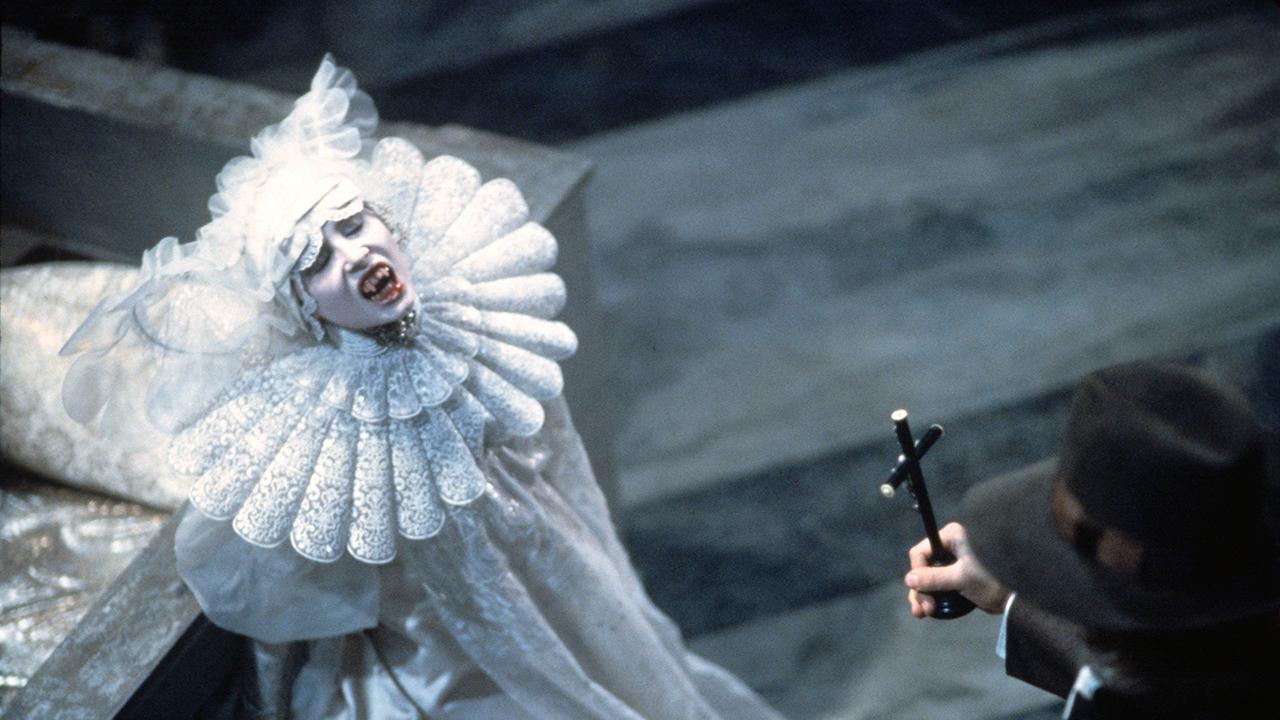
Coppola’s adaptation of the Stoker novel is, at its core, a love story. The production is lavish, frequently excessive, and technically inventive in ways that feel deliberately old-fashioned — Coppola shot it using in-camera optical effects, rear projection, and forced perspective rather than the digital tools that were beginning to dominate Hollywood.
The result is a film that looks like nothing else from its era, for better and occasionally for worse. The story opens in 15th-century Transylvania, where the warrior Prince Vlad (Gary Oldman) renounces God after his wife Elisabeta (Winona Ryder) throws herself from a castle tower upon receiving a false report of his death. He becomes Dracula, immortal and predatory, sustained by blood and bitterness across four centuries.
The plot proper begins in 1897 London, when young solicitor Jonathan Harker (Keanu Reeves) travels to Transylvania to assist Dracula with a property transaction and becomes his prisoner. Dracula, having seen a photograph of Harker’s fiancée Mina (also Ryder), recognises her as the reincarnation of Elisabeta and travels to England to find her.
The vampire hunters who eventually organise against him are led by the Dutch doctor Abraham Van Helsing (Anthony Hopkins), whose erratic, sometimes darkly comic energy dominates every scene he’s in. Eiko Ishioka’s costume design won the Academy Award, and justifiably so — Dracula’s crimson armour and elaborate robes are among the most striking visual designs in 1990s cinema, while Michael Ballhaus’s cinematography is rich and painterly throughout.
5. The Outsiders (1983)
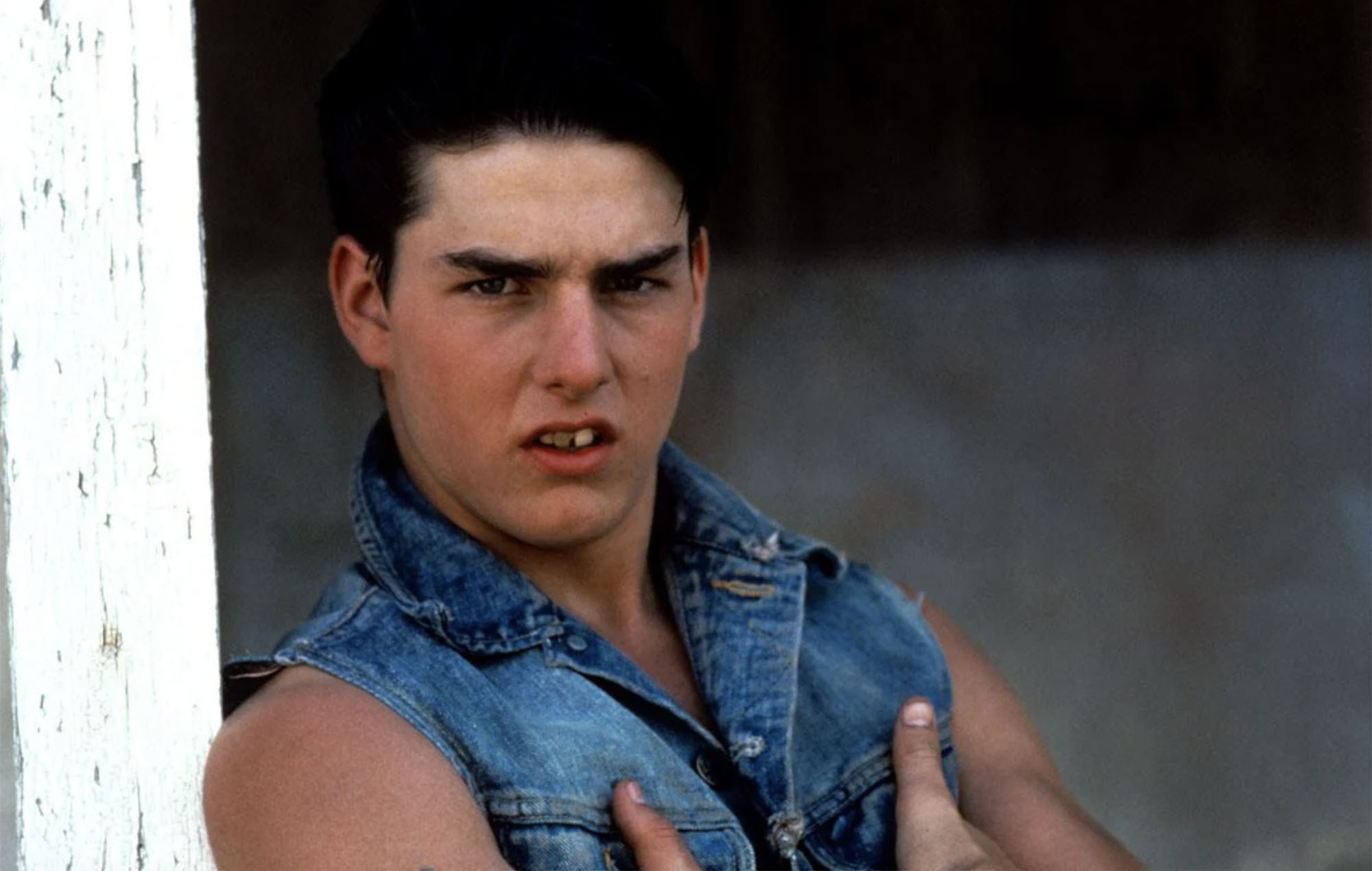
Coppola came to “The Outsiders” somewhat unusually — the project originated with a letter from students and a librarian at a Fresno middle school, who wrote to him arguing that S.E. Hinton’s 1967 novel deserved a film adaptation. He agreed, and the result is one of the more starry debuts in Hollywood history: a single production that introduced or significantly elevated the careers of a remarkable number of actors who would go on to define American cinema through the 1980s and beyond. The story is set in 1960s Tulsa and follows Ponyboy Curtis (C. Thomas Howell), a teenager navigating the entrenched class rivalry between the Greasers — working-class kids from the wrong side of town — and the Socs, their wealthier antagonists.
The cast also includes Emilio Estevez, Tom Cruise, and Diane Lane as Cherry Valance, a Soc girl whose friendship with Ponyboy cuts across the film’s central class divide. Coppola and cinematographer Stephen H. Burum shoot Tulsa in warm, golden tones that give the film a nostalgic quality even in its more violent sequences.
The film’s visual style leans somewhat into romanticism, which aligns with the novel’s own sensibility but has drawn some criticism for softening the harder edges of Hinton’s social commentary. Howell carries the film capably as its narrator and emotional centre. His Ponyboy is observant and genuinely sensitive, and the performance avoids the self-consciousness that can undermine young protagonists in films of this type. The famous closing line — Hinton’s own, carried over from the novel — lands because Howell has earned it.
4. Rumble Fish (1983)
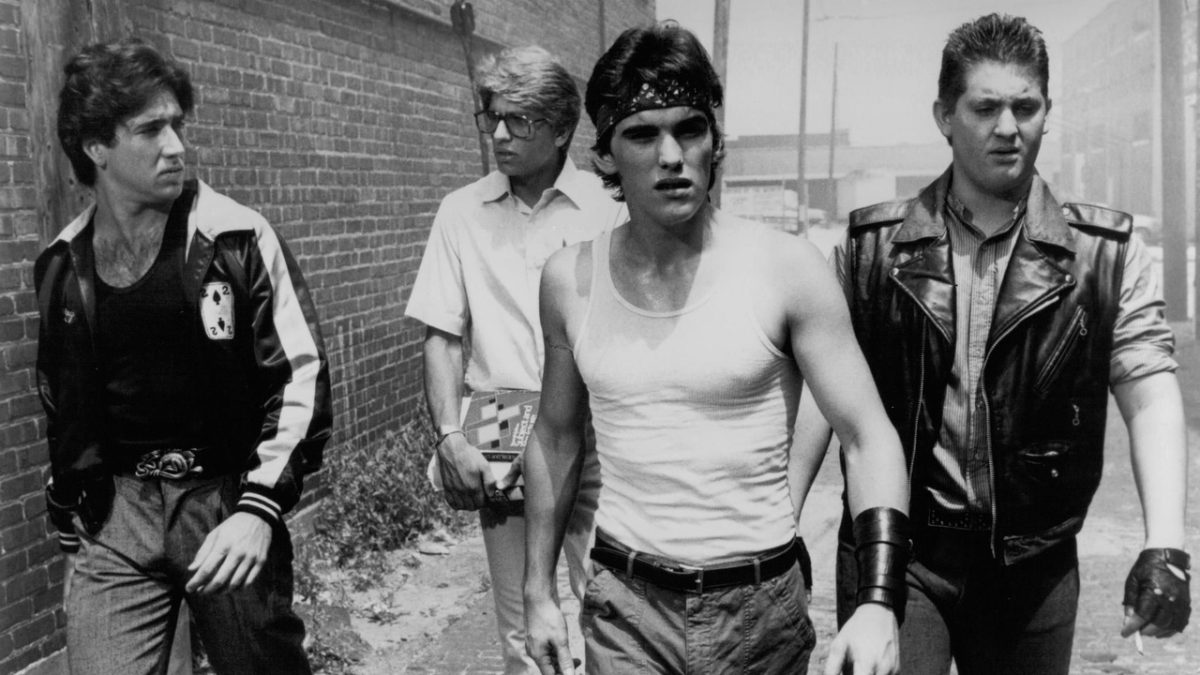
Rusty James (Matt Dillon) is a teenage street kid in an atypical Midwestern city, living in the shadow of his older brother’s reputation and struggling to hold together what remains of local gang culture. The Motorcycle Boy (Mickey Rourke), as everyone calls him, returns to town after a trip to California — charismatic and admired, but also partially deaf, colourblind, and visibly disconnected from the world around him. Rusty-James idolises him, but the film is clear-eyed about the gap between the legend Rusty-James has constructed and the troubled, directionless man his brother actually is.
Coppola and cinematographer Stephen H. Burum shot the film in high-contrast black-and-white, drawing on the visual language of 1950s juvenile-delinquent pictures and German Expressionist cinema. Stewart Copeland’s percussion-heavy score — built around ticking clocks and propulsive rhythmic patterns — adds a persistent sense of urgency.
Time-lapse cloud formations appear throughout, and the compositions lean heavily on shadow and texture, reinforcing the film’s interest in myth and distorted perception. The title refers to Siamese fighting fish displayed in a pet shop window, the only element Coppola renders in colour amid the black-and-white photography. The film failed commercially on release but has since developed a serious critical reputation as one of the most distinctive American films of the 1980s.
3. The Conversation (1974)
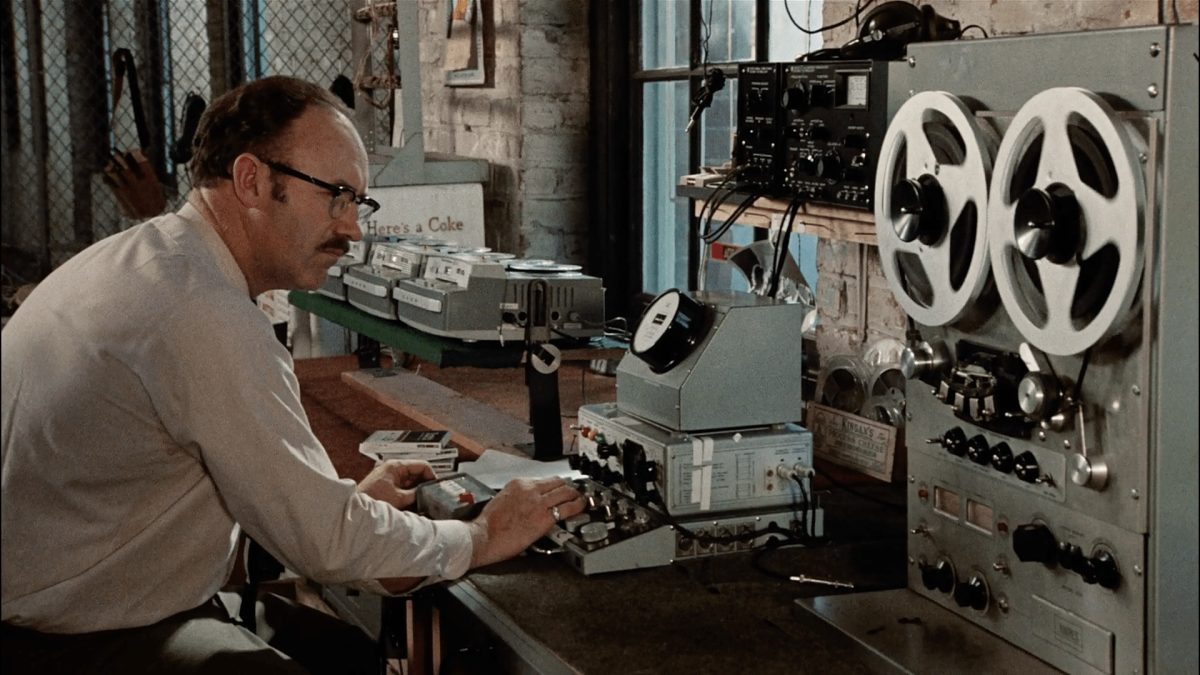
Harry Caul (Gene Hackman) owns the best surveillance equipment money can buy and almost nothing else. His San Francisco apartment is a bare, joyless cell secured with three locks. He plays tenor saxophone alone and will not give his landlady his phone number. He is, by any measure, a man who has made privacy into a religion, which makes it all the more devastating that his entire professional life is built on destroying it in other people.
The plot turns on a single assignment. Caul and his team have recorded a lunchtime conversation between a young couple — Ann (Cindy Williams) and Mark (Frederic Forrest) — circling Union Square in San Francisco. His client, referred to only as The Director (Robert Duvall, in a brief but sinister appearance), wants the tape as Caul gradually becomes convinced that delivering it will get the couple killed. He has been in this position before; a previous job in New York ended in three deaths, and the guilt has never left him, though he guards that fact as ferociously as he guards everything else.
What Coppola understands, and what makes the film so quietly devastating, is that surveillance is not neutral. Every time Caul cleans up the audio, isolating the couple’s voices from the ambient noise of the square — a technical process shown in meticulous, unglamorous detail — he is also constructing meaning, imposing interpretation. Walter Murch’s sound design is the film’s true genius: a single phrase, “he’d kill us if he got the chance”, shifts in emotional register depending on which word carries the stress, and the entire plot pivots on that ambiguity. Listening is never passive, and this becomes the cornerstone for the film’s dramatic development.
2. Apocalypse Now (1979)
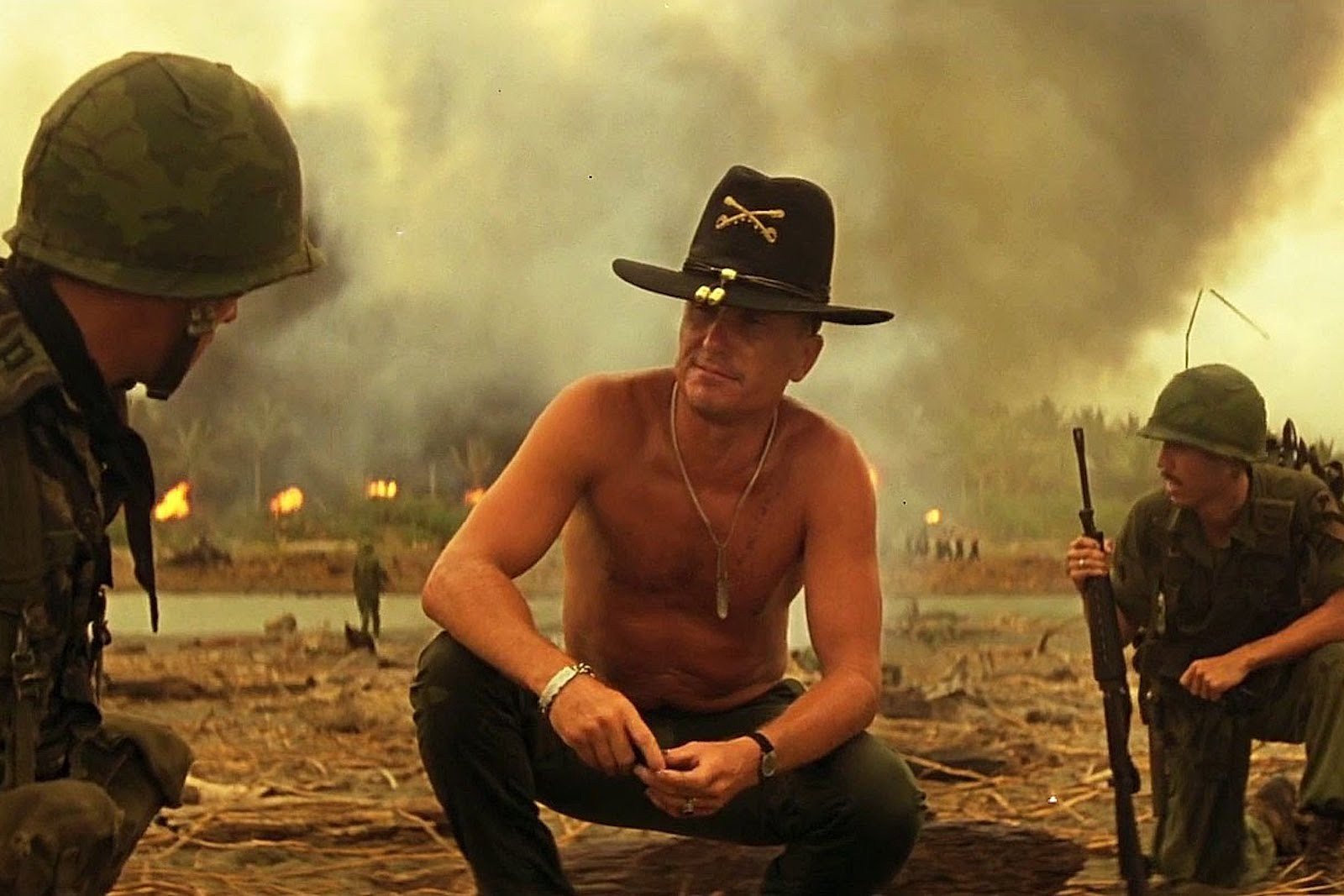
“Apocalypse Now” follows Willard (Martin Sheen), a burned-out Army intelligence captain, as he’s pulled from a Saigon hotel room — where he is drinking himself unconscious and punching mirrors — and given a classified mission: find Colonel Kurtz (Marlon Brando) and “terminate his command with extreme prejudice.” It is a loose adaptation of Joseph Conrad’s novella “Heart of Darkness,” transposed to the Vietnam War era.
More a fever dream than a military thriller, what follows is a river journey into moral dissolution that grows stranger and more hallucinatory with every mile upstream. As the boat crew — including a young, rattled surfer from California called Lance (Sam Bottoms) and the pragmatic Chef (Frederic Forrest) — presses further into the jungle, the film abandons conventional narrative logic almost entirely. By the time Willard finally reaches Kurtz’s compound, reality has become a concept the film no longer takes seriously.
The film is no simplistic antiwar statement, though it certainly contains one. It questions the American mythology of conquest, meditating on the thin membrane between civilization and savagery, and, perhaps most disturbingly, a portrait of how institutions manufacture the very violence subsequently declared monstrous. “Apocalypse Now” was famously troubled in production — 238 days of shooting in the Philippines, hurricanes, heart attacks, budget overruns — and Coppola’s own breakdown is embedded in the film’s texture. It feels made under duress because it was. That strain, paradoxically, became its greatest formal asset. Nothing about “Apocalypse Now” feels controlled or safe, because it isn’t, and remains one of the few films that genuinely earns its ambition.
1. The Godfather Trilogy (1972, 1974, 1990)
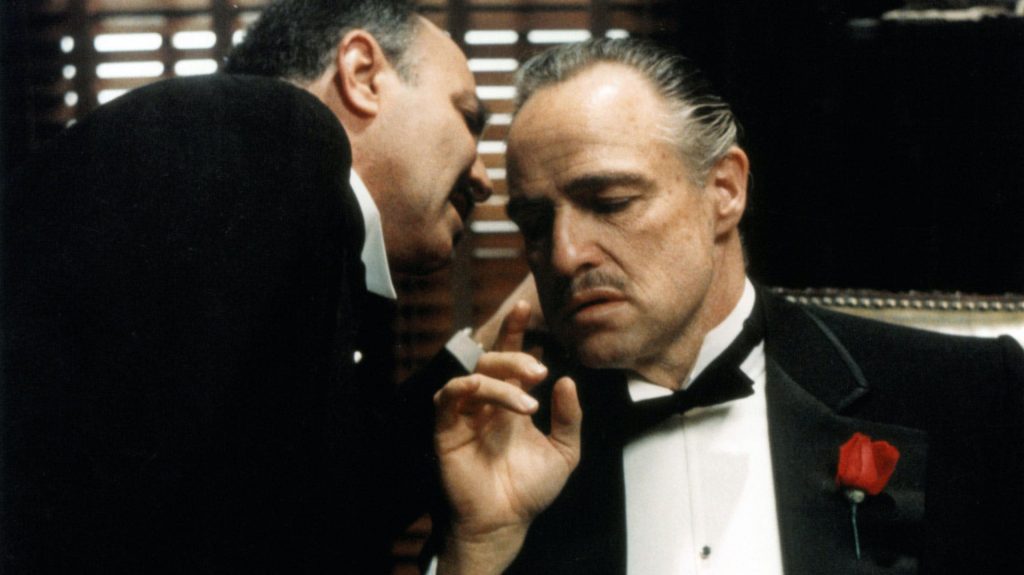
For many, there’s a before and after to popular American cinema, a line drawn by Coppola himself. The first film in the series, released in 1972, redefined what Hollywood cinema could aspire to: novelistic in scope, operatic in feeling, and shot through with a moral seriousness that the industry had rarely attempted at that scale. What followed across two sequels constitutes one of the most ambitious, if uneven, trilogies in film history — a body of work that reached genuine greatness twice and fumbled once, yet retains a cumulative weight only a few franchises can approach.
The first film traces the Corleone family’s passage through a series of crises after the ageing patriarch Vito (Marlon Brando) is almost assassinated while buying fruit, and power reluctantly shifts onto the youngest son, Michael (Al Pacino), a returned war hero who swore never to enter “the family business”. Later, this same bright-eyed Michael is barely recognisable as the same man who sits in the final frame, the door closing as his capos kiss his hand.
The sequel in 1974 achieves the rare feat of not only extending a story but also interrogating it at the same time. Running parallel timelines, it cuts between the young Vito (Robert De Niro) arriving as a Sicilian immigrant in early 20th-century New York and building his empire through lethal patience, and the adult Michael dismantling his own humanity in 1950s Nevada and Cuba.
Arriving sixteen years later, the third film was hampered by last-minute casting changes and also lacked somewhat the structural elegance of the earlier films. Michael’s arc toward redemption and spiritual reckoning, despite its ambition, never lands with the weight it needs, and the film often feels like an obligation rather than a compulsion. But taken whole, the trilogy’s treatment of its key subject – inheritance, not just of power, but of sin – propels it to evergreen greatness.