On Monday, February 16th, Netflix added to its robust history of successful content by releasing its docuseries titled “Reality Check: Inside America’s Next Top Model”. In the series, models, judges, and other people involved in America’s Next Top Model (ANTM) recount the controversial history of the show.
ANTM was marketed as a reality competition show “created” by supermodel Tyra Banks. The format involved a cast of young women competing in various challenges and photoshoots for the ultimate prize of having a successful modeling career. While the show has a fairly innocent concept, it has become infamous for perpetuating racism, misogyny, body image issues, and a slew of other harmful topics.
With this being said, Netflix’s release of a series about America’s Next Top Model was a genius idea, as it was only a matter of time before a large platform covered the history of the show. Even with it being over 20 years since the show first aired, it has remained culturally relevant and instantly recognizable. Through the waves of pop culture nostalgia, the public has reflected on this show, specifically regarding its chaotic nature. The show yielded controversies surrounding many different subjects, with one of the largest ones being race – specifically, Blackness.
Tyra Banks became a household name during the late 90s and 2000s. At the time, the modeling industry was significantly lacking diversity, making it easy for Tyra to stand out and break records, such as being the first Black woman on the cover of Sports Illustrated Swimsuit Issue and GQ. She was entering the public eye following the fame of Naomi Campbell, another Black model who made waves in her own way, which led to a rivalry. Whether this feud developed between the two organically, it was contrived by the industry, or a combination of the two, it’s clear that one of the main factors in the comparison between these two women was due to them both being Black.
While the modeling industry has a natural competitive nature to its work, the selectiveness when it came to women of color led to even more tension since there were fewer opportunities. From the beginning of Tyra’s career, her race was treated as either a barrier or a form of currency. This relationship with race set the standard for how Tyra would represent Blackness once she was in a position of power, and ANTM, her largest project, perpetually replicated this behavior with up-and-coming models.
Interestingly enough, ANTM was fairly diverse when it came to race and skin color. Each season appeared to have many different women with different ethnic backgrounds. With this being said, this wasn’t done with pure intent. The Black girls on Top Model were some of the few girls whose critiques were influenced by their race. While we don’t know the origins of this phenomenon, we can definitely say that Tyra’s time modeling shaped her tolerance for racism in the industry.
She spews racist rhetoric with a “matter-of-fact” attitude and views any harshness as a necessary evil to properly critique the girls. Most other girls got nasty feedback, but very rarely was it tied to their race. An understandable suspicion is that Tyra felt more comfortable criticizing Black girls because she is also Black, making it an “even” playing field. It also theorized that she’s taking a demotivational approach to “paying it forward”. In episode 2 of cycle 4, the girls did a photoshoot where they dawned avant guard makeup to portray fashion-forward extraterrestrials. They posed with abandoned police cars with no specific theme catered towards each of them.
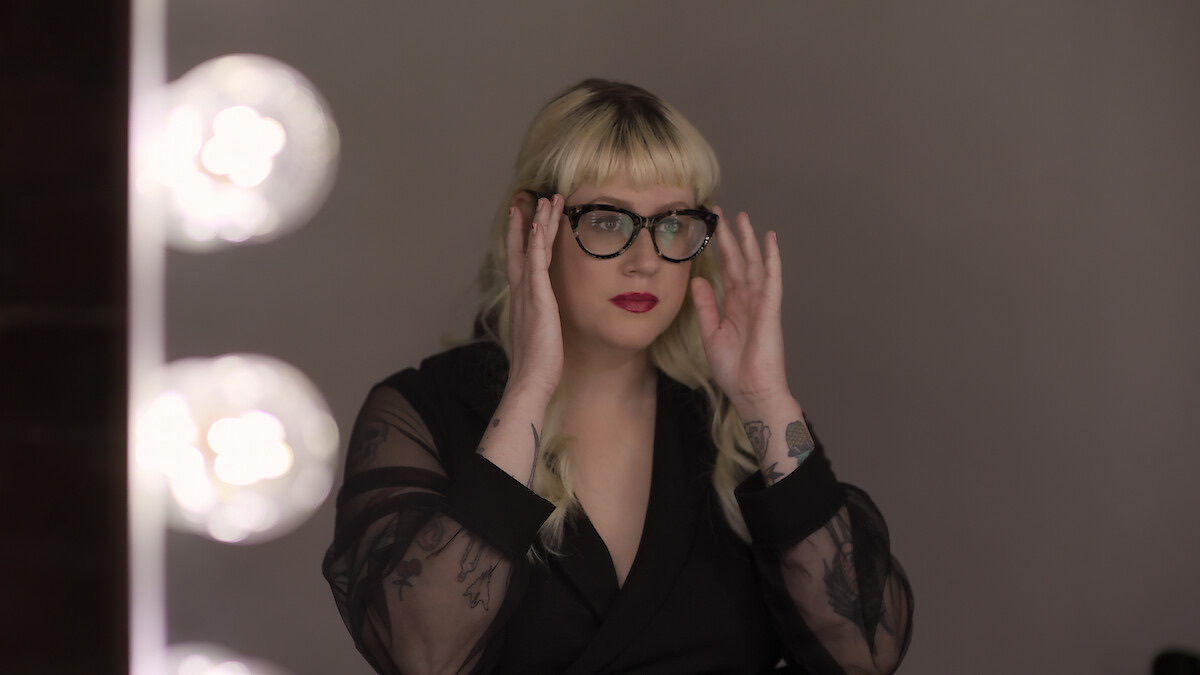
Tiffany Richardson, who is now best known for the viral moment of Tyra screaming at her, saying “we were all rooting for you!” was one of the participants in this photoshoot. When the judges reviewed her photo, they gave her feedback about being “ghetto”. Not only did this foreshadow the mistreatment Tiffany would face later in the season, but it also shows the standards they held her to, particularly being a tall, dark-skinned Black woman. The show exemplifies how inclusivity is painfully surface-level, and interacting with individuals of different backgrounds isn’t indicative of how much you value their participation.
Part of what makes Tyra’s hostility towards Blackness so jarring is the fact that on the same show, she would praise and uplift Blackness and, in some ways, see it as a win. Tyra and the other judges on Top Model saw value and beauty in Blackness, but only within carefully controlled limits. In the third episode of Cycle 8, contestant Jael appears before the judges to receive feedback on her photo from an ice cream–themed shoot. Appearing nude and styled as a birthday cake, Jael is praised by Tyra, who describes her being part African American as a strength because it allows her to ‘play’ different ethnicities.
Upon further reflection, this is an insight into Tyra’s fascination with racial morphing that had appeared as a challenge in two different cycles. Mixed or racially ambiguous girls could play up their blackness, but girls who were 100% African American had to be conscientious about not representing their ethnicity too much. Rather than celebrating their Blackness, the show framed them as attractive only ‘in spite of it.’
It would be inaccurate and unfair to say that Tyra never showed admiration for Blackness, but those instances still can’t be removed from the fact that she was, in fact, profiting off of it. In the Top Model documentary, she talks about how she wanted to make ANTM a show that spotlit all types of girls, but as she talks about the idea and pitching it to producers, it sounds like a marketing pitch – which it is. A huge part of the show involved challenges and prizes tied to Tyra’s makeup brand, Cover Girl Cosmetics.
She was very proud of this brand, specifically as it pertained to the shade range. The products were made to cater to people with a wide variety of skin tones, which coincided with Tyra’s want for inclusiveness, but again, this was something she made money off of. Black women have proven to be very lucrative in marketing as they are seen as symbols of progression and advancement. To be fair, this dynamic isn’t unique to Tyra, and many people/companies have stood to make a profit in the name of inclusivity without having to go out of their way to prove their authenticity.
Despite people discussing Top Model’s problematic nature, there seems to be a lack of self-reflection on the audience’s part. It’s understandable why women would want to point the finger, given that the show negatively impacted them; however, some of the show’s biggest critics online have been the same people perpetuating the depiction of racism. Part of this is the inherent toxic cycle of the internet. Users with even the best of intentions have had a habit of resurfacing racist moments in the show with no meaningful conversation that goes beyond “this is awful”.
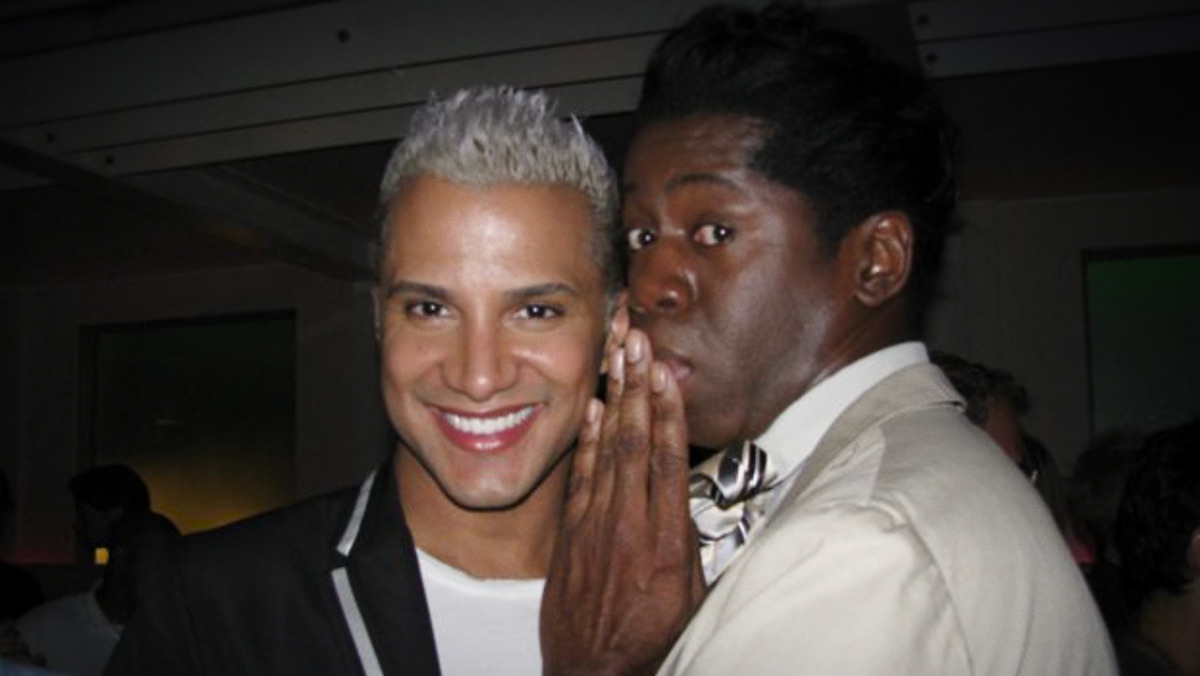
The dynamics of this become even more upsetting when considering the significant number of people who aren’t Black sharing these scenes. Even when recognizing that certain moments of the show should not have aired and been shown to the public, they will show the footage, talking about it.
There is also a conflicting reflection of the show where audiences joke about its ridiculousness, making memes out of the racist situations the girls went through, and treating them as caricatures. It is a delicate balance to determine what counts as impactful internet fun versus perpetual harm, but it is clear that the public sways back and forth between treating the show as pure entertainment and as an example of real-world harm.
The docuseries makes an effort to rectify the detachment people have had with contestants’ stories by giving them a platform to discuss their experience; however, it also has conflicting messages. It’s very clear that the Netflix series wanted to show the harm that Top Model did and highlighted many topics, including racism. They shared insight regarding the isolation Black girls felt and highlighted the mistakes both Tyra and Executive Producer, Ken Mok, made, but something about the subject matter keeps driving people to make a spectacle out of the bad.
The last episode in the series is titled “Rooting for You”, a reference to an episode where Tyra went overboard and yelled at a Black contestant in front of everyone. The contestant was Tiffany, who, as mentioned before, had already faced microaggressions during her judging. For years, the internet has had an absolute field day laughing and making fun of this moment despite recognizing how awful it was.
While most of the people doing this recognize that Tyra is in the wrong, the subject of the discussion isn’t just Tyra, but the person she verbally abused. The Netflix series falls into this trap by naming an episode after this moment and attempting to deconstruct it without any participation from Tiffany herself.
As a part of the PR for the docuseries, a cake was sent out that had “Rooting For You” written in icing on the top. If a series is making an effort to spotlight the harm ANTM has done, it’s wildly insensitive to release gag gifts based on jokes surrounding it. To make the disconnect even clearer, around the same time PR was sent out, Tiffany took to the internet to express her distaste for how her storyline was edited and expressed her anger towards the show, highlighting this moment versus her generosity in the community.
The inconsistencies surrounding Tyra and America’s Next Top Model go beyond a “he said she said” dynamic and industry gossip. It’s about how, while there has been such clear bigotry, the public can’t seem to decide how to react to it. Black women have had a history in pop culture of being simultaneously ridiculed and praised, and this is reflected in the Top Model fandom. They are either uplifted or having their trauma exploited.
Tyra has gotten a lot of rightful criticism for her actions; however, there appears to be a selection of non-black men who have gotten out of this perpetual scandal fairly unscathed. Internet attacks and humour are toxically addicting and can keep people from seeing their own contributions to a larger issue. It’s important not to convince ourselves that we are doing our part by rehashing racist moments from a show that aired decades ago. While it can be good for these conversations to take place, it’s equally important to focus on the issues that aren’t so entertaining.


![Chop and Steele [2022]: ‘Tribeca’ Review – An honest, hilarious take on TV’s comedic duo that entertains and enlightens](https://www.highonfilms.com/wp-content/uploads/2022/06/Chop-and-Steele-2022-hof-768x432.png)