Kate Cobb’s sophomore feature, “BRB,” captures the mood of the mid-to-late aughts when social media was not as refined or omnipresent as it is now. Online conversations took place on computers through dial-up internet, which often took ages to load even a simple page. People were generally more frank and eager to present themselves online.
It’s also when they started curating their online personalities and discovered like-minded people by sharing some of the most personal details about themselves, while carefully crafting others to engage with strangers. Cobb’s film offers a delicate portrait of the same time, an early era of self-curation, where loners often sought a respite on message boards.
The script, written by Sydney Blackburn and Michael Waller, analyzes those time-specific details through a tale of two sisters, who go on a road trip from their suburban neighborhood to Chicago. Although related by blood, they appear far different from each other. 15-year-old Sam (Autumn Best) is deeply invested in a world of fantasy and imagination, whereas a few years older Dylan (Zoe Colletti) doesn’t care for it.
Instead, she seems more concerned about her relationship with Sully (Richard David), who is both pretentious and impenetrable, a peculiar cocktail of traits that might make you want to cross the street before bumping into him. Yet, in that era, those pretenses didn’t have as bad a rep.
Pretense is a major theme throughout the script, which takes the sisters on an emotional journey through some curious twists and turns. It begins shortly after their parents (Beth Lacke, Keith Kupferer) leave them behind for a leisurely sail. Dylan learns about a guy whom Sam met online and fell in love with.
That’s where she gets the idea of driving their parents’ car to Chicago to help Sam meet this boy, instead of keeping their relationship confined to online dialogue. What begins as a journey for the lovers’ union soon snowballs into much more, leading the sisters to some introspection, which makes them realize and acknowledge their similarities despite their emotional or behavioral differences.
The script doesn’t offer the most original exploration of this idea. Much of its narrative beats are generic, and turns are predictable. While centering the story around the gradual change of heart through reconciliation and mutual compassion, the writing doesn’t lead to anything inherently new or surprising either. Structurally, it stays within the tried and tested limits of similar comedy-dramas, leading the two to realize the depth of their relationship and learn to accept themselves as they are while shedding prior judgements about each other.
If dealt properly, even these conventional genre tropes can yield a more unpredictable experience. Molly Manners’ recently premiered “Extra Geography” is a beautiful example of that. Miriam Battye’s script ensured we would be glued to the screen through an electric psychological interplay between its characters, even before Manners could work her magic on it. The result was riveting, brimming with charming spontaneity that kept you waiting to see every transition unfold, beyond staying invested because of its relatability quotient.
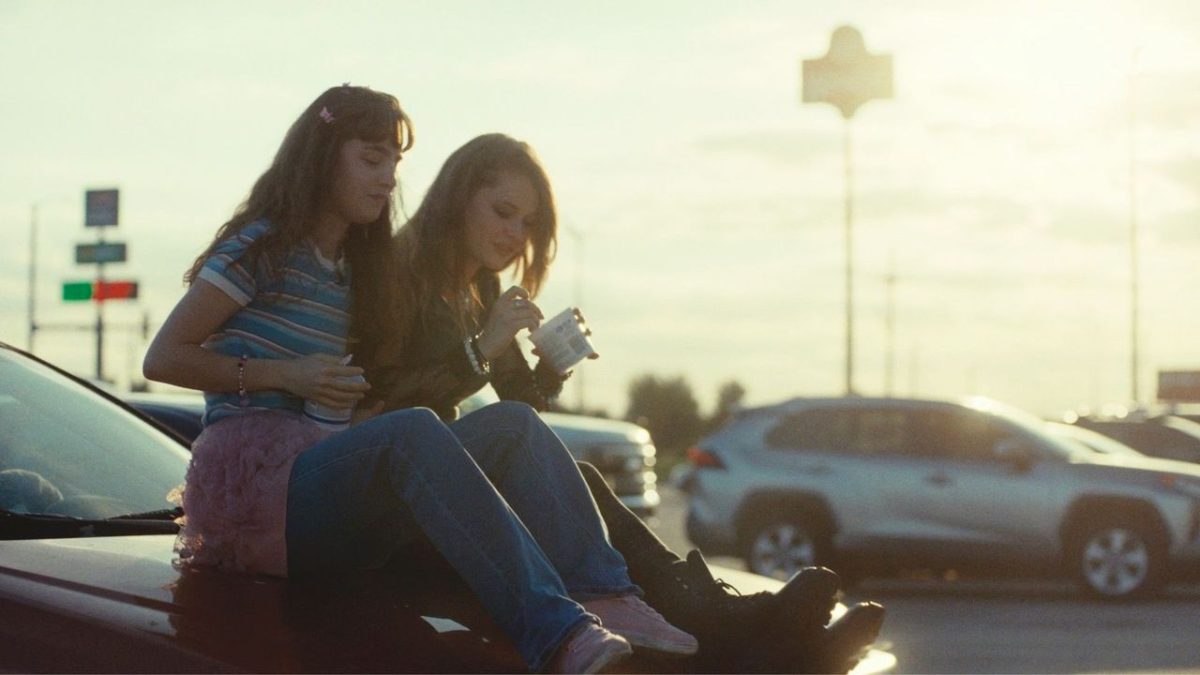
Yet, what “BRB” may lack in originality, it makes up for it through assured direction and lively performances. Autumn Best steals the show as the younger sibling and a geeky teenager, trying to balance between being like her older, cool sister and being herself. She brings a refreshing energy to her portrayal of this young girl, whose awkward attempts to rekindle their past lilting bond make you all the more invested in rooting for her. While playing a character we will instinctively sympathize with, she ensures that her performance isn’t one-note, offering a deeper understanding of Sam’s interiority even in fleeting moments.
There’s a moment in the film’s second half where Sam is simply looking at someone while processing her intense guilt and realizing how her one decision spiraled into a mess, leading her to this painful moment of self-realization. It’s an overwhelming moment that may forever be etched in her mind, affecting her life at large. Best captures the intensity of that experience with restraint, making us feel the burden of her pain even when she’s holding back her emotions.
Cobb’s direction allows these pockets of emotions to breathe, so we understand not only the subtext of a scene but also of the brief transitions in between when characters are left to deal with their memories and process the immediate aftermath. It shows up through Colletti’s performance as she steps away from a situation that fleetingly offered a hope for a future she once envisioned.
We also see it in Best’s performance when Sam confronts Dylan about a painful lie, or while quietly processing an important detail about their family. The writing is certainly well-intentioned in addressing the unwarranted shame or frustration that immature or naive boys leave the sisters to deal with on their own.
Although structurally underwhelming, the film is thematically impressive in gently tying the common threads between girlhood and sisterhood. As teenagers, we tend to feel everything tenfold more intensely, and the film depicts that intensity through Sam’s lens, while beautifully presenting Dylan’s tender learning curve intersecting with hers. While the script leaves you wanting more in terms of depth and newness, Cobb’s direction ensures we’re left with an experience we would want to revisit just to see these two sisters going through these gradual stages on their bonding trip.



![Memory House [2020] Review – A Surrealistic Tale About Violence](https://www.highonfilms.com/wp-content/uploads/2020/11/Memory-House-highonfilms-2.jpeg)
![A Monster Calls [2016] : An endearing tale of acceptance](https://www.highonfilms.com/wp-content/uploads/2017/02/a-monster-calls-768x429.jpg)