The idea of making a masterpiece in your own house will always be part of the American Dream. For example, we have seen Robert Rodriguez make “El Mariachi” (1992) with only $7,000, and Shane Carruth make “Primer” (2004) in his parents’ garage. Independent cinema has always thrived on audacity over affluence. But even within this scrappy tradition, James Ward Byrkit’s 2013 psychological thriller “Coherence” stands as a monument to what pure imagination can achieve when freed from the constraints of conventional filmmaking.
The story of how “Coherence” was made is as interesting as the movie itself. Byrkit shot the entire feature film in his own Santa Monica home in just five days with only 50,000$. There was no script, no presence of a huge team, no elaborate sets or special effects. The only driving force was a concept so amazing that it could turn a normal dinner party into a portal to infinite realities and eight talented actors willing to trust him enough to improvise their way through one of the most mind-bending narratives in recent science fiction cinema.
The plot of the film is simple: eight friends gather for a dinner party on the night Miller’s Comet passes overhead. As time passes by and the power goes out across the neighbourhood, leaving only their house and one other mysteriously illuminated house, the group begins to experience increasingly bizarre phenomena. Photographs appear before they’re taken, duplicate objects materialize, and the fundamental laws of reality begin to bend, revealing the terrifying possibility that multiple versions of themselves exist simultaneously in overlapping dimensions.
“Coherence” isn’t amazing because of its extraordinary plot. Its greatness lies in the way Byrkit executes his plans with such precision despite the self-imposed limitations. He spent nearly a year before production even started creating elaborate charts, maps, and diagrams tracking the fractured realities that the eight people in the dinner party would navigate.
He researched quantum mechanics, studying concepts like Schrödinger’s cat and the many-worlds interpretation that would form the scientific foundation of his narrative. By the time the cameras rolled, Byrkit had constructed a meticulously planned puzzle, even if his actors had no idea what they were getting into.
Improvisation done by the actors is a salient part of the movie’s authenticity. Each day, every actor received notes which notified them what information their characters needed to convey, but the dialogue itself was entirely spontaneous. Nicholas Brendon, best known for his role in “Buffy the Vampire Slayer,” admitted he had no clue how the movie would end until he watched the finished product. That effect was entirely intentional: Byrkit wanted the uncertainty, paranoia, and creeping dread to feel real, so the confusion his characters experience on screen is something the audience can sense as genuinely lived-in rather than performed.
This method led to some great performances. Rather than the hyper-articulate scientists who typically populate cerebral science fiction, “Coherence” gives us smart but under-informed types who piece together the cosmic puzzle in real-time while still making jokes and drinking wine. They know that whatever’s happening to them isn’t normal, but they don’t know enough to explain it articulately. Their conversations feel genuinely human, complete with interruptions and the kind of messy dynamics that emerge when old friends and ex-lovers are trapped together in an increasingly nightmarish scenario.
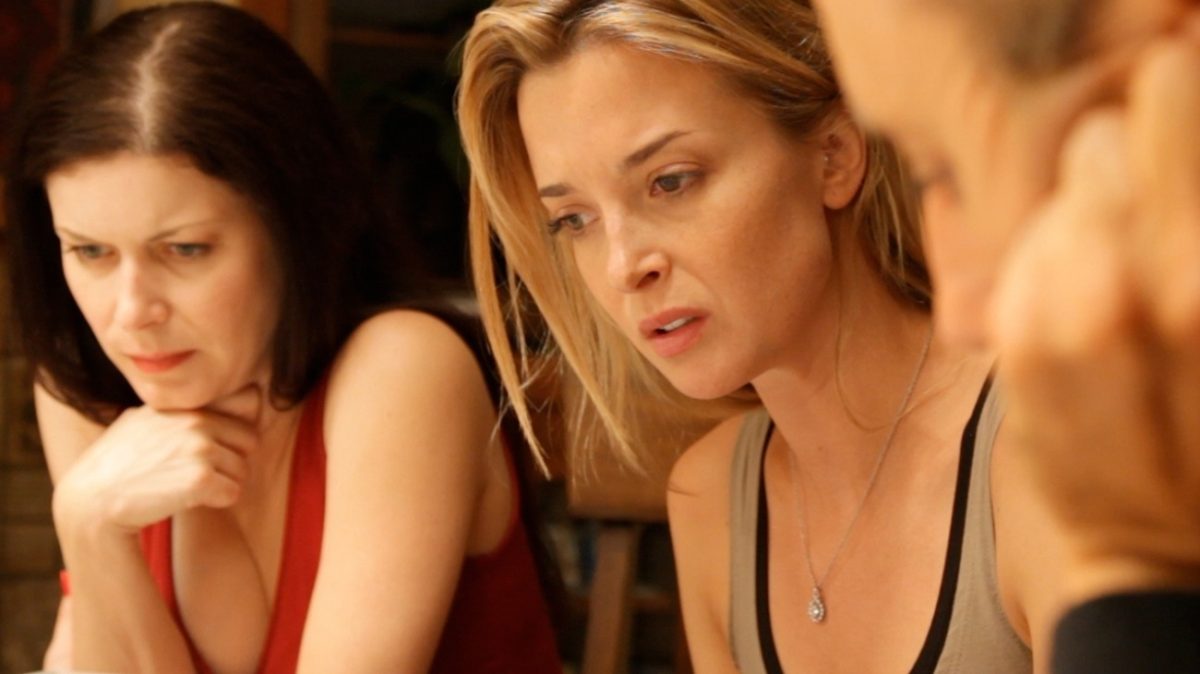
The film’s visual aesthetic perfectly adds another aspect to its narrative chaos. The handheld cinematography and variable lighting actually serve the story’s deeper purposes. Reality itself is unstable in “Coherence,” and the film’s visual language reflects this instability. The slightly amateur quality creates an unsettling ambiguity about what we’re seeing and when we’re seeing it. In a movie about fractured timelines and overlapping realities, this visual uncertainty becomes thematically essential.
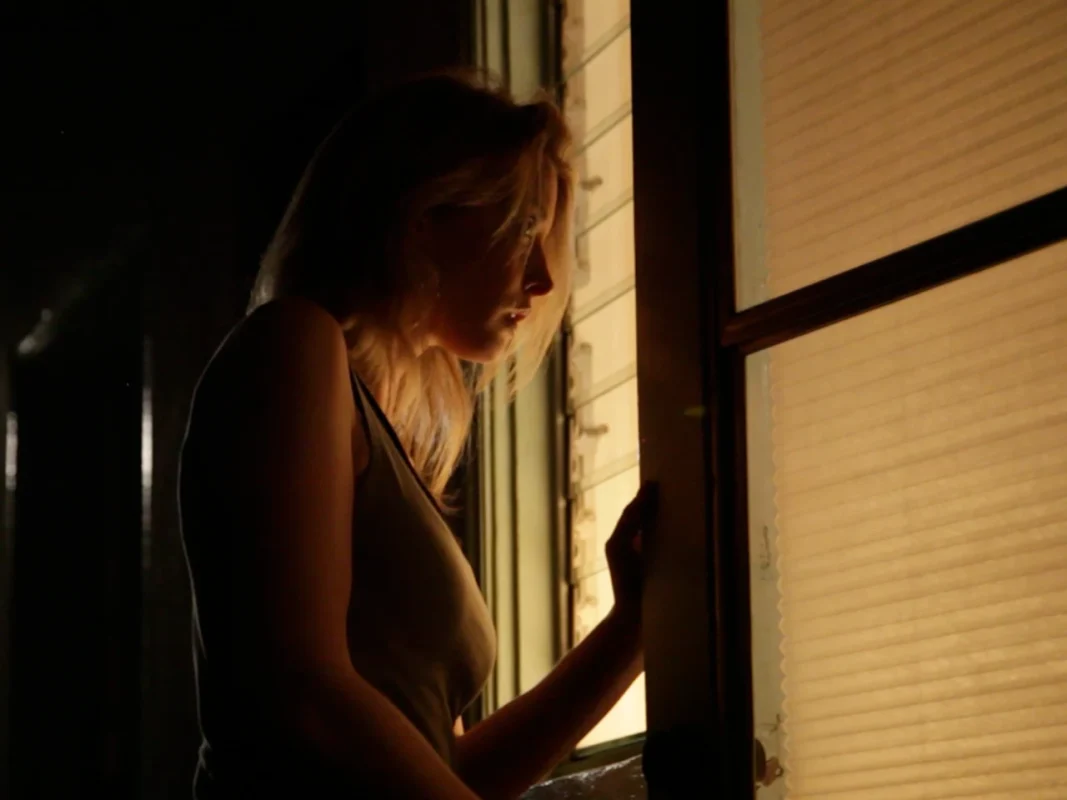
The film, at its core, is about the choices we make and the lives we don’t lead. The protagonist Emily, played with great intensity by Emily Foxler, is our guide through the multiple realities. As the evening deteriorates and the group discovers that their actions are creating divergent timelines, Emily faces a dilemma: somewhere in this chaos exists a version of her life that’s better than what she is living right now. A reality where she made all the right choices instead of the compromising ones.
This thematic exploration gives “Coherence” its emotional weight. Many sci-fi movies use parallel universes as spectacle or plot mechanics. Byrkit uses them to examine regret, desire, and the immortal question of whether we can ever escape our own mistakes. When Emily makes her dark decision in the film’s climax, attempting to literally take the place of a more successful version of herself, we understand why she would do that, even though we recognize its horror. Who among us hasn’t wondered about the road not taken? Who hasn’t imagined stepping into the life of the person we might have been?
The film’s ending is intentionally unsettling. Emily’s plan backfires when the version of herself she tried to replace turns out to be alive, leaving the original Emily trapped forever in a reality that isn’t truly hers. There’s no heroic triumph, no comfortable resolution. Instead, Byrkit leaves us with the disturbing image of someone who tried to steal a better life and must now live as an imposter in her own existence.
The title itself is an elegant ironic play on scientific terminology. In quantum mechanics, decoherence is the phenomenon that prevents different quantum states from interfering with each other, essentially keeping separate realities separate. By naming his film “Coherence,” Byrkit suggests the opposite: a horrific scenario where these carefully maintained boundaries collapse, where realities that should never meet suddenly meet with devastating consequences.
What’s most impressive about “Coherence” is how it transforms its limitations into its strengths. Unable to afford special effects or multiple locations, Byrkit made the confinement itself part of the horror. The entire nightmare unfolds around dinner tables and in suburban streets that should feel safe but increasingly don’t. The film proves that sci-fi doesn’t require starships or aliens to explore profound ideas. Sometimes all you need is a living room, a mysterious comet, and actors brave enough to have your back.
“Coherence” won multiple festival awards, including Best Screenplay at both Fantastic Fest and the Sitges Film Festival. Critics recognized that Byrkit had pulled off something remarkable, creating a work of substantial intellectual complexity that never lost sight of its human drama. The film has since achieved cult status, the kind of movie that inspires multiple viewings as audiences attempt to track all the subtle variations and timeline shifts that Byrkit carefully planted throughout.
For filmmakers, “Coherence” teaches them about resourcefulness and vision. Byrkit didn’t wait for studio financing or marquee stars. He used what he had: his house, his connections, and more importantly, his imagination. Byrkit trusted that a strong concept, executed with intelligence and commitment, would be enough. He was right. The film has earned over a 1,30,000$ against its 50,000$ budget, but more significantly, it has earned a permanent place in the sci-fi canon.
For the viewers, “Coherence” offers something increasingly rare in contemporary cinema: a film that respects our intelligence while thoroughly unsettling us. It doesn’t explain everything, nor does it tie up all its loose ends. Instead, it presents a cosmic puzzle and invites us to think about its implications long after the credits roll. The conversations it garners about quantum mechanics, free will, and the nature of identity are precisely the kinds of discussions that great science fiction should inspire.
“Coherence” also serves as a reminder that the multiverse concept still contains genuine philosophical horror when done properly. In Byrkit’s hands, parallel realities aren’t exciting opportunities for crossover events or fan service; they’re actually existential nightmares, and the haunting possibility that we’re living the wrong version of our own lives.
The film’s legacy continues to grow. It influenced subsequent low-budget genre filmmakers and demonstrated that audiences hungry for intelligent science fiction would embrace it regardless of production values. The film demonstrates that improvisation and meticulous planning aren’t opposing forces, but complementary ones, working together to produce something richer than either raw spontaneity or strict scripting could manage on its own.
More than a decade after its release, “Coherence” remains relevant. In our current moment of fractured realities, competing narratives, and the sense that we’ve somehow slipped into the wrong timeline, Byrkit’s meditation on parallel worlds and impossible choices feels less like science fiction and more like a documentary.
James Ward Byrkit took a risk when he decided to shoot a feature film without a script or crew in his living room. It was the kind of creative gamble that could have easily resulted in an unwatchable mess. Instead, he created a lean, mean, and intellectually rigorous thriller that proves the eternal truth of independent cinema: limitations breed creativity. Given infinite resources, would “Coherence” have been better? Most probably NO. The limitations forced Byrkit to focus on what matters most in storytelling: character, concept, and the courage to go with the flow and to follow an idea to its most disturbing conclusions.
In today’s time, where the media landscape is increasingly dominated by franchise filmmaking and algorithmic content, “Coherence” stands as a beautiful act of defiance. It’s proof that cinema’s power doesn’t derive from budgets or technology but from the vision of artists willing to take risks, trust in themselves, and believe that a good idea well-executed can still change everything.
When we talk about “Coherence,” we are celebrating what cinema can be when freed from commercial pressures. We’re honouring the tradition of independent filmmakers who understand that sometimes the most universal stories begin in the most personal spaces. The beautiful chaos Byrkit created continues to resonate because it reminds us that the scariest possibilities aren’t found in distant galaxies or dystopian futures. Sometimes they’re right here, in the next room, in the next reality, in the life we almost lived but never quite did.