“Crank: High Voltage” is a full-body sensory jolt, a film that drags the viewer into a nonstop sprint and never offers a pause. The first “Crank” (2006) played like a self-aware riff on action-movie excess; the follow-up turns that energy inward, parodying its own premise with reckless commitment.
The filmmakers seize the original’s raving charge and amplify it to absurd extremes, pushing every stylistic and narrative lever until collapse feels inevitable. Yet the film keeps running. Every dial is forced past its breaking point, the machinery visibly tearing, momentum somehow sustained through sheer nerve. Out of this overload emerges something rarely granted a studio release: a mind-melting, genuinely radical work that functions as pop-art provocation. By the end, “Crank 2: High Voltage” reads like action cinema in full combustion.
It is a deconstructive and experimental piece of cinema that brushes up against the avant-garde while also wearing the skin of an action movie. There is truly nothing like it. It is one of my favorite films. And I still hold out hope for a “Crank 3” one day. In the same way that I hold out for a third film in the “The Collector” (2009) series as well. Netflix, where are you? From its opening moments, “Crank 2” announces that any form of restraint is not on the menu, and not only does it not care what you think, but it revels in it.
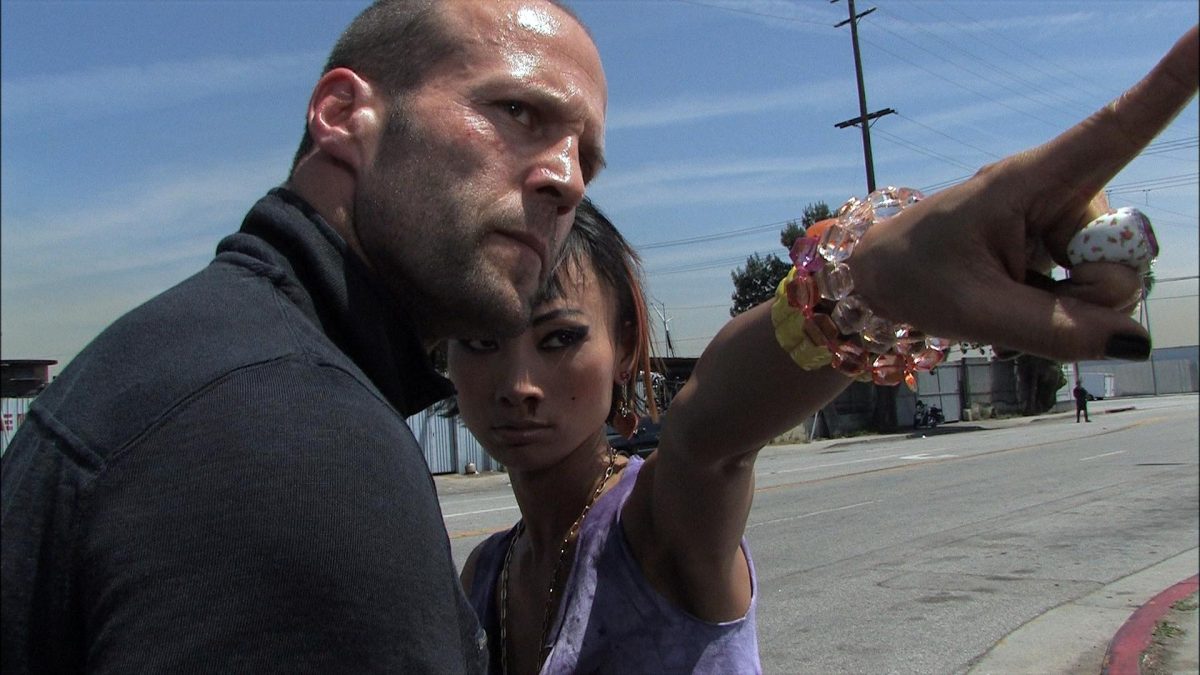
Jason Statham is Chev Chelios, having seemingly died at the end of the first film, he falls from the sky and lands back like a discarded action figure. The film is interested in one thing mainly, and that is propulsion. It moves with the ferocity of a panic attack, sprinting from one wild set piece to the next, refusing to let the audience settle into any form of comfort. This is cinema as blunt force stimulation, but it is also cinema as a sensory experiment. What makes “Crank: High Voltage” so exhilarating is how knowingly it embraces excess and keeps pushing forward.
The film understands itself and chooses to amplify a ridiculousness until it loops back around and becomes its own philosophy. Chelios must keep his body electrically charged to stay alive, a premise that opens the door to a parade of escalating scenarios involving tasers, car batteries, power plants, and human bodies being used as conductors. It’s primal.
After all, aren’t we just meat bags with electricity running through us? Each set piece is more extreme and audacious than the last. Yet rather than feeling arbitrary, the excess feels composed. The filmmakers behind this masterpiece, Mark Neveldine and Brian Taylor, treat chaos like a craft. If you watch behind the scenes, you can see how Neveldine and Taylor utilize their physicality to create unique camera angles. It is impressive and part of the reason the film remains relevant.
In “Crank: High Voltage,” the camera whips, crashes, and spins, with an aggressive disregard for traditional coverage. Editing is over the top, cutting between scenes primarily for impact. The film uses distorted lenses, digital textures, and movements that feel like video art.
There is a constant sense that the film itself is on the verge of collapse, and that stylistic approach becomes part of its meaning. “Crank 2” is less concerned with telling a story than with overwhelming the viewer’s senses and breaking down expectations. Beneath the vulgar humor and grindhouse aesthetics lies a rejection of cinematic norms.
“Crank 2” purposefully leans into the abrasion. Its look is raw, the performances pushed into cartoonish extremes, and its tone moving wildly between comedy, brutality, and absurdist satire. In an era where action films often strive for sleekness, “Crank 2” feels almost punk in its contempt for refinement. The genius score by Mike Patton complements the environment and amplifies the film’s unhinged energy until the sound feels like an extension of the world on screen.
Jason Statham’s performance is a key ingredient in this madness. He plays Chev Chelios as a barely contained force of pure energy. His physical commitment is legendary. Chelios is less of a character than a vessel for momentum, a human battery charging the movie forward. Also props to Amy Smart for delivering an over-the-top performance that mirrors physical humor the likes of a Lucille Ball or a Carol Burnett.
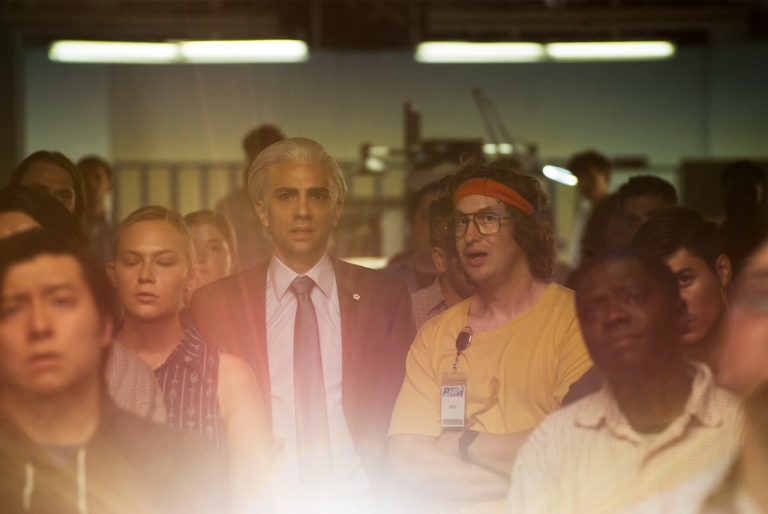
I respect the commitment to delivering authenticity through doing your own stunts. It’s safe to say that it would not feel like a “Crank” film without Amy Smart being involved,d just the same as without Jason Statham. She’s definitely an underrated actress from the 2000s. Should someone cast her and Kaitlin Olson in a comedy? That would be funny. Speaking of “It’s Always Sunny in Philadelphia,” I think Glenn Howerton’s reprisal in this film is hilarious.
The sense of humor in “Crank: High Voltage” is also confrontational. The jokes don’t succeed through conventional cleverness so much as through the film’s unhinged confidence in delivering them. The effect is confrontational, like the movie is flashing a middle finger at the viewer and daring them to keep watching. “Crank 2” dares the audience to keep up, to accept its warped logic, or to be left behind in the dust, winking the entire time.
The most impressive achievement of “Crank: High Voltage” is that it feels genuinely alive. It does not feel like it was focus tested or algorithmically designed. It feels like something made by filmmakers who were given just enough money and freedom to do something irresponsible, and then ran with it as far as they possibly could. The result is a film that feels dangerous, and it makes the experience genuinely thrilling.
Saying that “Crank: High Voltage” is a masterpiece might seem like a bold claim to some film enthusiasts, but within its own frequency, this movie earns that title. It is a maximalist work that understands how to use its own irrelevance as a weapon and then uses it to carve out something strangely pure for the audience. By pushing every element to excess, the film moves beyond parody and crystallizes into something genuinely visionary.
What emerges is cinema as overload—aggressive, disorienting, and strangely precise in its intent. It’s worth pairing it with “Gamer” (2009), also directed by Mark Neveldine and Brian Taylor, a film that extends the same fascination with speed, control, and sensory saturation into a different register. That both films arrived in the same year feels almost unreal, a brief moment when this kind of maximalist, abrasive studio filmmaking was not only possible but allowed to exist in plain sight.
Overall, “Crank: High Voltage” is unapologetically extreme, and it’s precisely within that excess that the film finds its brilliance. Few works in modern cinema commit so fully to their own audacity, and even fewer manage to sustain it without collapse, pulling off something both reckless and improbably coherent.