Dwayne ‘The Rock’ Johnson is one of the biggest stars on planet Earth, not only with a lasting legacy as one of the greatest and most popular professional wrestlers of all time, but as one of the 21st century’s defining movie stars. He sits amongst the top 10 highest-grossing actors to ever do it with a massive $11,466,158,582 accumulated across his career, and yet, it always felt as if something was missing. That was, until the Benny Safdie-directed “The Smashing Machine” came around, providing the actor with an all-new challenge that many questioned whether he had the dramatic chops to pull off.
Over three months on from its release, however — despite the movie’s varied critical response — the one piece of praise that remained present throughout was the plaudits for Johnson’s portrayal of Mark Kerr, even landing him a Golden Globe nomination for Best Performance by a Male Actor in a Motion Picture — Drama.
Despite those plaudits, which praised Johnson for stepping out of his typical IP comforts and into a role that demanded more of him, he seemingly fell back into familiar territory almost immediately afterwards. As though the movie provided the actor with all the cultural capital that had been missing from his otherwise greatly profitable on-screen career, that didn’t seem to be enough for ‘The People’s Champ’, who stated on an Instagram post that…
“You can’t control box office results”
— Dwayne Johnson on Instagram
For many of us, it came as a great disappointment that he would even feel the need to acknowledge the movie’s box office failures unprovoked, as though it was a far cry from his usual financial smash hits. It showed us something more. It showed us that Dwayne Johnson could be more than just numbers on a spreadsheet. Moreover, it proved that he could become something bigger than himself and melt into a role that demonstrates his range beyond that of ‘The Rock’. And that, most importantly, he cared for the art itself rather than the financial gain that it brought, willing to take a risk on something that he truly cared for, using his star power to get movies made that otherwise might not have been.
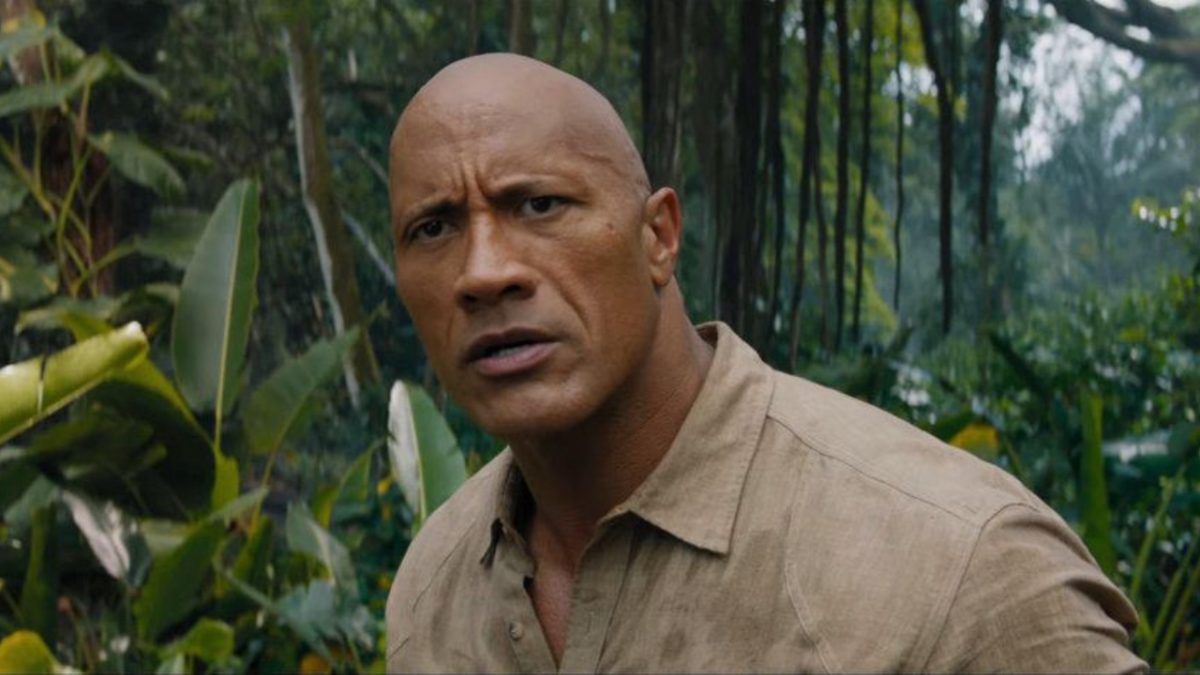
What’s even more upsetting is where we can expect to see Johnson next, as his current slate suggests that the third instalment in his Jumanji series and, of course, the live-action Moana remake, will be his next moves. This comes just mere months after he expressed that…
“I looked around a few years ago, and I started to think, ‘Am I living my dream or am I living other people’s dreams?”
— Dwayne Johnson for Variety
His upcoming schedule indicates a deflating return to the latter, as he once again finds himself chasing economic glory ahead of critical acclaim. It’s at this crossroads that Johnson might do well to remember the career that came before, since it was his background in professional wrestling that shaped him into the star he is today. Teaching him not only the art of performance and holding a camera’s gaze, but also the importance of adaptation and the thirst for change that comes with paying audiences. As though we now look back on his career in the squared circle with nothing but affection and admiration, there was a time when that wasn’t quite the case.
When he made his in-ring debut back at “Survivor Series 1996,” the then Rocky Maivia came in with huge expectations thanks to his family history within the business. With his father, Rocky Johnson, and grandfather, ‘High Chief’ Peter Maivia, both enjoying massively successful spells in the industry. The problem was that fans could smell the privilege on him. They knew that the company had big plans for him and that he was walking into the ring with the proverbial rocket strapped to his back. And if there’s one thing professional wrestling fans don’t like, it’s being told who the next ‘guy’ is going to be without having a say in the matter.
The way that Rocky Maivia would then come to be ‘The Most Electrifying Man in All of Sports Entertainment’ was, much like Johnson’s recent cinematic rebrand, through a change in approach. Gone was the clean-cut babyface that audiences rejected in favour of an all-new, charismatic bad guy persona that aligned more closely with Johnson’s real-life swagger and star presence.
His arrogance, bravado, and unrelenting belief that he truly was the very best felt not forced but rather an extension of Johnson’s real-life personality, something that audiences could sense and cling to, leaning into the idea of ‘The Rock’ as a star rather than resisting ‘Rocky Maivia’ as the company’s favourite son. For the first time, Johnson felt like the chosen one of the fans, not the machine.
This demonstrated a greater skill in Johnson’s arsenal; however, as though audiences failed to connect with his character, he understood that it coincided with a desire from fans for something larger from the sport as a whole. Audiences had grown tired of what we have now dubbed the ‘Golden Era’ of the WWE (then WWF), with the likes of Hulk Hogan, ‘Macho Man’ Randy Savage, and The Ultimate Warrior becoming viewed as the stars of yesterday, despite ranking amongst the most popular figures in all of pop culture just a few years prior.
Recognising this, Johnson knew that his rebrand needed to take an edgier tone, ditching his dated character in favour of what he deemed to be the future of sports entertainment. Lo and behold, just a few months following his transformation, the company would enter a brand new era. An era (which we now refer to as the ‘Attitude Era’) that saw viewership ratings and pop culture relevancy at an all-time high, with ‘The Rock’ firmly at the forefront.
“The Smashing Machine” represents something similar for Johnson, endearing himself to audiences through a more authentic approach that mirrored his own vision for himself and his career rather than adhering to how the powers that be at Hollywood’s biggest studios had initially viewed him. Specifically by seeking out the material himself and presenting it to Benny Safdie as far back as 2019, displaying a level of care for his work that had otherwise appeared absent up to that point.
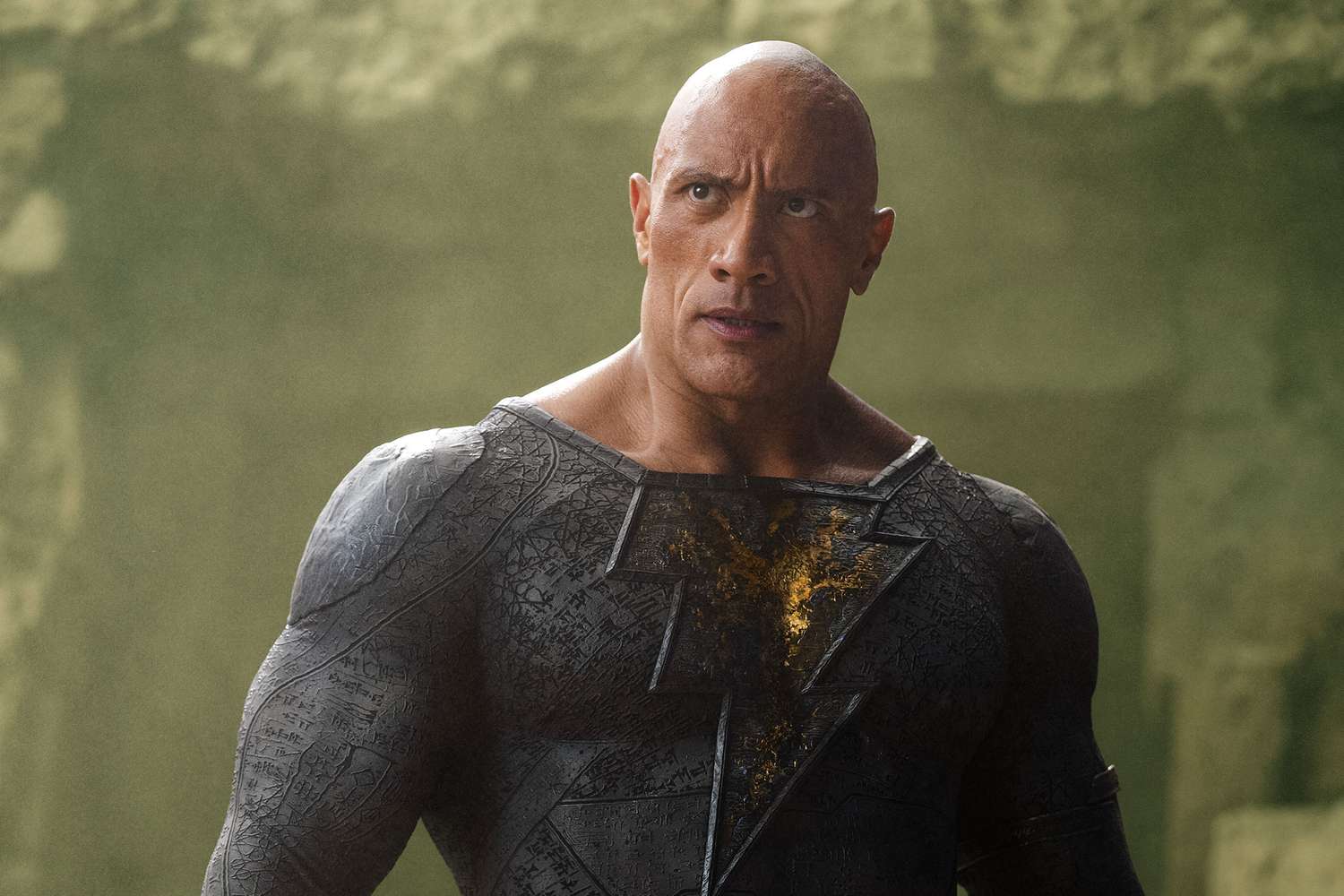
This came at a time when, once again, audiences had grown sick of Johnson’s schtick, with titles such as “Black Adam” and “Red One” failing to connect critically or with general audiences to the degree expected. With “Red One” returning just $186,000,759 of its $250,000,000 budget, whilst “Black Adam” failed to make good on Johnson’s famous promise that the “Hierarchy of power in the DC Universe is about to change”.
But more than this, audiences in a post Covid-19 world seem to crave something more meaningful than the typical 21st-century blockbuster that once dominated the box office, with terms like ‘Superhero fatigue’ often banded around as a reason for movies such as “Black Adam” failing to make good on their financial potential. Whilst 2025 saw major blockbuster titles like “Jurassic World: Rebirth” become the first in the “Jurassic World” series to fail to crack $1 billion worldwide, original horror films like “Sinners” and “Weapons” exceeded all prior expectations.
This suggests a continuing rise in hunger from wider audiences for a product that breaks through cinematic norms and dares to venture into unfamiliar ground. “The Smashing Machine,” as a sports biopic that centres around an unconventionally soft and mellow man in a world of masculinity and rage, certainly fits that bill and once more demonstrates Johnson’s ability to shift with the ever-moving tides. What makes this latest shift all the more impressive, though, is that it comes over 20 years into his Hollywood career, and not at its genesis. With the idea of ‘The Rock’ being one that has been firmly imprinted into the industry as a specific type of performer.
He typically takes on roles that exist in one singular lane, all linked through customary character traits that typically platform him as the robust hero of the story. To change that narrative, then, after over two decades of work, is an incredibly commendable achievement, and one that could easily be diminished with certain project choices moving forward. Incredibly important, then, that Johnson’s future is filled with fewer live-action adaptations of animated movies that have barely turned 10 years old, and more unconventional character studies that test both the audience and the performer himself, if he is to continue to expand on his newfound dramatic career.
All this to say that for the first time since leaving the WWE in 2004 to pursue his Hollywood career full-time, Johnson showed us what he was truly capable of with material that dared to push him beyond his comfort zone, and it would be a crying shame if that were to be a one-time deal. It’s a genuinely inspired performance, embodying both the freakish physicality required and the intense emotional depth that make Kerr such an intriguing and cinematic character.
By throwing away his previous reluctance to embrace a more vulnerable side of his game and inviting more of himself into his work—relinquishing complete control over his image and allowing the material, his heart, and even the makeup department to guide his performance—he delivered what was widely deemed a unanimous dramatic breakthrough.
Rumours suggest that he could be in line to star in one of Martin Scorsese’s upcoming pictures, as well as another Benny Safdie feature that is set to adapt Daniel Pinkwater’s novel “Lizard Music.” And if either one of those is to come to fruition, one can only hope it’s a sign of what’s to come for ‘The Great One’ after proving to us all just who he is: A supremely talented star who, when he wants to, can be one of Hollywood’s most intriguing choices of weapon.