Recently, Macaulay Culkin, longtime veteran of filmgoing holiday cheer, made a compelling point in the interminable “Is ‘Die Hard’ A Christmas Movie Or Not?” debate: his assertion basically boiled down to the fact that the film’s plot could unfold virtually unchanged at just about any time of year, thereby simply making it a film set during the season of jolliness.
Now this may not have been a flawless line of reasoning—when else would Nakatomi Plaza be shut down to all but the corporation’s staff celebrating Christmas?—but in its imperfections, Caulkin highlighted, intentionally or not, a deeper question pertaining to Christmas films: do most of these films—those not explicitly about the holly jolly Saint Nick himself—even need to be set at this time of year to function as stories, or are they merely attaching themselves to the season for the sake of brand recognition (the brand in question predating the medium of film by perhaps a few centuries)?
Now obviously, this isn’t the case with those classics that have withstood the test of time through their thorough entrenchment within the very fabric of what the season is meant to represent—though some cynics might argue that even the Christmas films inextricably tied to the holiday itself rely too much on saccharine yuletide glee to mask greater filmmaking and storytelling deficiencies—but this looming anonymity has certainly stuck to most in the endless array of straight-to-streaming, upper-middle-class Christmas fare, destined to disappear sooner than the first winter snowfall. So where does that leave “Goodbye June?”
A film whose tale of impending loss could feasibly have been set at just about any time of year, Kate Winslet’s directorial debut—joining late in a long chorus of ridiculously attractive actors making their first jump behind the camera in 2025, from Scarlett Johansson to Harris Dickinson to revered bombshell Brian Cox—“Goodbye June” actually finds some thematic relevance to the weighty presence of the countdown nobody wants to experience, as the crossing of dates on the calendar in anticipation for the season of festive cheer coincides with a much more depressing overture leading to the loss of someone who will never be around to experience another such season for themselves.
Also Read: The 10 Best Christmas Movies For Horror Fans
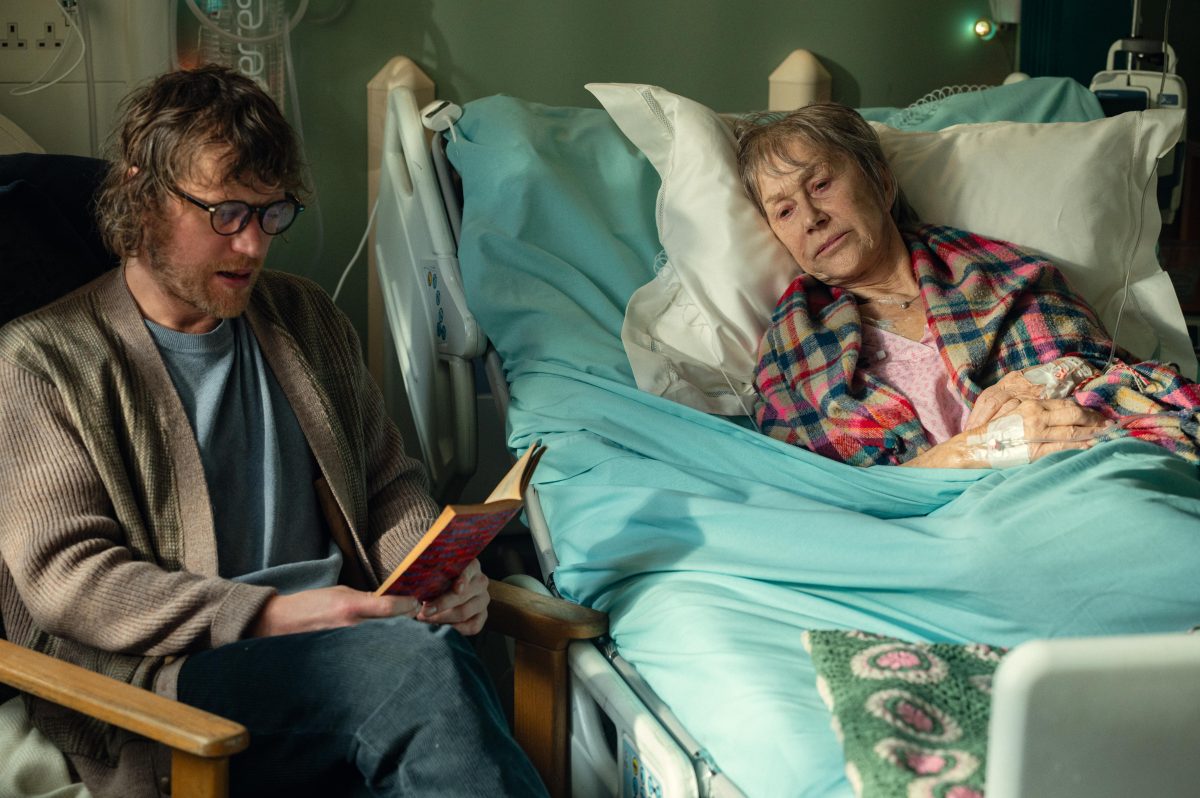
It’s a compelling if tricky needle to thread, and Winslet’s resulting efforts mostly come to resemble a classically ugly Christmas sweater: lovingly knit, but largely misshapen. Written by Winslet’s own son Joe Anders, “Goodbye June” confines itself primarily to the antiseptic walls of a hospital as the titular family matriarch (Helen Mirren) collapses one night in her home.
Rushed to the doctor for emergency surgery, June’s adult children—the eternally busy Julia (Winslet), the confrontational Molly (Andrea Riseborough), the caring Connor (Johnny Flynn) and the walking hippy-dippy caricature Helen (Toni Collette)—quickly assemble by her side to learn that the most recent bout of chemotherapy had been unsuccessful, and their mother is unlikely to survive the next two weeks leading to Christmas.
This comes to be a shocking development for the family for a plethora of reasons, not least of all how they will break the news to June herself, and how they will manage to avoid breaking each other’s necks in the process of acting in her best interest. Julia and Molly aren’t on speaking terms, June’s husband Bernie (Timothy Spall) is almost comically aloof, and Connor—who’d been living with his parents, presumably to help care for his mother—is stressed beyond the point of reason at all of the mayhem.
One might subsequently presume that “Goodbye June” would be aiming for something of a dramedy tone, but Winslet, for all the messiness that comes to define her first feature behind the lens, at least seems conscious of the dangers of overplaying her hand with too much schmaltzy Christmas comedy in the face of such despairing circumstances. The holiday is always there in the background, but as alluded to earlier, it certainly functions more as an ominous reminder of the moments June may not even get to experience—and will certainly never experience in years thereafter.
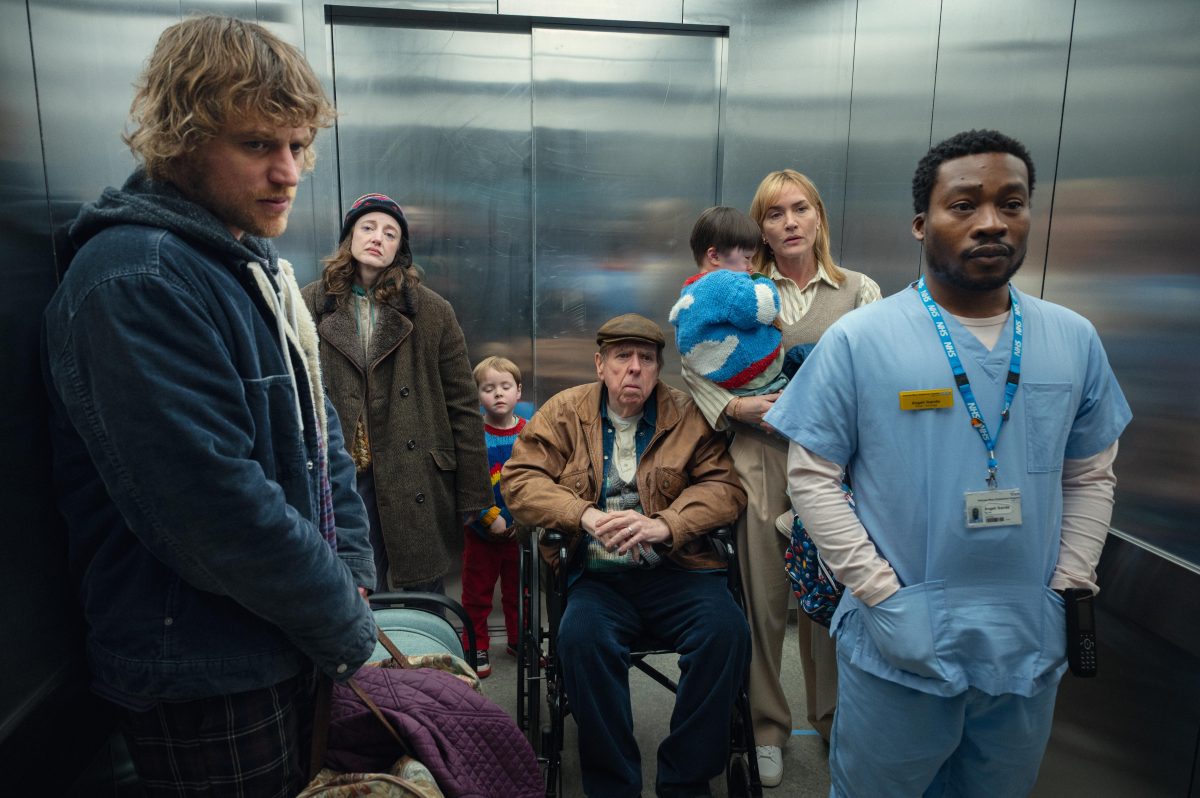
It’s an admirable sort of restraint that comes to be totally undone whenever Anders’s script decides to veer its way towards developing those terminally stressed family members, as Winslet’s impressively star-studded ensemble is given precious little material to infuse with any sense of dimension. Riseborough just seems to be present for the sake of picking fights, and when the time comes for her and Winslet to hash out their issues at the behest of their dying mother, the payoff is so unbearably toothless (right down to the allusions of resentment that seem to have spurred this longtime family feud).
Mirren herself is given nothing to do but literally lie back and die. Collette appears solely for the sake of making ditsy remarks about healing crystals and burning sage. And Spall, initially hitting a stride of indifference, striking the perfect balance between comedic and lightly sorrowful, is eventually forced to fall in line and trade in an entertainingly gutting display of repression for hollow exhibits of sentimentalism. Hell, there’s even an appearance from Stephen Merchant as Riseborough’s husband, but you’re liable to miss that little fact if you find yourself blinking more than twice.
But as is the case with many a holiday film not dubbed “Christmas with the Kranks,” “Goodbye June” is far too sincere in its intent—this one notably more sombre than your average advent fare—to earn any true vitriol more fervent than a simple aversion to transparent mawkishness. It’s hard enough to make blatant audience manipulation read with any sense of earnestness, and Winslet’s efforts can at least be lauded as more than a blatant attempt to sell seasonal merchandise.




![[WATCH] Video Essay Explores The Generation Gap in Two Mike Nichols’s Classics](https://www.highonfilms.com/wp-content/uploads/2017/05/the_graduate-768x377.jpg)