“For me, the sun rises and sets with her, man.”
With the 30th anniversary of Michael Mann’s legendary crime thriller “Heat” having just passed, we now look forward to the long-awaited sequel, which is expected to begin production later this year. Rumours suggest that the likes of Leonardo DiCaprio, Christian Bale, Adam Driver, Austin Butler, and Bradley Cooper could be in line to star, with Mann himself returning as director — his first feature since “Ferrari” back in 2023.
But before we get to that, let’s remind ourselves of the brilliance that was Michael Mann’s seventh directorial effort. A clash of titans that sees some of the greatest to ever do it all come together at the absolute pinnacle of their powers to create what might just be the defining American picture of all time. A true masterpiece that continues to stand the test of time, and whose DNA you can see imprinted all across 21st-century cinema.
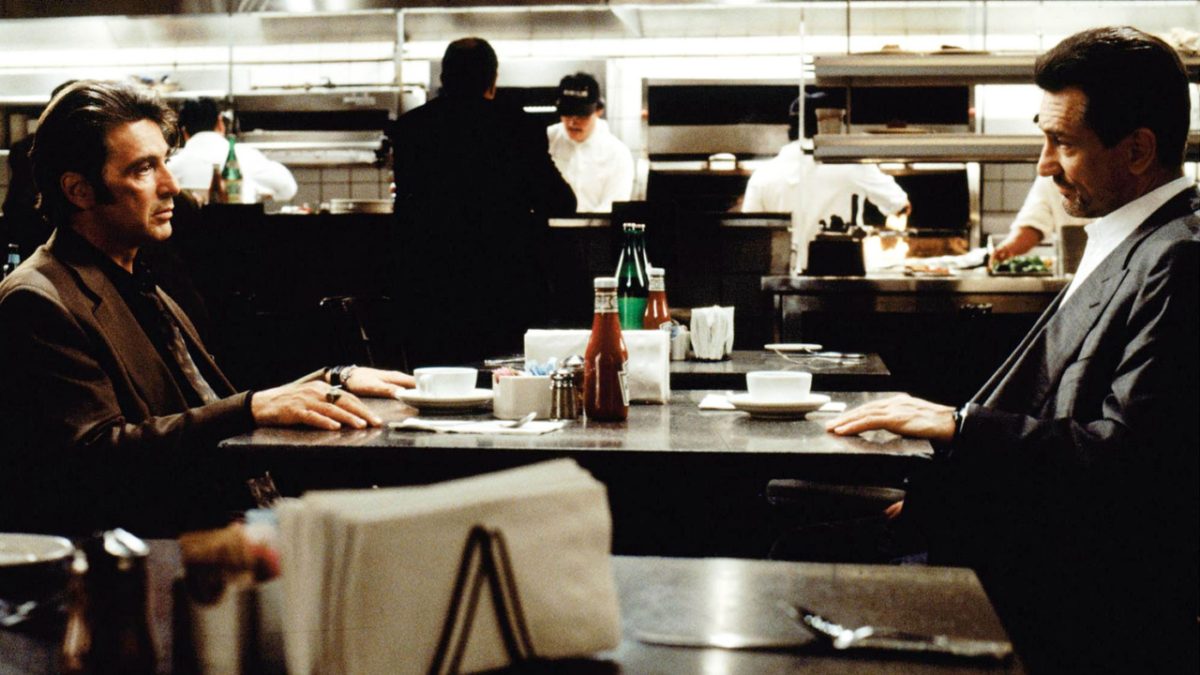
Both the structure of the movie and its marketing were built almost entirely around the idea of the very first on-screen meeting between the great Al Pacino and Robert De Niro. Who, despite both starring in “The Godfather Part II”, failed to share a single scene due to the differing timelines of their characters. To see the two, then, play a game of cat and mouse for the first 90 minutes of the movie before finally sitting across from each other in that iconic diner scene is amongst the most exhilarating thrills this medium has ever produced.
Sandwiched between the two behemoths is a supporting cast that more than holds its own, too. Including such names as Tom Sizemore, Danny Trejo, William Fitchner, Ashley Judd, Jon Voight, Diane Venora, Amy Brenneman, and even a young Natalie Portman. Perhaps most prominently, however, was a Val Kilmer who was at the absolute summit of his career in 1995, fresh off the heels of major hits like “True Romance” and “Tombstone”, as well as a starring role as Bruce Wayne in Joel Schumacher’s “Batman Forever” that same year.
Being the star that he was, the role of Chris Shiherlis almost slipped through Kilmer’s hands due to concerns over not being able to match the typical pay demands of a star who shone so bright. Kilmer, though, valued the experience of making the movie ahead of any monetary compensation, and instead wagered to be featured prominently between De Niro and Pacino on the movie’s official poster, to which Michael Mann gladly obliged.
When asked about his experience making the movie on an Ask Me Anything Reddit post from nine years ago, Kilmer responded,
“Well, imagine being able to say, “Al and Bob” for the rest of your life. Not many people can do that. I have seen Bob, giggling like a schoolgirl in a van in the middle of the night, because we have to be quiet cause they are filming outside… I have been hugged by Al Pacino in the middle of downtown LA like he was my older brother. I have shot live rounds from high-powered assault weapons over Bob’s head while rehearsing lines from our film. I got to kiss Ashley Judd. I sometimes lived at Michael Mann’s house. I am in one of the greatest cops and robbers films in film history, has to be in the top 20. I am on the poster for goodness sake. What an honor! Priceless experience. Watching ALL the actors do their thing. We all work hard, but when you are with the icons, you get really squared away. Loved every minute of it.”
Despite working with a cast of stars whose screen presence demands the attention of their viewer at all times, Mann’s filmmaking somehow manages to become a character in of itself, with moments of technical brilliance that, to quote Vincent Hanna, will make you say, “I mean, is this guy something, or is he something?”
His use of Los Angeles, in particular, is breathtaking. The city is elevated from a setting to a central presence, shot in a way that never allows the viewer to settle. It feels perpetually alive and in motion, echoing Hanna and McCauley’s unquenchable thirst for ‘the chase.’ He does so by taking us directly into the thick of LA, and whether that’s by air or on foot, it allows us to really be present with the characters as they embark on their high-octane adventures, making the action sequences feel palpable and allowing us to feel the consequences of their actions closer up.
One of the more memorable aspects of the film is Mann’s use of the colour blue, filling the Los Angeles air with a sense of detachment and loneliness — feelings that the colour is often associated with. These dates all the way back to artists like Picasso, who used blue to convey feelings of deep sorrow and isolation, whilst a contemporary filmmaker like Christopher Nolan has gone on to do just the same. Most notably, utilising the colour in “The Dark Knight” in Bruce Wayne’s bleakest and most deserted hours. With Nolan so frequently citing Mann as a chief inspiration, it’s obvious to see the lasting effects of this movie’s inspired artistic choices.
In “Heat,” Mann uses the color to bring together Neil and Vincent’s shared distance from the world, though expressed through opposite sides of the law. For Neil, his isolation is a choice. His home is minimalistic, everything in his life is carefully thought out, and he knows exactly who he is and where he’s going. He lives and dies by the philosophy that was bestowed upon him: “Don’t let yourself get attached to anything you are not willing to walk out on in 30 seconds flat if you feel the heat come around the corner.”
As for Vincent, he’s a little more on the edge. Though he, too, lives in the blue, he does at least attempt to lead a semblance of a normal life. Where Neil attempts to suppress his desire for connection, Vincent has embraced it, though his messy home life. His general lack of control tells us that, despite his efforts, he and Neil are two sides of the same coin. When finally brought together, they complete a perfect mirror of one another, and it’s through Mann’s lens that we see each character’s blue cancel the others out — two people that have finally met their match.
What’s interesting, though, is that even Neil is, for a moment, tempted by the warm embrace of a partner. Eady (Amy Brenneman) shines a golden light into Neil’s cold, blue world, and ultimately it’s exactly this moment of perceived weakness that costs him everything. Bringing forth the idea that even those with the coldest of palates long for a connection and a future beyond what’s in front of them.
Another area in which the film shines is through its immaculate sound design, especially evident in the iconic downtown shootout sequence that Mann famously opted to use live production recordings of the gunshots for, as opposed to adding them in post. With the director stating that,
“Nothing artificial could come close to delivering the fear of the sound that the full load made moving through those automatic weapons, and the way the sound ricocheted off the walls of the buildings of an empty downtown.”
At the same time, in the film’s tamer and more tranquil moments, we’re met with sound that matches that of the mood perfectly. Whether that’s the crashing waves of the ocean view from Neil’s apartment, or the sombre score that backdrops the diner conversation. What is most brilliant about “Heat,” though, is that despite its technical mastery and how grandiose it is in nature, it really is a story that many of us can see ourselves in.
Though I’m sure 99.9% of us have never once even considered partaking in a bank heist, it’s that familiar battle of work-life balance that eats away at so many. How do you juggle ambition with relationships? Can the want for both personal greatness and shared love, can they coexist? Do I need to change? Do I even want to?
“Heat” poses all of these questions, even if they are framed within a larger, far higher-stakes world than that of the everyday person. But that’s what makes it so brilliant, it shows us that even in a city as endless as Los Angeles, filled with people from all different walks of life moving 100mph in every direction, we’re connected by one quiet conflict: the fear that in chasing the life we desire, we may lose the people who give it meaning.
Everybody involved in the making of the film really was just firing on all cylinders, from the direction to the performances to the sound design to the cinematography. It all feels timeless, and something that we’ll continue to talk about 30, 60, 90 years from now. “Heat 2″ has its work cut out if it’s to match the legacy of its predecessor, but with the talent of those involved, and those rumoured to be involved, it would be silly to doubt the final product to come.