
With his strikingly confrontational debut “Emily the Criminal,” John Patton Ford utilized the guise of a crime thriller to lay out with exhaustive texture the struggles and humiliations that come with a life of scrounging for a living in an age where capitalism is on the path towards a murder-suicide with the working class, and the subsequent desperation borne from a moment where survival can only come from meeting the ugliness of the day at eye-level. Now, with “How to Make a Killing,” Ford incorporates the framework of a black comedy to sink his teeth into a far more relatable victim of economic disparity: a would-be billionaire muscled out of the family inheritance.
We’ve all been there, I’m sure, and while billionaires are people too (officially), in truth, the only rung of the human scale below the soullessness required to have a ten-figure net worth is probably the one occupied by those desperately striving to reach that hallowed tier of unfathomable wealth at the expense of emotional intelligence. How, then, do you make a film in the Year of Our Lord 2026 that tries to sympathize with a man who decides to take the cutthroat business of asset acquisition in the most literal sense imaginable?
Casting Glen Powell in that role sounds like a promising start, which is why Ford places the walking charisma machine in the shoes of the perfectly smarmily named Becket Redfellow, outcast of the Redfellow family fortune. The result of the passionate union between his 18-year-old heiress mother and some schmoe playing cello at an ornate Redfellow gathering, Becket and his instantly disowned mother would spend his entire childhood starting from scratch with no support from the endless money stream attached to her family name. Despite circumstances, living a blue-collar life, Becket spends his growing years assured by his mother (before her sudden, and presumably preventable, death) that he deserves every ounce of the Redfellow inheritance.

Fortunately for Becket, he technically remains in the running for that multi-billion-dollar inheritance despite the fact that his family has never even laid eyes upon him. Unfortunately for him, that fortune is contingent on his being just about the only person with the Redfellow name left alive to claim it. But Becket is as crafty as he is charming, and having recently seen Park Chan-wook’s “No Other Choice” like so many of us have (…right?), he sets off to ensure that every other Redfellow becomes a fellow drowning in red.
On the topic of Park’s own farcical take on homicidal desperation, “How to Make a Killing” is certainly somewhat kneecapped by its release coming so soon after “No Other Choice,” not only because Park’s experience in dark comedy and godly craftsmanship puts him in the lead by default, but also because he so recently gave us a film whose commentary on the despair of capitalistic competition comes from the place of a man on a slightly more sympathetic rung of the human ladder. Each subject’s willingness to go so far is obviously played jokingly at their expense, but finding the only remaining position in your entire dying field is a wholly different ballgame than going out of your way to murder your entire bloodline for money that you increasingly find yourself not needing.
To Ford’s credit, “How to Make a Killing” does address this concern at nearly every possible juncture, as the initially cumbersome framing device—Becket recounts the whole story to a priest mere hours before he’s set to be executed—becomes an opportunity to question the age-old adage of “When is enough enough?” The film is smart to tackle this question head-on before viewers become too disenchanted with Becket’s depravity, as each murder seems to put him into a position that subsequently gives him the comfort to live well above the means of his childhood.
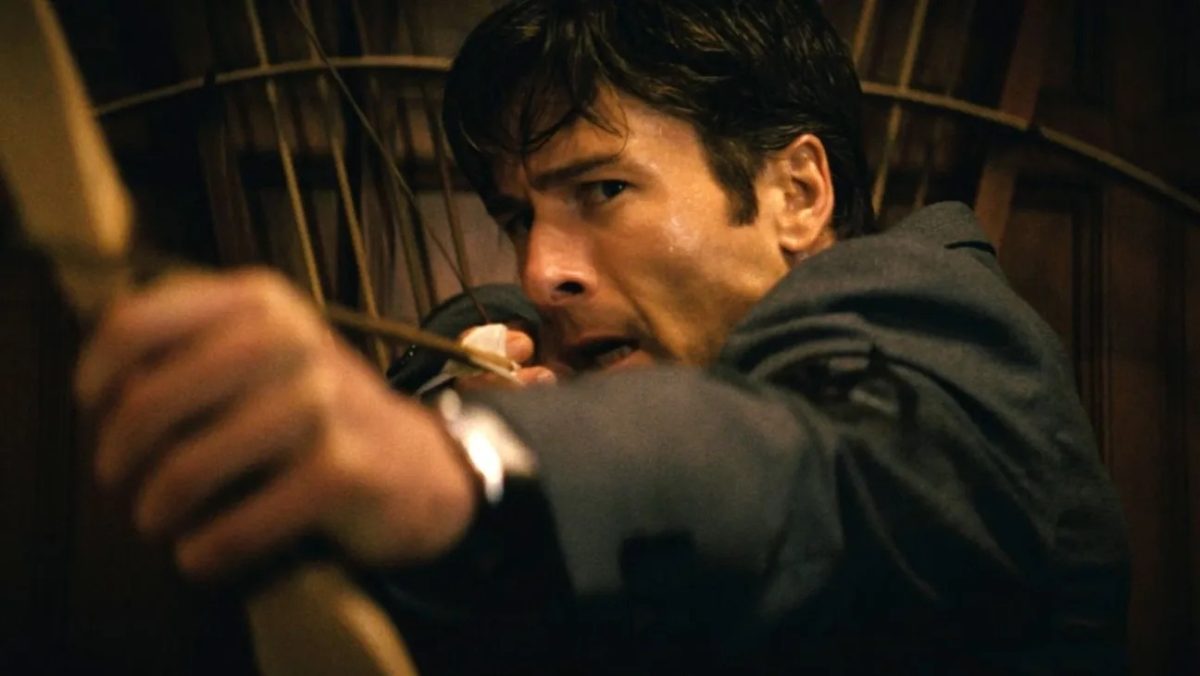
His first victim is a cousin whose death by yacht anchor leads Becket to form a bond with one of his repentant uncles (Bill Camp), a Wall Street financier who immediately takes him under his wing as a form of atonement for the family’s abandonment of him and his mother. The murder of a second cousin (a hilariously doofy “modern artiste” played by Zack Woods) puts him in the arms of Ruth (Jessica Henwicke), a down-to-earth love interest who gives him all the affection he’d ever lacked from a childhood of being told he was meant to be anywhere else but where he was.
And on that note, the blackest pit of moral decrepitude comes in the form of Julia Steinway (Margaret Qualley), Becket’s childhood friend, who so transparently sees his value in direct correlation to his capacity to satisfy her financial hunger. If Powell’s inherent charm isn’t quite hollow enough to give him the full Patrick Bateman façade—itself an inherent flaw in Ford’s sticky attempts to balance the subjectivity of an embedded evil with an antithetical grasp at genuine warmth—then Qualley’s work as the devil on his shoulder more than compensates, with Ford framing her legs elevated on Becket’s desk as though she’s loading a rifle aimed directly at his sternum.
So, when is enough enough for Becket? “How to Make a Killing” has something of a difficult time sussing that out, but in a way, that uncertainty becomes Ford’s imperfectly amusing testament to human fallibility, in our own inability to understand how far we might be willing to go when the fruit of temptation finally dangles our way from the low branch of the money tree. Eventually, its sour taste may be all your tongue can handle.








![Sissy [2022]: ‘SXSW’ Review – A Luscious And Brutal Horror Comedy Packed With Brilliant Performances](https://www.highonfilms.com/wp-content/uploads/2022/03/Sissy-1-768x403.jpg)