
Wes Anderson’s “Isle of Dogs” unfolds like a carefully folded letter discovered much later than it was meant to be read, and what makes the film linger is the way it positions displacement, loyalty, and political control within a fable that never insists on being decoded in one single way, allowing the viewer to arrive at meaning without being shepherded there.
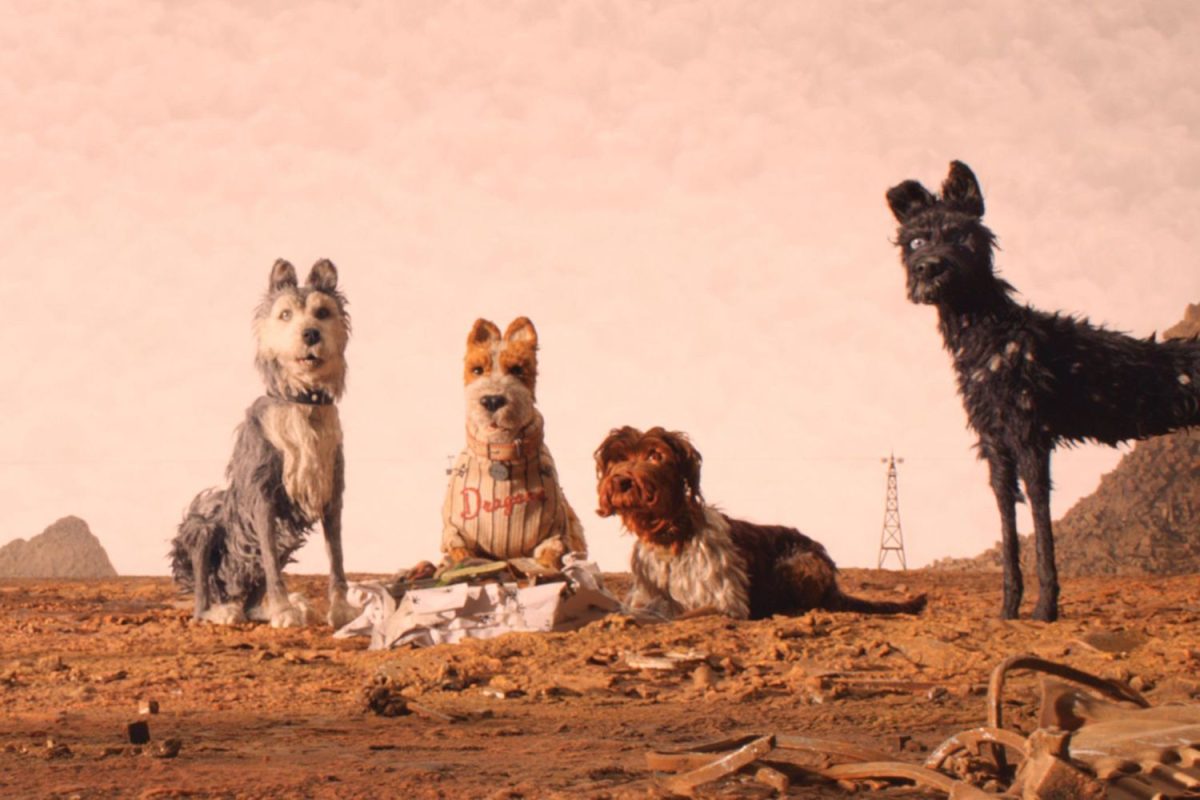
Set in a speculative near-future Japan where dogs are exiled to a garbage island under the pretext of a canine flu, “Isle of Dogs” develops its narrative with a calm assurance that allows meaning to surface gradually rather than announce itself. What appears at first glance as a controlled and whimsical premise opens into a carefully sustained meditation on displacement, belonging, and governance, all of which are explored through observation instead of exaggeration. The island operates as more than a location within the story, functioning as a repository of what has been discarded, postponed, or deliberately ignored, and in this sense, it holds both material waste and emotional residue.
The film presents this space without spectacle, allowing its accumulation of debris and forgotten objects to speak quietly about systems that prefer removal over responsibility. Anderson’s visual restraint plays a crucial role here, as the composed frames and measured humour create an atmosphere where cruelty is not softened but made more legible through contrast. The dogs themselves are drawn with a surprising emotional steadiness, behaving less like animated constructs and more like figures who retain memory, habit, and self-respect despite the erasure imposed upon them.
Their conversations reveal layered distinctions among them, particularly between Chief, whose identity is shaped by survival without protection, and the others, whose pasts are marked by domestication and care. This difference does not divide them so much as it enriches their interactions, allowing loyalty to emerge as a negotiated bond rather than a fixed principle.
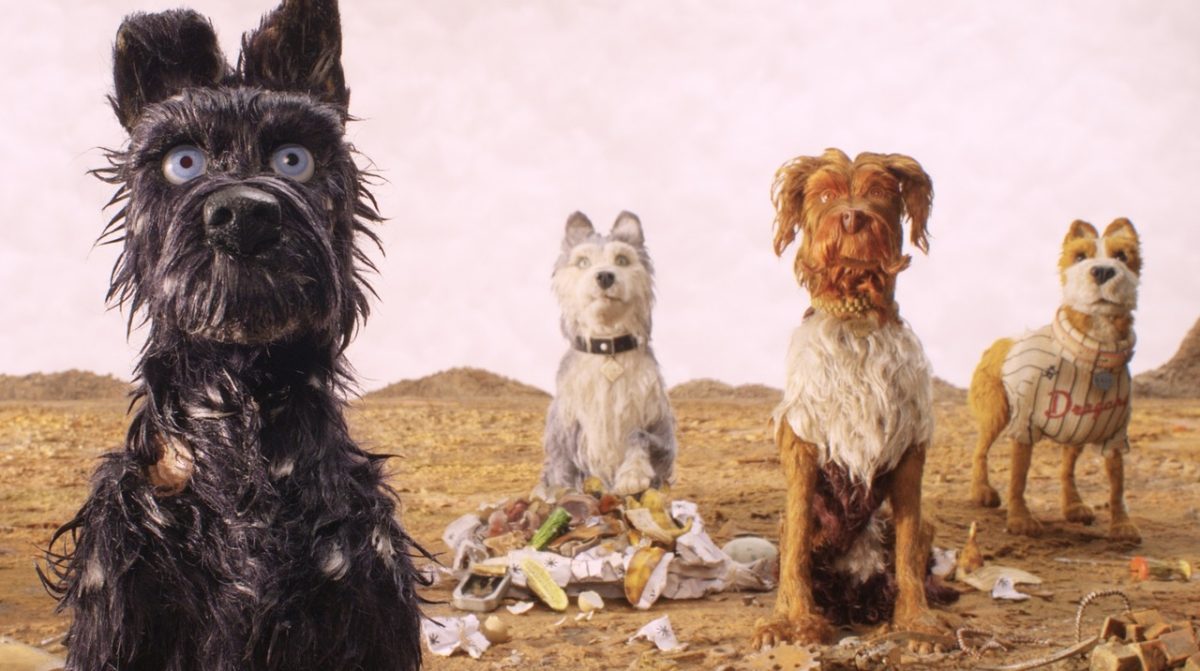
Through these exchanges, the film gradually shapes a social structure among the dogs that feels organic and lived in, emerging from shared exposure to uncertainty, hunger, and memory. Their relationships develop through conversation, disagreement, and small acts of care, creating a collective that rests on recognition and presence instead of rank or command.
Each dog carries traces of a previous life, and these histories surface in the way they speak, remember, and respond to one another, giving the group a layered emotional texture. This sense of community gains further depth with the arrival of Atari, whose journey to find Spots introduces a human perspective shaped by sincerity and focus. His determination unfolds through action and quiet persistence, communicated through gesture, routine, and attentiveness.
The film presents his movement across the island as a steady engagement with its terrain and its inhabitants, allowing his presence to register without transforming the space or its dynamics. As he navigates the island, his interactions with the dogs form moments of connection grounded in trust and shared purpose, and these moments add momentum to the collective journey without centralising him as a solution.
Also Check: The 25 Best Dog Movies of all Time
His role functions as a point of contact that draws attention to the conditions of the island and the bonds already formed within it. Through this interplay, the film offers a view of individual effort as something that intersects with existing structures and relationships, contributing to change through participation and continuity.
The narrative sustains a sense of scale where personal resolve operates alongside collective experience, allowing the world of the film to remain complex, open, and attentive to process. The political narrative surrounding Mayor Kobayashi, inherited resentment, manipulated scientific discourse, and public health theatre unfold with similar composure.
One of the clearest ways the film demonstrates this examination of authority appears in the public assembly scenes led by Mayor Kobayashi, where language and ritual work together to shape collective belief with remarkable precision. In these moments, the mayor stands before a carefully arranged crowd, framed by banners, traditional attire, and ceremonial gestures that lend historical weight to his declarations, creating an atmosphere where policy feels inseparable from heritage.
The repeated announcements about the canine flu are delivered through carefully chosen language and a composed, authoritative tone that organises fear into something publicly manageable and socially acceptable. Exile is presented within the language of civic responsibility, framed as a necessary measure taken in the interest of collective safety. The scientific reports shown in these scenes appear as settled conclusions, reinforced by official seals, formal documentation, and the coordinated presence of advisors, all of which contribute to an atmosphere of procedural legitimacy.
This carefully staged transparency creates confidence in the process while gently narrowing the space for questioning or opposition. The public within the film responds with visible calm and compliance, suggesting how authority often sustains itself through reassurance as much as through control. The pacing and repetition of these scenes echo the rhythms of bureaucratic routine, where familiarity gradually normalises decisions of serious consequence and ceremonial order softens their impact.
This approach to language becomes especially visible in scenes where human characters debate the fate of the dogs while the dogs themselves remain physically present but linguistically excluded. In the sequences set inside official chambers or public halls, Japanese dialogue unfolds without subtitles, and meaning emerges through posture, cadence, and the formal choreography of the speakers. At the same time, the dogs’ conversations are fully subtitled, allowing their thoughts, disagreements, and quiet anxieties to be clearly understood, which places emotional emphasis on those most affected by the decisions being made.
This contrast creates a textured viewing experience where understanding feels partial but purposeful, encouraging attention to visual and emotional cues as much as verbal information. In scenes on Trash Island, where the dogs respond to announcements or shifts in policy they only indirectly perceive, the absence of translated human dialogue mirrors their lived condition of being discussed within systems they cannot influence.
“Isle of Dogs” settles into the mind with a quiet persistence because it trusts the viewer to stay with its images, its rhythms, and its silences. The film finds its strength in patience, allowing meaning to form through accumulation, through small gestures, repeated patterns, and carefully sustained relationships. Its world feels meticulously constructed, though never sealed off from complexity, and its compassion emerges through attention rather than emphasis.



![The Weekend Away [2022] Review: Cheap Thrills that Come at a Huge Personal Cost](https://www.highonfilms.com/wp-content/uploads/2022/03/The-Weekend-Away_Unit_00266_R-768x512.jpg)

![Patakha [2018] Review – An Absolute Blast!](https://www.highonfilms.com/wp-content/uploads/2018/10/PATAKHA_HOF_Review-768x432.jpg)
![Evergreen [2019] Review: A Poignant Depiction of Love and Relationship](https://www.highonfilms.com/wp-content/uploads/2019/05/MV5BYjJhZDQ3MGMtOTYzNS00YTkwLWE0ZWUtNGNmMTk2ODc0YWQ1XkEyXkFqcGdeQXVyNTA4MjU3NTU@._V1_QL50_SX1777_CR001777960_AL_-768x415.jpg)