
Cinema has a lot of great examples where the main character struggles with depression, emptiness, and loneliness: from “Manchester by the Sea” and “Her” to “Melancholia” and “Lost in Translation”. In “Death Trilogy,” Gus Van Sant explores his portrayal of the emotional isolation of the protagonist. The third and final part, “Last Days,” released in 2005, is perhaps his most intimate and heartbreaking work.
This story is not just about the slow demise of a musician, Blake, but about how even people close to him fail to notice his existence. Because of this, he decides to commit the most desperate and terrible act for a person: to take his own life. In this film, the protagonist is not someone who is on the brink of death, but someone who accepts detachment and gradually disappears from the face of the Earth.
Blake, an aloof musician, isolates himself from others: his useless roommates, the record executive, and even his family (we know he has a daughter). We don’t know him particularly well, and there’s no need to. The movie is the journey of a man who is slowly fading away. We become spectators of the last hours of the character’s life, where depression takes over him. It begins and ends with a lonely protagonist, as abandonment is the only thing Blake has left.
Like Gus Van Sant’s previous works, “Last Days” reveals human loneliness in all its glory. At the same time, it stands out in a good way. The first film, “Gerry”, may leave more questions than answers due to its arthouse approach, in particular the lack of a plot (for the unprepared viewer, such a film is a pretentious mind-bender), while “Elephant” focuses on the tragic story of a school shooting by students. “Last Days” is something different; it’s about Blake’s complete absorption in his thoughts, which he was unable to cope with.
The film is partly based on the life of cult musician Kurt Cobain, frontman of Nirvana. The similarities are evident in his appearance and clothing: blond hair, iconic red and black sweater, sunglasses, etc., so it’s no surprise that we know the ending of the film even while watching it. Does this make the film uninteresting? Not at all, because the protagonist’s inner world, acceptance of the inevitable end, and total devastation play a key role.

Blake’s depression plays a key role in the film. He doesn’t want to interact with anyone, except maybe to play with kittens. The protagonist is unable to listen to others. No information gets through to him. Almost every interaction with other characters, whether it be the Yellow Pages representative or his friend from the rock club, leaves Blake stumped, as he fails to understand what they are trying to convey to him.
The musician is drawn to nature, where he breathes deeply by the lake or swims in the water. Music becomes a source of life, which has already almost faded away. He finds the strength to play music and write song lyrics. And, again, in complete solitude. People in his case become an obstacle, since at the beginning of the story, Blake accepts not death, but disappearance. The main focus in “Last Days” is Blake’s descent into oblivion. So how did the director manage to portray that?
Let’s start with the scene where Blake finds himself in a house with his roommates, muttering something under his breath. We don’t really know who these people are. Most likely, they are his musician friends, and they are introduced into the plot to show that Blake has already disappeared, even though he is alive. He wanders around the house like a ghost, cooks himself something to eat, and changes into a woman’s dress. The protagonist is not afraid that anyone will pay attention to him because he knows that won’t happen.
A group of unpleasant marginal characters in the film acts as his antagonists. We can see the true attitude towards Blake when his girlfriend, Asia, enters the bedroom while the guy is passed out on the floor. She checks his pulse, apologizes, and leaves. Why is this scene one of the most disgusting in the film? Later, when Scott, one of the roommates, talks on the phone, he points out that no one knows where Blake is.
Asia saw Blake in terrible condition and didn’t even inform the others. Does this group care about the musician’s fate? Doubtful. The second point is the presence of a shotgun next to Blake. The girl ignored it, silently leaving the guy alone with the weapon. It is unlikely that a sane person would not pay attention to this, knowing that such a person is prone to suicide.
There could be two explanations for this: either the characters are used to the protagonist’s behavior, or they are neglecting Blake because he is already gone. He is gone emotionally, but physically, he is still in this house, where they are pestering him with their requests. It is also possible that the minds of this group of marginalized people have atrophied to such an extent that they cannot tell whether Blake is real or whether they are seeing his spirit.
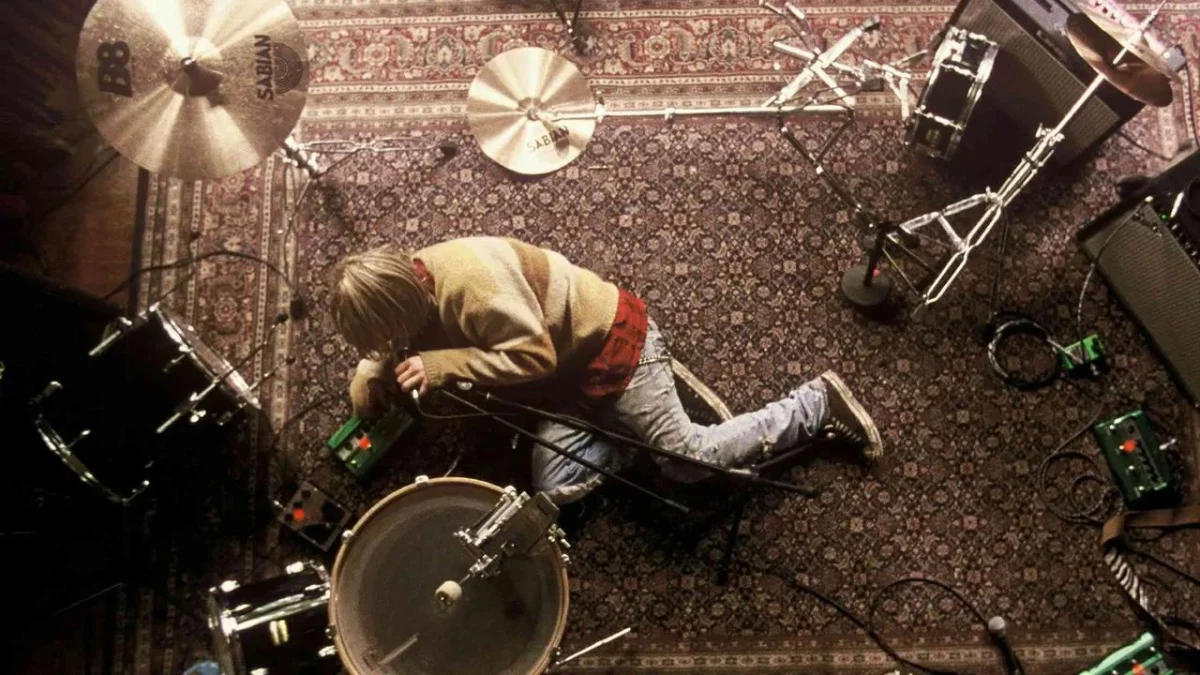
Another reason why Blake decided to disappear completely was because of people taking advantage of him. The musician is noticed from time to time when there is a need for it. Either someone needs advertising or to borrow money and help with writing a song. Blake does not refuse requests because he is essentially no longer on Earth. He no longer cares whether his friends will notice him if a shotgun is pointed at them or whether his own family will visit him. After all, why should he be afraid of something that most likely won’t happen or is already meaningless?
That’s why Blake wanders around his house or in the woods, because he’s already lost his mind. Again, we don’t really know what kind of house this is. It’s possible that Blake retreats here, despite his constant guests. And that’s why he chose this place as his last, because no one will see him here. He is becoming more and more like a living dead man who can fulfill his last wishes before disappearing.
The interlocutors have no idea that Blake already has one foot in the grave, yet they continue to take advantage of him. This would have continued if we hadn’t seen Blake’s dead body. When the musician kills himself in a small house, we see his naked soul leave him and climb the stairs. At that moment, Blake finally got rid of his burden—his body, his promises, proposals, responsibility, and, most importantly, depression.
Interestingly, even after Blake’s death, the ambulance crew carelessly tries to move his body onto a stretcher, causing them to drop the corpse on the floor. Blake on Earth is a small, pitiful creature who wasn’t listened to while there was still life in him. Blake will be despised until the very end, whether by strangers or those closest to him. For him, death became the only obstacle to plunging into oblivion. To a place where no one would bother him.
“Last Days” is more like reading a personal diary with the owner’s permission. Here, the main character is a phantom who invites us to look into his last hours before death. It starts being heartbreaking when we begin to hear church bells at the beginning and end of the film, symbolizing Blake’s demise. Therefore, the timing shows his journey from point A to point B. The music written by Blake will likely remain in people’s memories. However, he will disappear forever, a man who possesses a deep inner world and hyperemotionality and who feels like an outsider in the vast world. This will lead to his destruction, both physical and moral.


![Censor [2021]: ‘Berlinale’ Review – An uneven homage to video-nasty and the aftermath of violent proceedings](https://www.highonfilms.com/wp-content/uploads/2021/03/Censor-Berlinale-highonfilms-2-768x432.jpg)

![The Family Game [1983] Review – An Incredible Dark Comedy on the Middle-Class Nuclear Family Life](https://www.highonfilms.com/wp-content/uploads/2021/05/The-Family-Game-1983-768x432.jpg)