In the middle of the California desert, a 70-year-old camera format – bulky, temperamental, and never intended for high-speed stunts—was strapped to a custom rig and hurtled across the sand just six inches above the ground. This wasn’t a period-piece recreation; it was Paul Thomas Anderson (PTA) capturing a contemporary car chase for his tenth feature film, One Battle After Another.
While most modern blockbusters rely on “The Volume” or green-screen safety nets, PTA and star Leonardo DiCaprio opted for what DiCaprio calls a “docudrama feel,” embedding a high-octane action script into the grit of real-world locations.
The VistaVision Gamble
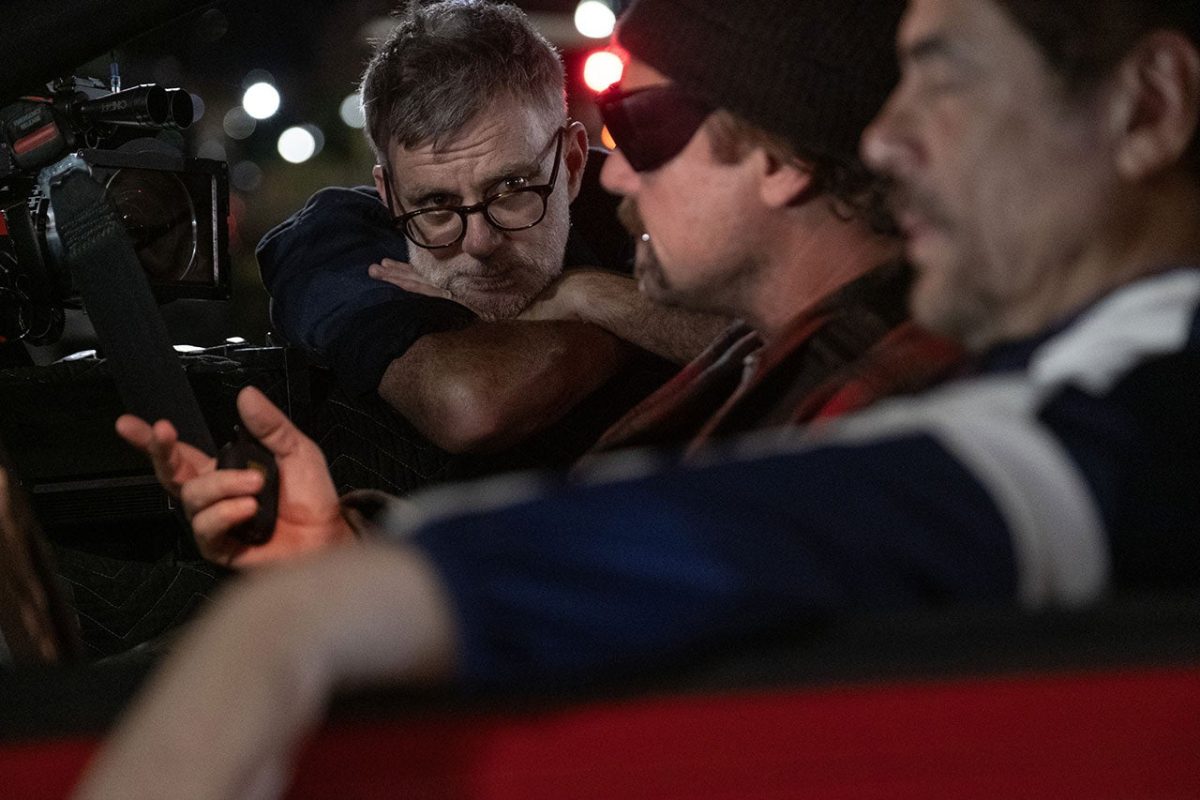
To capture the expansive scale of the American West, PTA turned to VistaVision, a high-resolution widescreen format created by Paramount engineers in 1954. In the modern era of lightweight digital sensors, choosing VistaVision is a deliberate act of rebellion. It is heavy, loud, and technically demanding, but for PTA, it was the only way to achieve the “stratospheric” visual response the film is now receiving.
The Mechanics of “Horizontal” Cinema
Most film cameras pull 35mm stock vertically past the lens, usually exposing four perforations (holes) per frame. VistaVision flips the script: the film travels horizontally. By pulling the film sideways, each frame is exposed across eight perforations.
The Technical Edge: This creates a negative area roughly double the size of standard 35mm film. The result is a much finer grain, immense detail, and a depth of field that feels almost three-dimensional without the need for 3D glasses.
A History of Grandeur
VistaVision was the “high-fidelity” gold standard of the 1950s, used to create the sweeping vistas of Alfred Hitchcock’s Vertigo and North by Northwest, as well as the search for John Wayne’s niece in The Searchers. However, as 65mm and cheaper anamorphic lenses gained popularity, VistaVision faded as a primary format—until the 1970s.
Because of its massive negative and lack of grain, George Lucas and Industrial Light & Magic (ILM) resurrected the format to shoot the special effects miniatures for the original Star Wars. It became the industry standard for “plates” (backgrounds for effects) in films like Inception and Interstellar.
When was it used last? While Christopher Nolan uses it for occasional dialogue scenes or background plates, it is extremely rare for a director to use it as a primary “A-camera” for high-speed action in the 2020s. PTA’s use of it for car chases is a genuine anomaly in modern production.
The Logistics of a “Skraping” Camera
Operating these vintage beasts at 80 miles per hour requires more than just a good tripod; it requires a specialized engineering team.
PTA: “The VistaVision cameras do require special pieces of equipment because of the way that they’re back loaded and the way that the magazine runs through the film… But if you need to go fast with a camera on a car, Allan Padelford is your man. And if you need that camera to skim about six inches off of the ground, his son [Kyle Padelford] is your man in the back who’s lifting it up and down just so it doesn’t scrape.”
Despite the precision, the sheer physics of the desert meant the equipment didn’t always come back in one piece. “They did scrape a few times,” PTA admits. “As expert as they are, there were some touch-and-go moments.”
The “Roller Coaster” Effect
This technical choice wasn’t just for vanity; it was about the physical sensation of speed. DiCaprio noted that the resulting visual texture—the way the background blurs and the focus “racks” between cars—creates a psychological effect that digital “perfection” cannot replicate.
DiCaprio: “It’s shot on film, it’s not 3D, but you do get that roller coaster ride that we had and that rack focus that they do. It hearkens back to, I don’t know, John Frankenheimer, or there’s some French Connection vibes there. You really feel that rush along with the score. It’s just such an incredibly tense moment.”
The “River of Hills”: Breaking Down the Year’s Most Hallucinatory Chase
While most directors use a car chase to get from Point A to Point B, Paul Thomas Anderson uses the “River of Hills”—a specific, undulating stretch of Highway 78 near Borrego Springs—to create a “Texas Dip” effect that acts as a visual metaphor for the film’s cat-and-mouse tension.
The Scene: A Three-Way Predatory Dance
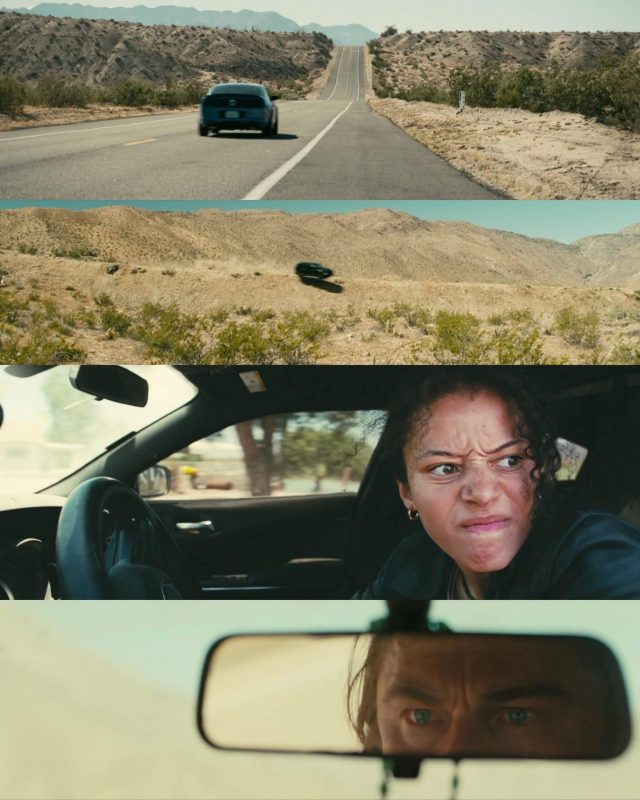
The sequence involves three distinct perspectives:
-
Willa (Chase Infiniti) is in the lead, desperate to escape.
-
Tim Smith (John Hoogenakker), the pursuer who appears as a “sparkle in the rearview mirror.”
-
Bob (Leonardo DiCaprio), trailing behind them both, watches his daughter’s life hang in the balance.
The geography of the road is the star. Because of the extreme “dips” in the desert highway, the cars constantly disappear and reappear. PTA uses long lenses to compress these hills, making them look like waves in a concrete ocean. One moment a car is a mile away; the next, it “crests” a hill and is suddenly looming directly behind the bumper.
The Secret Weapon: The “Biscuit Rig”
To get the audience inside the steel and glass, the production utilized the Biscuit Rig, a high-tech “process trailer” developed by legendary camera car driver Allan Padelford.
-
How it works: Instead of towing a car on a flatbed (which looks stiff and fake), the Biscuit Rig is a low-profile, drivable platform. The “hero car” is stripped of its wheels and mounted to this rig.
-
The “Pod” System: A professional driver sits in a “pod” on the roof or the side of the rig, steering the vehicle at high speeds. This allows Leonardo DiCaprio and Chase Infiniti to focus entirely on their performances—reacting to the “real” G-forces and the rattling metal—without having to worry about driving the car.
PTA: “We wanted to be right to that line of feeling a little uneasy… If everything was too smooth, it would have felt like a visual effect. We actually loosened the nuts on the camera mounts so it could shake. We wanted you to hear the scraping of the metal and the roar of the engine as a physical thing.”
The “Flipping a Coin” Choreography
The climax of the chase—known by the crew as the “Texas Dip”—was achieved through what PTA calls “accidental perfection.” Rather than over-mapping the scene with digital previs, the team blocked the shots using Matchbox cars on a table before heading to the desert.
The “eureka” moment came when they realized that if Willa slammed on her brakes just after cresting a hill, she would be completely invisible to the car behind her until it was too late.
PTA: “It was like a gift from the movie gods. We’d be driving, and suddenly you’d come over a hill and a tractor-trailer would just appear out of nowhere. We realized: that’s the climax. That’s how she takes control.”
Sound and Fury: No CGI, Just Revs
Editor Andy Jurgensen and sound designers chose to strip away traditional “action movie” music for large portions of the chase. Instead, they relied on the raw, percussive score by Jonny Greenwood, which was edited to sync with the mechanical “revs” of the engines.
DiCaprio: “You really feel that rush along with the score. It’s just such an incredibly tense moment. It’s three cars driving in the same direction, but the tension never stops. I’ve never seen these locations shot this way in cinema history.”
The “Gravity of Failure”: Inside the El Paso Rooftop Sprint
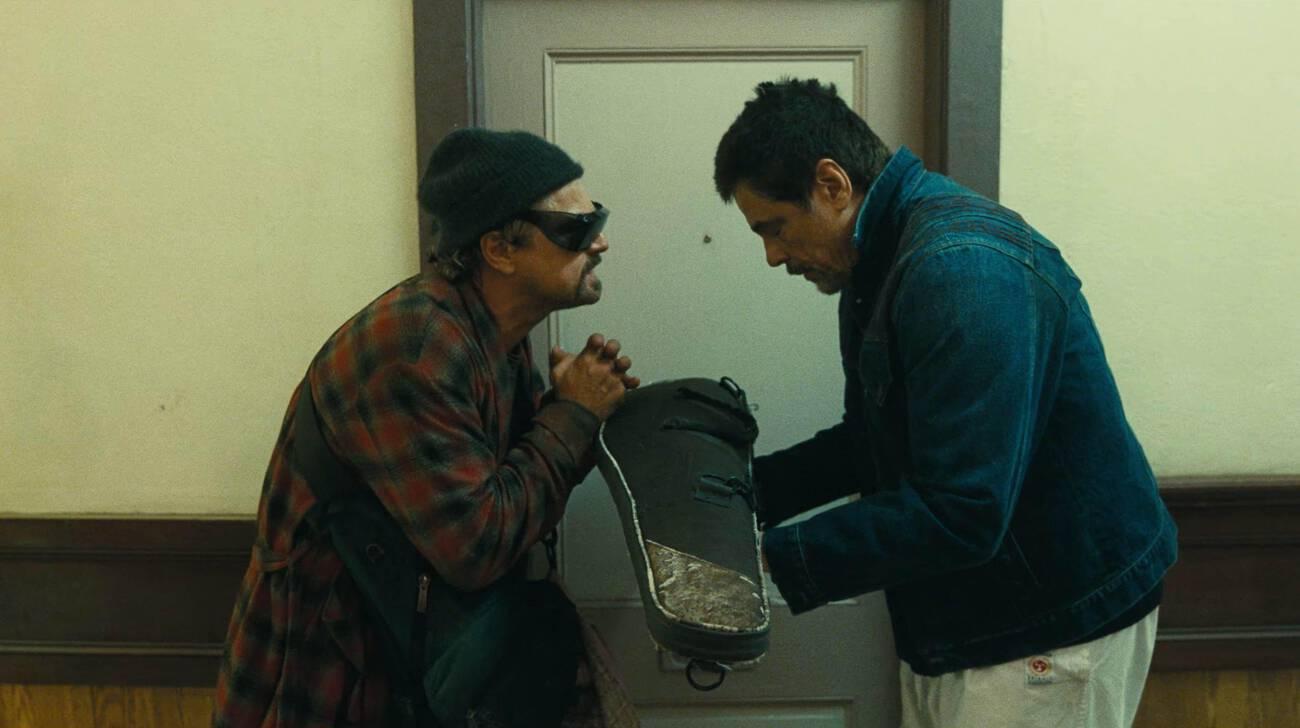
If the Anza Borrego desert chase represents the film’s “grand scale,” the El Paso rooftop sequence is its most intimate—and hilarious—deconstruction of the action hero.
While most modern films would digitize a star onto a rooftop, PTA and DiCaprio spent weeks in the sweltering July heat of West Texas to capture a sequence that combines high-stakes parkour with the “slapstick of the desperate.”
Scouting the “Labyrinth in the Sky”
Finding the right location wasn’t about finding the most beautiful building; it was about finding a “connected” urban landscape where a chase could flow across multiple levels of history.
PTA: “The rooftops section was something that Flo [production designer] and Adam [Somner] and I scouted half a dozen times over two years. Going up to a rooftop to film is not as easy as walking up. It’s a logistical nightmare getting gear, safety railings, and heavy VistaVision cameras up there. Then you add El Paso in July, where you’re dodging literal thunderstorms every afternoon.”
The “Parkour vs. The Pensioner” Dynamic
The sequence pits Bob (DiCaprio)—a man who believes he still has the “revolutionary spark” of his youth—against a group of local El Paso parkour athletes. To ground the scene, PTA hired real tracers from the community rather than Hollywood stuntmen.
The visual contrast is immediate: the young athletes move like water, utilizing the architecture of the city with a effortless, modern grace. Bob, meanwhile, is a “heavy” presence, fighting against gravity, his age, and his own clothing.
DiCaprio: “Paul got real people from the community who practiced parkour. In my head, Sensei Carlos has told me ‘Courage, Bob,’ and I think I’m back in the revolution. But the reality is I’m trying to perform with these young guys who make it look so easy. The comedy comes from that disconnect.”
The “Branch and the Tase”: A Three-Stage Gag
The climax of the rooftop chase is a masterclass in “Anti-Action.” Instead of a heroic leap into a helicopter or a pile of boxes, Bob’s momentum is stopped by the most undignified obstacles possible.
-
The Fall: Bob miscalculates a gap between two historic brick buildings.
-
The Branch: He doesn’t hit the ground; he gets “caught” by a stray tree branch, dangling over the El Paso street like a piece of laundry.
-
The Tase: Just as he finds a moment of “heroic” clarity, the American government—represented by Colonel Lockjaw’s team—simply ends the scene with the clinical “click” of a taser.
DiCaprio: “That’s the gag. Every time you think there’s this sort of courageous protagonist, something gets in his way. Something stops his momentum. It’s a setup for failure, and it was one of the most fun things to physicalize because it’s so human.”
The “Docudrama” Lens
By using the VistaVision cameras on these rooftops, PTA captures the shimmering heat haze rising off the Texas asphalt and the deep, rich reds of the El Paso brickwork. There is a “sweat” to the image that you can almost smell.
The scene serves as the perfect bridge in the film: it transitions from the high-speed “movie magic” of the desert to the harsh, grounded reality of a man who is physically outmatched by the world he’s trying to change.
The Documentary Integration
Perhaps the most subversive element of the film’s action is the use of real people. The “extraction” sequence—where Bob is smuggled out of a hospital—wasn’t just scripted in a vacuum; it was co-written by the cast and real-world professionals they met on location.
PTA: “The teacher in the scene with Leo is a local… we shot a lot of scenes that didn’t make the movie, because we could just roll the dolly down to a taco shop and shoot… I have ended up making a lot of period films… Before this film, I really haven’t had that flexibility.”
DiCaprio: “I realized it was almost like a film that was inserted into a documentary-type world… There were shop owners, there were corrections officers, real nurses, real military forces… all of that brought this sort of docudrama feel to the entire movie.”
The Spielberg/Kubrick Connection
The film’s tone shifts from gritty realism to what PTA calls “preposterous” comedy, particularly within the Christmas Adventurers Club—a secret society of “old white men” played with absolute conviction.
During a Q&A, Steven Spielberg compared these scenes to Dr. Strangelove, a comparison PTA embraces while crediting his mentor, Robert Downey Sr.
PTA: “Everybody has to speak their lines from their heart, genuinely, with complete conviction. If you just say it with complete conviction… it’s up to you to think if it’s hilarious and ridiculous… How seriously they take these issues, which aren’t very serious at all.”
Conclusion: A Communal Necessity
In an age of streaming, both PTA and DiCaprio are adamant that the physical scale of One Battle After Another—the VistaVision landscapes, the roar of the engines, and the shared laughs at Bob’s expense—demands a theater.
DiCaprio: “I just really hope that people go see this movie in theaters. I mean, it’s shot in VistaVision, the locations, the score, the sound. It’s made to have that communal experience.”
PTA: “I don’t want to see a movie anymore if it doesn’t have a few laughs.”


![Red Snow [2019] : ‘Japan Cuts’ Review – A Gloomy and Dark Tale of Lost Lives](https://www.highonfilms.com/wp-content/uploads/2019/08/White-Snake-1.jpg)
![Mute [2018]: Voiceless. Soulless. Pointless.](https://www.highonfilms.com/wp-content/uploads/2018/03/Mute-768x432.jpg)

![Baaghi 3 [2020] Review- an over-exaggeration of action and annihilation of the nitty-gritty](https://www.highonfilms.com/wp-content/uploads/2020/03/Baaghi-4-1-768x325.jpg)