
How close a father–son relationship truly is becomes most evident in times of crisis. When Pradip Barua, a school headmaster posted in a remote hill town in Arunachal Pradesh, realizes that his son Partha’s affinity for trouble has begun to outweigh his ties to home, he takes leave for a few days and returns to Assam, determined to intervene and restore a balance he fears is already slipping beyond his control.
Himjyoti Talukdar, the director of “Taarikh” (2024) and someone who had already amazed audiences and critics alike with “Calendar” (2018), knows how to set up family conflicts like delicate wooden boats into highly emotional whitewater that reveals the true nature of the relationships between the characters. Here, Talukdar is at the service of Dr Bhabendra Nath Saikia’s story, which was written in the early nineties, as he makes the most out of his cast and the resources afforded by the story and its local small town setting to contemporize it.
With “Moromor Deuta” (“Dear Father,” 2025), director Himjyoti Talukdar, along with screenplay writers Abhishek Dutta and Santanu Rowmuria, tackles the theme of social and intra-family relationships when one member of the family becomes increasingly defiant with persistent behavioural issues – here, Partha being the problem child. His disrespectful behaviour towards his sister and mother, his repeated demands for money, and his rebellious attitude escalate beyond control.
Within this context, Partha’s relationship with his sister, mother, father, and his friends is tested like never before as his actions force his father to take leave from work and come home. Then, as he starts skipping classes and comes under the influence of harmful substances, Pradip Barua tries to understand, together with his wife, where the boundary lies until one punishment goes too far, forcing both the father and son to confront regret and rediscover their bond through understanding and forgiveness.
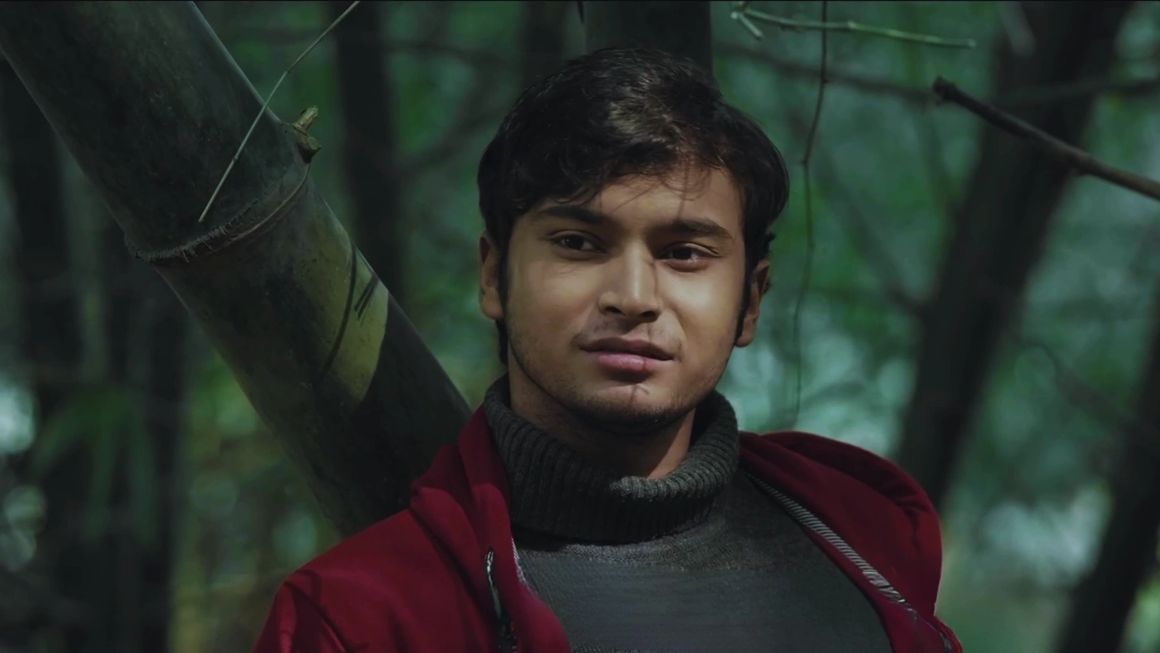
Moromor Deuta” (2025) treats its subject with the same tenderness as that of Felix van Groeningen’s “Beautiful Boy” (2018) and Peter Hedges’ “Ben Is Back” (2018), although there, the focus was more on the disruption caused by addiction rather than the simple age-related unruly behaviour, which also includes substance abuse. Yes, the themes in the film are heavy, but the storytelling doesn’t let it overpower the innocence of the tale, as the minimalist approach speaks for its simplicity.
Readers of the original story can perhaps understand that the plot of “Moromor Deuta” could have easily belonged to a direct-to-TV movie. And that’s precisely where the magic of “Moromor Deuta” (2025) lies, in avoiding clichés as much as possible and steering clear of the most tear-jerking dramatic elements as if navigating a minefield.
In other words, “Moromor Deuta” (2025) ditches the moral value approach by avoiding the attachment of heavy emotional baggage to the characters. It neither provokes nor tries to create an emotional battleground for the audience. It simply tells a story – and an effective one.
To achieve this, filmmaker Himjyoti Talukdar relies on two key elements. On the one hand, there is the unforced chemistry among the cast, and on the other, an uncompromising sense of realism. The main characters and the strong bond that they share are well developed, which makes it impossible not to become fully involved with them.
Moreover, the way an Assamese household is brought to life using such limited resources registers the film as a great small-scale production. It also helps that the film works at a consistently tight pace and ends not a moment later than it should.
Moreover, it is absolutely a revelation to see young actor Bodhisattva Sharma, known for “Paatal Lok” (2020-2025), “All India Rank” (2023), and “Khuda Haafiz: Chapter 2” (2022), in an Assamese film, finally. The intensity of his act and the screen presence he displays are remarkable, and it greatly enhances the credibility of his performance. The resolution of the story is simple, which is set between the self-realizations of the characters.
For the parents, it becomes a sobering recognition that their care may have tipped into indulgence during Partha’s upbringing. For Partha, a specific incident triggers a quieter awakening, one in which he grasps that his family’s love and support outweigh everything else he has been chasing. And for the father, the moment cuts deepest, as he comes to terms with the consequences of his own actions and the damage they have set in motion.
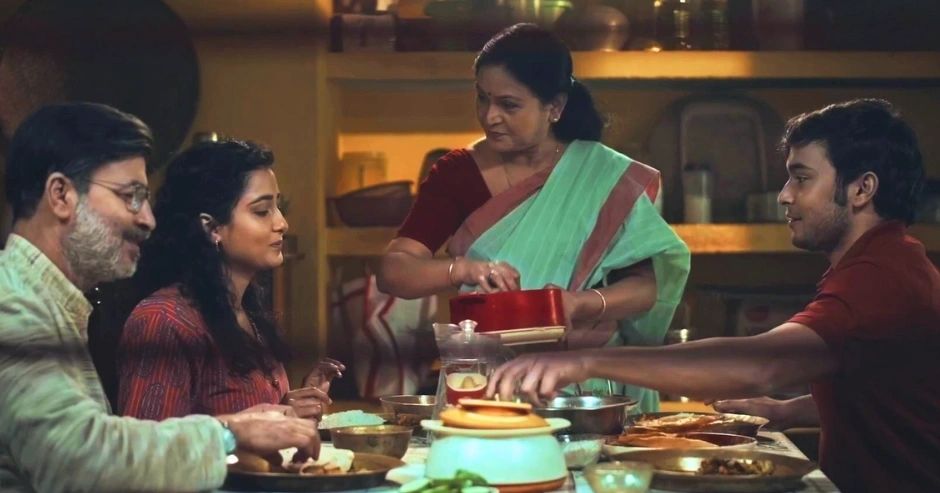
Himjyoti Talukdar has arranged these intimate circumstances and emotions with precision and framed them with inspiration. Almost casually, he turns this story of conflict into a story of bonding without becoming too loud or self-indulgent.
Beyond its narrative, performances, and gently tempered resolution, Talukdar also crafts a film of striking visual grace, grounded in the quietly radical belief that beauty begins with mise-en-scène. Chandra Kumar Das’s cinematography is central to that achievement. His images of Shergaon, Arunachal Pradesh — wide, hushed, and washed in cool blue tones — linger well after the film ends, leaving a lasting impression through atmosphere rather than excess.
According to the director, since the story is set in the Mangaldoi region of Assam, the sound design is also infused with subtle elements of a selected Ojapali performance in a key scene to reflect the internal pain of the father. Produced by Mamata Mahilary, “Moromor Deuta” (2025) tells a modest, familiar story, yet it distinguishes itself from films of a similar vein through the warmth and sincerity with which that story is shaped and shared.
The film also stars Mintu Baruah, Aparna Dutta Choudhury, Arun Nath, Kula Kuldeep, Aparajita Mahanta, and Kabyashree Hazarika, among others. With music by Arnab Bashistha and editing by Uddipta Kumar Bhattacharyya, its sound design and mixing are credited to Debajit Gayan. Moromor Deuta (2025), which premiered at the 23rd Chennai International Film Festival in 2025, is slated for a theatrical release in Assam on May 16, 2026.
In a strange twist of fate, “Moromor Deuta” (2025) also features a reference to Zubeen Garg, and its shooting was completed much before the untimely passing of the heartthrob. Similarly, “Taarikh” (2024) featured veteran Assamese music director Ramen Barua, and its shoot was also completed before he went missing. While not particularly significant, it makes for an interesting piece of trivia associated with both the films by the same filmmaker.

![Love Me Tender [2019]: ‘TIFF’ Review- Agoraphobia and the World Within](https://www.highonfilms.com/wp-content/uploads/2019/09/Love-Me-Tender-highonfilms-768x384.jpg)

![Fantastic Beasts: The Crimes of Grindelwald [2018] Review – Weakest Wizarding World Chapter Yet](https://www.highonfilms.com/wp-content/uploads/2018/11/FANTASTIC_BEASTS_HOF-768x432.jpg)
