There have been countless courtroom dramas built on the idea that justice, though delayed, can still prevail through the protagonist’s resilience and the victim’s persistence. Director Jeethu Joseph, best known for his thrillers, does not attempt to reinvent the genre with “Neru” (2023). Instead, the film follows a familiar arc: a once-promising man, now burdened by personal and professional setbacks, finds in a sexual assault victim’s tragedy a chance at redemption while pursuing justice.
Despite its conventional structure and a largely predictable screenplay, “Neru” (2023) remains consistently engaging. What sustains its emotional pull is the intensity of its courtroom confrontations, where the clash between prosecution and defence unfolds with enough sincerity and tension to keep the drama compelling.
Neru (2023) Plot Summary & Movie Synopsis:
A visually-impaired young woman named Sara is raped in her own home when no one else is around. Michael, the son of a wealthy Malayali businessman based in Mumbai, is accused of the crime. With no eyewitnesses and very little evidence strong enough to directly implicate him, the case appears almost impossible for Sara and her parents to fight. Michael’s family, armed with money and influence, can afford the services of noted senior lawyer Rajasekharan, leaving Sara’s parents with little hope.
Desperate to find someone capable of standing up for their daughter, they continue their search with the support of the investigating officer. After months of trying, they finally approached Vijayamohan for help. But Vijayamohan is no longer in active practice and is himself unsure whether he is ready to take up such a demanding case. Whether he can overcome his hesitation and secure justice for Sara forms the crux of “Neru”.
Why Was Vijayamohan Barred from Practicing?
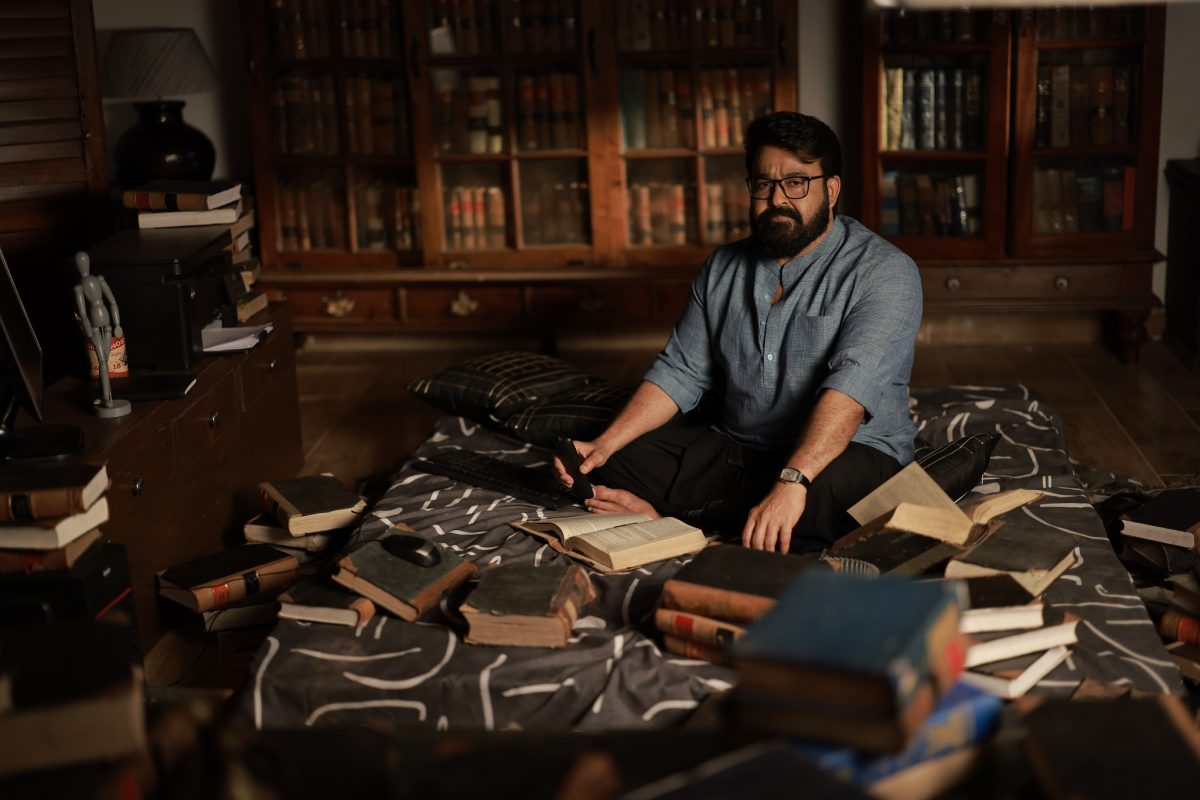
We are told that Vijayamohan (played by Mohanlal) began his legal career as a junior in the office of Rajasekharan (played by Siddique), a renowned and highly successful criminal lawyer of his time. Under Rajasekharan’s guidance, Vijayamohan gradually built a name for himself in the same field. However, his swift rise did not sit well with his seniors.
Things grew even more strained because of Vijayamohan’s closeness to Rajasekharan’s daughter, Poornima (played by Priyamani), which only intensified Rajasekharan’s resentment toward him. In many ways, it seemed as if Rajasekharan had long been waiting for the right moment to bring Vijayamohan down.
That opportunity arrived when Ahana (played by Santhi Mayadevi), who worked as a sessions clerk in the court, informally handed over a few documents to Vijayamohan. Technically, borrowing such documents off the record was illegal, even if it was also a practice sustained by professional trust. Vijayamohan needed them for a case and promised to return them the next day.
However, the documents went missing in a mysterious way, and it is strongly implied that Rajasekharan may have had a hand in their disappearance. As a result, Vijayamohan was suspended from the Bar for five years. Even after the ban ended, Vijayamohan struggled to rebuild his career, and the prolonged fall pushed him into depression and increasingly anti-social behaviour.
What Convinced Vijayamohan to Help Sara?
Ahana strongly believes that Vijayamohan is the one person capable of helping Sara get justice, and she persistently urges Vijayamohan to step out of the shell he has built around himself after he was barred from the bar council. Even then, Vijayamohan remains hesitant, unconvinced by Ahana’s words or by the encouragement of Paul Varghese (played by Ganesh Kumar).
What finally stirs him is meeting Sara in person, witnessing her determination, and realising that Rajasekharan is appearing for the defence. At that moment, the case becomes more than a legal battle. For Vijayamohan, it becomes a chance to save two lives at once, Sara’s and his own wounded sense of self.
Neru (2023) Movie Ending Explained:
Why Did Poornima Step in Instead of Rajasekharan?
In the initial stages of the trial, everything seems to be working in Rajasekharan’s favour. Confident of the verdict going Michael’s way, he underestimates Vijayamohan even after learning that he has taken Sara’s side. Since Rajasekharan has to appear before the Chief Justice’s Bench in the Arun Malhotra case, he asks his daughter Poornima to represent the defence in his place, believing that the other case demands his presence more urgently.
Also Read: Top 15 Trial Movies of the 1990s, Ranked
Later in the film, Rajasekharan is forced to step back again at another crucial moment, and Vijayamohan is the reason. Rajasekharan had influenced the staff of a restaurant to tamper with the CCTV footage so that it would appear as though Michael was having lunch there with his friend at the very time Sara was assaulted.
It was a calculated move from Rajasekharan, meant to weaken the prosecution’s case and tilt the verdict further in Michael’s favour. But Rajasekharan’s plan begins to unravel when it is revealed that one of the staff members had secretly recorded him while he was instructing them to alter the footage. The employee had kept the recording as a safeguard for the future.
On top of that, Vijayamohan notices a small inconsistency in the edited video: a reflection near a vessel in the corner, which exposes that the footage had indeed been manipulated. This discovery leaves Rajasekharan vulnerable, and the judge immediately orders the police to investigate him for tampering with evidence.
Though visibly shaken, Rajasekharan remains determined to position Michael as not guilty. By letting Poornima appear instead, he attempts to distance himself from the damage while still retaining control from behind the scenes. But the move also reveals his growing discomfort, because for perhaps the first time, Vijayamohan is not merely challenging him in court but systematically dismantling the defence he had carefully constructed.
How Did Sara’s Skill Help Win the Case?
Even after Vijayamohan proves that the CCTV footage had been tampered with by Rajasekharan and his team to protect Michael, the court still needs one final piece of proof before arriving at a verdict. Throughout the trial, the defence repeatedly tries to manipulate Sara and the witnesses through twisted, leading, and often contrived lines of questioning. They even attempt to discredit Sara’s sculpture, arguing that it was fabricated with the help of her stepfather in order to falsely implicate Michael.
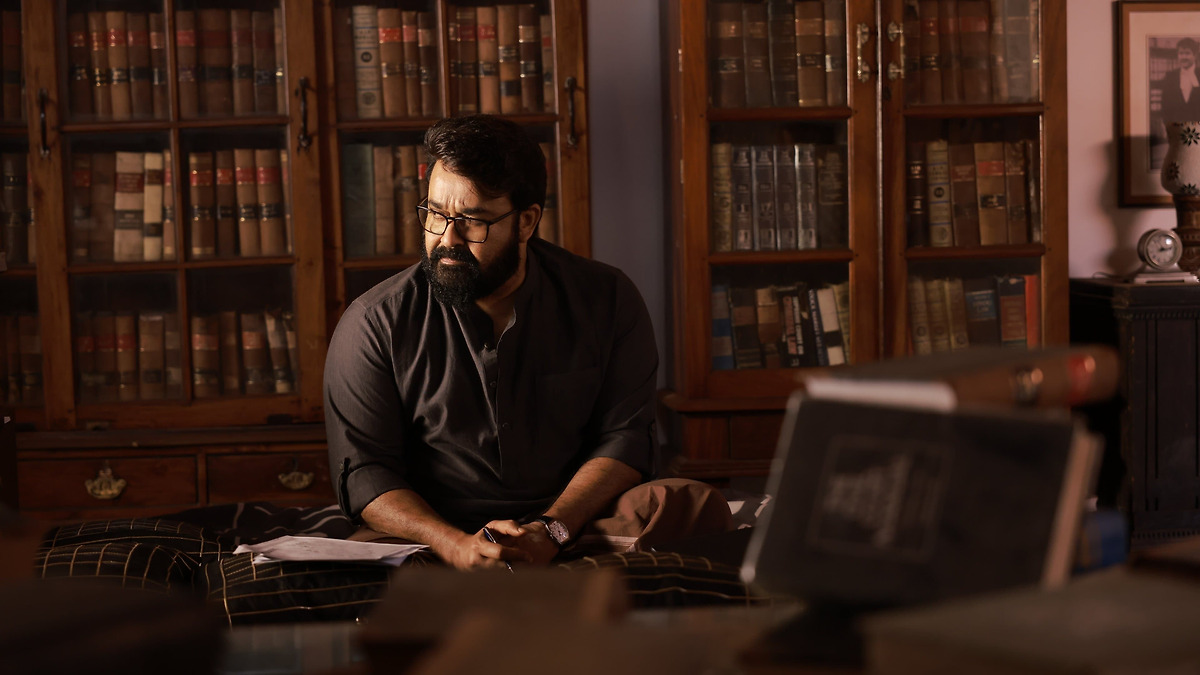
To counter this, Vijayamohan decides to rely on Sara’s own skill as the strongest possible evidence. Rajasekharan himself volunteers to sit as a reference model for her. The defence, however, tries to turn even this into a pressure tactic. Sara is asked to work within a very limited time, in a small enclosed room, with no audience, and under conditions that almost recreate the psychological intensity of the original trauma. Yet Sara remains composed.
Even under such immense pressure, she carves a face that unmistakably resembles Rajasekharan. In that moment, neither Rajasekharan nor his team had any convincing argument left to challenge her ability. Sara’s art thus becomes the final and most powerful proof in exposing the truth.
Neru (2023) Movie Themes Explained:
Richness Is Injurious to Empathy
The film suggests that Michael is not someone who has committed a terrible act in a moment of impulse, but someone shaped by a pattern of moral corruption. Even the daughter of his defence counsel seems convinced that he is “a born criminal.” What enables such a mindset is not merely personal depravity, but the privilege of being born into wealth and influence.
“Neru” (2023) makes it clear that affluence often breeds a dangerous sense of entitlement, one that makes men like Michael believe they can act without consequence. The problem, then, is twofold. On one hand, people like Michael do not even fully register the gravity of their actions as crimes. On the other hand, wealth and power allow them to exploit legal loopholes and evade punishment.
The film extends this critique through characters like Poornima and Rajasekharan, who, despite knowing the moral weight of the situation, choose to stand with privilege rather than a helpless victim like Sara. Poornima’s silence, in particular, becomes telling because even her identity as a woman does not move her toward solidarity.
In “Neru”, money does not merely shield the guilty; it erodes truth, compassion, and the ability to empathise with another human being. In that sense, the film’s observation reaches beyond its courtroom setting and speaks to a wider social reality, where power often dulls conscience and makes injustice easier to live with.
The Spark on the Right Path
This entire trial would likely have ended in defeat and silence had Ahana not gone the extra mile to bring Vijayamohan back into the fight. It is not strictly her responsibility, yet when the call for help comes to her door, she does not turn away. Instead, she chooses to act. Ahana’s motivation works on two levels: she wants to do the right thing for a victim, and she also wants to help a colleague who has long lost faith in himself. Even when Vijayamohan resists, withdraws, or lashes out, Ahana continues to push him towards the path he has abandoned. What makes this especially meaningful is the contrast the film builds between destructive effort and redemptive effort.
Michael, too, goes the extra mile, but in the service of cruelty. His calculated violation shatters the life of a young woman in the one place where she should have felt safest: her home. “Neru” arrives at one of its most human observations: when people choose to go further for the sake of compassion, courage, and responsibility, they can help heal what violence and privilege have broken. But when power strips people of empathy, that same human will can descend into something predatory and inhuman.



![God of Dreams [2022] Review: An Hodge-podge of several Dystopian fictional tales](https://www.highonfilms.com/wp-content/uploads/2022/02/God-of-Dreams-2022-768x432.jpg)