
Project Hail Mary” (2026) may feature some of the most impressive technical craftsmanship in recent years, but it is a science fiction adventure in a classical sense. That’s not to say that it’s overtly idealistic. Even with the trademark humor that directors Phil Lord and Chris Miller have become renowned for, “Project Hail Mary” deals with serious issues regarding the survival of the planet and how fragile the Earth’s infrastructure would be if faced with any serious threats.
What’s old-fashioned, and perhaps aspirational, is that “Project Hail Mary” is a story of problem-solving where the conflict emerges from solving external threats, not avoiding malice. It’s a sci-fi adventure that’s not afraid to dig deep into the raw science, but never fails to tug on the heartstrings in a very earnest, non-cynical way. There are many sci-fi classics that “Project Hail Mary” will be compared to, but judging by a direct homage to “Close Encounters of the Third Kind,” it would be fair to call it downright Spielbergian.
“Project Hail Mary” is based on the bestselling novel of the same name by Andy Weir, the sci-fi author whose previous hit “The Martian” was also adapted into an Oscar-nominated blockbuster. The texts are comparable because they both center on the not-so-distant future in which technology has advanced, and humanity has become slightly better at coalescing its resources, but “Project Hail Mary” is didactic in its structure.
It’s deep beyond the Solar System that the former schoolteacher Dr. Ryland Grace (Ryan Gosling) finds himself awake on a spacecraft that he has no memory of boarding. After learning that he was dispatched on a mission to research a parasitic organism that has been drawing energy from stars (including the Sun), Grace pieces together a past where he was recruited by the international coordinator Eva Stratt (Sandra Huller).
The dual structure of “Project Hail Mary” is lifted directly from the novel, but Lord and Miller also understand its importance as a cinematic framing device. Grace’s perspective on being in space for the first time (having never previously considered the opportunity) is more impactful if his rather banal life on Earth is established, but the taxing establishment of his message could have caused the pacing to drag had it all been shown in one chunk.
Grace is a compelling protagonist because he had previously spent his life hearing that he was wrong, and is suddenly tasked with responsibilities that he can barely comprehend. Any doubts about what his emotional connection to Earth is, or why his memories are so obscured, are answered by a satisfying script that knows when to dial out information for the maximum possible emotional impact.
While “Project Hail Mary” does include more overt sci-fi elements than “The Martian,” which was by all accounts fairly practical, its thesis about the potential extinction-level incident affecting Earth and the process by which interstellar travel may be achieved is sound. Visualizing scientific theories, many of which are completely theoretical, is not an easy task, but “Project Hail Mary” benefits from the fact that its protagonist is a teacher.
Grace’s instincts aren’t just to speak aloud and create models that might better explain his thoughts, but to pool knowledge in a collaborative way. Gosling draws out this aspect of the character in both segments of the film. Grace makes for an interesting presence among Earth’s authorities because he is such an outsider, but he’s also a deep enough character that he’s worth spending time with as the sole human on screen.
Also Check: 30 Underrated Sci-Fi Movies From Across The Globe
The goal of Grace’s mission is identifiable, but “Project Hail Mary” doesn’t draw a completely straight line to where his character is headed. Grace’s self-actualization as to why he was so anxious about the mission and what makes him uniquely suited leads to a personal story in which his maturation is just as compelling as the larger-than-life stakes.
That Grace can’t fully comprehend what the future looks like, perhaps out of personal trepidation, gives him a winning and jovial perspective that Gosling absolutely nails. Although Gosling has played goofballs in the past in “The Nice Guys” and “Barbie,” Grace is not a clown. He’s a thoughtful thinker who often gets in his own head and uses his curious outlook on the world to withstand the mounting pressure placed upon his shoulders.
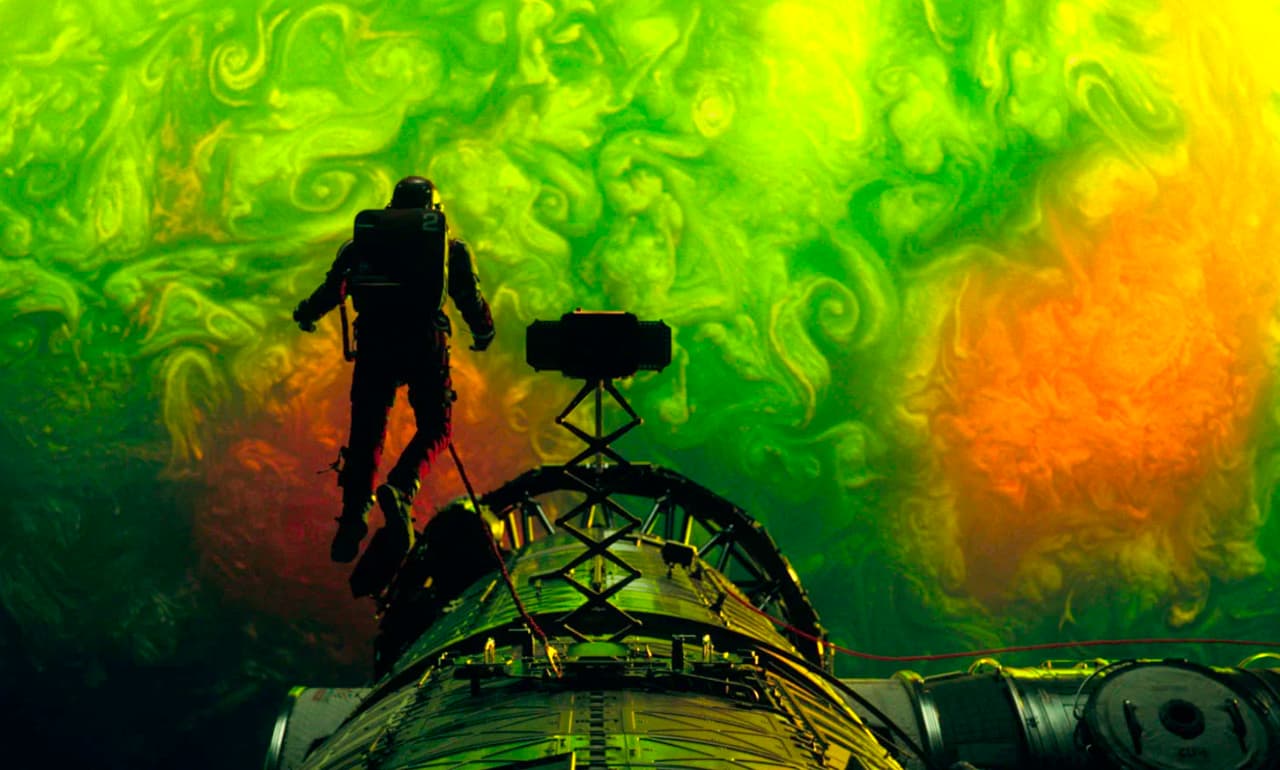
Space travel is beautifully rendered in “Project Hail Mary” in a manner that is suited for the best of IMAX projection because of how nuanced the visual effects are. While the manipulation of space and time can be difficult to depict in a way that does not defy human perception, “Project Hail Mary” is mostly stagnant in where it is set, giving Grace room to build a comfortable habitat in his new residence.
Of course, the inherent danger of being stranded in an unknown region of the universe means that there is an abundance of issues, mostly relating to technological malfunctions, that prevent any of the more in-depth science from ever feeling weightless. Appropriating scale and motion is critical to any depiction of space, and “Project Hail Mary” draws from previous sci-fi operas while also developing new sci-fi imagery and technological idiosyncrasies that are drawn directly from Weir’s writing.
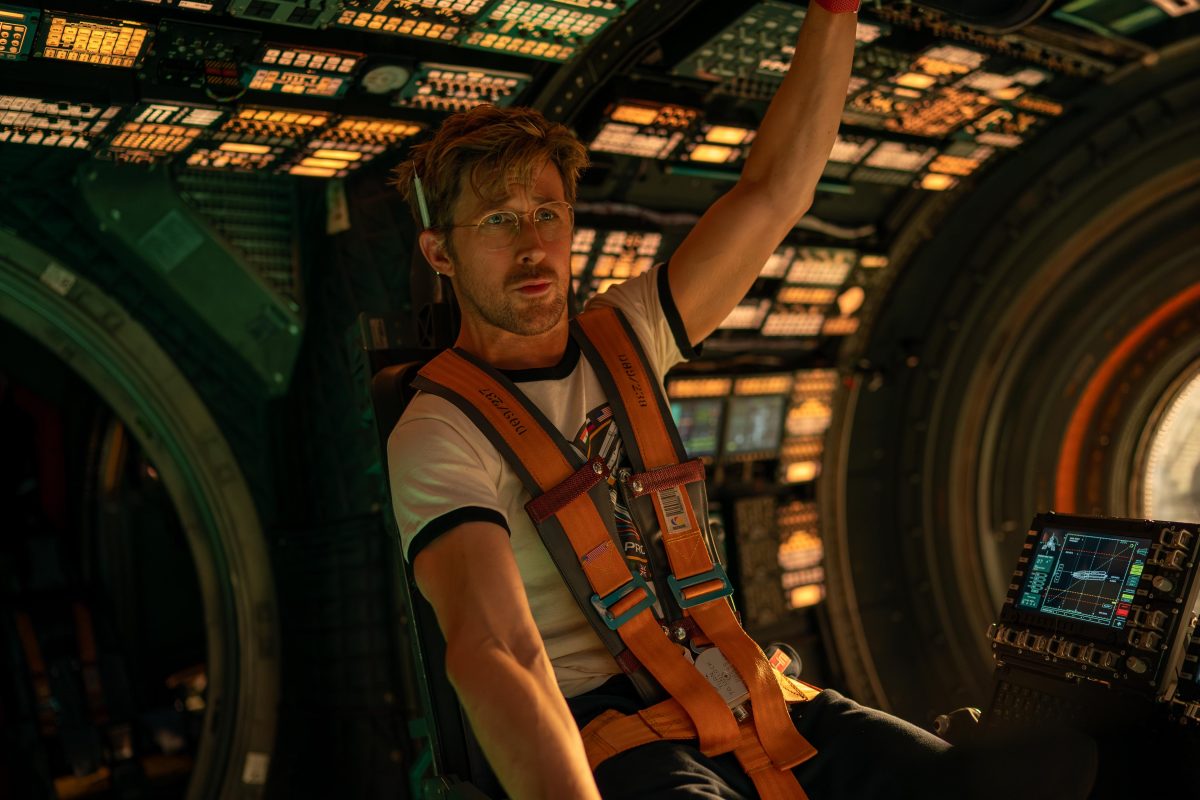
As is the case with any of the best adaptations, “Project Hail Mary” understands what to draw from the page, which in this case is a good amount because of how inherently cinematic Weir’s writing is. While some lines of dialogue and passages are nearly directly lifted, the film also necessitates additional moments with supporting characters, physical gags, and lyrical moments of expression.
A first-person novel requires a good deal of interiority, and “Project Hail Mary” makes the right revisions in order to ensure that Grace is vulnerable while also being empowered. Gosling’s inherent charisma may have made him an instantly good choice for the role, but to be so compelling in a manufactured environment with such specific roles is a challenging task that ranks as one of the best performances of his career.
“Project Hail Mary” is both a thought-provoking work of sci-fi speculation and a rousing adventure that hits essential moments within any “hero’s journey” whilst never feeling antiquated. It’s funny in a disarming way that doesn’t diminish the stakes, and achieves a degree of visual and musical poetry that feels destined to be incorporated with any montage of contemporary classics. To say that “Project Hail Mary” is the ideal commercial crowdpleaser is not in any way a backhanded compliment. Cinema would be much better with entertainment as good as this.



![Bull [2022] Review – A Lean and Mean Gangland Revenge Thriller](https://www.highonfilms.com/wp-content/uploads/2022/04/Bull-2021-768x433.jpg)


![Flee [2021] Review: A Gripping Tale of the Pursuit to Find a Home](https://www.highonfilms.com/wp-content/uploads/2022/02/Flee-2021-768x320.jpg)