The psychological thriller, as a form, serves as an instrument for dissecting the mechanics of obsession and the rupture of social order. Two major films, separated by barely two years, Alfred Hitchcock’s “Psycho” (1960) and Youssef Chahine’s “Cairo Station” (1958), each deploy this instrument powerfully. Both center on isolated male protagonists whose repressed desires escalate into violence, and both permanently altered the cinematic landscapes from which they emerged. However, “Psycho” shows madness as a private sickness, locked inside a person’s mind. While “Cairo Station” shows madness as something created by society’s cruelty and poverty. This latter approach, linking personal tragedy to societal problems, gives Chahine’s film a unique and lasting power.
This core difference is clearest in the main characters. Norman Bates is defined by his twisted family. His identity is consumed by “Mother,” a ghost of past trauma. The Bates Motel and its looming house are externalisations of an unstable mind. His voyeurism, exemplified by the infamous peephole, is a predatory act of control within his isolated island.
This internal nature of Norman’s sickness is underscored by the film’s narrative choice of the abandonment of the social motive. The catalyst for the entire plot is Marion Crane’s theft of $40,000—a classic act rooted in social and economic frustration. Yet, upon her arrival at the Bates Motel, this tangible, social logic is completely severed. The stolen money, hidden in a folded newspaper, becomes irrelevant. Norman never discovers it. It is literally forgotten, submerged in the swamp with Marion’s car.
Hitchcock deliberately discards the plot of social crime (pursuit, greed, consequence) to descend into a purely psychological one. The external world of cause, effect, and material need is swallowed whole by the internal world of psychosis. Norman’s violence is entirely disconnected from want, poverty, or any social pressure. It emerges from a self-contained system that operates independently of the society just beyond the motel’s driveway. The horror is that his madness needs no reason from the outside world; it is its own reason.
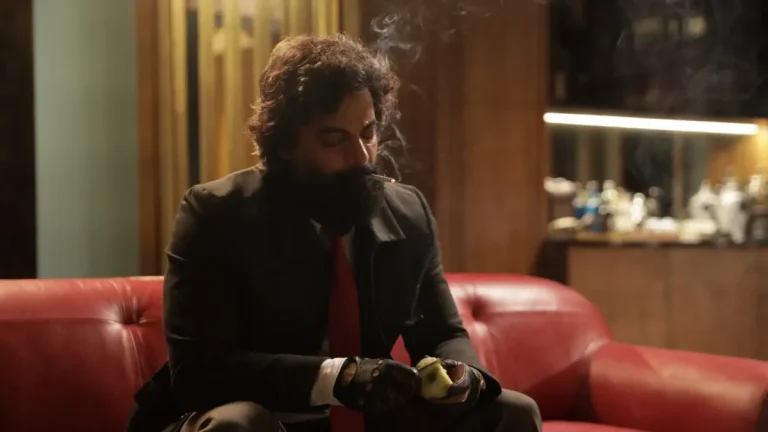
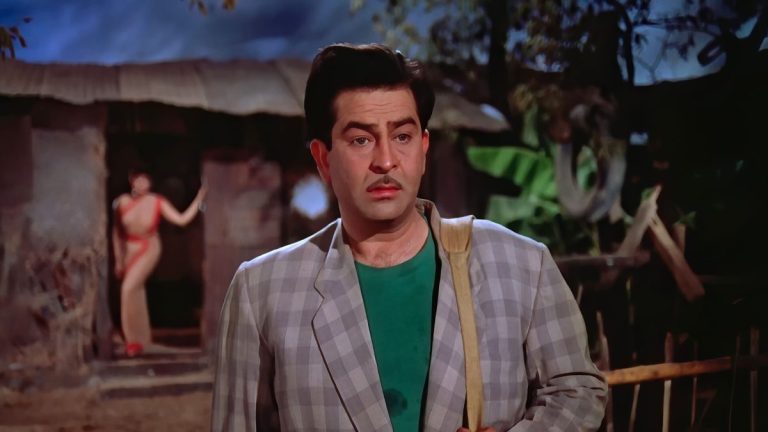
Qinawi, played by Chahine himself, suffers from an outsider status that is socially constructed. He is introduced through the mockery of others and insults regarding his lame leg and his weak eyes, which are social signifiers, marking him as an object of ridicule and violence, as when he is beaten for the mere act of “staring.” His small room, covered with magazine pictures of women, is a sad indicator of his loneliness and wants he can never fulfill. While Norman’s sickness comes from within, Qinawi’s is named and judged by everyone around him as a “pervert.”
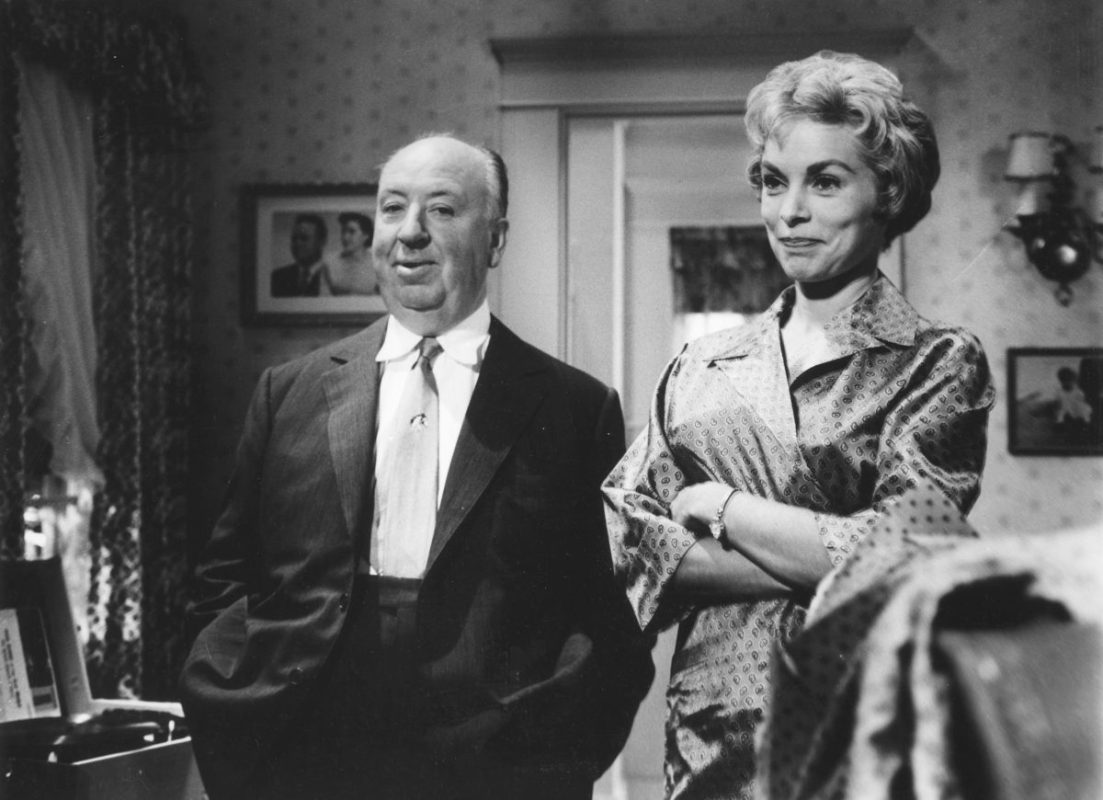
Also Related: Dial ‘M’ for Masterpiece: 20 Best Movies of Alfred Hitchcock, Ranked
Yet, crucially, the film’s perspective is not aligned with this diagnosis. By casting himself in the role, Chahine embeds a layer of authorial sympathy, positioning Qinawi, with his sincere if obsessive and inconvenient passion, as a more honest figure than the so-called “normal” characters who inhabit the station’s brutal realities, namely patriarchal violence as portrayed by Hannouma’s fiancé.
This foundational sympathy is key to understanding the film’s deeper critique. The film consciously resists the pervasive cultural trope—seen in European literature from “Frankenstein” to Zweig’s “Beware of Pity” and echoed in much classic cinema—that equates physical disability with moral monstrosity. This narrative did not emerge in a vacuum; it is a reflection of a societal reality where disabled individuals are routinely desexualized and denied basic humanity, their desires pathologized as perversion. This logic stems from a deeply entrenched conflation of beauty with virtue, where any deviation from conventional attractiveness is read as a moral failing. Qinawi’s tragedy is that he internalizes this very logic, believing his own longing to be a monstrous aberration.
Furthermore, Qinawi’s specific brand of “perversion”—his obsessive, socially unacceptable fixation—can be read as a coded allusion to queer desire in a repressive climate. Chahine, a director whose later work would grapple more openly with his queerness–and who is believed to be queer himself– positions Qinawi’s condemned longing as a form of desire that society is ready to punish with vindictiveness. The film suggests a hierarchy of transgression: while the misogynistic control of Hannouma’s fiancé and the capitalists’ exploitation of the workers are framed as brutal but accepted facts of life, Qinawi’s visible, yearning deviance is what truly mobilizes the mob.
The physical worlds of each film reinforce this dichotomy between private and public illness. Psycho’s world is almost claustrophobic. The journey to the Bates Motel feels like a descent into a private, psychological underworld. The iconic shower murder occurs in an enclosed, vulnerable space, making the horror intimate and violating. “Cairo Station,” as its title declares, is a film of public exposure. The station is a microcosm of post-colonial Egypt—a “libidinal pressure cooker”; it’s a place of class struggle, unfair labor, and open desire.
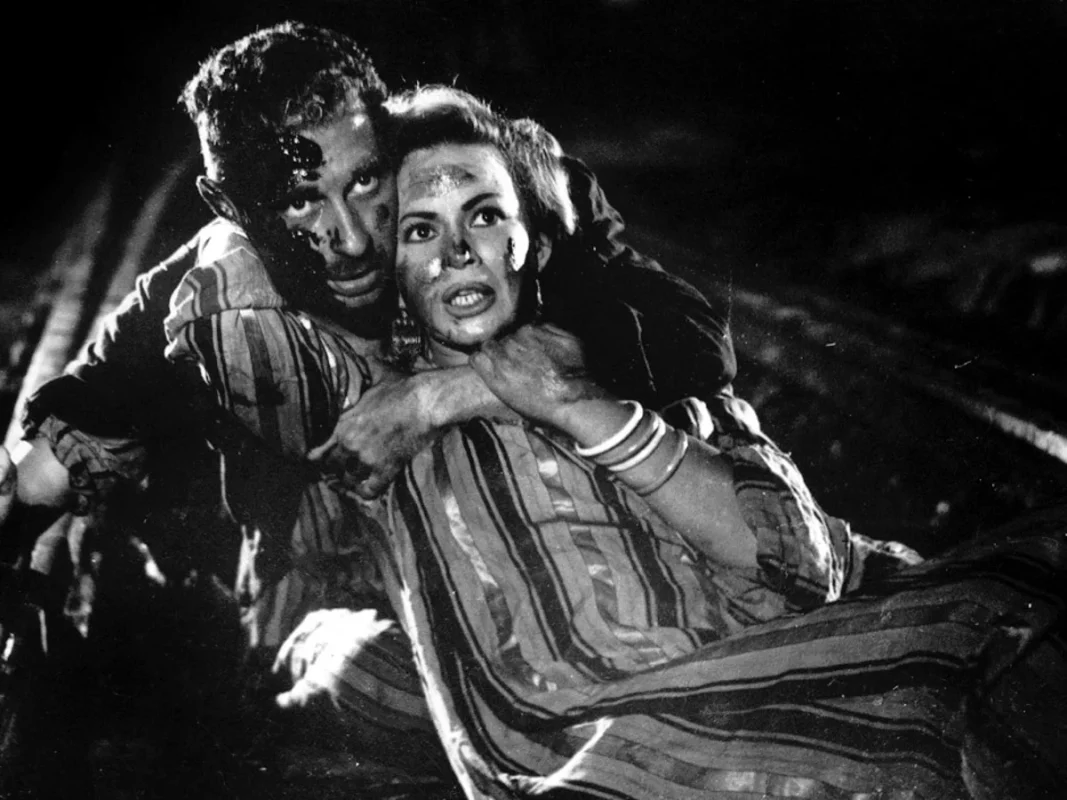
The treatment of desire and voyeurism further separates the films. In “Psycho,” desire is pathologised through the Mother persona. Norman’s attraction to Marion Crane is immediately lethal and inseparable from his psychosis. The gaze is predatory and leads directly to violence. In “Cairo Station,” desire is everywhere. Qinawi’s obsessive gaze at Hannouma Hind Rostom is pathetic and public. However, he is not the only male ogling her. His crime, the film suggests, is not his sexuality but his disabled body, which his society refuses to see as sexual. His voyeurism is less a prelude to murder than a symptom of his total exclusion from the sexual culture that’s happening around him.
More Related: Cairo Station [1958] – The Struggles against Sexual Repression and Social Oppression
The violent climaxes show each director’s view perfectly. Hitchcock’s shower scene is a terrifying work of editing, a private nightmare. Its power is in the shock and the violation of a safe space. After it’s over, Norman cleans up quietly. He pushes the car into a swamp, hiding the secret. The violence is like a sick ritual inside his head, and then it gets buried.
The violence in “Cairo Station” is the exact opposite. It’s public, messy, and loud. Qinawi’s attack on Hannouma isn’t that of a murderer’s assault—it’s a clumsy, desperate act from a man who has been humiliated one too many times. It happens in front of everyone, and it fails. He doesn’t become a powerful killer; he becomes a scared man running through a crowd. And the crowd doesn’t call the police. It forms a mob and turns on him. The society that produced the monster then turns to destroy him.
Finally, “Psycho” concludes with the explanatory monologue of the psychiatrist, providing a tidy, if reductive, Freudian closure. The mystery is solved, the sick psyche is labelled. Order, however uneasy, is restored through narrative explanation. “Cairo Station” offers no such comfort. Qinawi is subdued, but the station’s chaos continues. The social conditions that birthed his madness—the poverty, the repression, the exploitation—remain unchanged.
This final distinction points to the ultimate function of each film. “Psycho” provides a terrifying, contained myth. It is a story we watch to feel a safe kind of fear, one that ends with a neat label and a cell door closing. It is about the monster who is nothing like us. We would never murder an unsuspecting woman in the shower, and we could try not to be that woman by avoiding sketchy motels. “Cairo Station” offers no such comforts; it doesn’t provide a simple villain, and it goes so far as to implicate us, any one of us who has ostracized a person, even if only in our minds, merely because of their physical appearance or social class. It implicates anyone who has had a part in upholding the brutal society we inhabit.
Chahine’s “Cairo Station” is not merely a work of social realism, as that label misses the complexity in which the film mixes the energy of a Hollywood melodrama and a raw, unsettling view of human nature under post-colonial Egypt. While its story of an outcast makes it similar to psychological thrillers such as “Psycho,” Chahine’s work resonates more with those who have been shunned by society because of their economic status and social class. The horror, then, is built in public view, where the whole station created its own monster and then sought to destroy it.