Bryn Chainey’s mystery horror film, “Rabbit Trap” (2025), was met with a mixed reception upon its premiere at Sundance. Later on, it didn’t receive a second wind, at least not in the way it should have. Of course, the film isn’t devoid of issues, whether structural and thematic, but that doesn’t paint the complete picture about Chainey’s vision for this project.
Chainey paints a portrait of a married couple while hinting at the unspoken discontent between them. Despite its flaws, the stylistic details deserve appreciation, like those in any other folk horror. The audio-visual elements play a crucial role in this project, which revolves around two artists playing with the form itself, testing its malleability while bending and fusing it to stretch it beyond its usual limits.
Rosy McEwen and Dev Patel star as these two artists, who seem content in their married life. McEwen plays Daphne Davenport, a musician who specializes in a style of ambient music that won’t attract as many listeners as traditional rhythms or melodies would. She stays gleefully lost in her pursuit of the uncanny through sounds that capture the haunting beauty hidden in plain sight. That includes everything from the gentle stroke of air brushing against the grass to the guttural screams of a wild bird, screeching, as if it’s begging for attention. The process itself is mesmerizing enough to reveal its appeal.
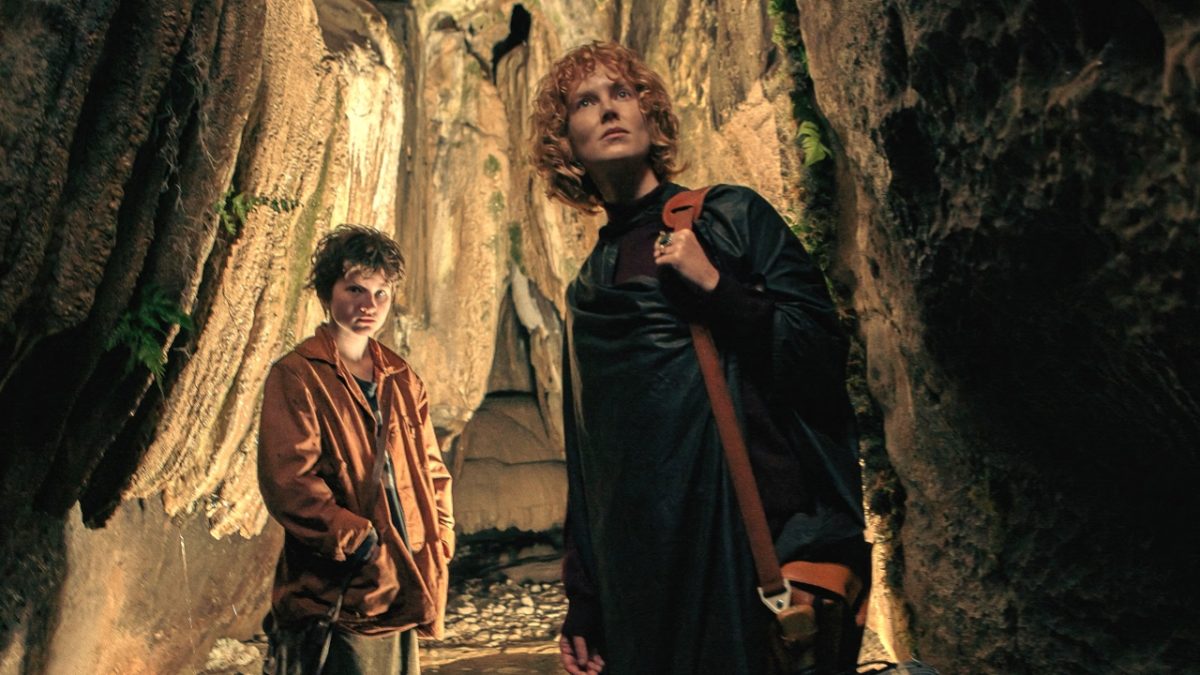
That’s probably what compelled Chainey to work on this idea about these recording artists, and for his protagonists to travel to Wales in search of new sonic landscapes. Joining Daphne is her husband, Darcy (Patel), who roams through the vast greens and woods recording all sorts of sounds from nature whenever he is not by her side in their cosy cottage.
They live in the middle of nowhere, and Andreas Johannessen’s cinematography emphasizes that detail, often by isolating them or their quaint house in its vast landscape. Although they are away from people and their regular lives, their isolation or the silence doesn’t feel oppressive. Instead, it seems liberating for these unorthodox musicians who seek solitude together.
The conflict appears in the form of a stranger looking at them from somewhere at a distance. The couple can notice the figure but can’t see the face or anything else that may reveal their identity. Eventually, the person enters their lives as a soft-spoken guest, seeking company for their own reasons. Daphne and Darcy consider that person a young boy, and he doesn’t object to their assumptions. From that point onward, we witness a drama between these three characters, one local and two outsiders, one child and two adults, one oppressively lonely and two, at least ostensibly, content in their solitude.
The core issue with “Rabbit Trap” is that it doesn’t expand on its own mystery, nor does it build compelling drama from differences between its characters. The script introduces potential conflicts in the couple’s lives, regarding their expectations from their marital relationship, while using ‘the child’ as a conduit and a catalyst to confront those qualms.
Later, it presents a few pieces of regional folklore to build an immersive, mystical landscape, but offers nothing substantial beyond the most obvious ruminations. It suffers from issues that people point out about the recent strain of ‘elevated horror’ projects, where subtext is made so embarrassingly pronounced that it feels like themes are basically being shoved down our throats.
Chainey’s film didn’t annoy me in that respect, but it still felt underwhelming due to the lack of substance behind its compelling style. It faces the exact troubles that Flying Lotus’s sophomore feature, “Ash,” faced, where style overtakes the substance. Hence, the more you try to dig beneath the surface of its narrative, the more you realize how hollow it is.
In “Rabbit Trap,” there’s little to no discovery left to the audience, and the mystery wears thin quite early, which can make it a slog to sit through. The narrative could have sketched out richer internal lives instead of staying lost in its ambiguity. It could have been as thematically arresting as Michael Shanks’s “Together,” tracing the roots of misery of its co-dependent couple.
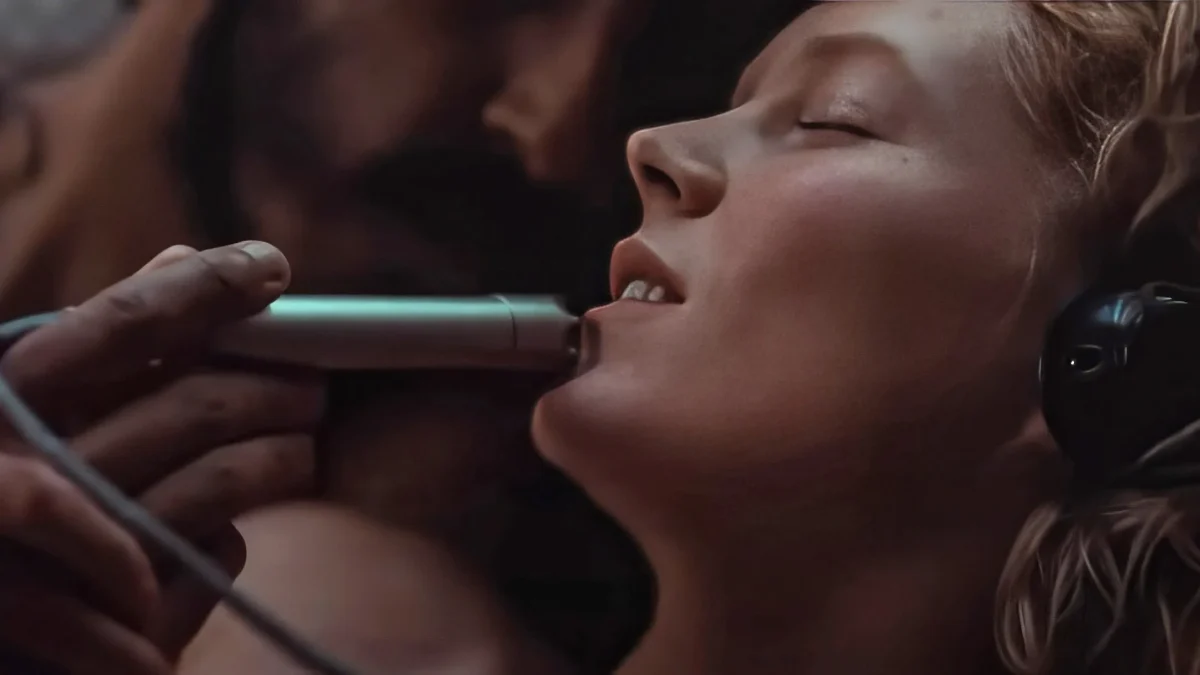
That was more than possible with actors as striking as McEwen and Patel, capable of highlighting their woes through gaps in their communication, while revealing the emotional warmth that sustains their relationship. These details appear only in flashes, and the leads do a fine job with the available material. Jade Croot is also impressive in capturing the terror from an obsessive-compulsive child seeking warmth and grace. Yet, that doesn’t suffice for a project that doesn’t go further than usual with its tale about ‘formed families.’
That’s why it pains me to see Lucrecia Dalt’s score and Johannessen’s visual chops going largely unnoticed, apart from incisive editing choices by Sam Sneade and Brett W. Bachman, who employ abrupt transitions to build tension rather than cutting it.
Dalt’s immersive score becomes another underappreciated contribution as a composer from 2025, other than Nala Sinephro’s meditative score for “The Smashing Machine.” Her eerie music captures the dread, apprehension, and panic, every emotion central to a horror project, without being instructive with its cues. Whether it’s the pluck of strings or an unexpected thud, it maintains a creepy ambience that fits aptly in a horror flick.
Therefore, although an overall disappointing affair, “Rabbit Trap” is a fascinating stylistic gamble that reveals Chainey’s skill in building a captivating atmosphere.