News of Disney’s live-action “Tangled” adaptation sends a new wave of nostalgia connecting us straight back to the original 2010 animated movie. And while the film is packed with memorable songs, glowing long hair, and a charming princess, one detail still steals the spotlight: the frying pan.
Yes, the frying pan.
Disney’s 2010 animated film introduces Rapunzel: a wide-eyed princess with impossibly long hair, locked away in an isolated tower by a sorceress, Mother Gothel, who seeks eternal youth through Rapunzel’s glowing, magical hair, activated by her singing. What’s more interesting is how Disney revisits the Rapunzel tale, popularized by the Brothers Grimm in 1812, and reimagines her agency by putting a frying pan in her hands as her weapon of choice against Eugene—better known as Flynn Rider—in the 2010 film. This was one indelible element of the film that made the kids laugh and was catchy enough that it reinforced the film’s modern take on a classic fairy tale
The inclusion of a frying pan is widely considered a clever choice made by Disney that subverted the traditional princess tropes. It functioned as both an effective comedic element, contributing to some of the funniest scenes of the film. A classic fairy tale setup…until a stranger climbs up into the tower.
And when Rapunzel senses danger, she does not reach for a knife, a dagger, but a frying pan. It was a weapon chosen by Rapunzel amongst her household items for her protection against a stranger wandering around her tower. Speaking of her household items, Disney knew most of the audience would be kids, so it opted for Rapunzel to have a frying pan.
There are two primary reasons for Rapunzel to choose a non-lethal object like a cast-iron frying pan for her protection over a knife. First, she wanted to see the floating lanterns that appeared in the sky every year on her birthday. The frying pan was meant to scare Flynn and coerce him into agreeing to accompany Rapunzel to the kingdom to see those lights.
If she had a knife in her hand, his intention to kill might have been obvious. Disney didn’t want that, as Rapunzel aimed to strike a bargain and not murder Flynn. She promised him to return his stolen satchel if he took her out of the tower for those lights and returned her safely afterwards. Meanwhile, the frying pan remained in her hand throughout most of the journey in case Flynn tried to mess with her, and she could smack the pan in his head one more time.
The second reason is Rapunzel’s innocence, as she found a solid, heavy item available to her that aligns with her innocence and non-violent nature. This makeshift weapon of defense, used to bash Flynn Rider, symbolizes her lack of combat training but proves her quick, protective instinct. It should be noted that the heavy cast-iron skillet suits her strength well, which she had developed from years of brushing her 70 feet of hair every day, as evidenced in the opening musical number “When will my life begin?”
Her newfound, naive strength blended with her sheltered, domestic life reflects that she was not a seasoned fighter but a girl who knew her boundaries with a strong sense of protecting her personal space. Knocking Flynn Rider unconscious with a humorous weapon showed a frightened yet brave demeanor, which is natural in any untrained warrior.
What’s more comical is the versatility of the frying pan when compared to swords or knives. The pan remains a symbol of her innocence, but with a fierce determination to fulfill her dreams. Even Flynn was oblivious to a common household item’s effectiveness in overcoming danger. “Tangled” is a sneakily smart attempt by Disney, as pairing the frying pan with the magic hair is a great example of Disney’s character storytelling through design. Disney decided to instill power in this fairy tale with beauty, kindness, and bravery.
Rapunzel’s characterization validates a greater shift in Disney’s portrayal of princesses in the late 2000s and 2010s, unlike earlier princesses, whose innocence often required rescue. Merida in 2012’s “Brave” and 2016’s “Moana” embody modern Disney heroines possessing agency, curiosity, and emotional resilience. Their bravery does not emerge from combat expertise or hardened personalities but from moral clarity, empathy, and willingness to act despite fear.
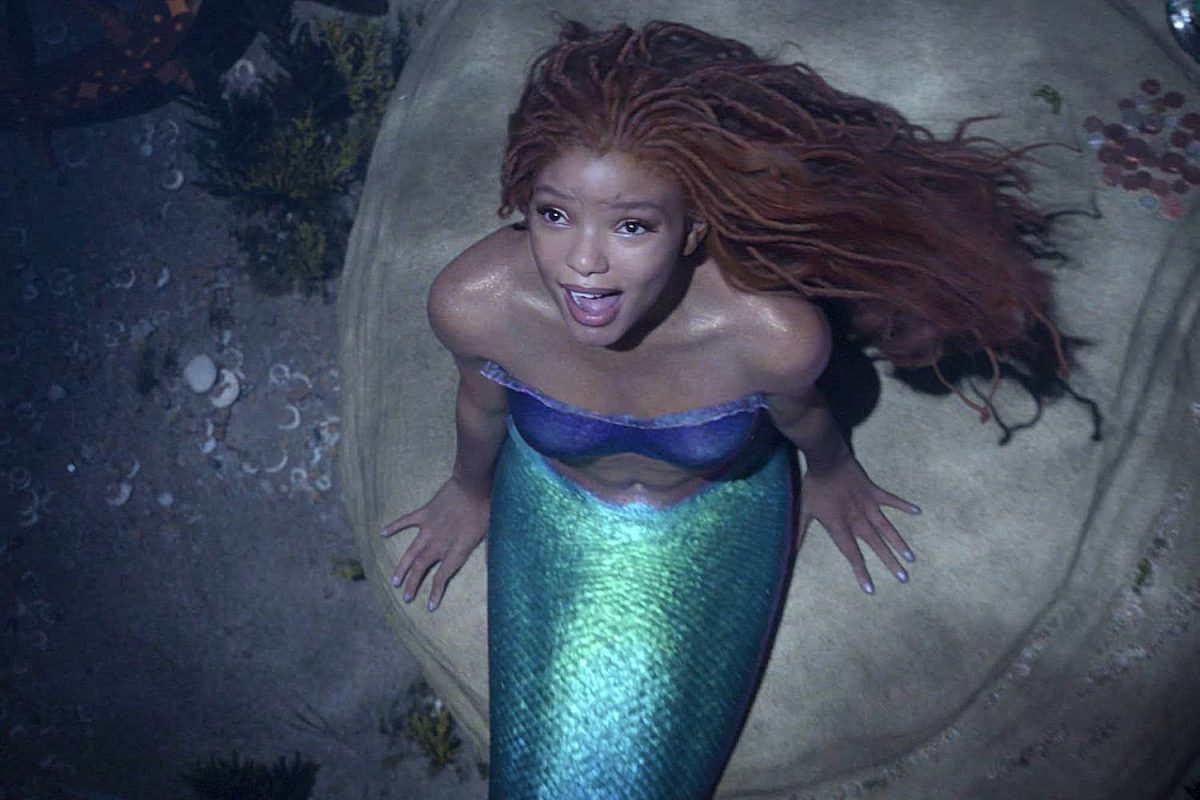
How Disney fairy-tale films materialize innocence through objects emerges as a compelling and underexamined subject of study. Innocence materialized through delicate objects like glass slippers, spinning wheels, and a poisoned apple, highlighting those princesses’ fragility and fate. Disney tried to reiterate the idea that salvation for the earlier princesses meant help needed to arrive from the outside world.
For example, Snow White’s aprons, pies, and cleaning tools showed her gentleness and domestic order. Cindrella’s most valued possessions were household utensils or tools for mopping the floors, visually reinforcing her vulnerability and moral purity. Ariel’s fascination with forks and trinkets was undeniable in “The Little Mermaid,” framing her childlike curiosity rather than rebellion.
Certainly, over time, Disney’s portrayal of innocence has shifted in fairytales, and objects remain central to this visual language. Even Merida’s bow and arrow, and Moana’s oar and canoe signal choice rather than confinement or fragility. The objects’ function has changed since Rapunzel is one prominent example, where her frying pan is no longer a symbol of helplessness but innocence.
Rapunzel is resourceful, either with a frying pan or her magical hair that has healing powers. The frying pan, however, is funny until it isn’t. It visually lands as a joke but is painful as a weapon. Disney lowered the threat level without it feeling dark or cruel. It lets Rapunzel be physically capable without turning her into an action cliche.
Her hair and frying pan come in handy together when she first lands a blow with the frying pan on Flynn’s head after he breaks into the tower. Bonk goes the frying pan on his head, and the sound effect with Flynn’s expression makes the situation hilarious. The audience laughs. Then Rapunzel dragged his body across the floor and tied him up with her hair. Here we see a persuasive display of self-defense where Rapunzel is scared but not violent. The pan was heavy, and it worked as Flynn stayed down. But look closer, she panics about what she has done since she second-guesses herself.
Her innocence is substantiated again in the fact that she hasn’t internalized violence as “normal,” as she hasn’t been exposed to the outer world ever. She has been in the tower for years with her sidekick, Chameleon, whereas a better sidekick should be the frying pan, though. Hurting someone was out of the routine for her. It was alarming for her as she felt wrong in hitting someone with a frying pan.
She was clearly worried as her instinct showed concern and not triumph. Her character verified that she doesn’t see violence as a tool of identity or power, as she has been in a default state of care all her life, with her Mother Gothel. No other human interaction ever existed that could have put her in different situations otherwise.
Different situations otherwise invite us to recall the scene where Rapunzel and Flynn were chased by the castle guards and the horse, Maximus. This marked one of Rapunzel’s first extended interactions outside her tower world. Confronted with real danger, she is forced to become more decisive and proactive in defending herself and Flynn.
Rapunzel is the personification of this evolution. She is certainly frightened and altogether emotionally unprepared for the world beyond her tower. Her innocence remains intact in the way she frets over this small act of cruelty, while the frying pan functions as a visual extension of Rapunzel’s idea of self-defence, stopping short of a blunt embrace of violence.