“Sentimental Value” shows Joachim Trier on the other side of his Oslo film trilogy, with an equally penetrating chapter to untangle the messiness of human relationships. He begins this film with shots of a quaint Scandinavian house as a voice guides us through the history of everyone who lived there. We see similar shots throughout its duration, giving us a sense of what it meant for anyone who made it their home. The focus, however, isn’t the architecture itself, but its sentimental value. He makes us feel every emotion that the house represents to the family across generations. So, the space feels like an entity in itself, which is a part of the film’s overarching theme.
Trier conveys the pain, fear, and emptiness they all felt in that space, but he also offers a glimpse of the warmth and tenderness that kept pulling them back to it. The place becomes almost a museum of contradictions, and so does every little part of it. Even a door can retain memories of the arguments fought behind it and the silences on the other side.
Some lost their lives between those walls due to the complicity of their spineless neighbors, while others sought joy in the same space, using celebration as a form of revolt. Hence, the house becomes part of their DNA, as reflected in Trier and Eskil Vogt’s script, even through a crack that links the dimly-lit basement to the cozy interiors, and has stayed there for generations.
Here, the allegory is implied but not hammed-in. The crack connects these spaces that have borne witness to despair potent enough to break it all apart. We gradually witness signs of despair that connect all the generations. Those cracks made Gustav drift away from his daughters and from a house where he saw his mother slowly losing her will to live. The trauma inadvertently seeped into the daughters’ psyches, who found their own ways to cope with it. Agnes, who acted in one of Gustav’s early films, didn’t return to that mode of interpreting life. Nora, however, found herself drawn to theater, a means to realize and confront her emotional truth, to faithfully present it.
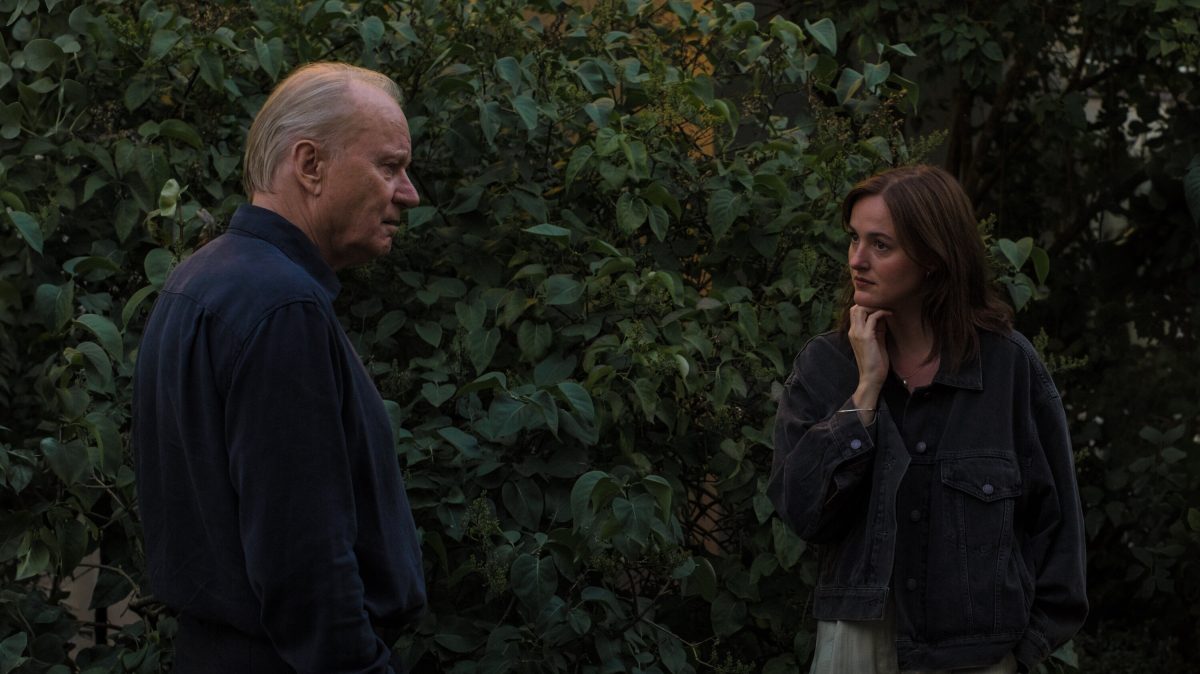
In an early scene, we witness her last-minute jitters before going on stage, unable to reach a place where she would be comfortable with being vulnerable in front of others. It’s where she ought to be emotionally naked to convey her character’s plight. It’s where she won’t be Nora, but her character. That, however, won’t help her escape herself. It can satisfy her yearning to be someone else, but it won’t distance her from her thoughts.
Even in those imagined realities, she will have to reach into her emotional pockets in order to perform. The very act of performing can help her look at her emotional mess from a distance and analyze it as a third person. It can be its own form of catharsis.
Gustav understands that, which compels him to take a bold step. He asks Nora to be in his new film, based on a script he wrote. She will play a character, which is partly herself and partly his mother. He hopes to shoot it in the same house where they all grew up. It can offer him the means to process his own trauma attached to this space, while giving Nora a chance to do the same.
Yet, he doesn’t lay all those cards on the table when he meets her at a cafe. Instead, he tells her that she is a great actress, despite leaving one of her plays during the interval. She justifiably holds a grudge against him for not knowing how to communicate with her, for leaving them behind. His script becomes his attempt at communication, distilling the profound loneliness Nora felt in his absence, and the one his mother must have felt after enduring agony from Nazi sympathizers, in the same breath.
In the film’s final moments, Nora finishes a scene from Gustav’s script and looks into his eyes, and so does he into hers. No words are exchanged between the two, but that doesn’t keep us from realizing what that heartbreaking scene meant to both of them. It offers them an emotional release they desperately sought without any break from the weight of his words.
Gustav doesn’t interrupt this scene, thus forcing them (and us) to sit with their discomfort instead of cutting in between or running away from it. It remains faithful to theater, a form Gustav didn’t care for, but is inadvertently drawing from. Of course, in this case, the camera is our eye, offering vantage points that our seat in a theater won’t provide, moving through corridors in ways we won’t be able to in a theater. Yet, it similarly rewards our patience, leaving us with a pang that fragments won’t.
Also Read: Sentimental Value ( 2025) Review: Joachim Trier Returns With Another Complex Examination of The Bonds We Share And Those We Break
Probably not intentional on Trier and Vogt’s part, but the scene also feels like Gustav quietly apologizing to Nora for not offering her the privilege of time she always sought from him, while filming it with an approach closer to her interests that he didn’t honor as he should have. The script keeps coming back to this cathartic aspect of art through scenes of actors and directors working on their craft.
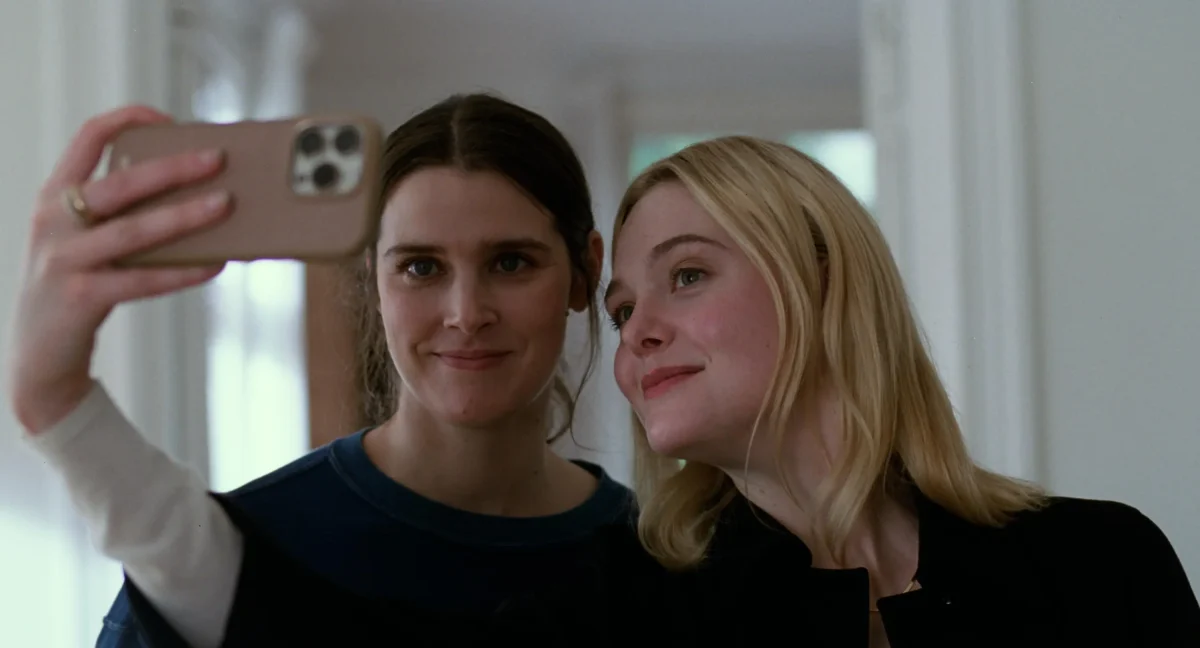
In one scene, we see Rachel reading a version of a scene that Gustav originally wrote for Nora. It involves the female protagonist praying, but it’s not clear to whom she is praying. He doesn’t offer her any clear answers; instead, he hopes she finds one herself. So, she starts reading the soliloquy, addressing her scene partner. Soon, she breaks into tears, wondering why the fictional mother didn’t embrace her daughter as her scene partner held her. Gustav agrees.
It seems like a distillation of Gustav’s parental regrets along with his childhood trauma. It’s why he wanted Nora to play the part. It was his way of communicating what he couldn’t otherwise, and to process what he didn’t know about his mother. In their case, the house became a shrine to the inescapable residue of their intergenerational trauma.
In there, every object retained an emotion for them. Gustav makes a case for this when Rachel shows up at their home. He claims that the stool she was standing next to is the same one his mother used before she departed from his world. Rachel quickly steps back, acknowledging its emotional weight. It becomes almost immaterial that Gustav lied about it, since he conveys what it can represent, offering her something tangible to convey the emotion.
Nora takes a step in that direction on Gustav’s film set, where she plays the same role. In this case, a studio is designed to give us an illusion of their home. There’s a blue screen surrounding the walls, almost peeking through the windows, representing a sky that isn’t there. In the scene, she walks up to a stool, unlike the one Rachel had seen in their real home.
Even this time, much like the stool, every fragment of her reality remains manufactured, replicated to look like it’s part of their past. She acts believing it is real. Although an elaborate, orchestrated lie, it allows her and Gustav to realize the possibilities of their own lives and offers them a form of catharsis. Whether theater or film, the act of reproduction can offer someone clarity about the struggles in their personal lives or cleanse the emotional residue in ways that nothing else can.
Of course, art won’t always lead you to easy answers. Yet, the very act of discovering them can help you out of the bottomless pit. It won’t remedy any of those ailments, nor does it need to. Still, it can bring someone closer to acknowledging their despair, something the script equates to the very act of praying.
There need not be an audience for that communication. It can be a dialogue with oneself in a path toward recovery. Trier manages to capture the weight of those residual emotions of intergenerational trauma, without treating ‘healing’ like a walk in the park. In the final scene, the father and the daughter take their first step. The final nod is simply an acknowledgment of that step toward forgiveness and growth.