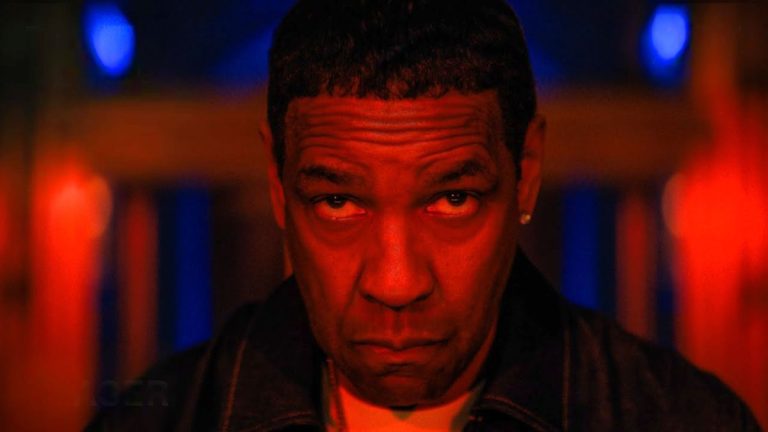
“The Orphans” (original title: “Les orphelins,” 2025) initially presents itself as a revenge thriller. A teenager learns that her mother was murdered and sets out to punish those responsible. Two hardened men pursue her through the city, trying to stop her. There are fights, gunshots, and betrayals. On the surface, the film follows a familiar action template. Yet the story’s real subject lies elsewhere. It is about inheritance—an inheritance of pain rather than money or property.
Every major character is shaped by abandonment. Gab retreats into the law. Driss survives beyond it. Leila refuses both paths. What binds them is neither conspiracy nor ideology, but the emotional vacuum left by childhood loss. The corporation matters only because it offers its trauma something concrete to strike. Even the title reaches further than Leila alone.
The true orphans are Gab and Driss. Long before the plot begins, they lose family, safety, and direction in the same orphanage. As adults, they choose opposite lives, yet remain psychologically frozen in the same place: two boys who never learned how to process grief. Leila forces that buried past into the present. She is more than the daughter of their first love. She embodies their unresolved guilt. The film’s tension, then, comes less from the threat of murder than from the fear of repetition—of pain passed down, unexamined, from one generation to the next.
Spoilers Ahead
The Orphans (2025) Plot Summary & Movie Synopsis:
Why Does Leila Refuse to Accept Her Mother’s Death as an Accident?
Leila’s investigation begins with something small: inconsistency. Official records describe a routine accident. But the details do not align. Her mother was careful, organized, and cautious. The explanation feels administrative rather than truthful. The film shows Leila not as impulsive but methodical. Her suspicion grows slowly because she tries to preserve a comforting belief that tragedy was random. When she learns a corporation had indirect involvement, the emotional shift happens immediately. Random death creates grief. Intentional death creates direction. Leila suddenly has someone to blame.
This matters psychologically. Grief is passive, but anger is active. By believing her mother was murdered, Leila gains purpose. She is no longer a victim of fate. She becomes someone pursuing justice. Her youth is crucial here. At seventeen, she interprets justice as correction. If someone causes harm, they must suffer in equal measure. She does not yet understand consequences.
She believes moral clarity guarantees moral outcome. The film frames her investigation not as recklessness but loneliness. She does not trust the authorities because they wrote the report that erased her mother. Institutions, to her, are not protectors. They are editors of reality. Revenge, therefore, becomes, in her mind, truth.
Why Do Gab and Driss Both Chase Leila for Different Reasons?
Gab and Driss enter the story as opposites. Gab is a police inspector, structured and procedural. Driss is a fixer working within criminal networks, improvisational and pragmatic. Their reunion is not emotional at first. It is functional. They are both tracking Leila. Yet their motivations are entirely different. Gab wants to save her legally. He believes the law, though imperfect, prevents irreversible mistakes. His fear is not only that Leila will kill someone but that she will destroy her future. He understands how the justice system treats intent. One act of revenge will permanently define her life.
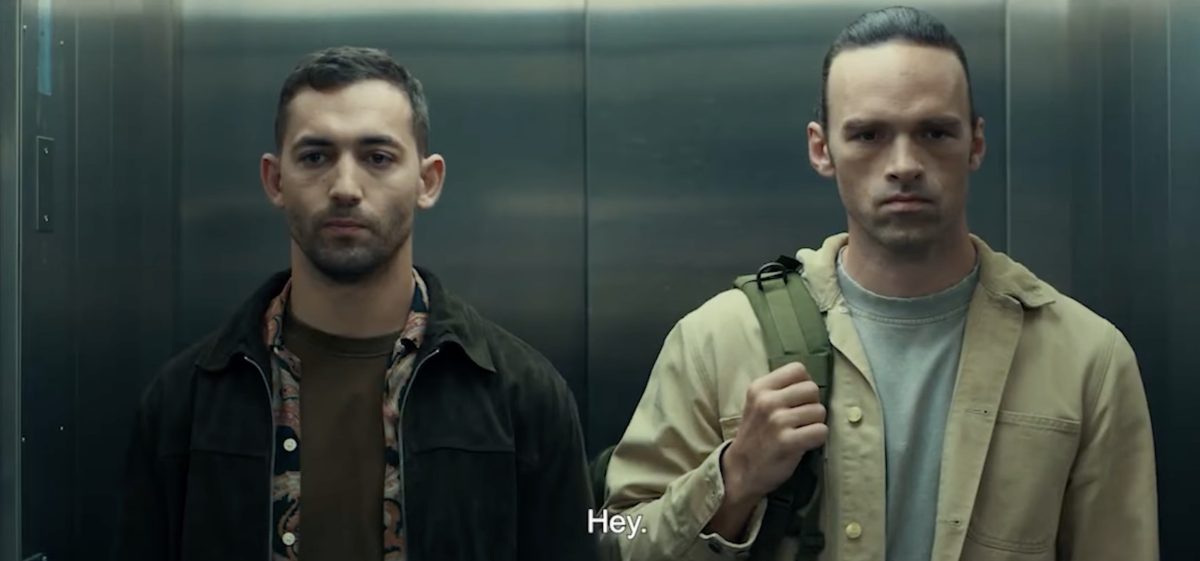
Driss wants to save her personally. He recognizes the emotional spiral because he lived it. His life in the criminal grey zone began with a similar moment: a decision made during grief that permanently redirected him. He sees his younger self in Leila. Their shared history explains why they cooperate despite mistrust.
Both loved Leila’s mother years earlier. Her death reconnects them to a version of themselves before their lives diverged. Saving Leila becomes a chance to repair a failure they could not prevent in the past. The film subtly suggests they are not only protecting her. They are trying to redeem themselves.
What Does the Corporate Cover-Up Actually Represent?
The corporation functions less as a villain and more as a system. Its role in the mother’s death is hidden through paperwork, influence, and delay. No single individual appears responsible. That ambiguity is important. Leila wants a person to punish. Instead, she faces an organization designed to absorb blame. This frustrates her because revenge requires a clear target. Institutions rarely provide one. The cover-up reveals a central theme: systems prioritize stability over truth. The police accepted incomplete explanations. Employees followed instructions.
Everyone preserved order rather than justice. Gab begins questioning his loyalty because he realizes the law can maintain peace while ignoring reality. Driss already understands this, which is why he lives outside it. The film positions Leila between them, someone forced to decide whether the truth lies in rules or in action. Her mistake is assuming violence creates clarity. The corporation’s mistake is assuming concealment creates closure. Both approaches avoid accountability in different ways.
Why is the Final Confrontation Set in an Abandoned House?
The rain-soaked house is not a random action setting. It mirrors the orphanage emotionally. Both are empty structures associated with childhood absence. By bringing the characters there, the film collapses the past and present. Leila chooses isolation because revenge requires certainty. She cannot be interrupted by doubt or compassion. The storm externalizes her state of mind: chaotic, loud, and directionless despite intense focus.
Gab and Driss entering the house represents a confrontation with memory. They are no longer chasing a suspect. They are confronting a younger generation repeating their emotional mistakes. The fights leading to this moment were physical. This moment is psychological. Inside the house, dialogue slows the film. Action becomes secondary.
For the first time, Leila hears them not as pursuers but as witnesses to her mother’s life. They explain who she was before motherhood, including their shared past. This changes Leila’s perspective. Her mother becomes a person, not just a victim. That realization destabilizes her certainty. Revenge depends on simplification. Understanding complicates it.
Why do Gab and Driss Stop Leila instead of Helping Her?
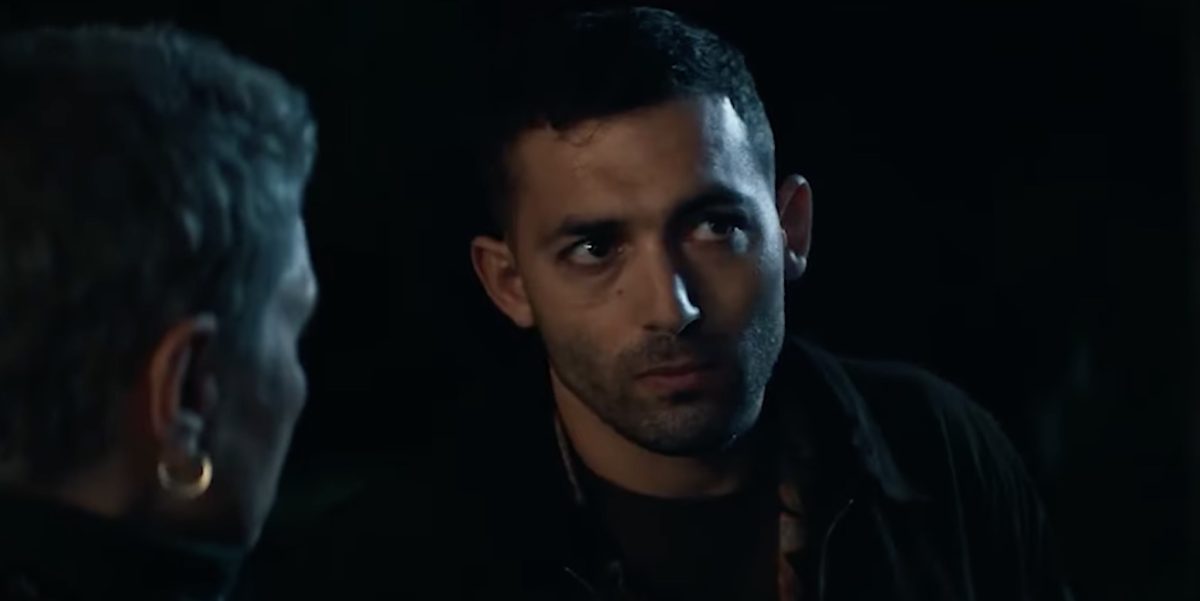
The crucial decision occurs when Leila is seconds away from committing violence. Both men could let it happen. The corporation wronged her. Morally, her anger is understandable. Yet they intervene. Their reasoning is not legal or ethical alone. It is experiential. Gab knows institutions can be flawed, but still believes society requires restraint.
He stops her because he believes justice must be collective, not personal. Allowing revenge would validate chaos over law. Driss’s motivation is more personal. He recognizes the psychological aftermath of revenge. It does not heal grief. It preserves it. Violence freezes the moment of loss, preventing emotional movement forward.
He understands she will never escape that night if she acts. Together, they represent two forms of protection: societal and emotional. Their alliance is significant because they rarely agree on anything else. The one thing they share is the certainty that killing will not save her. Stopping Leila, therefore, becomes the film’s true climax, not exposing the conspiracy.
The Orphans (2025) Movie Ending Explained:
Why is Leila’s Survival More Important Than the Corporation’s Destruction?
The corporation is destabilized but not eliminated. Evidence surfaces, reputations suffer, and the cover-up weakens. Yet the story does not celebrate victory. This is intentional. Destroying the corporation would turn the narrative into a conventional revenge fantasy. The film rejects that structure. It argues justice is incomplete but necessary, while revenge is complete but destructive.
Leila’s survival preserves the possibility. She retains the chance to define her life beyond tragedy. If she had succeeded in revenge, she would have permanently tied her identity to her mother’s death. The film suggests truth matters, but the person discovering it matters more. Protecting Leila’s future outweighs punishing the past.
By the end, the title clearly refers to Gab and Driss. They begin emotionally stranded, connected only by memory and resentment. Their shared effort to save Leila forces them to communicate, which they avoided for years. They cannot undo their childhood, but they can prevent its repetition. Helping Leila process grief gives them the closure they never received. For the first time, they act not as survivors but as guardians. Leila is technically an orphan after losing her mother, but she does not remain one emotionally. Gab and Driss become imperfect parental figures.
Not through adoption, but through responsibility. The final scenes imply they are still uncertain about their paths. Gab questions his institution. Driss questions his lifestyle. However, both have changed. They are no longer defined solely by what they lost, but by what they chose to protect. The film’s last idea is quiet but clear.
Violence could expose corruption, but compassion interrupts inheritance. The past cannot be repaired, yet it can stop controlling the future. “The Orphans” is therefore not a story about revenge denied. It is a story about grief redirected. Leila wanted justice for her mother. Gab and Driss gave her something else: a life not governed by the worst day she ever experienced.


![Family Pack [2022] ‘Prime Video’ Review : Avoid meeting this Family](https://www.highonfilms.com/wp-content/uploads/2022/02/Family-Pack-2022-768x324.jpg)

![Marlina the Murderer in Four Acts [2017]: ‘TIFF’ Review](https://www.highonfilms.com/wp-content/uploads/2017/09/TIFF_HIGH_ON_FILMS_marlinathemurdererinfouracts_04-768x384.jpg)