She was Paris, He was Texas
…and their paths were meant to converge in Paris, Texas.
From the point of view of a hawk, we look at our hero – dressed in a black pinstripe suit, a yellow tie knotted to the brim of his neck, and a striking red cap. He is not the CEO of a company pacing towards a board meeting with a briefcase in hand, nor is he a MAGA enthusiast president. He is a tramp stranded in a desert, holding a plastic can with the last drops of water.
With just one delicate touch of rigid ice cubes at the back of his throat, he collapses in a deserted shop. He is weak and worn-out, pitiable and powerless to talk. His silence builds the mystery. Who even is this obscure rodeo in the middle of nowhere? Where is he coming from, and where is he meant to go? Did he even walk the land if no one saw him walking? In between the permanence of dunes, does his feeble existence even matter? When the viewer is completely engulfed in all these mysteries, a random sign in the shop, in all its indifference, reads, “The dust has come to stay, you may stay or pass on through or whatever.” That’s how we meet Travis… Travis, the “Texas”.
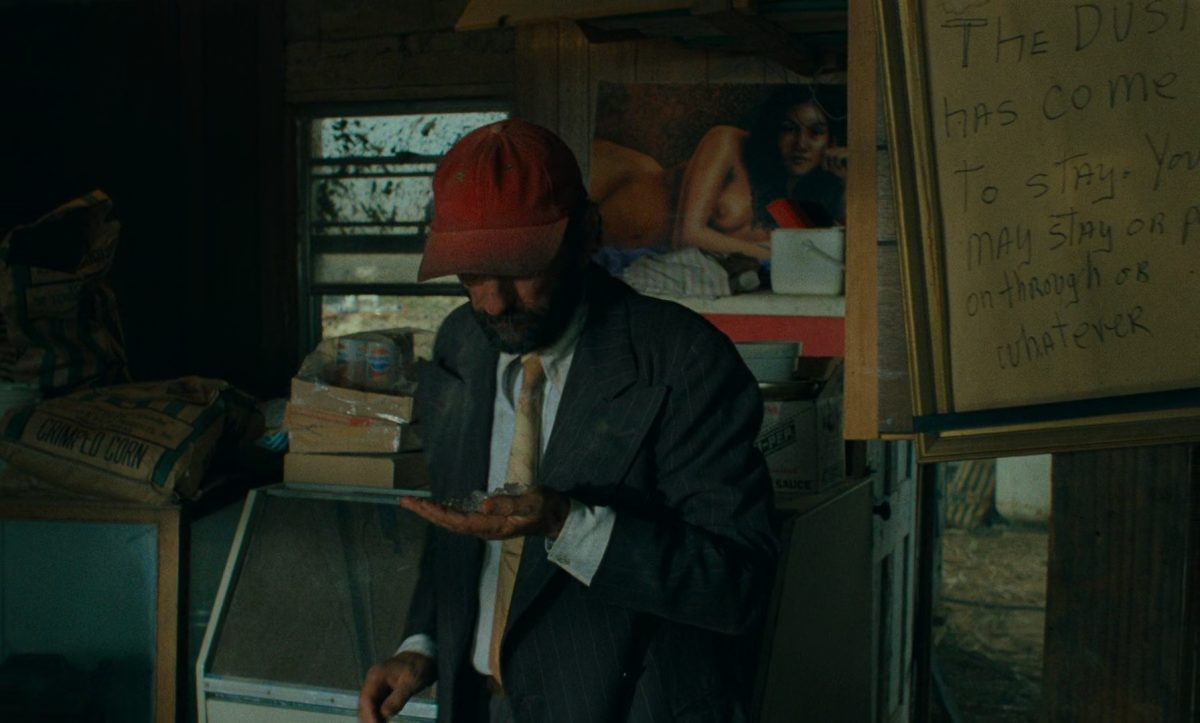
“You painted a naked woman because you enjoyed looking at her, put a mirror in her hand, and you called the painting ‘Vanity,’ thus morally condemning the woman whose nakedness you had depicted for your own pleasure.” – John Berger, Ways of Seeing
For the first 26 minutes of Wim Wenders’ “Paris, Texas,” Travis does not utter a single word. Even his doctor assumed him to be mute. This immortal meditation of Travis is not comprehensible in the land of mortals. He is not silent in rebellion or disrespect; he just is. The first connection to Travis is found when the doctor invades his wallet and contacts his brother Walt. Silence doesn’t pay bills after all.
As Walt arrives, Travis has already walked away from the clinic. Asking why he walked away is not important here. He could have stayed or passed on through or whatever. He just walked. When Walt finally meets Travis, he is full of questions that were obviously left unanswered by the man Walt had presumed to be dead. As Walt is doing everything possible to take his long-lost brother back home, Travis doesn’t seem to be keen on leaving the place. One can expect that from a person who can get attached to a particular car.
Travis’ first sense of emotion is seen on the mention of Hunter, the son he abandoned. But his first words were Paris, repeated thrice. Paris is not in France, but in Texas. Paris, Texas. He had bought a plot there, in this isolated town, where his parents had once had sex. The city where his Paris-like mother loved his Texas-like father.
The brothers arrive in Los Angeles, where Walt lives with his wife Anne and Hunter, who was left there by his mother Jane. In order to find his place in that house, Travis polished all the shoes. Meanwhile, Hunter had little recollection of his dad and was timid around him, so Travis tried to mend their relationship by reading books and taking advice.
However, you don’t become a good father that way. He was advised to look “dignified and respectful and confident” for a father isn’t allowed to look fun and chill. So Travis buys a grey suit, a fedora, and goes to pick up Hunter in a car. But that’s not who Travis is; he is fun and chill and does not fit into the strict father role. Just one walk with Hunter, and he realises he doesn’t need to be harsh on himself or on Hunter.
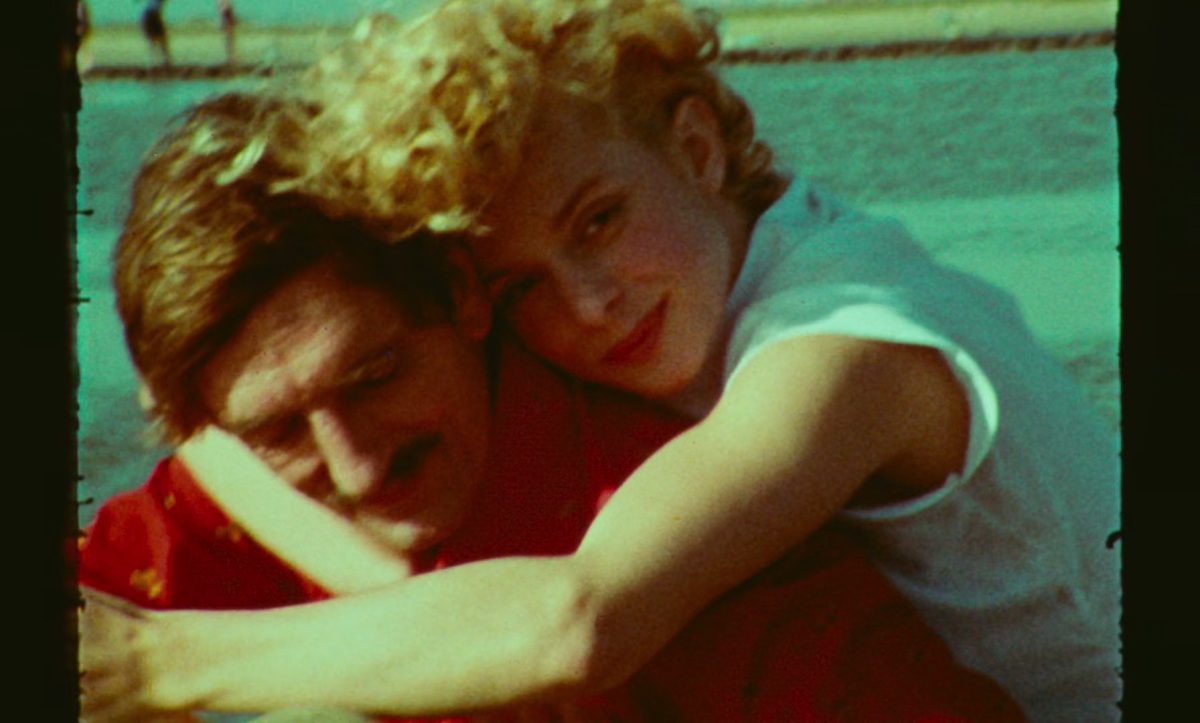
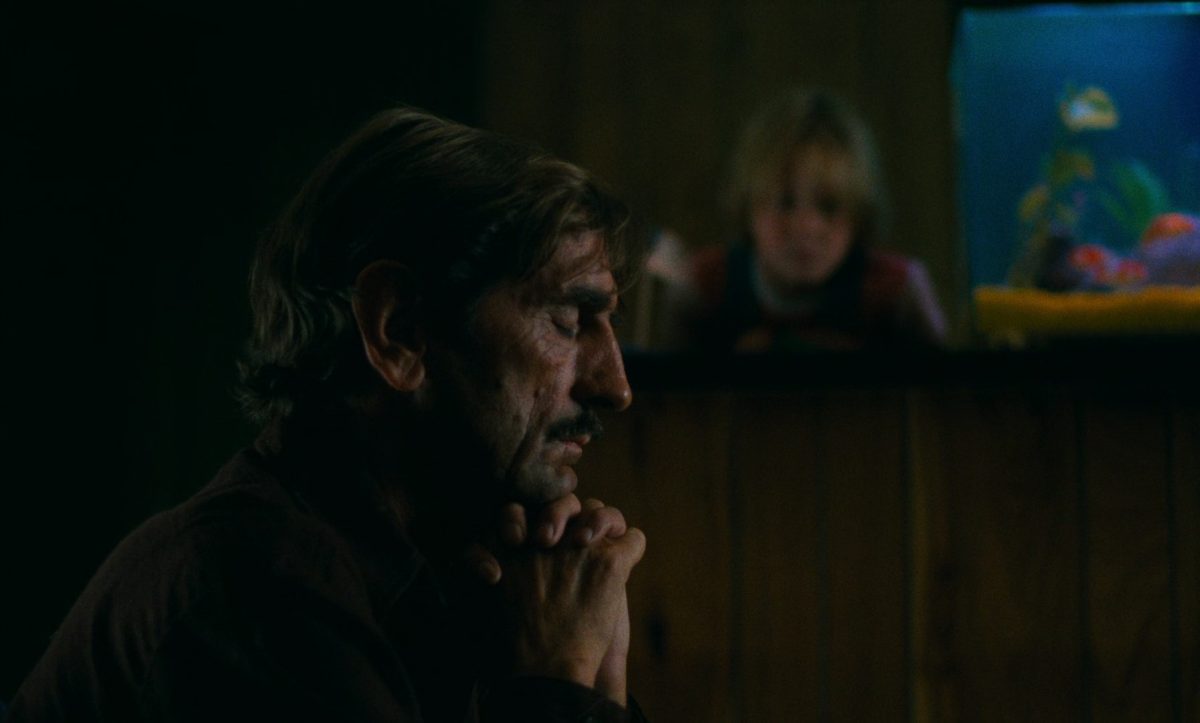
Walt shows old videotapes of their family when Travis and Jane were together, while Hunter is watching his dad watching the videotapes, and tells Anne that Travis still loves Jane, the real Jane, not the one in the movie.
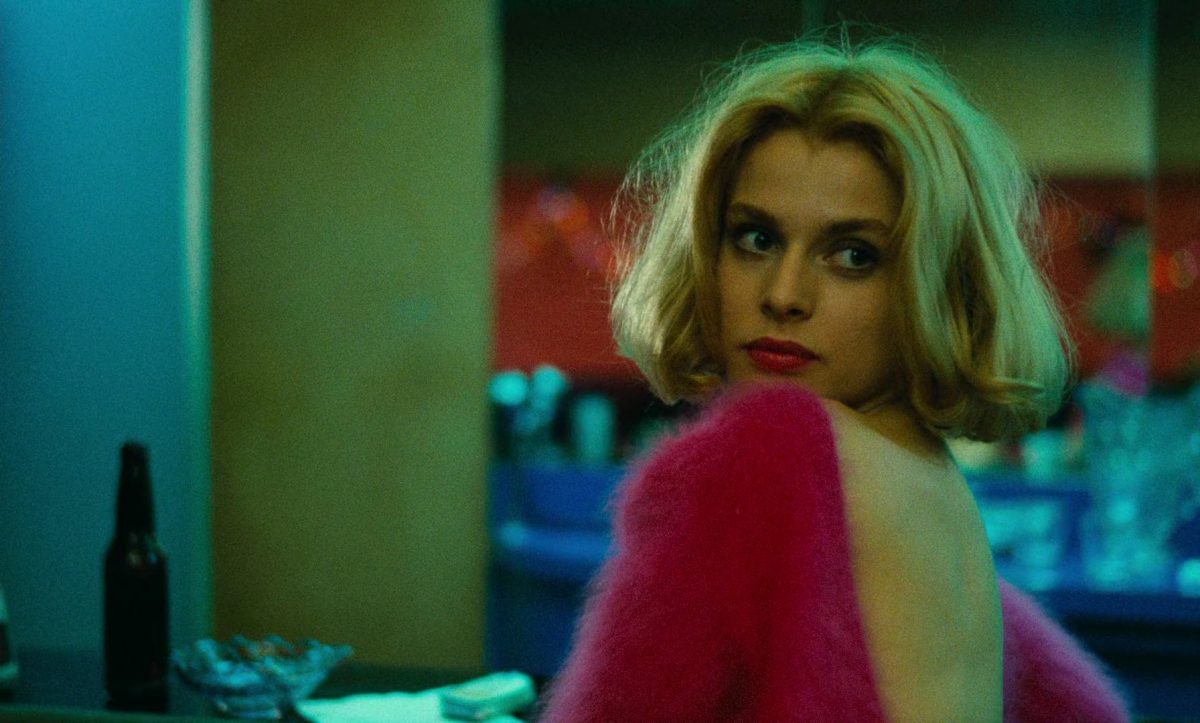
Soon, Hunter and Travis start their journey to find Jane, who is reportedly in Houston, which is a city in Texas. Maybe this time, Travis will get to reach his dream destination, his location of love – Paris, Texas. They locate Jane and find her working in a dingy place, a place where Hunter would not be allowed to go, a place where a mural of Lady Liberty becomes ironic, and a place where Texas-like men go in search of Paris-like ladies. She looks like a league above that place, like a rose in a field of daisies. A backless pink jumper, a short bob cut on blonde hair, and a look back towards an unknowing Travis. That’s how we met Jane… Jane the “Paris”.
These are not just titles, but the identities of these two places are so neatly tied to the characters. Texas is seen as this huge landmass of barren land, but it has its own geographical diversity, just like how Travis is now old and worn out, but has his own moments of fun and pleasure. Texas is stereotyped with cowboys and guns and violence and violence, which might even be true at some point. But just like Travis, it has a soft side too.
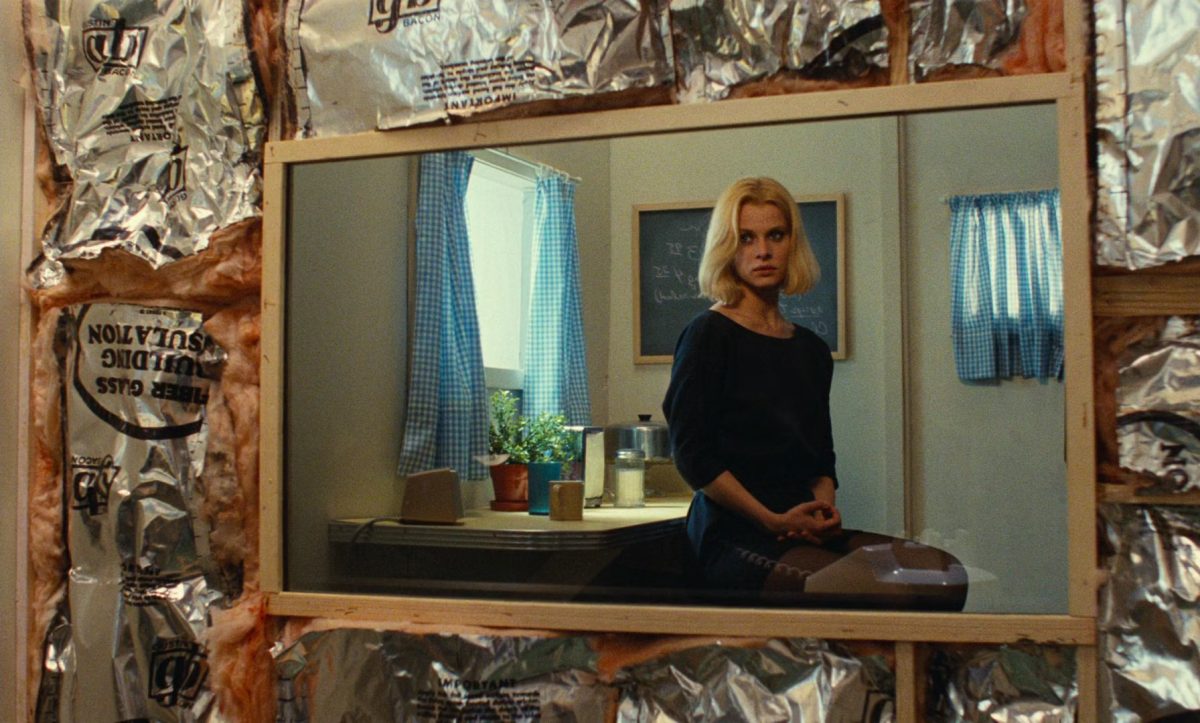
The same goes for Jane & Paris. Despite their beautiful appearances, they both have a traumatic past. Reaching this stage of beauty came through the pathways of violence. From far away, they both look like what everyone would desire, but when you go closer and untidy parts start to show up. From the outside, they both look picturesque to be kept as frames on walls, but from their point of view, the internal reality looks messy and unkempt. This was shown in the movie by how Jane’s room looks perfect through the looking glass, but from her side, it’s a one-way glass kept in its place with shabby insulation, wooden frames, and duct tape.
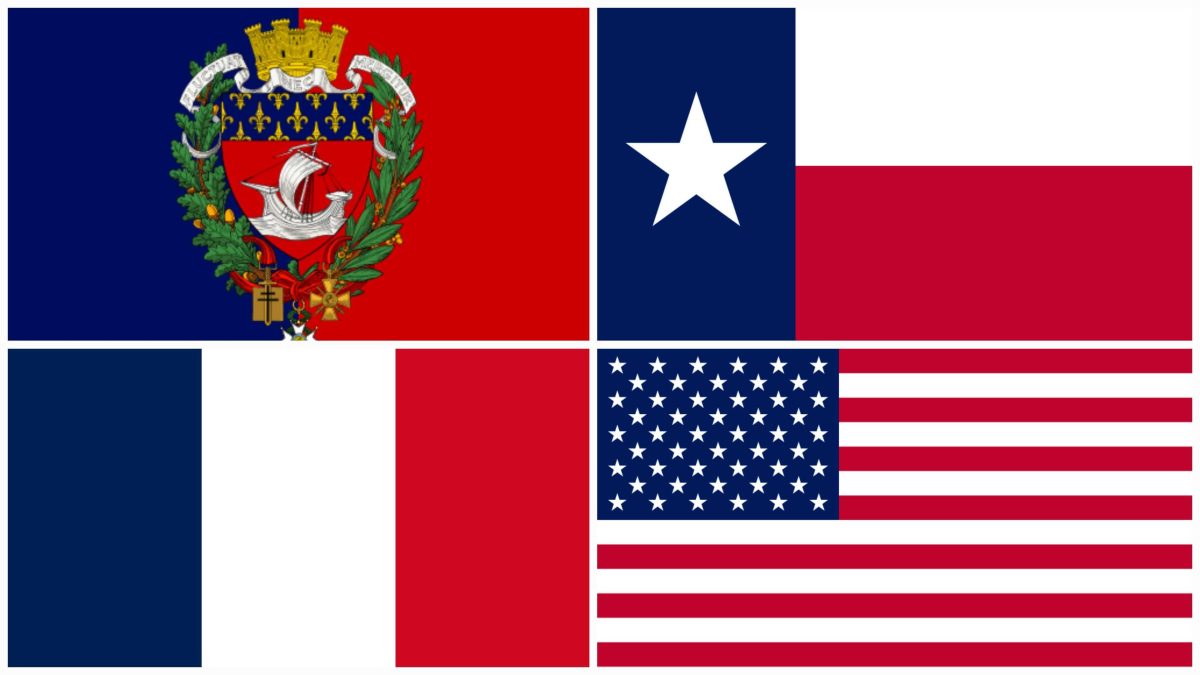
Even though the characters of these people and places are clearly contrasted in the movie, one common thread runs through both of them – the colours. Interestingly, both places use the same colours on their flags – red, white, and blue. And these colours are consistently shown in the movie. While looking for Jane, Travis is wearing a red shirt and blue denim. Jane drives a red car, and Travis is following her in a blue one. Their rooms are full of red, blue, and white props. Even in the last conversation, Travis has a blue light all over him. Heck, even Hunter is in a red shirt and a NASA jacket with an American flag on it.
Flags of Paris, Texas, USA, and France (clockwise from top left)
Colours moving from Reds to Whites to Blues when Travis and Hunter find Jane in Texas.
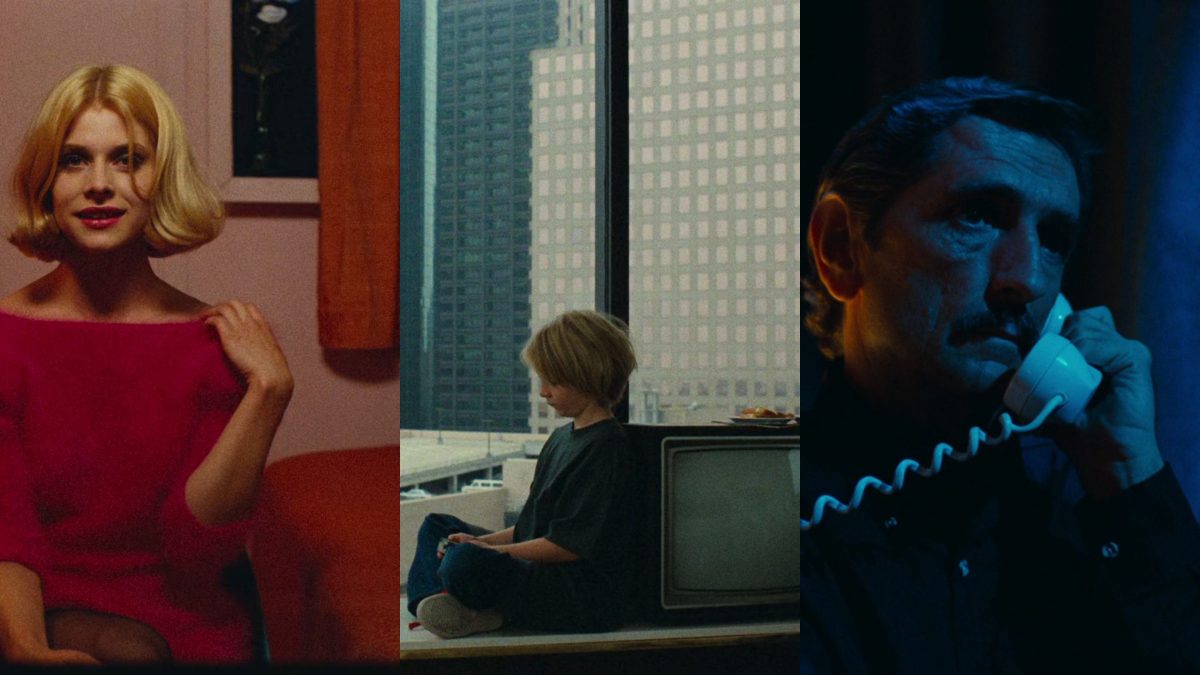
While red, blue, and white are the primary colours, a contrasting green neon has been used at places that Travis is about to leave soon. Even Hunter and Jane are wearing green in the end scene.
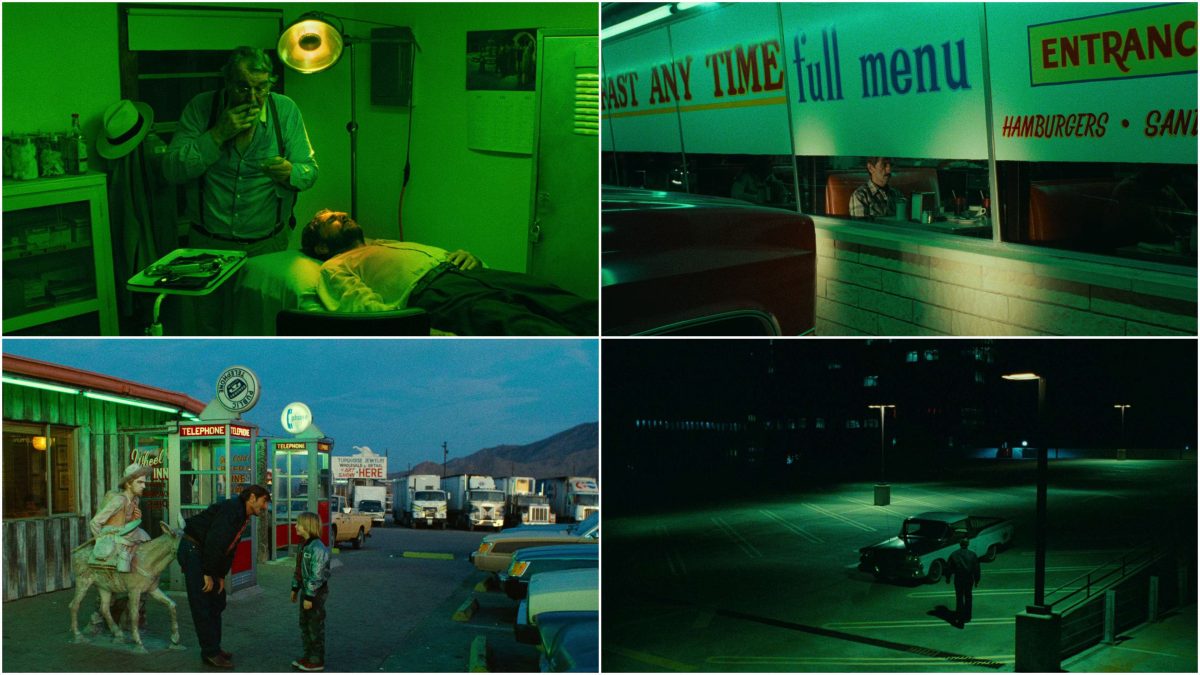
While the colours are beautiful by themselves, the texture elevates the movie to being visually stunning. The movie itself has a little grainy texture with neon-lit saturated colours creating a unique vibe to the movie. Even the composition of some frames is purely masterful. A lot of frames are divided into perfect halves or thirds, giving a symmetrical look to the scene along with complete focus on the characters’ close-ups. Robby Müller’s cinematography has made a movie where every frame is a painting.
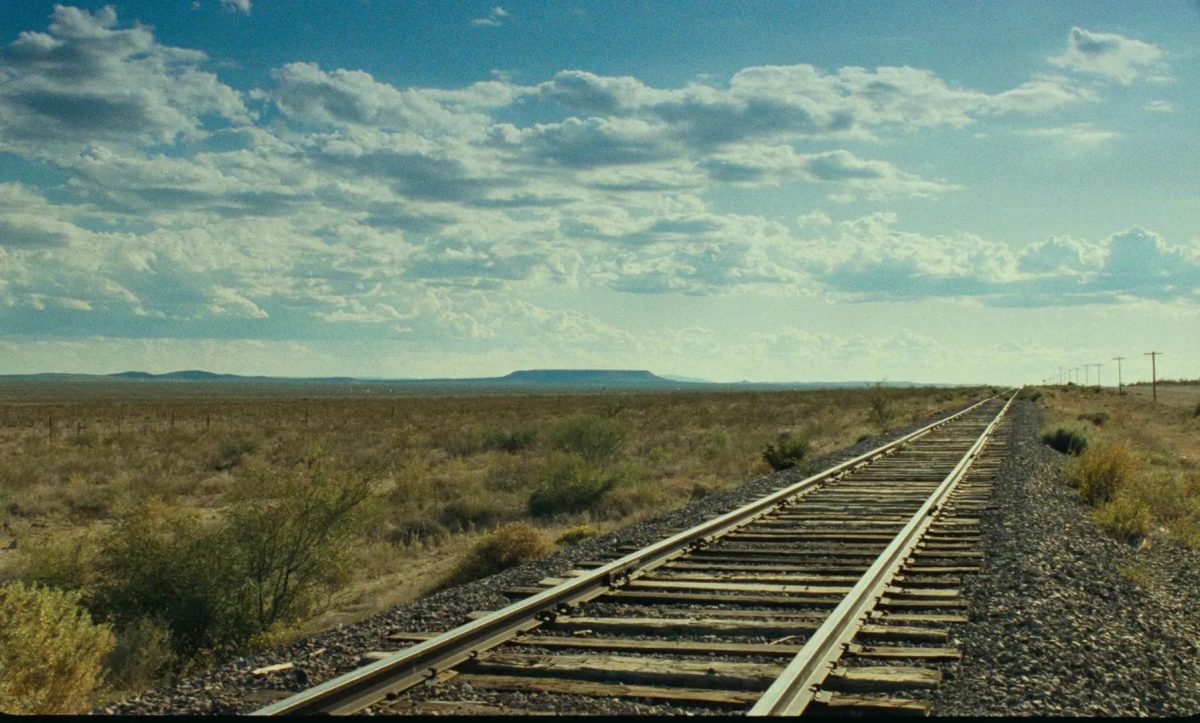
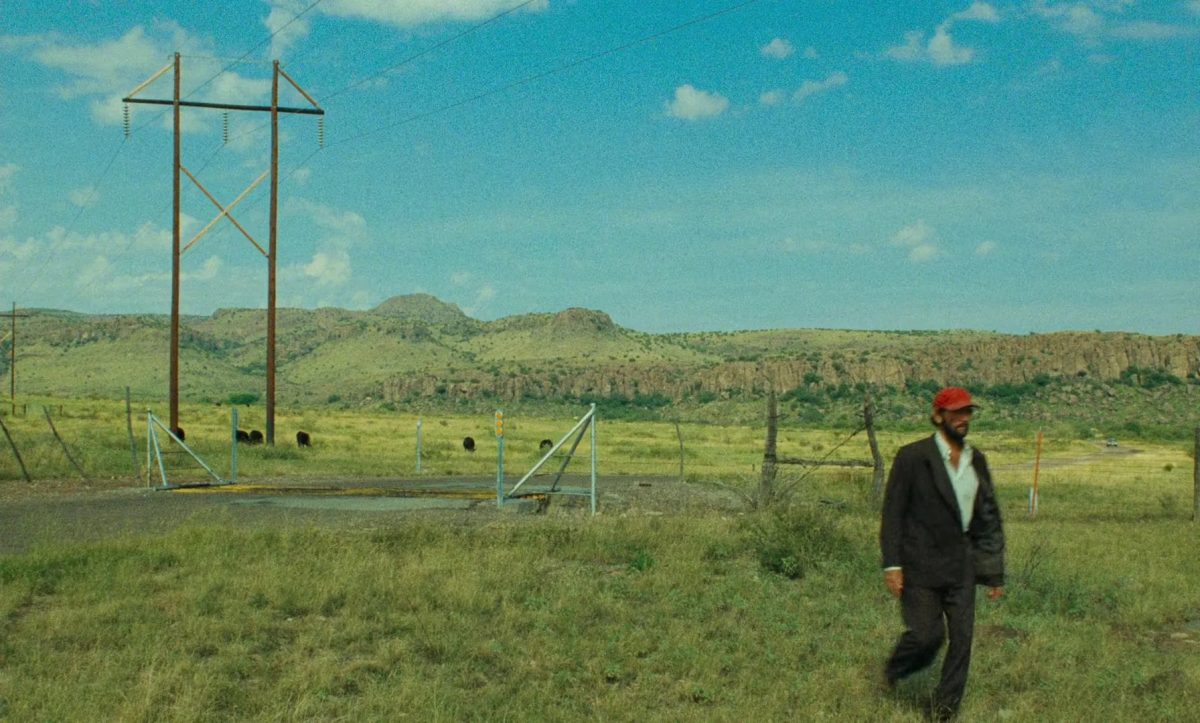
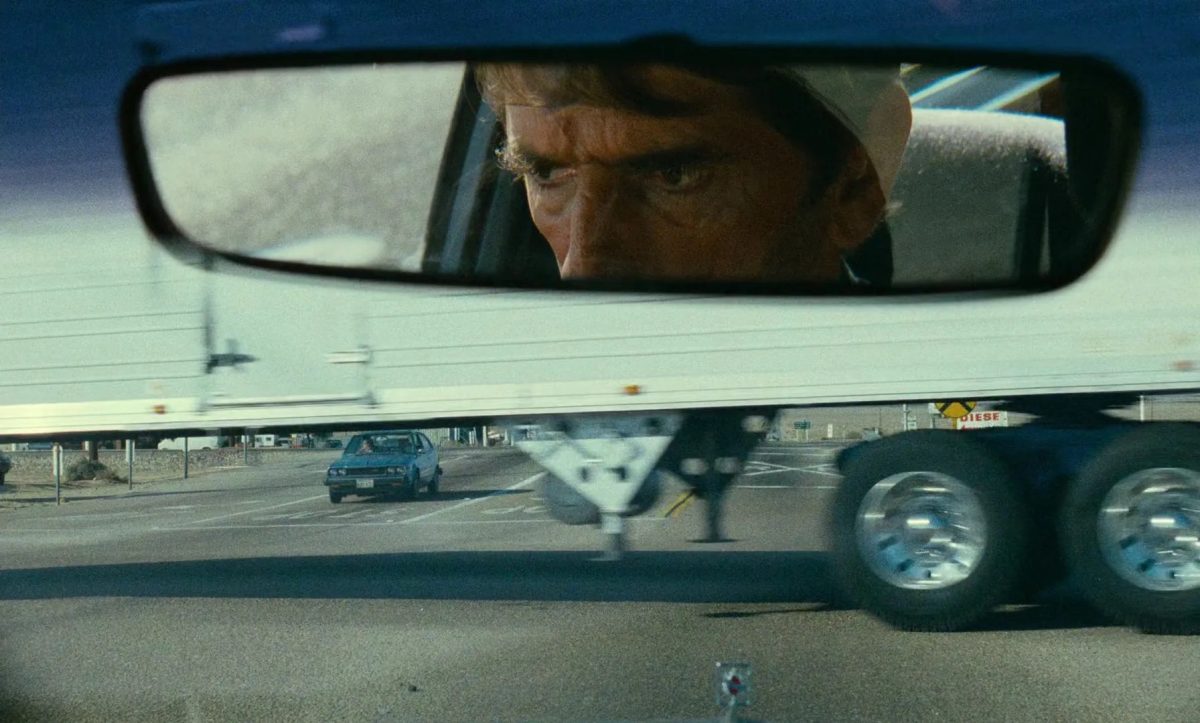
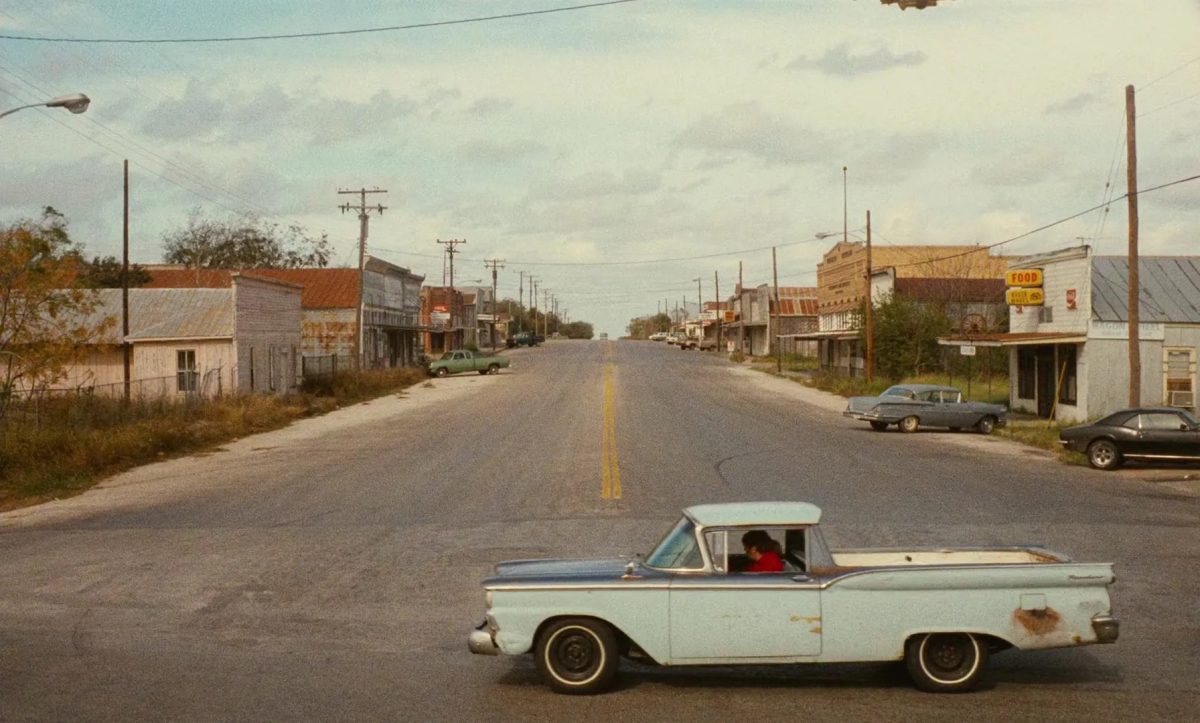
Example frames of splitting the screen into halves or thirds & some beautiful landscapes
For some films, every frame a painting can be a hyperbole. But the more you look at “Paris, Texas,” the more it starts to resemble art. Art from one particular artist – Edward Hopper. Hopper was a renowned American realist painter and printmaker known for his skill in depicting modern American life and landscapes. The impact of Hopper on Wenders is clearly visible in the movie and can be heard in any of his interviews. In fact, Wenders has even made a 3D film installation named “Two or Three Things I Know About Edward Hopper”. Capturing the scene from a distance with prominent geometrical shapes and diagonals, Hopper’s paintings look uniquely distinct. So much so that anything resembling his art is called “Hopperesque”. A term that fittingly applies to Paris, Texas.
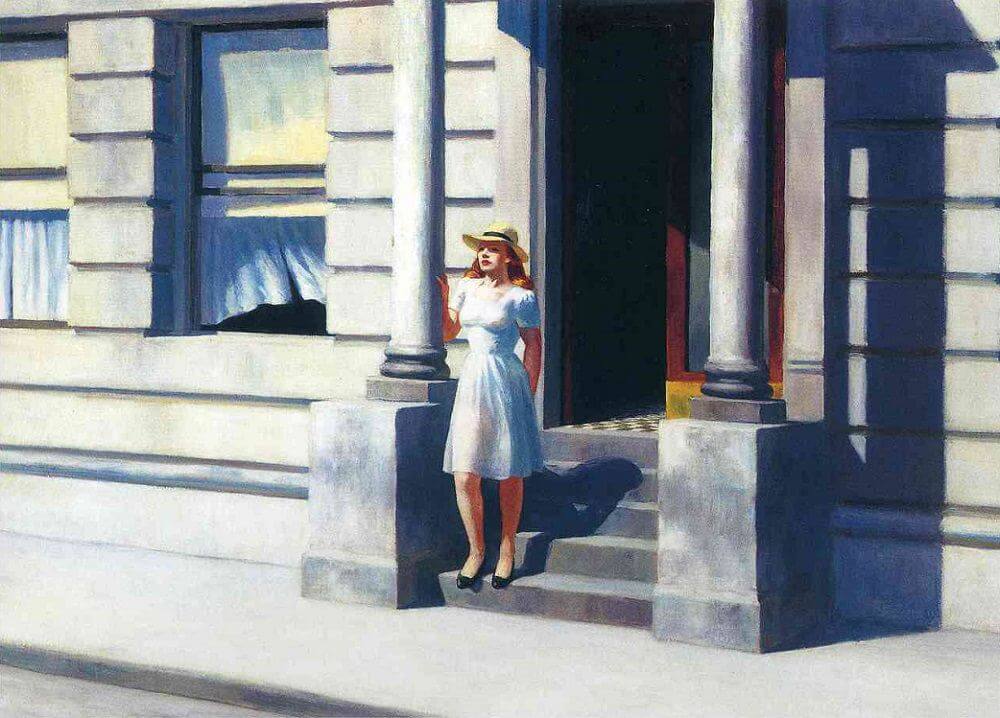
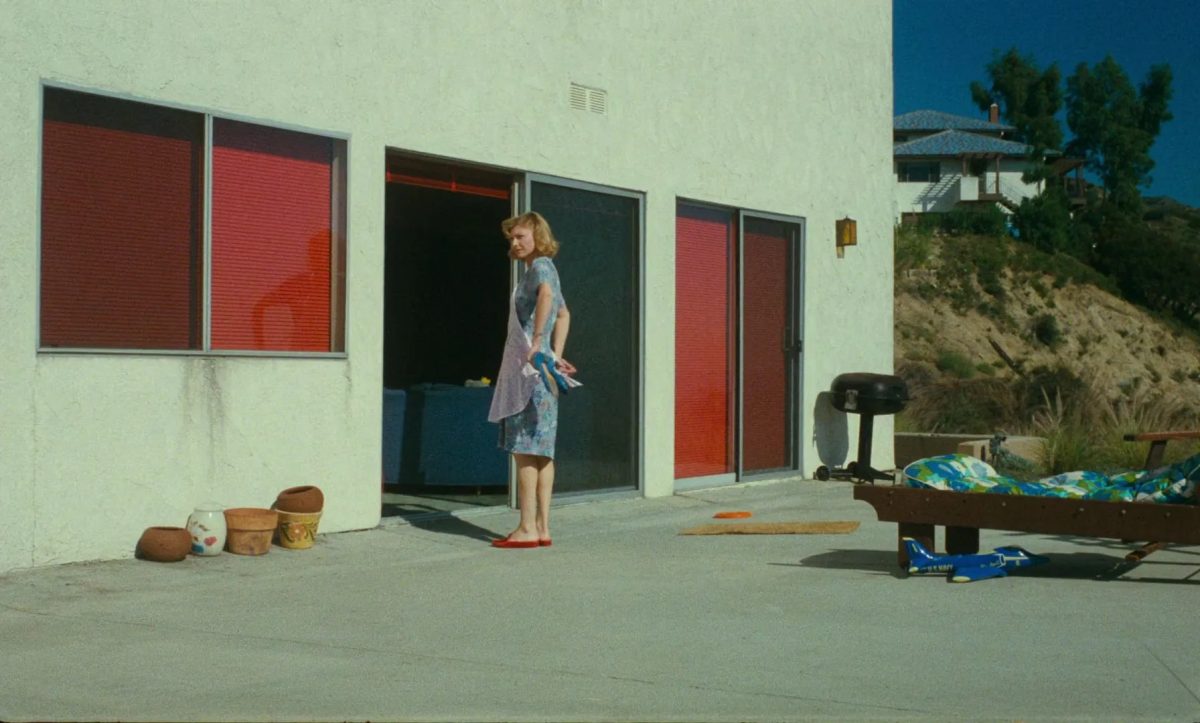
Summertime (1943) by Edward Hopper, on top of a frame from “Paris, Texas”
With a great fond of American urban architecture and lifestyle, Hopper predominantly explored themes of loneliness and isolation within American urban and rural settings. His most famous paintings, “Automat” (1927), “Gas” (1940), “Nighthawks” (1942), and “Office in a Small City” (1953), exemplify his focus on quiet, introspective scenes from everyday life. His primary emotional themes include solitude, loneliness, regret, boredom, and resignation, expressed in daily environments, like an office or a café, in public places, in apartments, on the road, or on vacation. As if he were creating stills for a movie or tableaux in a play, Hopper positioned his characters as if they were captured just before or just after the climax of a scene.
No wonder his art has gained popularity in recent years. With the increased intervention of the internet into our lives and shattered social harmony, art imitating solitude and loneliness is probably more relevant than ever. “Hopperesque” isn’t only the composition, it’s also what Hopper’s art stood for. “Paris, Texas,” captures the Hopperesque loneliness like no other. Paraphrasing Anurag Minus Verma, “It’s loneliness without the enjoyment of freedom and without anxiety of solitude”.
Loneliness that just is. It’s there, and you live with it. You still go to the restaurant, the gas station, the café, or the office like a character from Hopper’s paintings. You might not have lost a brother or the love of your life, but you still hit the road every day in hopes of finding someone, and when you find them, you hit the road again. And again, and again.
Wenders very well understands the relevance of “Paris, Texas,” and the relatability of Travis at the time of release, as well as today. In a 2024 interview with Letterboxd, Wenders said, “Travis is a unique character, but in a strange way, easy to identify with. Especially today, where loneliness is a big, different topic than 40 years ago.” Maybe that’s why he went out of his way to keep the end the way it is. An ending with no respite for Travis. In the interview, Wenders revealed producers wanted a different end to the movie. They said, “It’s going to be so easy. All we want you to do is shoot the car on the freeway, making a U-turn, and that will be the last shot of the film. Let him make a U-turn, and then everybody will know it’s gonna be okay.” And I said, “Not over my dead body will I shoot a U-turn.”
This resulted in a restricted distribution and did not support the main actor (Harry Dean Stanton playing Travis) for the Oscars. Wenders mentions, “The whole thing of the movie was that he made a great decision, a selfless decision. Making a U-turn, that’s cowardice.” Travis had finally come up to a place where he could stop thinking about himself, where he could stop tormenting people for the way they think of him, and Wenders would not let that go. Despite being feeble and relatable for most of the movie, it is revealed that Travis was quite literally a criminal, and it might be morally unethical for Travis to retreat back with his family without consequences.
His past has led him on a highway of life, and highways don’t have U-turns. He just walks the huge landmass of Texas until he is one with the soil of Texas itself. For he is Texas and Texas is him. While Jane can start a new life with the love of his child. For that’s what Paris is meant for. She is Paris, and Paris is her. People are places and places are people.
The title of the movie, Travis’ nostalgia for this place, and his conviction to reach there – all contribute towards making this place feel like a mythical faraway place. A place where you would desire to go for the whole of your life, yet this stationary place keeps drifting away from you. “Paris, Texas,” is like Timbuctoo in literature – bearing the idea of a legendary, exoticized city that symbolizes the unknown and the unexplored. It is used to evoke a sense of wonder, nostalgia, and the allure of the unknown.
“Paris, Texas” is like Rangoon, where the love interest of a yearning wife has gone, and she has no means to go there, even if all she wants is one last glimpse of her lover. All she longs for is a meeting or at least closure. Like in “All We Imagine as Light,” Prabha from Mumbai desires Germany so much that everything made there becomes an exotic and erotic artefact for her. A symbol of her proximity to Germany and thus, her husband. Sometimes people and places are so far away that one can only long for them, ironically making them feel closer than they actually are.
Qais wanted to go to the other side of the mountain with Laila, Jordan asked Heer to meet him on the plains where truth and lies don’t exist. Sometimes it’s not the distance from the person that kills us but the lack of a place where our fate could collide with theirs. A place that sounds so bizarre that anyone would raise an eyebrow at its existence. A place so otherworldly that only magic can reach there, and a place sourced from a fairy tale. Its existence is passed down through generations. A place where a Paris-like girl could meet a Texas-like boy – a place like Paris, Texas.
The title “Paris, Texas” fuses two seemingly distant places by a thread. “Hiroshima Mon Amour” does that too. While “Paris, Texas” shows how a place slowly seeps into the person, “Hiroshima Mon Amour” describes how the tragedies of a place take hold inside us. At the start, the hero thinks that his newly found French lover can never comprehend the trauma of those who lived through the bombings. That is, until he hears the story of how women were treated in France during the war.
Thrown in the underground, hair cut to their roots, all she could do was scrape walls with her bare nails and munch on her blood, just to feel alive. Even though she was made to run from her town of Nevers one random night, he understood how Nevers had never escaped her. He understood how the River Loire still flows inside her as blood, how the path of her getaway is still deeply woven with her veins, how the marching tune of Marseillaise still raises her heartbeat, and how the earth of the lawn where her first love took his last breath still sits heavily on her chest.
He realised her pain is not too different from his. It’s not far off from how the 10000 degrees of Peace Square still boils his blood, how new species of animals crawl into his skin when he thinks of the Little Boy, and how the sound of that bomb still deforms the lives of Japan since they were born.
They both realise how their current selves are shaped by the place of the past. The places are personalities, and their personalities are places. She calls Hiroshima the city of love, and how his body fits her like a glove. At the end, they name each other Hiroshima and Nevers. People are places and places are people.
She was Nevers, and He was Hiroshima. She was Mumbai, and He was Germany. She was Paris, and He was Texas. Their paths were meant to converge in Paris, Texas. But they diverged, they diverged, and they never met again. Not in Hiroshima, not in Mumbai, and surely, not in Paris, Texas.