The 2010 film “Black Honey” or “Molasses” remains essential for understanding the Arab individual’s relationship with the idea of homeland, or at least some aspects of it. The film presents this struggle through the figure of “Masry,” whose name literally means “Egyptian,”—a man returning to Egypt after years in America, carrying expectations that almost immediately collide with a reality unlike the one he imagined. Masry’s journey begins with an idealized image of home.
This picture was formed over years of longing and selective memories–especially those of a carefree child, not an adult fending for himself–that cause false nostalgia. But he soon confronts something entirely different, mainly the ways his supposed “home” was a bureaucratic nightmare that does not care about its own citizens.
The American passport that Masry carries opens doors that remain closed to ordinary citizens. The formal structure of rules and regulations reveals itself as just a facade. The real operating system is patronage (wasta), and the foreign passport represents its highest form. Yet while this document grants preferential treatment that cuts through bureaucratic mazes, it simultaneously closes the door to genuine participation in society.
Masry—by virtue of his American passport that also symbolises his clinging to a Western mindset—remains a spectator rather than a participant in Egyptian life. The comfort his privileges provide transforms into a form of isolation. Rather than feeling he has returned to his roots, his new status confirms that he is a permanent guest in his family’s home.
When Masry accidentally loses his American passport during a protest against America, the system’s true face shows itself. The same officials who welcomed him before now treat him as a second-class citizen. The system never respected Masry as a human being. It respected him as a symbol of external power.
Without the passport, he becomes another number in a queue. Losing the American passport places Masry in the same position as any Egyptian citizen. Slow bureaucratic treatment, institutional indifference, and daily humiliation—all become his direct experience. Thus, he begins to feel a genuine connection, because participation in difficulty gives him a shared ground with other characters.
It is also worth examining that this is an anti-American protest. Masry, as an American passport holder, is symbolically on the other side. Yet he is physically present among the protesters, swept up in their momentum. This contradiction captures his belonging to both sides and therefore fully to neither.
Masry’s retention of his passport alongside his choice to stay represents an implicit acknowledgment of a contemporary idea that tells us complete, absolute belonging may be impossible in an era of globalization and entangled identities. He does not choose a fixed identity as he cannot. Yes, he chose to stay in Egypt, but even that choice was accompanied by his using his American passport privilege to land the airplane; he will never be on the same level as his friends and family as long as he has that passport
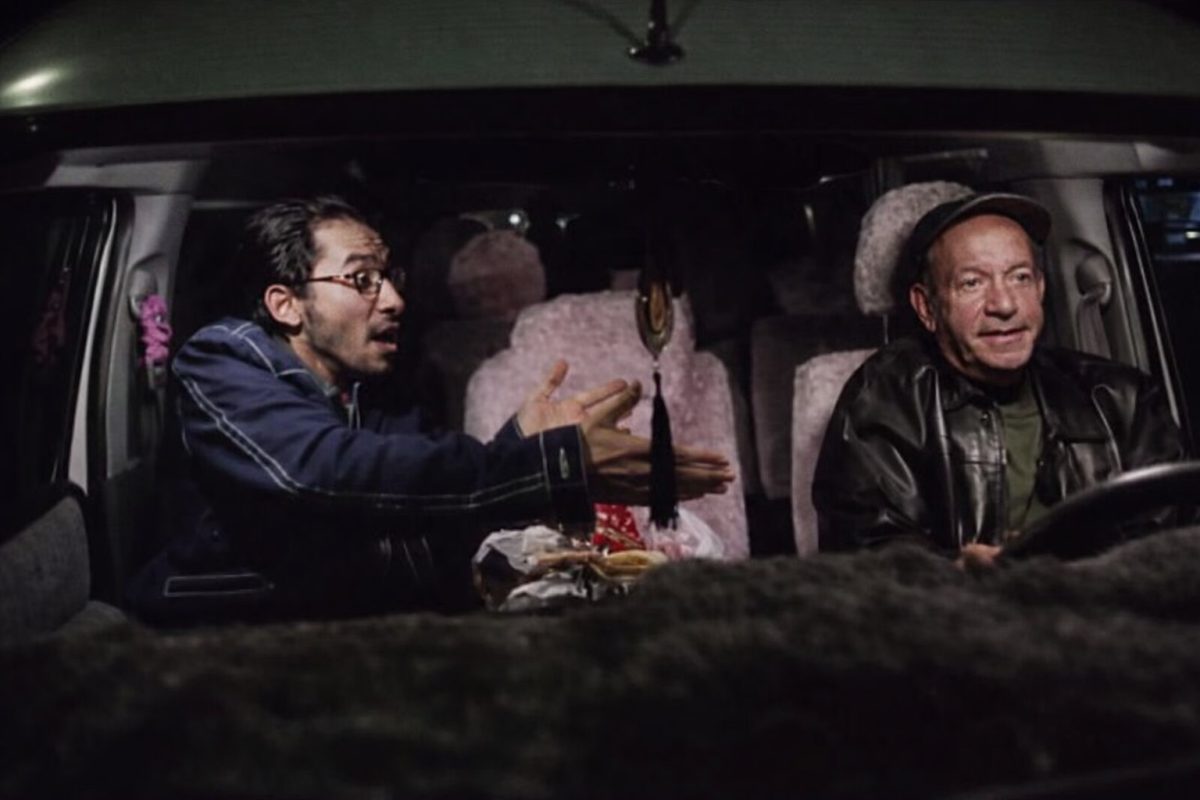
Other perspectives are represented as well through secondary characters. First, the man Masry encounters on his journeys to and from Egypt represents the rational choice: departure as a logical solution to an unchangeable reality. This man has witnessed “the other side” and made comparisons, then chose to leave as a practical solution. Second, the man attempting to obtain a visa, whom Masry encounters again at the airport. Both men sit on either side of Masry at the airport, speaking negatively about Egypt.
The first wants to escape based on real experience, while the second wants to escape based on dreams and illusions. Their agreement, despite differing experiences, is a strong indictment of the situation in their “home.” Masry, seated between them, finds himself trapped between two different logics: the logic of rational escape and the logic of emotional escape.
The film recognizes that the question of homeland in the contemporary context is no longer a simple search for stability. It has become a daily weighing of comfort against meaning, salary against genuine relationships, safety against the capacity to endure, freedom against barely hearing your native language–the language of your loved ones. Yet these choices are not equally available to everyone. Escape, whether rational or emotional, requires a capacity for movement that many lack.
Outside the film’s direct narrative, there are groups trapped within the homeland by constraints more rigid than Masry faces: poverty, class, gender, and the absence of legal protection. For these groups, the question is not whether to stay or leave. Leaving is not an option. The resources required for mobility—money, documentation, connections—are unavailable to them.
Without making it an explicit focus, the film reveals the limits of its thesis when we extend the reading to include more vulnerable groups, particularly women. The suffering Masry discovers is bearable suffering. It does not threaten his immediate physical existence. But in a context where violence against women rates are extremely high and institutional protection fails, especially in Egypt, the question of homeland is not posed as a matter of belonging or meaning. It becomes a question of basic safety. Thus, the homeland that can be “endured” by some may be an unlivable place for others.
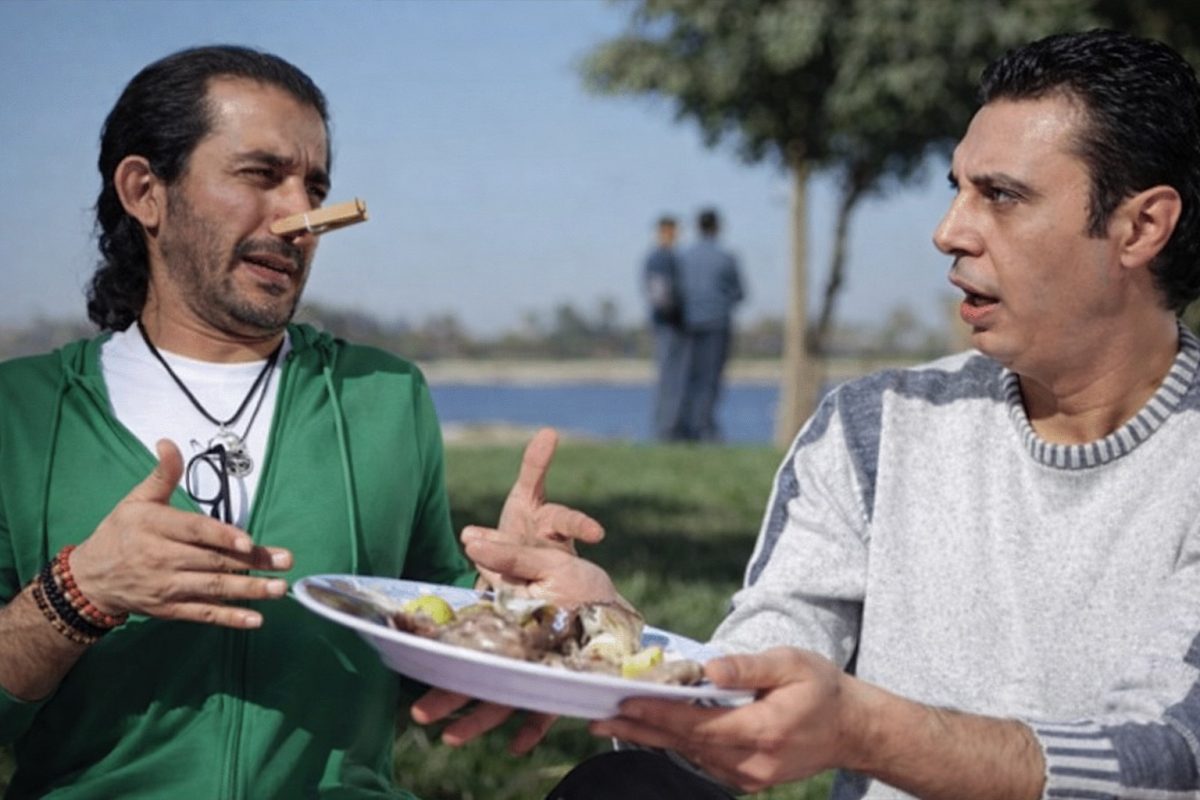
Masry can afford to romanticize childhood as a boy running through streets, playing with friends, being fed by his mother—these memories are available to him because his gender allowed him to move freely. For many women, childhood is not remembered as freedom. It is remembered as a restriction.
The streets were not places to play but spaces to be wary of and not spend too much time in. As an adult, the bureaucratic humiliation Masry experiences temporarily is the permanent condition of many citizens, but women face additional layers. A clerk who treats a man with indifference may treat a woman with harassment. A police officer who ignores a man’s complaint may blame a woman for the crime committed against her.
In this sense, the nostalgia Masry carries is conditional nostalgia. It is nostalgia for those who can remember home as a warm space and then discover its harshness, not for those who were never granted that warmth in the first place. For women and minorities, nostalgia is replaced by mourning for a homeland that never provided what it should have. The grief is not for a place left behind, but for a place that failed to become what it could have been. This does not mean that the film’s logic was flawed–as it would not be feasible to get into all those perspectives in 120 minutes–it just means that it has boundaries.
The film considers return as a process rather than an event. Masry arrives, leaves, and returns again. This movement suggests belonging is not binary, but rather that it exists on a spectrum. His border crossings reflect the internal crossings between the different identities he has. The film shows the two versions of himself coexisting, sometimes peacefully, sometimes in conflict. “Black Honey” is not a film about Egypt.
It is about the idea of homeland in an age of globalization and entangled identities, and the place we carry with us wherever we go, that pursues us even when we attempt to flee. This leaves us with an open question: what kind of difficulty can we—or do we want to—live with? While also keeping in mind the contradictions of our relationship to our homeland and understanding that truth is incomplete, contradictory, and sometimes painful, but also, our humanity forms itself within these contradictions.
Beyond the film, these questions extend to how we judge those who leave. In Arab societies, the desire to emigrate is sometimes framed as weakness or betrayal. Those who express suffocation are told they do not love their country enough because they would not die for it. This judgment also ignores that the experience of homeland is not uniform. For some, the country is a place of memory and family. For others, it is a cage.