Homayoun Ershadi’s death on 11 November 2025 marks not only the loss of an actor but the fading away of a particular cinematic sensibility, one that defined an entire era of Iranian filmmaking. His face is best remembered from “Taste of Cherry,” Abbas Kiarostami’s 1997 Palme d’Or winner, a film that remains one of the most quietly radical works of world cinema.
Ershadi was never meant to be an actor. He was an architect, a man whose life followed the familiar rhythms of the Iranian middle class — study, work, the quiet routines that make up a life. The story goes that Kiarostami noticed him while he was simply sitting in his car in Tehran traffic, an ordinary moment that would change his life.
Kiarostami had a way of blurring the boundaries between fiction and reality, relying on non-professional actors, real locations, and a certain philosophical openness. Ershadi fit effortlessly into that world. He carried the texture of real life with him, and that is why he was the right choice for the film, something one can feel in every frame. There was something in Ershadi’s face, a quality of introspection that did not appear constructed or trained. Kiarostami perhaps saw in him a presence untouched by the mannerisms of cinema, a quiet authenticity that the film needed.
In “Taste of Cherry,” Ershadi plays Mr. Badii, a man calmly preparing for his suicide and driving along the outskirts of Tehran looking for someone willing to bury him if he succeeds. The film unfolds almost entirely inside a car, the quintessential Kiarostami space. Yet its emotional and philosophical expanse is vast. Ershadi’s performance is deceptively simple: long silences, careful gazes, a stillness that resists interpretation. But this is exactly where its brilliance lies. He did not “act,” but rather inhabited the role. What we witness is not the demonstration of emotion but the presence of emotion, ambient, unspoken, trembling beneath each hesitation.
To understand why Ershadi’s presence mattered so deeply, we must return to the film’s themes. “Taste of Cherry” is often labelled a film about suicide, but to see it only that way is to simplify it. The film’s reality is far more layered and elusive.
In an interview about the film, Kiarostami remarked: “The choice of death is the only prerogative possible… because everything in our lives has been imposed by birth, our parents, our home, our nationality, our build, the color of our skin, our culture.” Place those words — home, nationality, culture against the backdrop of Iran: the ever-present militia, the oppressive weight of the regime, the shifting urban landscape through which Badii drives, dust rising behind him. Within this context, his desire to be buried does not feel entirely inexplicable.
We cannot, of course, objectively justify his decision. But since we know almost nothing about his past, only that he once served as a soldier and now wanders the city in his car, we are left to interpret the forces that might push him toward the brink.
A film built around such a theme could easily have become didactic or issue-driven, but “Taste of Cherry” subverts that path. It instead turns toward investigating the human need for acknowledgment, the desire not simply to die but to be witnessed in one’s dying. Again and again, Badii approaches strangers with his unusual request. He tests not only their willingness to help but also reveals his own vulnerability. He is asking to be seen and asking for a presence, even if that presence is destined to arrive at the moment of his disappearance.
Also Related: Taste of Cherry [1997]: The Absurdity of Suicide
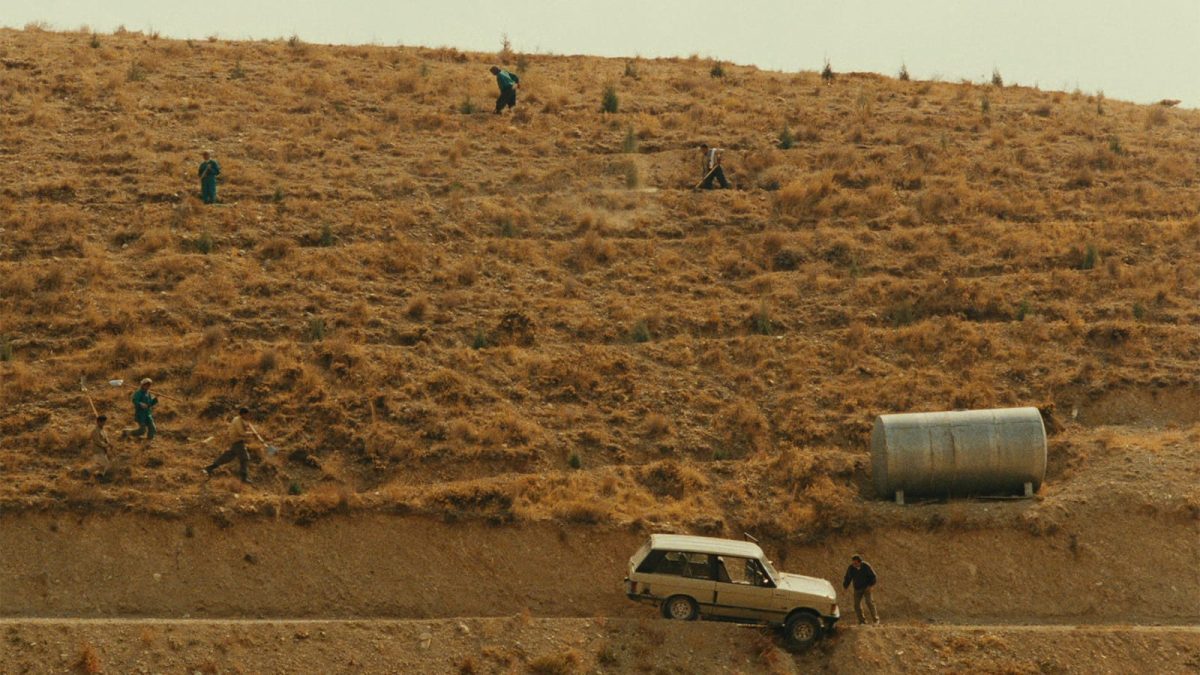
This is what makes Ershadi’s calm, dignified performance so piercing. He embodies the paradox of a man who wants to die yet still longs for connection. When he sits with the Afghan security guard, when he speaks with the seminarian, or when he listens to the taxidermist describe the taste of mulberries, his face shows not dramatic conflict but the faint ache of a man grasping at the remnants of empathy in a world that feels increasingly indifferent.
Roger Ebert, the late American film critic, famously called cinema a “machine that generates empathy,” inviting viewers into lives far from their own, which makes it all the more striking that he awarded “Taste of Cherry” only one star. In his review, he acknowledged the film’s humanistic intent and even praised the courage it must have taken for an Iranian filmmaker to confront the forbidden subject of suicide. “Yes,” he wrote, “an Iranian director making a film on the forbidden subject of suicide must have courage… But is Taste of Cherry a worthwhile viewing experience? I say it is not.”
His dismissal reveals something crucial about the expectations that often shape Western criticism: a desire for emotional clarity, psychological access, and narrative transparency. Kiarostami withholds all of that. The film’s quiet ambiguity is not a deficiency but a refusal to participate in the kind of empathy that demands understanding on familiar terms.
Instead, “Taste of Cherry” asks us to sit with what we cannot fully grasp. It invites empathy while constantly reminding us of empathy’s limits, especially across cultural, political, and experiential borders. What Ebert interpreted as emotional distance is in fact the film’s insistence that some experiences, shaped by censorship, surveillance, spiritual fatigue, and the claustrophobia of life under a repressive state, resist easy comprehension. The film becomes not an empathy machine but a meditation on the communicational gulf between different worlds. Within that gulf, its political and existential implications begin to unfold.
In fact, if anything, the film’s political and existential implications grow heavier in retrospect. Kiarostami’s cinema has consistently explored the constraints imposed on life by society, the state, and circumstance.
In “Taste of Cherry,” death emerges as the one act not determined for us. Ershadi embodied this idea with a clarity that felt both devastating and dignified. His face captured the tension between autonomy and resignation, between the desire for control and the quiet acceptance of fate.
The film’s controversial ending, which blurs the line between fiction and documentary footage of the crew shooting the film, is one of Kiarostami’s boldest gestures. By suddenly revealing the filmmaking apparatus, he erases the boundary between the story and its creation.
Returning to Ebert’s idea of cinema as an empathy machine, this is precisely what Kiarostami interrogates. Empathy, no matter how deeply we believe in it, is never absolute. We often claim to understand what someone else is feeling, but in truth, we cannot fully enter another person’s interior world. The ending acknowledges this rupture. It reminds the viewer that empathy inevitably breaks down, that it is always mediated and vulnerable to misunderstanding. By pulling us out of the narrative at the moment of highest emotional tension, Kiarostami forces us to confront the limits of what we can know about Mr. Badii, and by extension, about anyone.
Even after “Taste of Cherry” won the Palme d’Or, it screened in only a handful of Iranian cinemas. Reports suggested that officials viewed the film as too “death-oriented.” As late as 2009, when it aired on Iranian television, the first question posed was, “Does this film promote suicide or does it promote life?” Kiarostami replied, “The movie is about the possibility of living, and how we have the choice to live. Life isn’t forced on us. That is the main theme.”
Also Read: The 30 Greatest Cannes Palme d’Or Winners of All Time
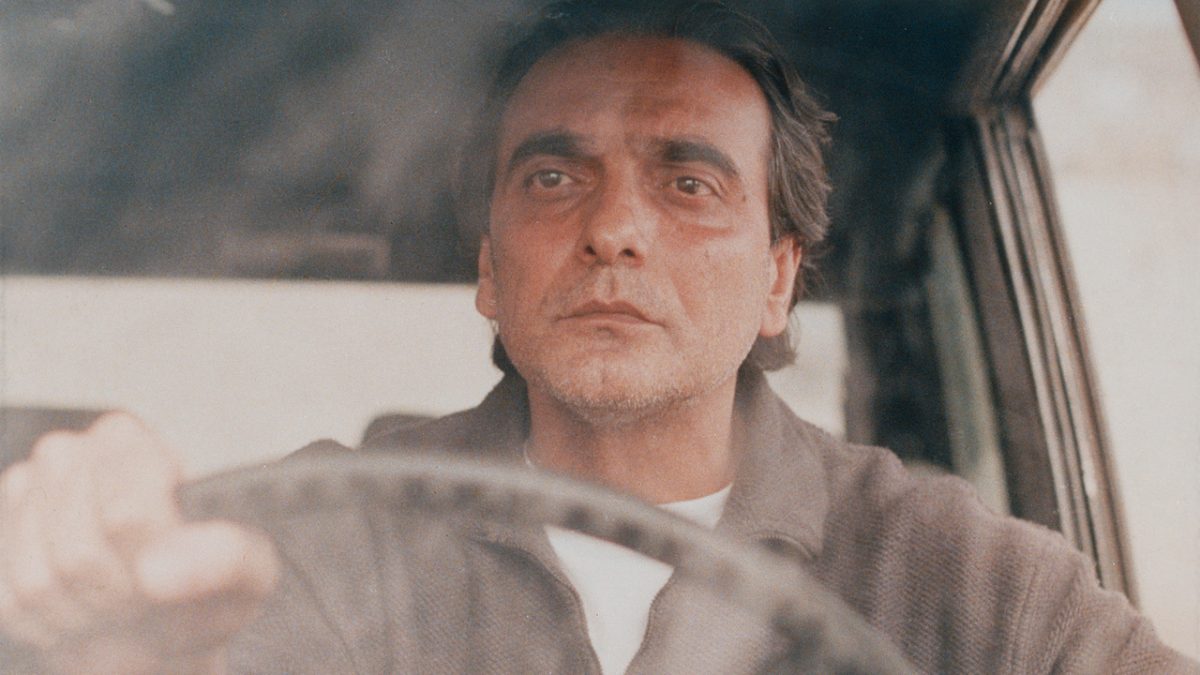
Although he generally resisted explaining his films, the taboo surrounding suicide in Iran and in many cultures meant that he was repeatedly pushed to clarify his intentions. That pressure was its own quiet tragedy, a reminder of how easily his work could be flattened into a moral argument. Yet he continued to make films on his own terms, fully aware that his choices would be questioned, misread, or rejected. His unwavering commitment to ambiguity and open-endedness marked him as a filmmaker who believed in cinema’s ability not to instruct but to awaken, to leave space for the viewer’s own reckoning.
And this is why “Taste of Cherry” remains inseparable from the man who anchored it. Ershadi was not merely acting within Kiarostami’s world. He was living inside its questions. Though “Taste of Cherry” remains his most iconic role, Ershadi went on to build a respectable international career, acting in films such as “The Kite Runner” and “The Song of Sparrows.”
Yet none of his later work ever quite captured the quiet gravity he achieved under Kiarostami’s direction. It was not due to a lack of talent. His particular gift, the ability to appear entirely unmediated, belonged to a kind of filmmaking that increasingly feels endangered. Today’s global cinema, shaped by pace, plot, and performance, leaves little space for the unhurried contemplation that Kiarostami championed.
Ershadi, by simply being himself, became a symbol of that cinematic world. His death feels like the dimming of a light from an era when Iranian cinema was redefining realism, challenging censorship with poetry, and investing profound philosophical weight in the simplest of gestures. His legacy is not one of grand speeches or dramatic transformations, but of the radical power of existence — of a face that held the camera without fear, without embellishment, without artifice.
As we remember Homayoun Ershadi, we also remember the fragile boundary he helped dissolve, the one between life and film, actor and character, world and image. “Taste of Cherry” was never only a film about a man deciding whether to live or die. It was a film about how being seen, even briefly, can alter the meaning of one’s life. Ershadi understood this instinctively and profoundly. His death, like his performance, feels like a quiet, contemplative fade-out, the end of a presence that never needed to announce itself to be unforgettable.

![Loev [2017] – A Tender and Subtly Powerful Gay-Themed Cinema](https://www.highonfilms.com/wp-content/uploads/2018/01/cover2-2-768x432.jpg)