The horrors of colonization gripped Aotearoa (the Māori name for New Zealand) as early as 1642, but prominent “settlements” didn’t crop up until the 1830s. The Treaty of Waitangi was signed soon after, paving the path for the New Zealand Wars, during which the indigenous Māori faced unspeakable colonial atrocities.
Taratoa Stappard’s “Mārama” is contextualized against Aotearoa’s bloody colonial history and filtered through the experiences of Mary (Ariaana Osborne), a young Māori woman who receives a mysterious letter and an invitation to Whitby, North Yorkshire. The macrocosm of shared identity condenses into a deeply personal horror tale, one that is more terrifying than the undead clawing out of their graves. Stappard weaves a sharp, scathing portrait of colonial violence where the perpetrators exploit, abuse, and dehumanize indigenous women to rob them of their personhood.
The Gothic framework of “Mārama” is a layered organism. Genre aesthetics lure us in as soon as we transition from the gloomy outdoors to the interiors of Nathaniel’s (Toby Stephens) claustrophobic gothic manor. Mary had received a letter from one Thomas Boyd, who claims that he knows more about Mary’s family.
An orphan raised by non-Māori guardians, Mary embarks on the difficult journey of 73 days (!), only to discover that Boyd died in his cottage. Nathaniel welcomes Mary to his home, stating that he and Boyd were dear friends, and that he wishes her to be a governess for his granddaughter, Anne (Evelyn Towersey). Overwhelmed by the situation and the prospect of making such a lengthy return journey, Mary accepts, even though frightening visions plague her.
This is when the thematic underpinnings of the film’s Gothic storyline unfold. There’s a prominent theme of duality right off the bat, the escalating threat of psychological torment, the feeling of entrapment, and the past coming back to haunt. Stappard tackles these meaty genre traits with great skill and nuance, using lush and gorgeous symbolism to convey the heart of horror.
Something is amiss about Nathaniel and his alleged “appreciation” for Māori culture. His office is adorned with countless cultural artifacts to the point of obvious fetishization, and his keen interest in Mary starts to feel more ominous by the second. Things feel doubly unsavory due to Mary’s visions, which are almost always violent and unsettling. Some artistic choices, like a stunning dolly shot while Mary and Anne walk along a path flanked by greenery, heighten this tension even before things go awry.
Then we see a traditional Māori hut from New Zealand kept intact in Nathaniel’s massive garden. Mary is horrified, given how fetishistic such an act is. The locked hut stands there like a prop, like some sort of gaudy proof of Nathaniel’s “appreciation” for the Māori. The pit of unease created in this moment only gets worse. Mary is being haunted, but this haunting isn’t meant to scare her, despite being inherently traumatic.
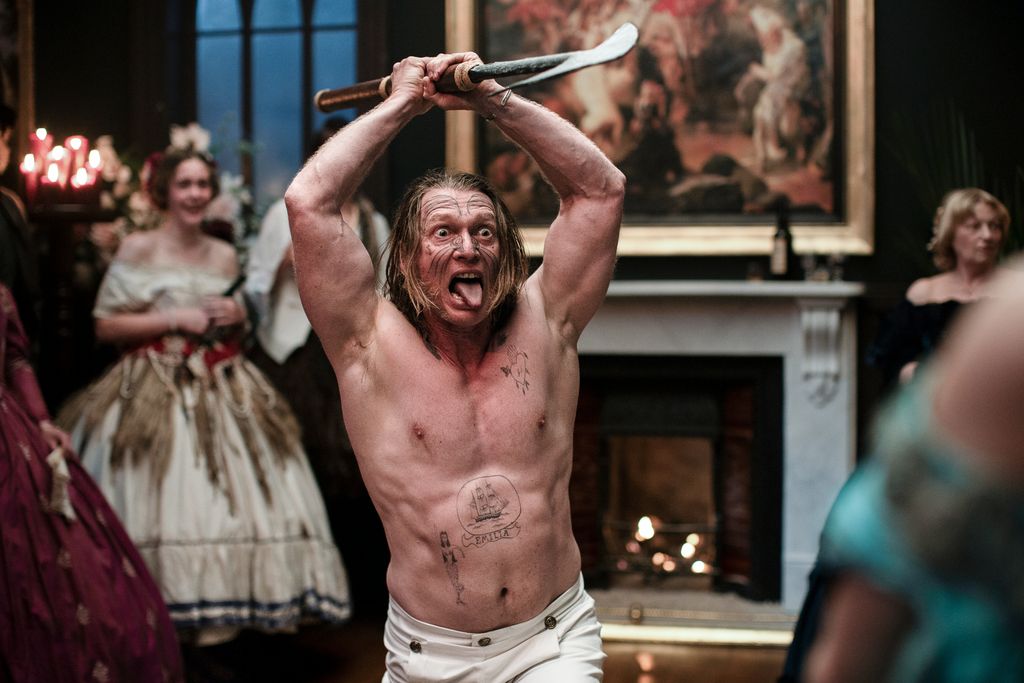
As things escalate, we see Nathaniel and his peers partaking in the most ghoulish insult to Māori cultural heritage. Dangerous stereotypes are spewed for the sake of entertaining the wealthy, who band together and mock traditional practices while cackling with glee. Mary’s visceral reaction is a scene that stays with you, with Osborne belting out a performance that deserves all the flowers it can get.
Mary’s presence in 1859’s colonial England makes her feel like a fish out of water. She has been lured here on purpose, with the intention to be subjected to the same unspeakable fate as her loved ones. But Mary is the only one who can fight back and end this horrific cycle once and for all. Revenge is the only way forward, and the only way to ensure a brighter future is to understand our pain-stricken past. Colonialism isn’t a relic of a bygone era — it is not a phenomenon that exists in a vacuum, far removed from our current reality.
The colonization of Aotearoa affects indigenous lives to this day, be it in the form of socioeconomic struggles or the perpetuation of harmful stereotypes. “Mārama” is a pertinent reminder of colonial history that often gets overlooked or sidelined, along with the oppression of minorities and other cultural groups.
Stappard’s Māori Gothic horror is one of a kind. It is a beautifully crafted film that isn’t afraid of plunging into the ugliness of barbaric colonial crimes that the world seems so eager to forget. But as long as art exists, indispensable stories like “Mārama” will be told time and again.





![The Tale of King Crab [2022] Review – A visually sumptuous magic-realist adventure that aimlessly transverses through Herzog-land](https://www.highonfilms.com/wp-content/uploads/2022/04/The-Tale-of-King-Crab-Movie-Review-1-768x433.webp)
![Laura [1944] Review – An Exceptionally Stylized Noir Mystery](https://www.highonfilms.com/wp-content/uploads/2019/11/Laura-1944-768x633.jpg)