
Elle Fanning has just had a wonderful award season with her “Sentimental Value” crew and castmates, who turned a dysfunctional family drama into something that floored nearly everyone who saw it.
Now, she returns with “Margo’s Got Money Troubles,” another project that explores complicated family dynamics through a similarly compassionate lens, while analyzing some contentious topics and following some flawed characters. When the show was announced, some outlets described it as a show about a fighter’s family, which led to some skepticism. Until now, many projects have rehashed tropes about a traumatized boxer and his frustrated wife to the point that it has spawned a recurring SNL character.
Luckily, the show handles such tropes with far more nuance and doesn’t get lost in the sea of lazily rendered projects. The credit goes far more to direction and acting performances than to the script, which sometimes falters when addressing its potent themes about the protagonist’s journey toward self-determination.
Dearbhla Walsh (Bad Sisters), Kate Herron (Loki), and Alice Seabright (Chloe), who share the directorial duties, make the show both tender and gripping. They transform this psychological tale into an irresistible drama by capturing the ebb and flow of each character’s life, leaving us with memorable moments even in the most mundane moments.
The show begins as a dreamy tale about a young college student, Margo (Elle Fanning), whose literary skills draw the attention of her 30-something professor, Mark (Michael Angarano). Shortly after, she finds herself dealing with an unplanned pregnancy all alone, as the baby’s father refuses to take the responsibility. He abandons her, worried it would affect his existing marriage.
As it happens, Margo’s father, Jinx (Nick Offerman), remains out of the picture. It’s not clear whether he had ever been a part of her life, either. So, her mother, Shayanne (Michelle Pfeiffer), took care of her the same way she plans to take care of her baby — as a young mother without a responsible partner.
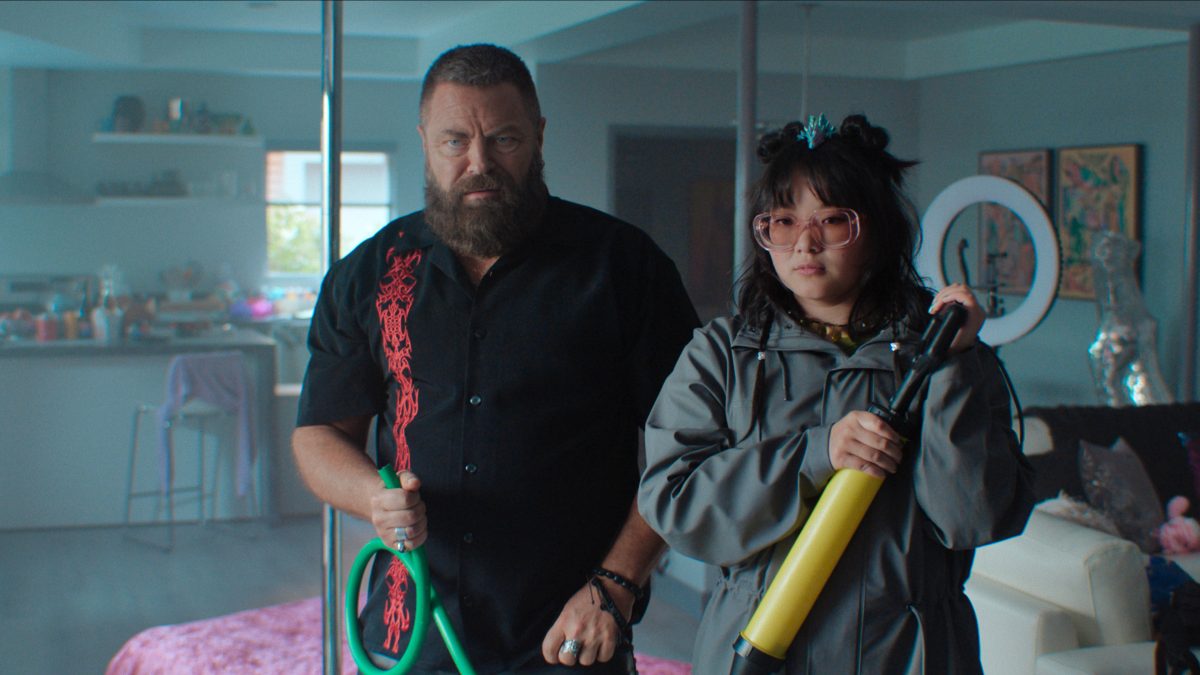
The thematic connections don’t end here. They extend as the father returns into her life, partly for himself, partly for her. He arrives as a middle-aged man, once a famed wrestler, now way past his youthful irreverence, on his journey of sobriety, hoping to make amends and seeking redemption. So, it leans into a fairly familiar arc of absent fathers.
Yet Offerman manages to bring a raw emotional quality to his performance that works remarkably well. He plays it in the same register as he did in that gut-wrenching episode in “The Last of Us” — through similar shades of a man grieving the lost chances.
Jinx’s mournful act offers one side of the argument, whereas Shayanne’s justified resentment reveals another. As they try to find common ground, Margo struggles to find it in her life. Her child’s father remains similarly hopeless, leaving her to seek any potential option to make ends meet. With her unfinished college education leaving her with no discernible prospects, she decides to start an OnlyFans account to support her family.
For those unfamiliar with this video platform, it doesn’t have a fine reputation, as a lot of its visitors happen to be insecure men, and its content frequently includes sexually suggestive videos. Through this thread, the narrative explores the pervasiveness of the male gaze and its dehumanizing effects on female streamers. That’s also why people have polarizing views about the platform and how its data incentivizes harmful patriarchal tropes.
The script analyzes them through Margo’s subjective standpoint, as a mother ensuring a good life for her child, while using her intellect and imagination to craft an attention-grabbing experience. That draws a parallel to her father’s scripted fights as a pro wrestler, furthering the show’s musings on the cost of fame and its lingering weight. Yet it also reveals a liberating aspect of storytelling: she finds emotional freedom to craft an alternate world, even as she’s pitted against a man who’s both entitled and a coward.
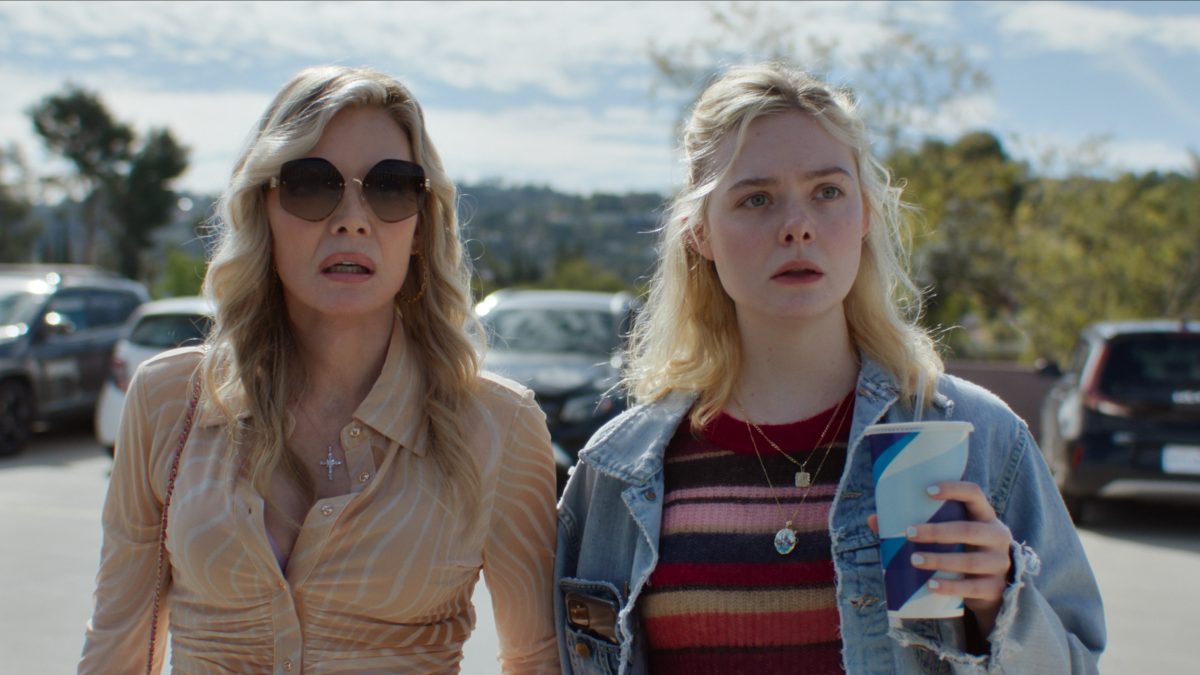
Thaddea Graham, Greg Kinnear, Nicole Kidman, Marcia Gay Harden, Rico Nasty, and Lindsey Normington star as secondary characters who appear solely through their relationship with the central trio. That offers much more room to flesh out Margo, Shayanne, and Jinx’s transformative journeys by analyzing their fears, attachment styles, and expectations of themselves.
Most of it involves them trying to move past their past selves, while going through often unexpected ups and downs. The script excels at handling the resulting emotional roller coaster, making the show as gripping as it ultimately is.
Yet it falls short in addressing Margo’s intricate experience as a woman facing a series of unforeseen battles. Her and Shayanne’s characters also feel far less irate than they should be in many situations, where their rage is the focal point rather than their attempts to defuse the situation.
While the show captures the overwhelming nature of their despair, it would have benefited from heightened moments that show them behaving in ways they’re not expected to. Apart from that, Graham’s character feels two-dimensional, given how long she’s on screen and how clearly she can work with far more demanding material.
Still, there’s plenty of charm in the show’s sustained dramedy tone, backed by a naturalistic direction that deftly captures some of its most painful moments, when the characters are at their loneliest. It also offers some of the finest showcases of Elle Fanning and Michelle Pfeiffer’s talents, whose grounded performances firmly ground this trope-based narrative in real life, making it feel lively, bittersweet, and surprisingly real.





![The Looming Storm [2018]: ‘NYAFF’ Review](https://www.highonfilms.com/wp-content/uploads/2018/07/THE_LOOMING_STORM_HOF-768x512.jpg)