Growing up in a place you were not born in can be agonizing and quite disorienting. You would always try to look for missing pieces of your past and tie them to your present life. It’s a debilitating cycle that can make you feel you belong to many places at the same time or to no place at all. That goes against a notion that we, as humans, naturally seek in our lives: the sense of belonging. First-generation immigrants often face similar forms of rejection in some shape or form, whether stemming from their socio-cultural differences or internal conflicts, making them wonder whether they fit in in any given situation. The subject of Naveen Chaubal’s documentary, “Pinball,” faces a similar crisis.
Chaubal uses his feature directorial debut to take a closer look at the life of a young Iraqi immigrant who had to move to the US after the 2004 war. It hits a little close to home when you look at the current geo-political situation, fueled by imperialist forces with significant political and financial cache, using their privileges to elevate their own status under the garb of something else. A similar situation affected the lives of the Al Windawi family, who had to flee Iraq in search of a new home. It took them to places in Jordan, Egypt, and the United States, which became the new home for their two kids: Yosef and Azraa.
According to the photos shown in the documentary, they were both very young when they had to leave their home to settle in Louisville, Kentucky. It’s a suburban town that doesn’t offer the kind of joy or excitement that a young child would be gravitated to. That’s why Yosef wonders why his family arrived at this town, seemingly in the middle of nowhere, in the first place.
The film is about him confronting the scars of displacement, looking at his hazy memories from years before and after moving to the US, when he was a child. Whether an immigrant or not, it’s a delicate part of anyone’s life when they shape their worldview based on their immediate reality. Yosef experienced it after 2004, when his family left their homeland, and a few years later, when they found a home in the States. In this pre-ubiquitous Internet era, you didn’t have access to the level of information that kids these days tend to have. So, if there’s no tangible record of your past, you may have to rely only on external sources to guide you through those formative chapters.
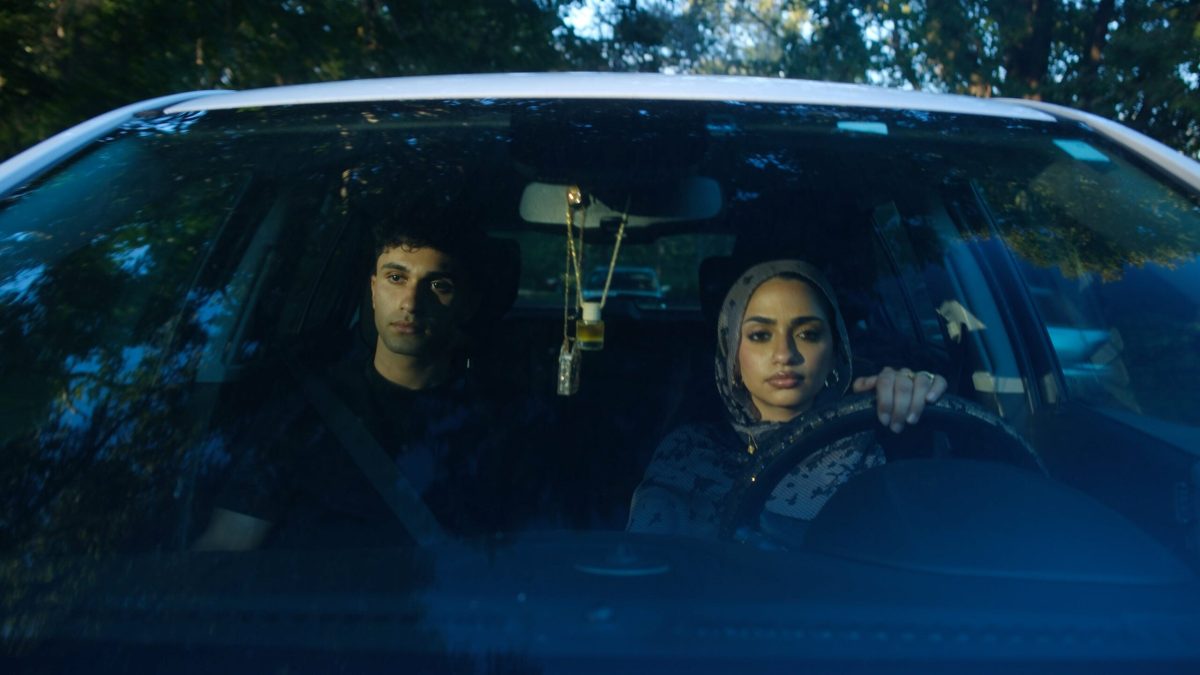
Yosef probes into his foggy memories of those years through conversations with his parents and the official records after he moved to the country. Part of it includes concrete details, while the other part includes the emotional ones. Chaubal focuses more on the emotional remnants of Yosef and Azraa’s past to make us realize what it would be like to live in their skins and see the world through their eyes. It also highlights how their traumatic past seeps into their current lives and affects their complicated worldview as a Muslim minority in a Western nation.
We witness it through aspects of Yosef’s daily life, whether it’s him working at a fast-food chain, speaking with his relatives back home, or through interactions with his parents, who have certain expectations of him as an adult. Some of these interactions feel a little staged, specifically meant to explore threads that may not be part of their regular conversations. They include discussions about different perspectives on the 2004 war and his personal account of Yosef’s time in Egypt. Yet, it doesn’t hinder the film because those pieces add something valuable to the conversation, making it fairly cohesive.
Chaubal’s film may not serve as a comprehensive account of people displaced due to this war, nor does it need to be. There’s a tendency to lump every single individual in such a situation into a single box to reach simplistic conclusions or a sense of closure. Chaubal’s documentary doesn’t do that. Instead, it encourages us to consider the human aspects of Yosef and Azraa’s journey as adults trying to find their place in the world. They have their own battles to overcome while trying to fulfill their parents’ expectations, much like any other person, irrespective of their race, class, or ethnicity.
Overall, “Pinball” presents a moving account of Yosef and Azraa’s lives through well-shot footage, captured by the director himself. Chaubal has previously worked largely as a cinematographer, which seems evident through his evocative camerawork. He combines footage of Yosef’s deeply personal conversations with mundane moments from his regular life, participating in social activities or being occupied with his daily routine. Plenty of these shots involve him and Azraa simply observing the world around them, showing them absorbed in their thoughts that are not directly related to what’s happening in front of them. Yet, they are crucial in making the unspoken words linger in our minds.
The film could have certainly analyzed the political undertones in more detail (especially considering its core theme about people who don’t move to the US with a conventional American Dream) and been more insightful in that regard. Yet, it doesn’t take away much from the emotional impact of Chaubal’s documentation.



![Clash [2016] – A Thrilling and Deeply Humane Chamber Piece](https://www.highonfilms.com/wp-content/uploads/2017/08/cover-2-768x399.jpg)
![A Certain Kind of Silence [2019]: ‘KVIFF’ Review – Zero love in 12 Tribes Cult](https://www.highonfilms.com/wp-content/uploads/2019/07/A-Certain-Kind-Of-Silence1-highonfilms-768x415.jpg)
![Bangarraju [2022] Zee5 Review: An Absolute Run-of-the-mill Formulaic Commercial Mess](https://www.highonfilms.com/wp-content/uploads/2022/02/Bangarraju-1-768x576.jpg)

![M.F.A [2017]: Fantasia Film Festival Review](https://www.highonfilms.com/wp-content/uploads/2017/08/MFA-Main-768x415.jpg)