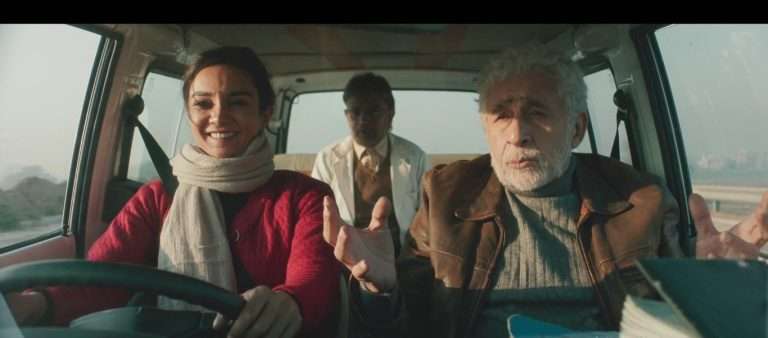
Stories are found in brief moments, certain pauses, unadulterated curses, and a few unreasonable references. They stay there since they want us to visit them and explore their objective or intention. We, in the present time, tend to rush through the gaps of our thoughts to bring out a prose or a poem, a lifetime in some lines.
While rushing, we start looking down upon shadows, dirt, scars, corroded metals, and age. It is not a new phenomenon, undoubtedly, but it mutated with time to have a new identity. This particular identity does not believe in homeostasis and nullifies originality by hiding behind fame and money. The last two are not against creativity. But those who have these assets mostly use them as agents that redeem originality to stay relevant and unforgettable.
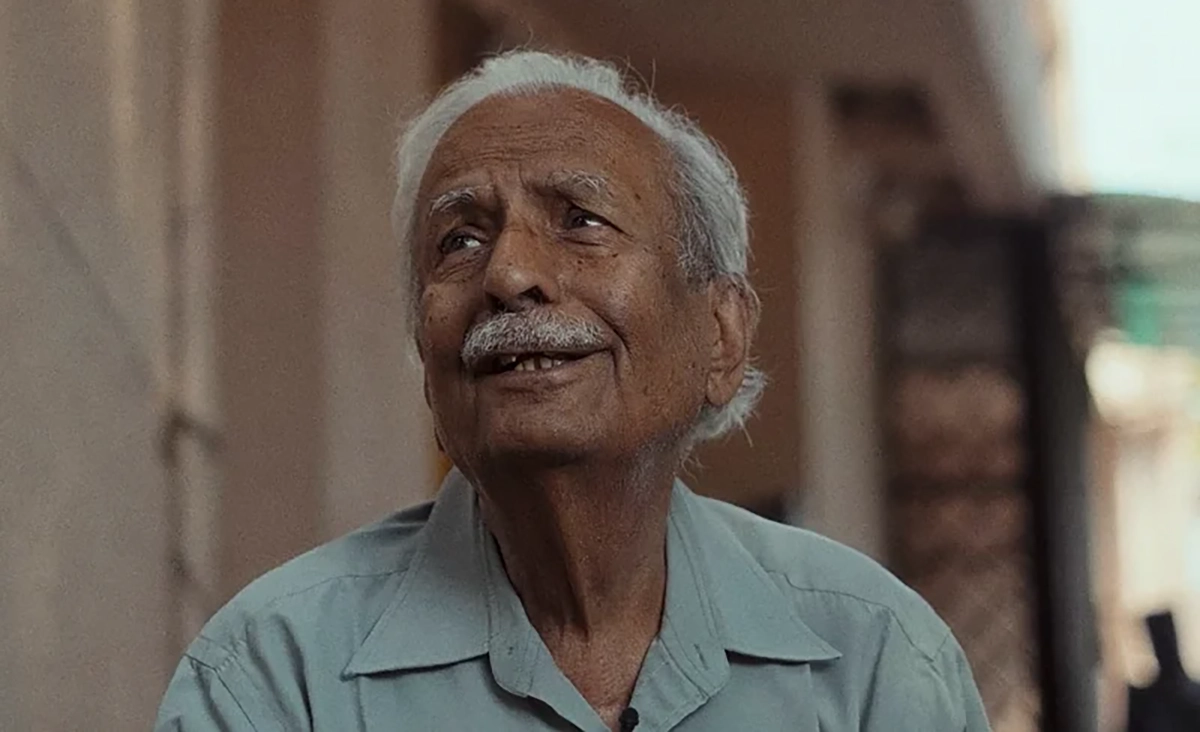
Achal Mishra’s documentation of Vinod Kumar Shukla’s life and literature in the film “Chaar Phool Hai Aur Duniya Hai” addresses the necessity of contemplation. Like a story, the prologue of the film is given by Vinod Kumar Shukla’s son, Shashwat Gopal. He gives us an idea of Shukla’s approach towards his works by mentioning how he used to recite a single poem or passage every second day, week, or month during their dinnertime. This was the only time they used to assemble together by taking the day off. In the initiation, he also provides a glimpse of both his and Shukla’s association with forgetfulness and originality.
In art, when artists forget something, to complement their self they induce something new. But, at the same time, the forgotten moments brew in a different situation to remind us that most moments of our lives are mostly similar. The only difference lies in the fact that one went in the past, whereas the other is lingering in the present.
Manindra Gupta, in his memoir “Akshay Mulberry,” focuses on a similar theme, but the process of contemplation is deeply rooted in the exterior periphery. The outside world has to look through the window to get a visual of Gupta. But, interestingly, both Gupta and Shukla are stating the comfort and conflict of the internal world – the former is an outside guest, the latter is a host. In the film, in most frames, Shukla is invested in looking at the larger world with a bit of chaos and a lot of stillness.
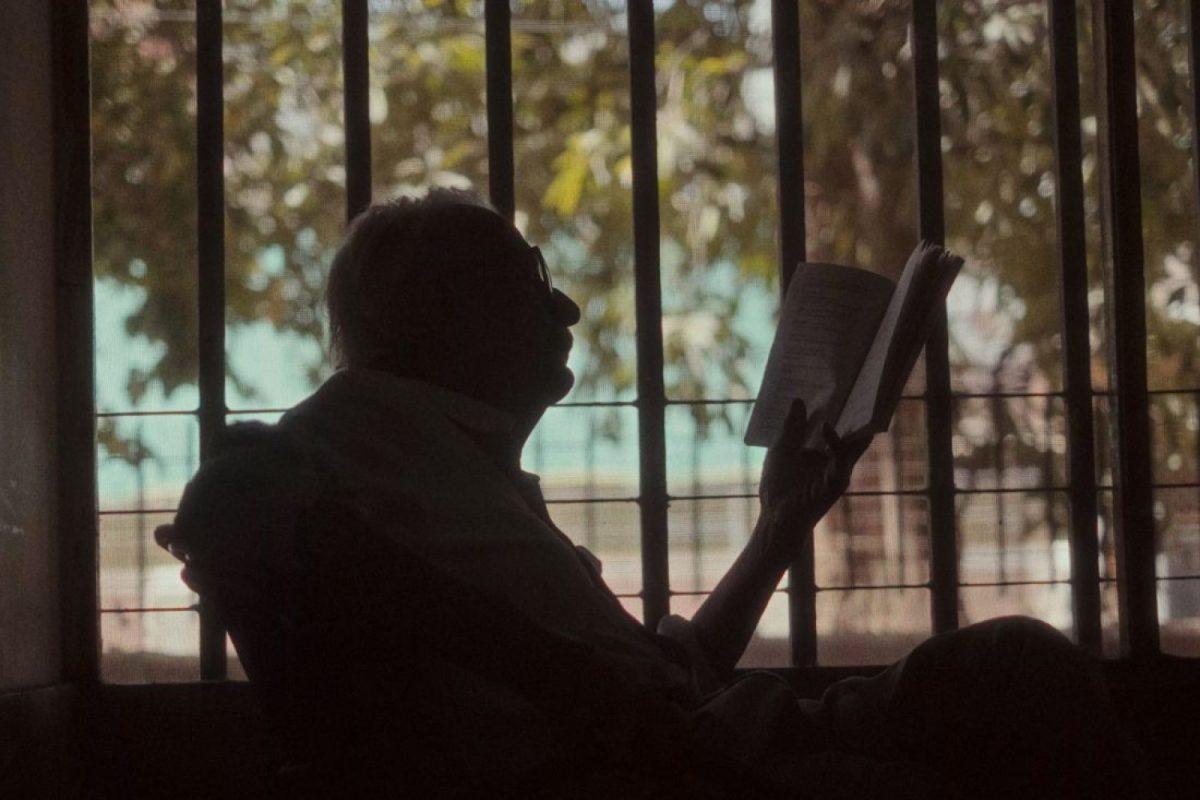
Even Shashwat keeps on mentioning how he clicks pictures because he thinks that photographs can speak the words he is contemplating. It vividly presents before us a thought that their vision expands with time and observation. Gupta, on the other hand, finds a way to the larger world through the receptacle of a flower. Both have a divergent vision, but the horizon differs. Shukla dwells within his four walls to imagine a situation. Gupta experiences its very reality.
We live in a time where we are craving for noise. Silence has become the central concept of this society. This documentary is a progression towards another medium of silence, where it is ideal and necessary. Vinod Kumar Shukla, in a scene, speaks about his introduction and then a serious friendship with the pathbreaking filmmaker Mani Kaul. The silence of Shukla has a few demerits that seep through his narration of criticism and debate on art.
Read: The Political Subtext of Govind Nihalani’s 1984 Satire ‘Party’ Is More Relevant Now Than Ever
In the Govind Nihalani-directed film “Party,” Avinash (played by Om Puri), in a monologue, addresses how art cannot be separated from artists. He also speaks about how, for this specific reason, proper criticism and dissent should be given a space. Shukla, on the other hand, did not like the criticism of progressive intellectuals on Mani Kaul’s adaptation of “Muktibodh.” But Shukla’s silence also helped him in figuring out the essentiality of creation. It is in the silent moments we talk, scream, recite, and write.
Shukla’s idea of seeking permission from people he writes about is important for artists of any generation. In times of plagiarism, we are conditioned by political or social correctness. Shukla considers it a hurdle since, while making things correct, we might lose the raw form of our ideas. Journalists and writers, in the present time, are scared of writing about important people because the latter might use their power to exclude the former. Today, if independent journalists are in jail, it is because those who are in power claimed that before writing about their actions, the journalists did not think about seeking permission.
The spineless media channels with capitalist owners and subscribers are rising with ferocity only because of the fact that while maintaining correctness, they forgot their primary job. Mainstream writers dissent less because the correctness superimposes their originality. They remember and ignore. They do not forget, since anything that is forgotten is bound to reflect in an artist’s creation. Today. Tomorrow. Or maybe fifty years later.
Shukla’s idea of love is traditional, which goes against the love of many other forms. We do get to watch his wife living as a homemaker and walks the kitchen while he is eating his lunch. It gives us a visual that his wife either eats after he finishes his meal or dares to finish her meal before he sits at the table. Shukla even mentions that most of the women characters of his novels have his wife’s hue, which primarily comes out of the fact that his world revolves around her life.
But, at the same time, we get to listen to his inclination towards a traditional form of love which relies on monogamy and maintaining the image of an ideal wife. Like most wives, Shukla’s wife would not have any problem since she has become conditioned to the entire process. Even in his simplified silence, a tinge of patriarchy slithers inside this beautiful writer’s life, which speaks volumes about its reach and capabilities. While figuring out the world, we find a patriarch in Shukla that’s innate and active.
Achal Mishra, through “Chaar Phool Hai Aur Duniya Hai,” delivers us a writer in his raw form. He wants his audience to decide what makes Vinod Kumar Shukla a writer with flaws and perfections. The film becomes believable because the director did not hesitate to strip the writer even in the presence of his fame and glory.
Documentaries are not supposed to be preachy and morally extreme. They are mobile books projected towards an audience who are also flawed and perfect in many ways. Achal’s film behaves like a book that neither applauds nor criticizes the writer. It simply shows a life we did not witness. With the slow pace, he asks the viewers not rush. Rather, he wants us to identify Vinod Kumar Shukla as a social person, and not someone who is absolute.