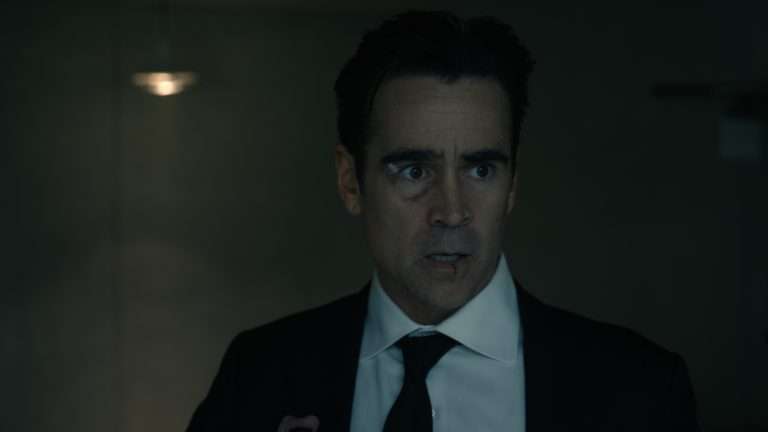
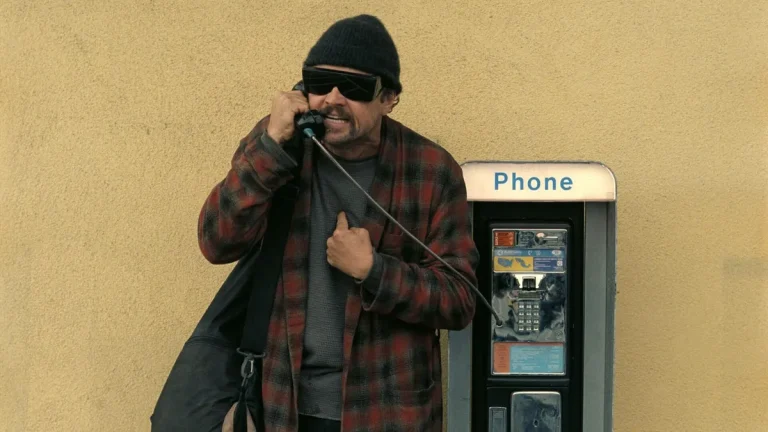
Pusher II” (2004) shifts the focus away from money and survival, turning it inward. This is no longer about scrambling to stay alive in the drug trade. It is about a man trying to earn the right to exist in his father’s shadow. Nicolas Winding Refn strips the crime world down to something more intimate and cruel: inheritance, masculinity, and the quiet terror of never being enough. Tonny is not chasing power. He is chasing approval. Every bad decision, every humiliation, every act of violence grows out of that need. Where the first “Pusher” was about debt, “Pusher II” is about shame. And shame, unlike money, cannot be paid off.
Spoilers Ahead
Pusher II (2004) Plot Summary & Movie Synopsis:
Who is Tonny when He Walks Out of Prison?
Tonny leaves prison already defined by fear. His cellmate’s monologue about conquering it feels less like advice and more like a warning. Tonny owes money. He owes favors. And most importantly, he owes his identity to his father, the Duke. The debt is temporarily forgiven out of respect for the Duke’s name, not Tonny himself. From the beginning, Tonny exists as an extension of someone else’s reputation. Outside, nothing changes. The city is familiar, but Tonny is smaller within it. He walks free, yet remains trapped in expectation. The Duke is a gangster who believes authority must be unquestioned.
Tonny, with his impulsiveness and emotional neediness, threatens that image. The presence of a younger, favored son makes this clearer. Tonny is not the future. He is a mistake the Duke tolerates out of blood obligation. When Tonny steals a Ferrari to impress his father, the gesture exposes his misunderstanding of power. The Duke doesn’t want spectacle. He wants control. The rejection is brutal because it confirms Tonny’s deepest fear: he is embarrassing, not impressive. Letting Tonny work at the garage is not kindness. It is probation.
How Does Fatherhood Change Tonny?
Learning that he has a son with Charlotte unsettles Tonny in a way prison never did. Charlotte’s demands for child support sound reasonable, but Tonny hears them as another test he will fail. He lies and delays. Yet when he spends time with the baby, something shifts. Changing a diaper becomes a moment of quiet clarity.
For once, Tonny is needed without conditions. The child doesn’t judge him. Doesn’t compare him. This fragile bond becomes the only thing in the film that offers Tonny a version of himself not defined by the Duke. Tonny’s participation in the car heist should be a victory. Instead, he is shoved into the trunk because there’s no room for him. The image is humiliating and precise. Tonny is useful, but never visible. He contributes, but he does not belong. Even when he does well, his place remains marginal. The crime world rewards efficiency, not emotion, and Tonny is too desperate to hide his need.
Why Does Kurt’s Failed Drug Deal Spiral So Quickly?
Kurt the Cunt is chaos disguised as confidence. His panic with Milo’s deal mirrors Tonny’s own fear-driven decisions. Flushing the heroin destroys any chance of recovery, and Kurt’s solution is performance: staging a robbery, staging violence, staging victimhood. Tonny agrees to help because he believes loyalty will finally buy him standing. Instead, he is dragged deeper into debt he did not create. Kurt’s reveal that the Duke is the backer seals Tonny’s fate.
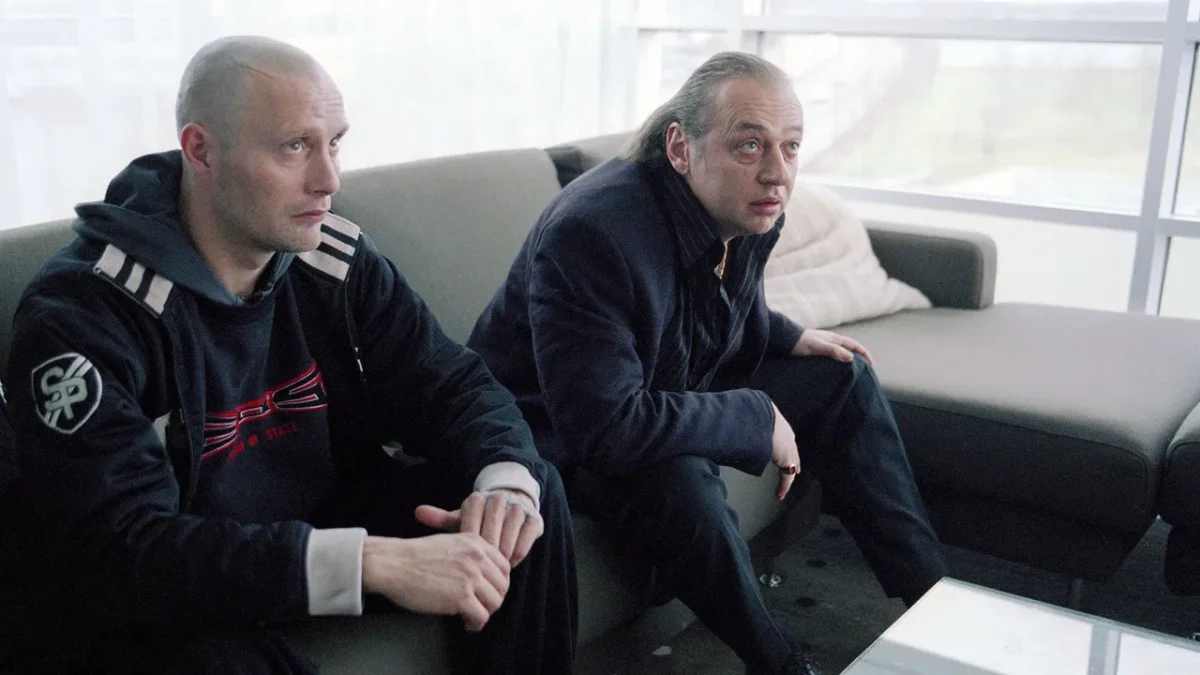
Even his attempts at helping others are quietly arranged to keep him trapped. The Duke’s toast at Ø’s wedding is devastating in its politeness. Calling Ø a son while mocking Tonny in public strips Tonny of dignity. Alcohol does the rest. Watching Charlotte neglect their child while indulging in drugs confirms Tonny’s fear that he is the only one taking responsibility seriously. When Charlotte humiliates him and he lashes out violently, it is not about control. It is about despair. Tonny sees himself becoming exactly what everyone believes him to be. The violence is a moment of self-recognition, and it terrifies him.
Pusher II (2004) Movie Ending Explained:
Why Does Tonny Agree to Kill Jeanette?
Offering to intimidate Jeanette is Tonny’s last attempt at earning redemption through obedience. When the Duke escalates it to murder, Tonny agrees because refusal would mean final rejection. Saying yes feels like proof of loyalty, even if it destroys him. Standing in front of Jeanette, Tonny cannot do it. The act would make him fully into his father.
His failure is not a weakness. It is the last line he refuses to cross. The Duke’s reaction to Tonny’s failure is not disappointment. It is annihilation. The beating is verbal, emotional, and final. In that moment, Tonny understands that no version of himself will ever be enough. The stabbing is not planned. It is instinctive. A son killing the source of his shame to survive what remains of himself. The act does not free Tonny. It simply ends the cycle by force.
Tonny doesn’t run toward power. He runs toward responsibility. Finding Charlotte and Gry high and careless confirms his decision. They mock him. Neglect the child. Repeat the same patterns. Tonny takes his son and leaves. The bus ride is quiet, unresolved, and fragile. There is no promise of safety or success. Only the possibility of being better than what he inherited. “Pusher II” is not about escaping crime. It is about escaping identity. Tonny does not become a hero. He becomes a father. And in Refn’s brutal world, that is the most radical choice of all.
Pusher II (2004) Movie Themes Analyzed:
Masculinity, Inheritance, and the Violence of Being Unchosen
“Pusher II” is not structured like a conventional crime sequel. While the first “Pusher” was driven by debt, urgency, and survival, Nicolas Winding Refn’s second installment turns inward, using the criminal underworld as a backdrop for something far more personal. At its core, “Pusher II” is a film about inheritance, power, masculinity, and emotional damage, and about what happens when a man is never allowed to step out of another man’s shadow.
The most dominant theme in the film is masculinity as a performance rather than an identity. Tonny has spent his entire life trying to imitate what he believes a “real man” looks like in his father’s world. Strength is measured by violence, respect by fear, and worth by obedience. Yet Tonny is constitutionally incapable of performing this version of masculinity. He is too emotional, too impulsive, too desperate for approval.
Every attempt to assert himself, stealing the Ferrari, agreeing to dangerous deals, and accepting humiliation, only highlights how badly he misunderstands the rules of power. Masculinity, in “Pusher II,” is not something one earns through effort; it is something granted by those already in control. This leads directly into the film’s second major theme: inheritance as a trap rather than a privilege. Tonny’s last name opens doors, but it also closes every possible exit. His debts are forgiven not because he deserves mercy, but because he belongs to the Duke. His employment at the garage is not an opportunity but surveillance.
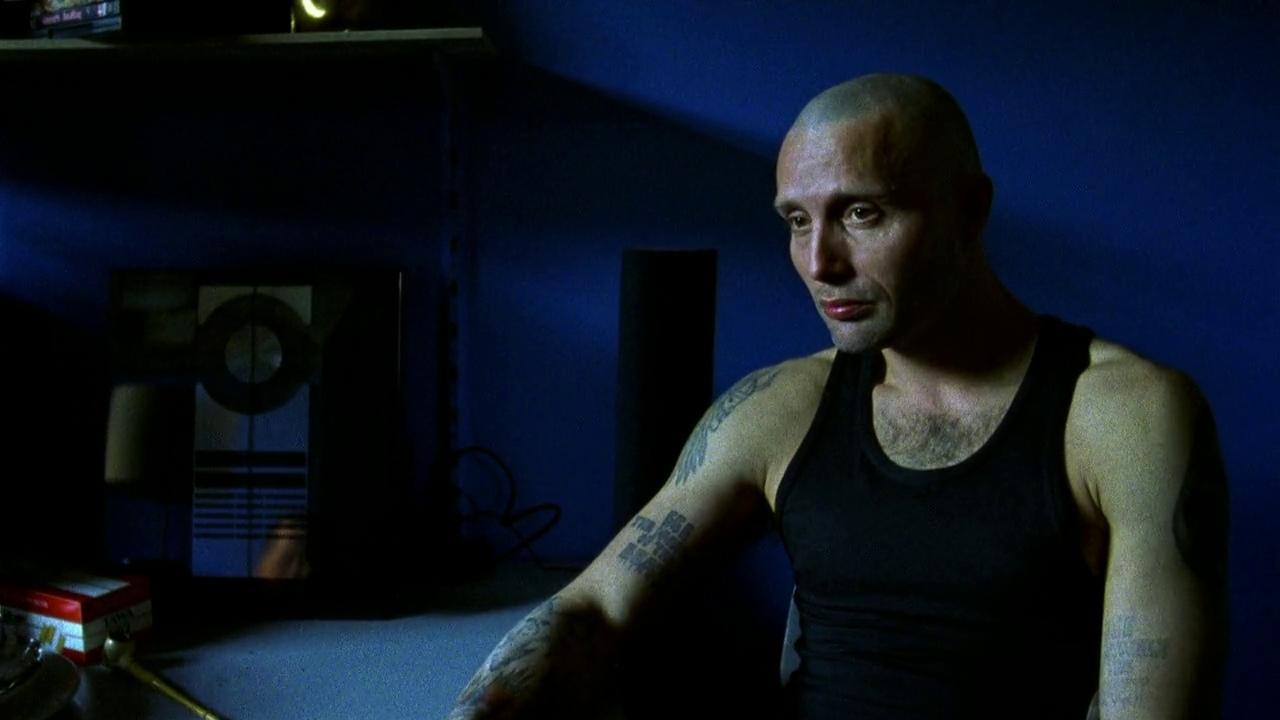
Even his failures are absorbed into his father’s reputation, making escape impossible. The presence of the Duke’s younger son reinforces this cruelty. Tonny is not just failing; he is being replaced. In this world, inheritance does not guarantee belonging. It guarantees comparison, humiliation, and erasure. Refn also explores shame as a more powerful motivator than greed or fear. Unlike Frank in “Pusher,” Tonny is not driven by ambition. He is driven to stop feeling ashamed. Shame governs his body language, his speech, and his choices.
He accepts humiliation, riding in the trunk during the heist, being mocked publicly at the wedding, because confrontation would confirm what he already suspects: that he is unwanted. Violence becomes Tonny’s only language of resistance, but it is a language he does not fully understand. Each violent act is reactive, clumsy, and self-destructive, revealing how little control he actually has.
Against this backdrop of inherited brutality, fatherhood emerges as the film’s quiet counter-theme. Tonny’s relationship with his son introduces a form of responsibility that is not based on fear or dominance. The act of changing a diaper, mundane and unglamorous, stands in sharp contrast to the performative violence of the criminal world. For the first time, Tonny is needed without having to prove anything. His son does not demand success, money, or intimidation, only presence. This small, human connection destabilizes everything Tonny has been taught about power. It reveals that care, not control, is what gives life meaning.
The film also critiques the cyclical nature of abuse. The Duke’s cruelty is not random; it is systemic. He humiliates Tonny the same way the criminal world humiliates him. Authority flows downward through degradation. When Tonny finally kills his father, it is not an act of triumph but of exhaustion. He does not overthrow a tyrant to take his place. He destroys the source of his psychological imprisonment.
The violence is ugly, intimate, and tragic because it marks the end of Tonny’s old identity without offering a clear new one. Moreover, the final act reframes escape not as freedom, but as a responsibility chosen over inheritance. When Tonny leaves the city with his son, there is no suggestion of redemption or safety. Refn deliberately avoids optimism.
What matters is not where Tonny is going, but what he is refusing to become. He chooses to break the cycle rather than dominate within it. In a universe where masculinity is defined by cruelty, this choice is radical. Ultimately, “Pusher II” is a devastating portrait of a man crushed between who he is and who he is expected to be. It argues that the most violent systems are not built on crime alone, but on inherited definitions of worth that leave no room for vulnerability. Tonny’s escape is incomplete and uncertain, but it is human, and that, in Refn’s world, is the closest thing to hope.