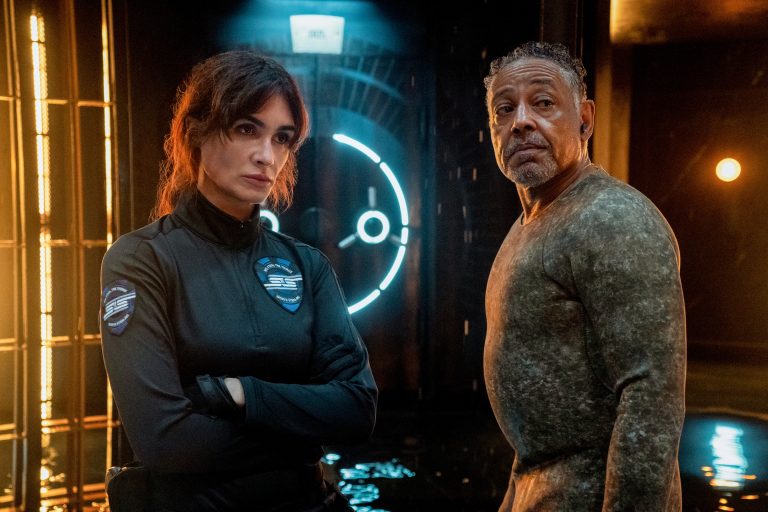
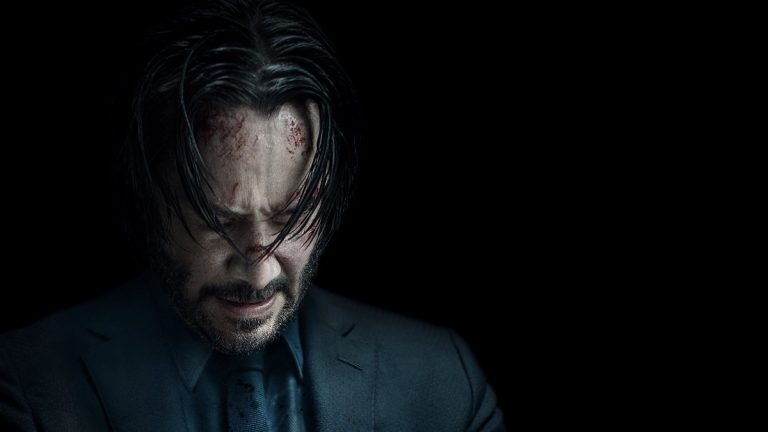
Warner Bros has emerged as a key frontrunner in early Best Picture Oscar predictions, with four of its movies consistently generating buzz.
- One Battle After Another
- Sinners
- F1 the movie
- Weapons
The first two have been gaining limelight, whereas Netflix’s “Frankenstein” has been making some ripples in the water as well due to Guillermo del Toro’s grand storytelling. This leads to a central question: Have Oscar voters already established clear favorites, and how might Warner Bros’ ongoing acquisition turmoil impact its position as a top contender for the Oscars?
Despite “Sinners” and “One Battle” already gaining the spotlight as the frontrunners of Oscar-winning potential, Warner Bros disclosed its plan for promoting “Weapons” for the Oscars’ race as well. The studio wants to follow the footsteps of “The Silence of the Lambs,” the only horror feature that has ever won a Best Picture Oscar, along with four other categories. Evidently, running campaigns for the Oscars has never guaranteed an Oscar win, but it is a fresh step towards bringing the horror genre into the mainstream awards recognition.
With critical acclaim, strong box office performance, and early Awards buzz, it puts “Sinners,” “One Battle,” and even “Weapons” in a strong position to gain awards momentum independent of the acquisition deal and its outcome. The rise of “Sinners” has been further cemented by its major victories at both the Black Film Critics Circle (BFCC) Awards and the Dublin Film Critics Circle (DFCC) Awards, completing a remarkable turnaround. Irrespective of the acquisition turbulence, Warner Bros appears to be hitting its stride, as recently the Sinners’ script was officially made public by Deadline.
At the same time, “Sinners” has fierce competition with “One Battle” as the latter has scored big best-film wins from the New York Film Critics Circle, the Los Angeles Film Critics Association, and the Boston Society of Film Critics. Hence, based on the artistic merit, the two films remain unaffected awards-wise because of their quality and acclaim being the dominant factors. Black racist themes in both films are now on the rise in Hollywood, which gives the entertainment industry a chance to open up for talent, creative voices, complex narratives, nuanced storytelling, catering to changing US demographics, and ultimately, the economic viability.

Netflix’s “Frankenstein” remains a notable contender, but the streamer’s broader awards narrative has shifted rapidly. Several Netflix films that were previously considered in early predictions were “Train Dreams,” “A House of Dynamite,” “Jay Kelly,” and “Nouvelle Vague.” However, the Oscar narrative for Best Picture is changing fast with each passing day. The initial low viewership of all four of these films, excluding “Frankenstein” on Netflix, has diminished the chances for Netflix to gain a larger part, which is done by exclusion of these names in the Golden Globes nominations for Best Picture, either drama or musical/comedy.
Much of the discussion then comes to Netflix’s own ability to mount a strong, coordinated awards campaign for all of its potential contenders this season. Unlike Warner Bros, which has historically relied on a combination of theatrical releases, targeted press screenings, and critic engagement, Netflix faces the challenge of promoting a wide slate of films across multiple genres while competing for the same pool of Academy attention.
The acquisition hubbub surrounding Warner Bros has, paradoxically, amplified the studio’s Oscar narrative, making it difficult for Netflix to promote its films due to the negative impact of the internal corporate drama and shifting industry perceptions.
Although Oscar will be held in March 2026, and the decision regarding the acquisition deal between Paramount and Netflix may not be finalized before summer 2026, any of Warner’s films winning an Oscar will greatly influence how the industry perceives the final decision between the two giants’ bids afterwards.
However, if one assumes that Warner Bros’ win at the Oscars is affected by the current situation of the two bids, I feel that it would be vice versa. The acquisition saga has played up Warner Bros’ prestigious slate. The films have largely moved beyond the reach of corporate transition, having already established a strong critical footing by 2025.
“Sinners” and “One Battle” are already the talk of the town with relevance to their culturally and politically significant themes. These films celebrate, most traditionally, the “cinema-going experience”. The industry critics, creators, and unions have openly criticized the Netflix-Warner’s merger for this very reason, as it will negate Warner’s typical theatrical movie model. The esteemed voters of the Academy might question on creative grounds, arguing that it could hurt theatrical cinema and jobs.
Both the acquisition deals, from Paramount and Netflix, are under scrutiny regarding antitrust and share price concerns. The Academy members might rally for these films strongly as they support the “classic” theatre paradigm. Netflix and Paramount are well aware that one of the industry’s strongest distributors currently has two of the most formidable awards contenders in play. Both recognize Warner Bros.’ immense potential—and the sweeping impact it could have on the industry.
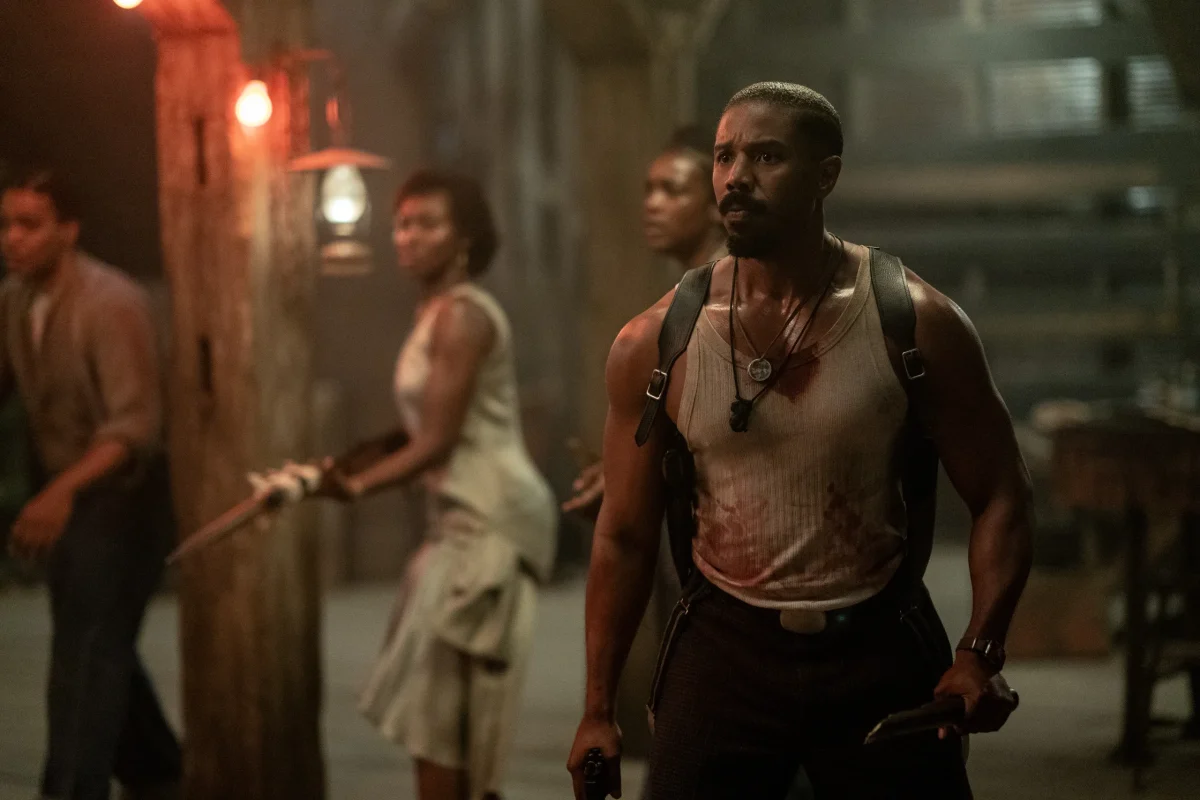
If anything, a high-profile connection to the acquisition deal and adding a complex narrative layer, it could motivate some voters to support these films. It takes months, and sometimes, years to close deals like this. The industry sentiment and voter perception are shaped by the films and not the acquisition bids that, of course, do not come every year.
What does recur annually is a creative genre-bending film like “Sinners” or an explosive kinetic action-thriller like “One Battle” that has complex themes of revolution, the cost of idealism, and the power of family love. Against the backdrop of acquisition uncertainty, Warner Bros. is clearly hitting a creative and competitive stride. Based on artistic merit, critical acclaim, and awards momentum, “Sinners” and “One Battle After Another” stand as powerful Oscar contenders whose trajectories are driven far more by cinema than by corporate negotiation.
It has raised the profile of these films as powerful contenders for the Oscars, ultimately reflecting Warner Bros’ stance in the bid as well as the awards arena. While separate from the Oscar race, 2025’s end has been a game-changer for Warner Bros., since recently, season 1 of HBO Max’s series “It: Welcome to Derry” has drawn 6.5 million US viewers in its first three days of availability. It is an explicit reinforcement of the studio’s creative stability and audience engagement.
How does this connect to acquisition and Oscar prospects for Warner Bros? This certifies that Warner Bros is a powerful and well-managed entity, rather than a distracted or declining one. As a result, interest in Warner Bros from both Paramount and Netflix continues to deepen. The acquisition drama puts Warner Bros under the microscope, and the entire story enhances its Oscar prospects. Plenty of historical cases prove the fact that studio drama affects Oscar outcomes, positively or negatively. For example, at the time of Slumdog Millionaire’s campaign, Fox Searchlight was undergoing corporate restructuring under new management.
The studio leveraged the narrative that it was punching above its weight, helping build a small studio into something that could compete with major studios. It delivered a culturally significant story in a period of corporate upheaval, a storytelling that instigated voter sympathy and excitement. It helped shape the narrative in Academy members’ minds that the film was not just about quality, but also a recognition of the resilience and creativity of a small studio. Result? “Slumdog Millionaire” swept multiple Oscars, including Best Picture, showing how a studio narrative can multiply voter enthusiasm.
It could be deemed as a “symbolic support” advantage for Warner Bros as well, which could actually boost Warner Bro’s Oscar chances this season, a situation ironic for both Paramount and Netflix. Although Warner Bros has favored Netflix’s bid, it makes Warner Bros a focal point of industry conversation- visibility that could shape its Oscar campaign positively.