Paul Mescal got his big break with “Normal People,” his very first project in the industry. Before that, he had been a part of the theater scene in Dublin and London, but the BBC show gave him far more exposure than a young actor would ever hope for. It earned him a BAFTA TV Award and an Emmy nomination, which instantly put him on a bigger map. Only a few years down the line, he became an Oscar nominee for his heartbreaking performance in Charlotte Wells’s “Aftersun.” Now, he is gearing up to grace the screens as Paul McCartney in Sam Mendes’ ambitious undertaking.
Usually, it takes a few decades for actors to reach that stage in their careers and gain that sort of recognition. Mescal gained it within a few years, despite not starring in any blockbuster project that typically leads to such an outcome. Instead, he found comfort in indie films that offered him meatier roles than studio juggernauts. Even now, “Gladiator II” is the only massive-budget film in his catalog that relies more on mainstream appeal than auteurist filmmaking. He also bagged this role due to his work in “Normal People,” featuring an understated performance that doesn’t exactly make you think of him as an action star.
That’s why it’s exciting to see someone like him earning the spotlight by honing their craft and bringing emotional maturity to every role rather than pandering to the trends of the time. His work doesn’t demand our attention through shallow theatrics, but draws it through a keen understanding of his characters. That was true even for his short role in Maggie Gyllenhaal’s directorial debut, and it’s just as true for his latest part in Chloe Zhao’s mournful film. Considering his caliber, it may as well be true for his forthcoming collaboration with Richard Linklater.
As the Irish actor returns to the Oscars ceremony, let’s take a look at his past work in film and use ranking as an excuse to speak about the variety of roles he has portrayed so far.
9. Carmen (2022)

Benjamin Millepied’s “Carmen” explores a passionate romance that seems destined to be doomed. It offers a Bonnie-and-Clyde-esque reiteration of a love story between two outlaws from the opposite sides of a border. While exploring that underlying political thread, the film remains a genre-hopping musical at its core, filled with beautifully choreographed dance sequences, backed by some of the finest work from Nicholas Britell.
Britell has already made a name for himself through his stunning collaborations with Barry Jenkins, apart from his work on shows like ‘Andor’ and ‘Succession.’ For ‘Carmen,’ he steps away from his jazz-centered compositions to offer a blend of classical opera, Eastern European, and West African music. His music lends Paul Mescal and his castmate, Melissa Barrera, a wide emotional canvas to work with.
The film offers Mescal a role far more physically demanding than his past work. He needs to express passion, aggression, and vulnerability through his agile body language to take us closer to his character’s interiority. It pushes him to explore something beyond his restrained acting style, making him access something primal and kinetic.
Unfortunately, the script doesn’t provide him with enough material to examine his character’s anguish. It feels severely underwritten, especially as a tale about an American rebel falling deeply in love with a Mexican immigrant. There’s only so much Mescal can do, as an actor, to explore Aidan’s socio-political identity. That’s why he seems lackluster as compared to his dynamic co-star Melissa Barrera, who graciously performs her steps while he often merely stands aside.
8. Gladiator 2 (2024)

The first “Gladiator” film came out when the world was settling into a new millennium. It introduced Russell Crowe as Maximus, a fierce warrior who helped the Roman army in multiple battles, only to be pushed aside by Commodus, the emperor’s entitled son, who was deemed unfit to carry forward his father’s legacy. That’s why the film became one about a psychological battle between the two men, who sought different ways to realize the dream of Rome.
Over two decades later, Paul Mescal stepped into the Colosseum as Maximus’s son, Lucius, fuming with rage about his wife’s untimely death. That’s when Macrinus, a slave master, decides to exploit his anger to put on a show in the gladiatorial battles. The empire is led by Geta and Caracalla, two men who seem as incompetent in that role as Joaquin Phoenix’s character with a smug grin. So, the script inadvertently mirrored some elements from the first film as it did from the real world.
The film’s central themes raise parallels to power-hungry overlords in the contemporary world, which makes Mescal’s character seem like a messianic savior filled with cuts and bruises under his shining armor. Yet, Mescal doesn’t fit this mold seamlessly as Crowe, even if he ‘looks’ the part. His bulky physique doesn’t translate the level of fury and pride that Crowe summoned simply through his calculated performance, which is still regarded as one of the finest in cinema.
Of course, Mescal shines in conversational scenes with Denzel Washington, where he needs to reveal Hanno’s turmoil and his worldview, often without being explicit. Yet, when it comes to the battles, he is not nearly as captivating as he ought to be, paling in comparison to Crowe or even his castmates like Pedro Pascal.
7. The Lost Daughter (2021)
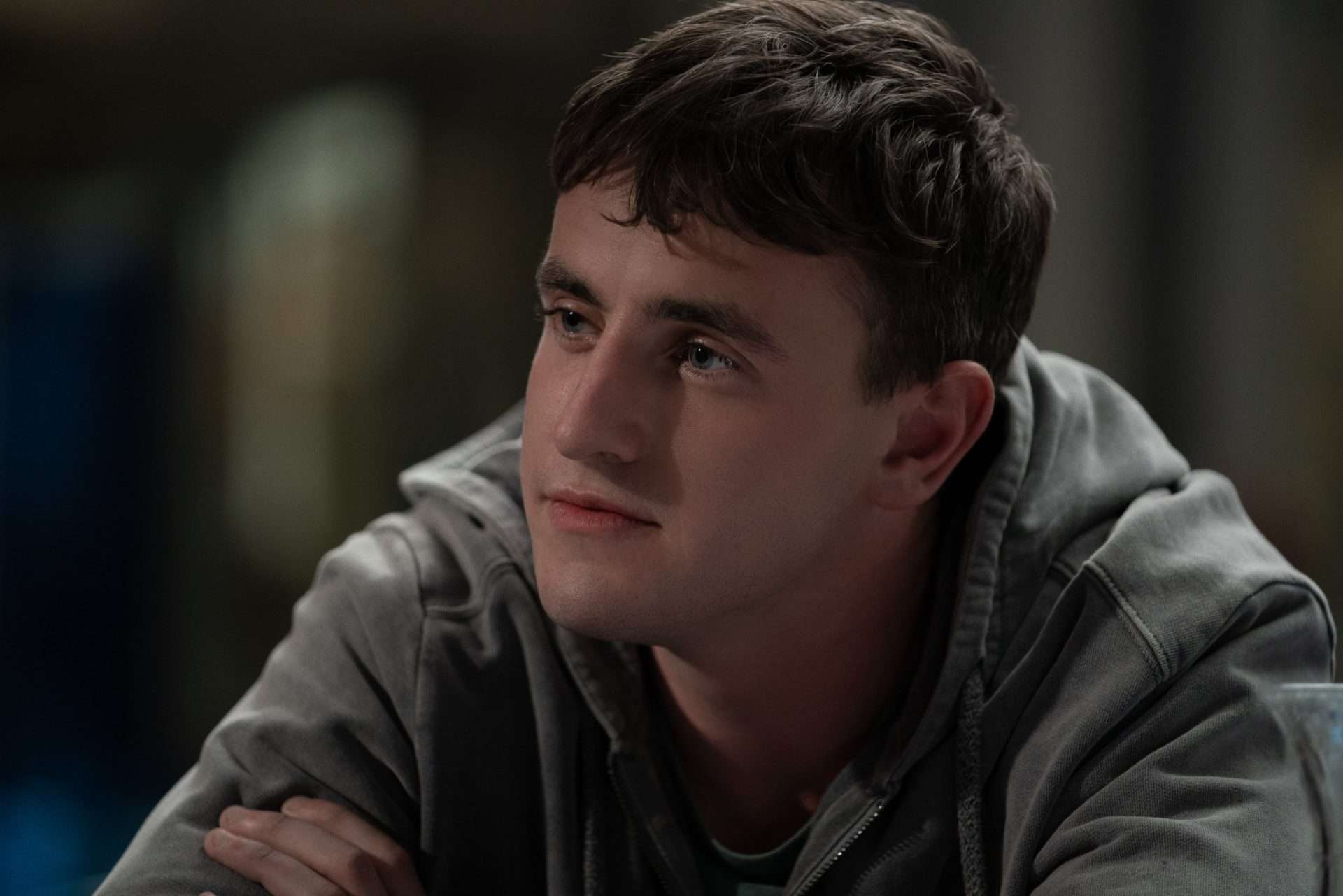
“The Lost Daughter” introduced us to Maggie Gyllenhaal’s writing and filmmaking talent through a carefully rendered adaptation of Elena Ferrante’s eponymous novel that deals with the often unspoken burdens of motherhood. It follows a well-respected writer, Lena, who goes on a summer break, trying to work on some new material. Yet, everything around her pulls her back to her painful past, making her reflect on her guilt for abandoning her child.
Olivia Coleman leads the cast, while Jessie Buckley plays her younger self. They both are reliable at exploring Leda’s eternal anguish as a female writer, defying the traditional societal expectations. Dakota Johnson and Dagmara Dominczyk present a few more shades of motherhood, which furthers the film’s feminist critique. Amid this, Mescal plays 24-year-old Will, who serves as a catalyst in Coleman’s & Johnson’s character arcs.
As someone only a few years into his adulthood, Will has far fewer regrets than these women and mirrors their immediate hopes and desires. Mescal, who appears in only a handful of scenes as this character, manages to reveal his enigmatic personality and his duality so well, even if parsed through Leda’s lens. Yet, considering the limited scope for performance, this role pales in comparison to the rest of his filmography.
6. Foe (2023)
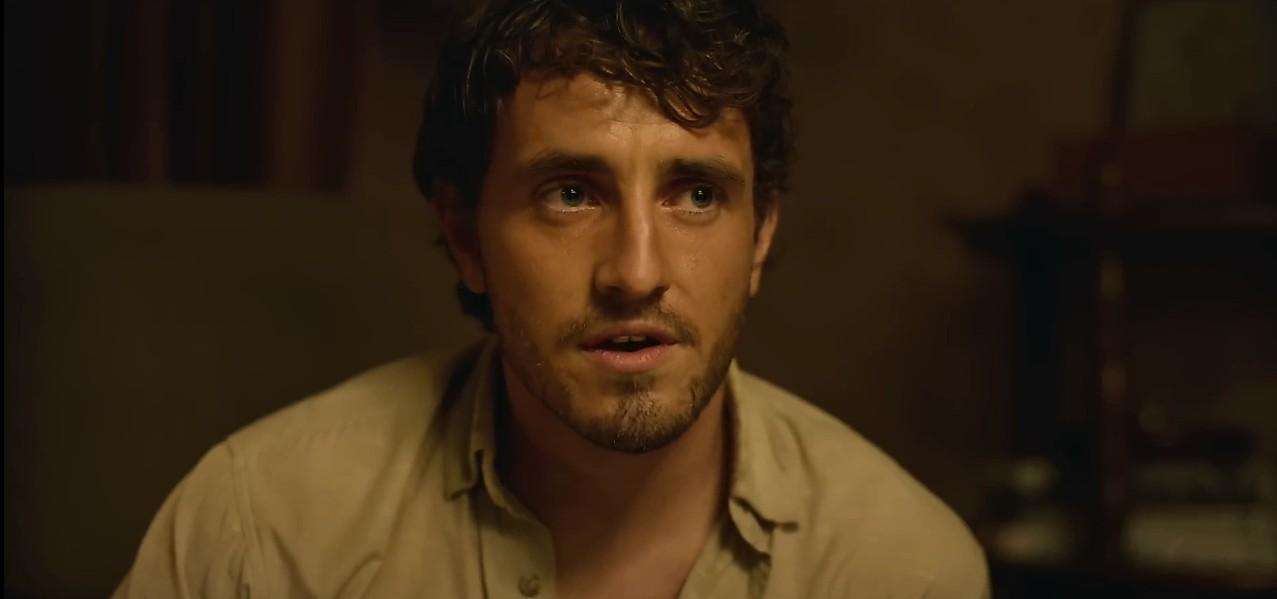
Garth Davis’s “Foe” revolves around Hen and Junior, a married couple going through a rough patch in their relationship. One day, a stranger knocks on their door with a proposal that can change their lives for the better. Yet, it can lead them to face complications far beyond their trivial emotional concerns. The script explores this psychological thread while introducing some sci-fi elements from Iain Reid’s source novel. It hopes to make us contend with a similarly dystopian possibility.
Despite all its narrative ambitions, the film fails miserably for many reasons. It beckons to something spiritual, only to leave with something dull and forgettable. That feels unfortunate for Mescal and Saoirse Ronan, both of whom are sincere and committed to their roles. Mescal portrays Junior’s despair through his different versions as he experiences growth and tries to get used to his new reality. Although more theatrical in its presentation than his other roles, he manages to find nuance within those heightened moments, as the couple inches closer to a doomsday scenario in their relationship.
5. The History of Sound (2025)
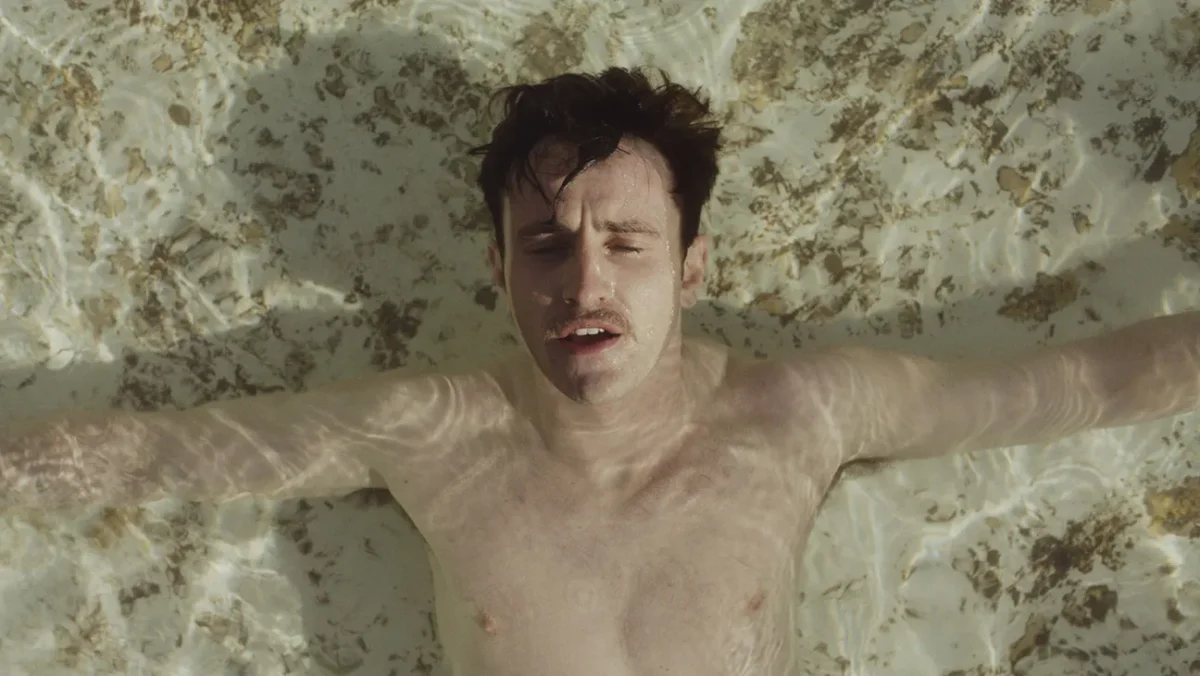
Oliver Hermanus’s “The History of Sound” introduces Mescal as Lionel, a young singer devoted to the art of music. That draws him to David (Josh O’Connor), a pianist who plays a tune that reminds him of his home. In those early moments, Lionel feels quite shy and reserved, while David seems charmingly self-assured. Despite those minor differences, stemming from their socio-cultural backgrounds, they grow close and yearn for each other’s presence.
Based on Ben Shattuck’s short story, this tender romance relies on unspoken words and lingering emotions to do the talking. That leaves the actors with a lot of pressure to communicate the underlying tones and offer a keener sense of their qualms without leaning on expositions. While it may usually be a daunting task for an actor, Mescal and O’Connor have often worked with a similar approach, expanding their characters far beyond what’s on paper.
Mescal’s character, who remains our eyes and ears through this bittersweet romance, goes through a painful, transformative journey while struggling to grasp the very nature of his anguish. He has to spend much of the time making us feel David’s glaring absence through Lionel’s all-consuming despair, even when Lionel refuses to acknowledge it as the root of his pain. Mescal’s delicate yet full-bodied performance leaves us with a tactile sense of that emotion, where even the in-between moments leave an imprint, capturing the pang about a love story that never found a chance to bloom or breathe.
4. God’s Creatures (2022)

“God’s Creatures” centres around a mother and a son, who find themselves confronting the fate of their relationship. Emily Watson plays the mother, while Paul Mescal stars as her son, who returns home to Ireland after being away for several years. That’s why Brian’s (Mescal) return feels like a homecoming that catches Aileen (Watson) off guard, but as something she always longed for.
Everything seems fine in the moment, but after a tragic incident, she is forced to reevaluate her role as a mother. Shane Crowley’s script mainly deals with Aileen’s grave moral dilemma between choosing a comfortable lie and a deeply uncomfortable truth. Yet, it also captures the delicate bond between Sarah (Aisling Franciosi) and Brian, violated and tarnished by a violent rupture.
Watson and Franciosi are the highlights in the cast, while Mescal deftly handles his complicated character in this morality tale, hoping to be perceived in a light similar to how he was in his past, while ignoring the recent, unflattering chapters of his life. Mescal’s chilling performance maintains an intricate balance in this deceptive character who tries to diminish the gap between the façade and the truth, seeking redemption without making any effort at course-correction.
3. Hamnet (2025)
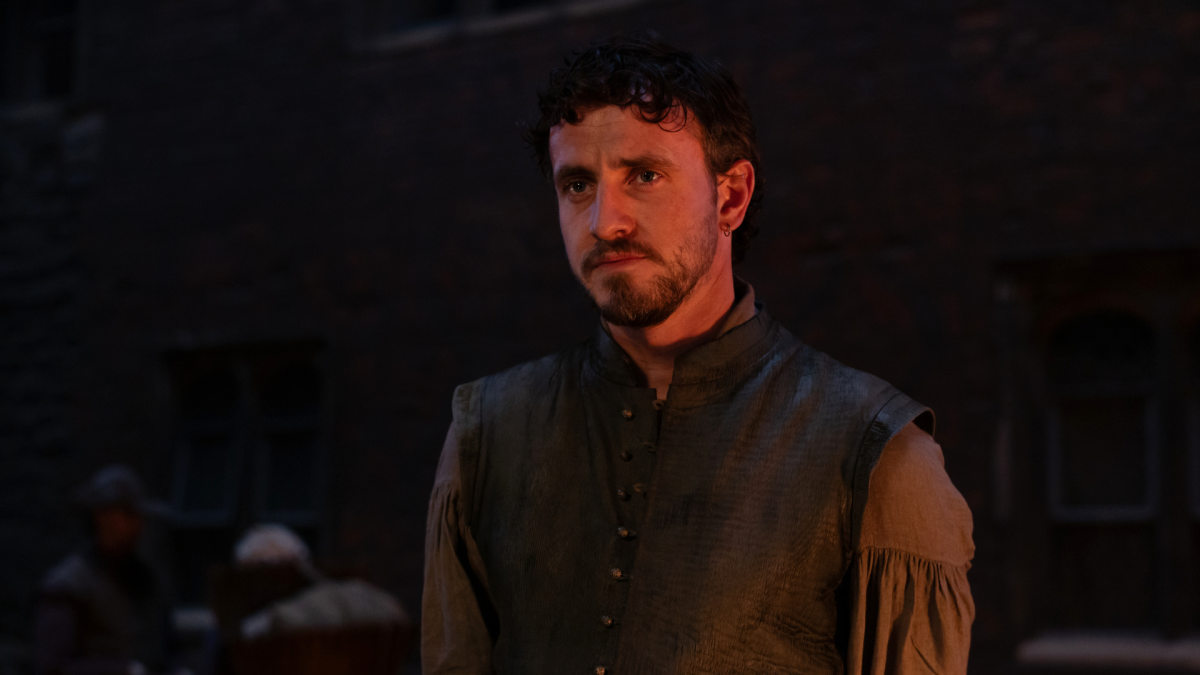
William Shakespeare is such an unshakable force in literature that it must be a challenge for any actor to take over his role. That alone makes Mescal’s turn in Chloe Zhao’s “Hamnet” a powerful one. Yet, he never takes that for granted. Every single choice he makes conveys Will’s overbearing grief, be it about his past anxious self or about the child he couldn’t support when it mattered the most.
Mescal’s performance is dynamic but restrained, emphatic but elaborate. In the early chapters, he conveys the burden of the father’s expectations and familial duties, pulling Will back from his creative pursuit. Once the emotional labor was reduced, Will’s conflict became far more internal, sinking him deeper into his guilt and misery.
How does one cope with something so overwhelmingly tragic and irreversible? The script compels us to introspect through Will’s arc, as it leads him and Agnes to a heartrending chapter of catharsis. For a film that focuses on the otherwise overlooked anguish of Agnes, Mescal ensures that Will takes only as much space in the narrative as he should, while still finding a lot of detail in his gradual transformation, even through the way he carries himself.
Thanks to him, you can notice Will blossoming into his confident self in Agnes’s presence, only to get sucked back into a shell of shame and misery while trying to bridge an ever-expanding gap between them. There’s plenty he could have conveyed by leaning into the operatic nature of Shakespeare’s dramas, but he remains restrained even in moments where he seems to be on the verge of tearing himself apart. It’s a shame that his role appears in a year stacked with so many great performances, which sadly leads to his Academy Award snub.
2. All of Us Strangers (2023)
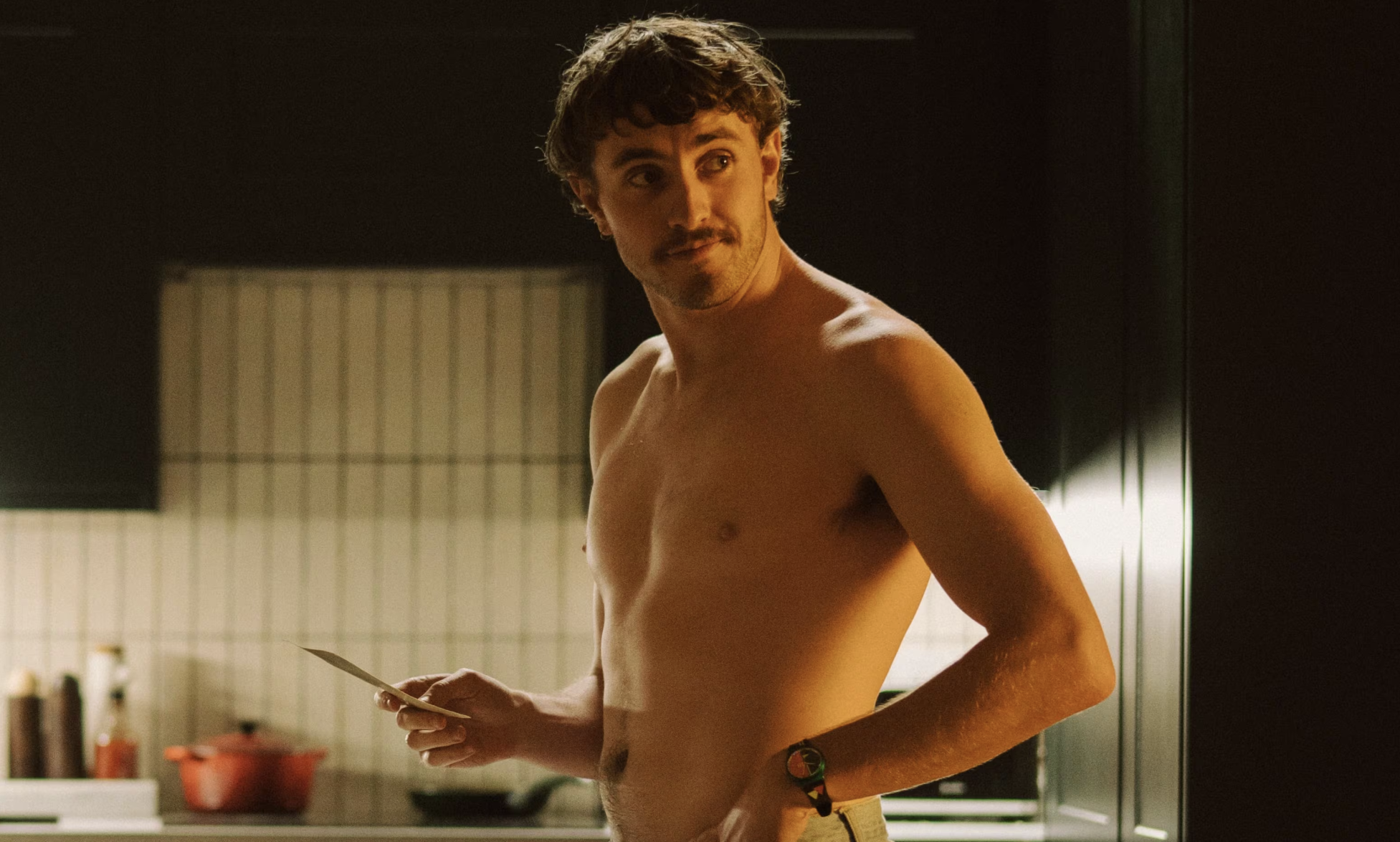
“All of Us Strangers” showed Andrew Haigh’s return with another script that addressed his characters’ complicated relationship with their past, while leaving us with something that feels devastatingly personal. The film is a tender, meditative exploration of a universal dilemma in choosing between pain and forgiveness, parsed through the eyes of a gay man who couldn’t open up to his parents about his sexuality.
Andrew Scott plays Adam as a mournful writer reflecting on his past, while starting a relationship with an enigmatic neighbour, Harry (played by Paul Mescal). Harry holds Adam’s hands through this journey, as he steps back into his childhood home, seeking a more honest relationship with his parents. He remains an elusive figure in Adam’s quest in those painful moments, making him realize the comfort in human presence while offering him the emotional support he needs.
Haigh’s script, adapted from a Japanese tale, explores Adam’s healing through an intricate family drama intersecting with a swooning romance, parsed through a magic realist tale. That’s why it becomes just as haunting as any ghost story, which makes Harry’s role all the more critical. Mescal maintains a delicate mystery about his character, who offers Adam the love he seeks, while battling a fear of abandonment, stemming from his past. He appears largely through Adam’s perception of him, which could have turned him simply into an idea that anyone can project upon. Yet, Mescal makes Harry seem painfully real, revealing his numbness while presenting him as a canvas that Adam can draw upon and seek as comfort in his painful journey.
1. Aftersun (2022)

In 2023, Paul Mescal earned his first Oscar nomination for “Afertsun,” for playing a father trying to make up for the lost time with his young daughter. The script introduces him only through the time they spent together while on a holiday trip in the sun-drenched landscapes around a Turkish resort. Writer-director Charlotte Wells draws it from her own experience with her father through a character who begins to understand his qualms once she becomes as old as he was during that time.
Wells employs hazy footage as a means to communicate the hazy nature of memories, which makes the characters appear through how they are remembered or perceived by Sophie’s older self, perhaps drawing conclusions about his unspoken struggles through a kinder lens. That makes Calum, the father, such a fascinating role to take on for an actor, if a bit challenging because the camera doesn’t always offer him a wide space to embody the character’s pathos.
Yet, Mescal uses those pockets of intense close-ups or blurry clips to convey Calum’s regrets and self-resentment so well that it stays with you even when he is away from the camera or not showing his face. His performance is potent but understated, defined by a remarkable control and maturity that you rarely see in an actor as young as he was while working on this film. It’s the kind of poetic project that makes you want to go on and on singing its praises, and a lot of its credit goes to Mescal’s assured turn at the centre, channeling Calum’s pain about his bottled emotions without ever going overboard.