When ultra-violence becomes the selling point of a film, and the cinema thrives on the generous display of blood and gore, it certainly tells us something about the cinematic trends and the people’s mood. In Hindi cinema, the evolution of violent films has gone through distinct phases, prompting scholars to examine whether this trend reflects a growing social insensitivity to violence.
The 1970s and particularly the 1980s marked the last period when many top-grossing films carried ‘Adults Only’ certificates for their violent or sexual content. According to Box Office India, “Hukumat” (1987) was the last Hindi film to become the year’s highest grosser while being certified for adults. By the late 1980s and into the 1990s, the emergence of the Khans signaled a shift toward family-oriented storytelling and “soft” films aimed at urban, metropolitan audiences and the expanding NRI market.
This trend continued in the early 2000’s, where the multiplex culture promoted more urban stories where raw violence was replaced by slick, choreographed action. In recent years, however, there has been a striking resurgence of violent Hindi films, many of which have earned massive box-office returns despite offering content that is hardly meant for the faint-hearted.
While critics have condemned the misogyny and glorification of substance abuse in “Kabir Singh” (2019), as well as the unapologetically brutal violence in “Animal” (2023), “Marco” (2023), “Hit 3” (2024), and most recently “Dhurandhar” (2025), the fact remains that these films rank among the highest-grossing releases of their respective years.
The Rise of Violence in Indian Cinema
Earlier, most established actors were reluctant to take on brutally violent, A-rated roles for fear of alienating their core family audiences. Shah Rukh Khan has not appeared in an A-rated film in over two decades, Aamir Khan’s last A-rated performance in a full-fledged role dates back to 1999 (excluding his cameo in “Dhobhi Ghat”), and Salman Khan has also stayed away from A-rated content for more than a decade. Hrithik Roshan, notably, has never worked in an A-rated film at all. But in recent years, this trend has begun to shift. Actors struggling to deliver hits now increasingly view ultra-violent films as a means of career revival.
Ranbir Kapoor became the darling of the masses with “Animal,” his first A-rated film. Ranveer Singh, after a difficult few years at the box office, delivered a massive blockbuster in “Dhurandhar.” Even Tiger Shroff attempted to go fully unhinged in the disastrous “Baaghi 4,” which thankfully failed.
Violence, and then more violence, has increasingly become a template for many new films, and even titles that are not officially A-rated show a marked rise in violent content, such as this year’s biggest hit “Chhava” and 2024’s “Pushpa 2.” This has triggered a chain reaction, with even long-established stars now willing to embrace extreme characters and A-rated action dramas. Rajinikanth, for instance, appeared in “Coolie,” his first A-rated film for violence in nearly 30 years.
Read: The Reincarnation Of Indian Cinema
Shah Rukh Khan, while securing a U/A certificate for the theatrical release of “Jawan,” accepted an A certificate for its OTT version. He has also consciously reinvented himself as an action star to adapt to evolving audience tastes, and actors like Ranbir Kapoor and Ranveer Singh are similarly reshaping their screen personas around darker, rougher roles.
Meanwhile, there has been a noticeable decline in both the production and reception of softer films, with very few major blockbusters emerging from drama or comedy in recent years, apart from rare exceptions like “Saiyyara.”
There was a time when filmmakers went to great lengths to avoid an A certificate, often resulting in highly questionable decisions by the Censor Board in India—most famously, granting U certificates to films like “Sholay” and “Ram Teri Ganga Maili.” Today, the situation is almost the opposite.
Many filmmakers openly embrace, even strategically pursue, an A certification. Sandeep Reddy Vanga famously promoted “Animal” with a poster prominently displaying a large “A,” celebrating its Adult rating. Where the A certificate once signified sexual content in 1990s soft-core cinema, it now serves as a badge of unrestrained violence.
Cinema and Society: How the Violence Influences Our Society and Vice-Versa
Does this trend reveal something about society, or are we simply overinterpreting a cinematic shift and unfairly blaming audiences for endorsing violence? Is this pattern likely to continue, or will it, like many other film trends, eventually saturate and fade?
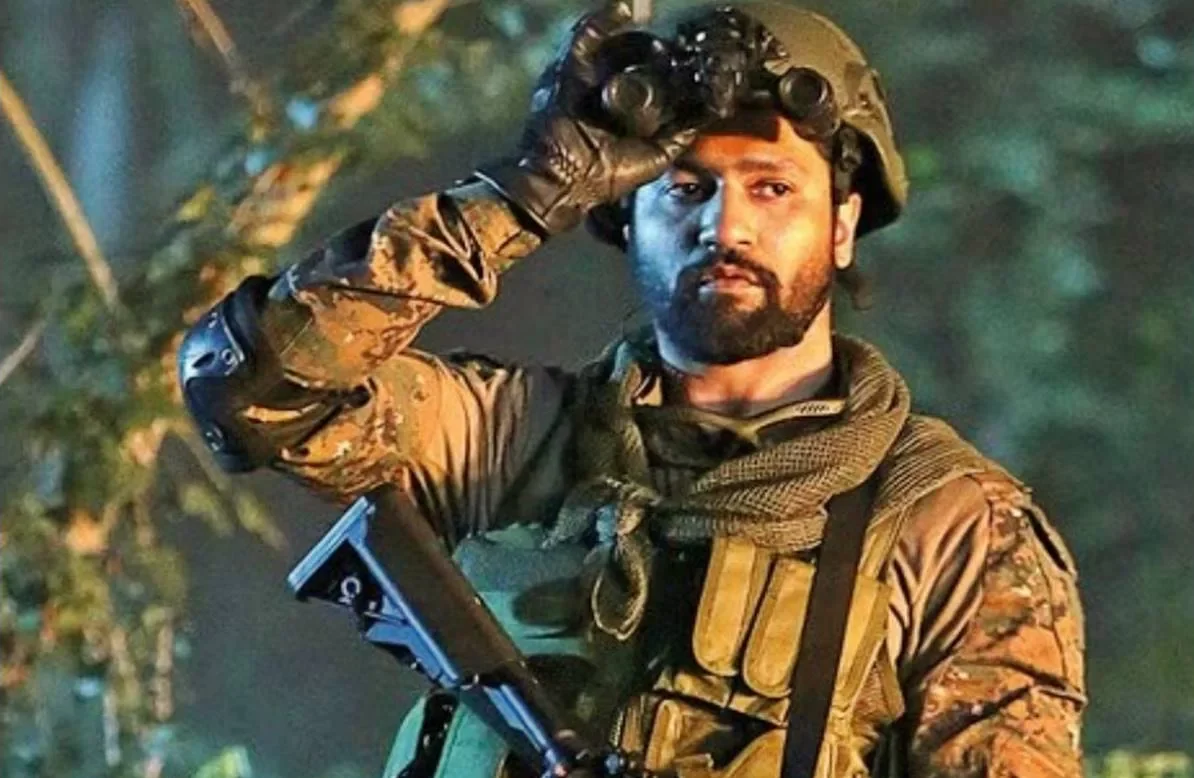
In several cases, violence is consciously deployed to evoke emotional responses, especially in films based on real events such as “The Kashmir Files,” “The Kerala Story,” “The Bengal Files,” “The Ajmer Files,” and “Dhurandhar,” as well as in war and historical films like “Uri: The Surgical Strike,” “Chhava,” “Tanhaji,” and “RRR.”
Audiences often celebrate violence when it is directed at a clearly defined “enemy,” which, in recent years, has frequently been framed as Pakistan, occasionally China, and in historical narratives, the Mughals—particularly Aurangzeb.
In Marathi cinema too, more than a dozen films have explored the life of Shivaji, his commanders, and their battles against the Mughals. Sometimes, reconstructing violence on screen becomes necessary to convey the gravity of historical trauma and to help commemorate collective suffering, such as the depiction of the Jallianwala Bagh massacre in “Sardar Udham” or the intense battle sequences in “Kesari 2,” the latter even receiving an Adult certificate because of its violent content.
However, the problems within this trend are threefold. First is the portrayal of distorted, selectively presented, or entirely fictionalized facts to support a particular ideological narrative—for instance, the numerous historical inaccuracies in “Kesari 2,” or “Hara Hara Veera Mallu,” which invents an entirely fictional story while retaining Aurangzeb as the antagonist. Second is the glorification of violence and the promotion of one-sided narratives that validate retributive justice, leading to real-world consequences such as people travelling to Aseergarh Fort in search of a supposed hidden treasure “stolen by the Mughals,” purely because it was suggested in a film.
Also Read: Screaming into the Void: The Role of Women in Horror
Thirdly, there is the psychological impact of such violence and the growing communalisation of cinematic representations of Indian history. It is hardly coincidental that antagonists in many of these violent films consistently belong to a particular community, and clips from these movies are then circulated on social media as supposed “evidence” of historical and ongoing injustices. The manner in which depictions of past violence are mobilized to legitimize present-day hyper-nationalist sentiments is deeply troubling. This is a dangerous trajectory, and society—and cinema—must tread very carefully along it.
The Role of Women in Violence
How do women participate in a violent cinematic space? In the 1970s and 1980s, when violent cinema began to gain significant traction, women were increasingly pushed to the margins. They were most often positioned as victims of violence and assault—serving as the emotional trigger that motivates the male protagonist’s revenge—or as passive, sympathetic support systems while the hero embarks on his violent mission. Occasionally, women themselves enacted revenge, blending violence with sexuality to justify and sensationalise their agency.
In contemporary violent cinema, female characters are still, more often than not, at the mercy of male figures. Women are frequently sexualised, depicted as vulnerable to exploitation or death, their suffering setting off yet another cycle of revenge, or they remain passive observers with little narrative power.
There are, of course, exceptions where women occupy the centre of violent action, such as in “Bastar,” “Commando,” and “Article 370.” However, the broader trend remains troubling. As violent narratives intensify, the scope for softer romantic interludes narrows, and women are increasingly reduced to appearances in item numbers, allowing a distinctly sexualised male gaze to dominate the narrative.
In a film like “Jaat” (2024), even female police officers are shown helpless before a violent mob led by two women (though the ultimate leader remains male), and it takes a male saviour to rescue them from assault. Ironically, after indulging in a moral discourse on respecting women, the film casually cuts to an item song.
The rise of vulgar item numbers, marked by increasingly explicit choreography and crude lyrics, has become a staple of this genre. The boundaries in these films are starkly defined: within violent spaces, women can exist only as warriors, as victims, or as objects of sexual spectacle. The figure of the middle-class “domesticated” woman has almost no place in such narratives, and recent films make this absence strikingly evident.
The rise of violence in recent Indian films is both symptomatic of evolving cinematic trends and reflective of a shifting public orientation toward notions of self, community, society, and nation. Increasing binaries—between protagonist and antagonist, good and evil, self and other—make it easier to depict, legitimise, and even celebrate violence on screen. At present, Pakistan and the Mughals serve as convenient, ready-made villains, repeatedly exploited by filmmakers, often at the expense of nuance and subtlety. While this trend may not always be destructive, it undeniably carries its own set of problems and therefore demands careful, sensitive, and critical examination.