To enter the world of “Montu Pilot” web series is to step into a version of Kolkata that refuses to be romanticised even as it throbs with longing, a cityscape where desire circulates as currency and affection arrives coded in transactions, and yet where love, in its most fragile and unruly form, continues to insist on existing, stubbornly, in corners that polite society pretends not to see. Directed by Debaloy Bhattacharya, the web series situates its drama in the red-light district – that charged geography where the metropolitan dream folds into its underbelly.
Through Montu’s gradual transformation into the titular “pilot,” it becomes possible to observe how love is never merely an emotion but a negotiation with space, class, gender, and survival at a certain economic disposal, so that what appears at first as a story about a young man entering prostitution slowly unfolds as an inquiry into how cities manufacture both intimacy and loneliness at the same time.
Here, the portrayal of Kolkata is socially specific. The series situates its narrative across distinct yet interconnected spaces: the narrow lanes of the red-light district, rooms illuminated by harsh neon bulbs where transactions are negotiated in clipped tones, the modest lodges that operate on hourly rates, and middle-class apartments where the same clients return to a curated domestic normalcy. Each of these spaces produces a different version of love.
The series makes clear that metropolitan love cannot exist outside material conditions. Economic need determines who enters the trade and who consumes it. Migration patterns bring individuals from smaller towns to the city’s margins, where aspirations collide with limited opportunities. The politics of respectability ensures that those who participate in the economy of desire publicly deny its existence. As a result, love in this urban landscape is rarely insulated from power. It is shaped by police surveillance, social stigma, and the constant negotiation between visibility and secrecy.
Montu himself emerges as a body navigating structures, and his body becomes the site upon which the city writes its contradictions, because his entry into sex work disrupts the heteronormative grammar that the metropolis outwardly upholds, even as that same metropolis thrives on hidden circuits of queer desire. The show’s refusal to caricature his journey presents what is at stake: sexual identity and the politics of who gets to love openly and who must disguise longing as service.
It is precisely in this vacuum of care that the politics of love becomes most visible, because when institutions withdraw empathy and society reduces intimacy to transaction, whatever tenderness survives does so against the grain of an entire system. And thus Montu’s arc from vulnerable entrant to orchestrator of the trade, from a man shaped by circumstances to a man shaping the circumstances of others, carries with it an unsettling commentary on how metropolitan survival often demands complicity.
The figure of the pilot, embodied with layered restraint by Saurav Das, evolves into more than a facilitator of clients and sex workers, because he becomes a broker of access, a mediator between desire and supply, a negotiator between police raids and nightly earnings. Through this evolution, one witnesses how the city trains individuals to internalise its hierarchies, how a victim of structure can gradually become an agent within that same structure, and how the boundaries between exploitation and management blur when economic precarity dictates choices.
In “Montu Pilot,” the functioning of power seeps into the frame, like humidity seeping into the walls of the red-light district in Kolkata, settling into corners and adjusting thetone. The police circulate through the lanes with a familiarity that suggests long-standing arrangements, their boots echoing against concrete to remind everyone of the terms under which it may continue. A raid unfolds less like a moral intervention and more like a calibrated performance whose outcome is already understood, through warnings issued, bribes exchanged, and visibility temporarily suppressed. The district pauses, recalibrates, resumes.
In this rhythm, law becomes choreography, and order becomes something negotiated rather than enforced. The state, therefore, does not appear as a towering antagonist. It pursues steady pressure, regulating how much of the city’s underbelly may surface and how much must remain discreetly contained so that flyovers can glitter and apartment balconies can host respectable evenings elsewhere.
That elsewhere is never far away. The same highways that stretch out in long, sodium-lit arcs carry men from well-furnished homes into these tight lanes and then back again before dawn. The camera often watches cars glide across open roads, the city flattening into streaks of light, suggesting freedom, expansion, and the ease of metropolitan mobility. Yet those wide roads inevitably narrow into the same congested entrances of the district, where desire is itemised and time is billed.
The men who step out of those cars do not arrive as caricatures of cruelty. They arrive as ordinary citizens like office-goers, businessmen, husbands, bringing with them fantasies shaped by entitlement and silence. They request intimacy, but only within parameters that protect their own reputations. They pay for closeness but leave before attachment can demand recognition. Their exits are as important as their entrances: doors close, engines start, taillights recede along highways that promise return to normalcy, while inside the rooms, the air thickens with a residue that money cannot clear. The metropolis sustains itself precisely through this smooth transition between exposure and concealment.
Within this continuum stands Montu, gradually assuming the role of the “pilot”, the dealer who connects bodies to buyers, who reads the tempo of the night and adjusts accordingly. His authority grows through vivid repetition of answering calls, settling disputes, and anticipating police presence, calculating which client may become troublesome and which woman needs protection or persuasion.
In doing so, he becomes an intermediary not only between sex workers and customers but between the district and the larger city that feeds it while denying it. His transformation integrates him more deeply into its mechanics. The highways he travels grant him mobility, yet that mobility is tethered to responsibility from earnings to security, for he has reputations to maintain.
Also Read: The 10 Best Hindi Films of 2019
The absence of overt governmental care becomes palpable precisely because everything functions so efficiently without it. There are no robust safety nets, no structural interventions that alter the district’s vulnerabilities. Instead, survival depends on informal networks and on figures like Montu who operate within grey zones. The emotional lives of those around him adapt to this environment. Love, if it appears, must accommodate uncertainty: a relationship might be interrupted by a raid, a promise might be deferred because a client with higher payment demands priority, a night of tenderness might dissolve under the weight of practical necessity.
The politics of love here is therefore inseparable from infrastructure. It is written into the contrast between the cramped staircases of brothels and the sweeping curves of flyovers, into the knowledge that some people can drive away unmarked while others remain spatially and socially fixed.
The brothels and private rooms in the series across scandalous settings function as laboratories where power relations are stripped of euphemism, and within these rooms, one sees how clients arrive with fantasies shaped by patriarchy. They show us how affection can be simulated and yet occasionally become real in flashes. Finally, it upholds how performers learn to choreograph intimacy as labour, thereby complicating the sentimental myth that love exists outside systems of exchange, because in a city where rent must be paid and dreams demand funding, the line between emotional attachment and economic necessity rarely remains intact.
Yet the series does not collapse love into mere transaction, and this is where its politics deepens, because moments of connection emerge that seem to exceed the logic of money, moments in which vulnerability surfaces unexpectedly, and these instances suggest that even within commodified spaces there survives a capacity for mutual recognition that unsettles the hierarchy between buyer and seller, reminding the viewer that the human need for tenderness resists complete commodification.

The metropolitan cityscape, with its relentless pace and glittering façades, often markets itself as progressive, as “Montu Pilot” subtly questions this self-image by revealing how queer lives remain marginalised despite the city’s claims to modernity, so that Montu’s experiences become a lens through which to examine the city’s uneven embrace of difference. It begins to appear that the metropolis, for all its cosmopolitan pride, continues to demand silence from those whose loves challenge dominant narratives.
The politics of love here also intersects with class mobility, because Montu’s aspirations cannot be separated from his socio-economic position, and the city’s promise of upward movement lures him even as it confines him within exploitative circuits, creating a paradox in which the metropolis both enables and restricts, offering visibility while imposing stigma. Through this paradox, the series gestures toward a broader truth about urban life, that opportunity and vulnerability often coexist in the same breath.
The presence of women in the narrative further complicates the terrain, as female sex workers navigate their own negotiations with clients, police, and society, and their stories illuminate how gendered bodies carry different burdens within the same spatial economy. It paints a picture of love, for their love too must be calibrated against risk and reputation. This embeds love across the dream of romance that sometimes persists precisely because it offers an imagined escape from structural confinement.
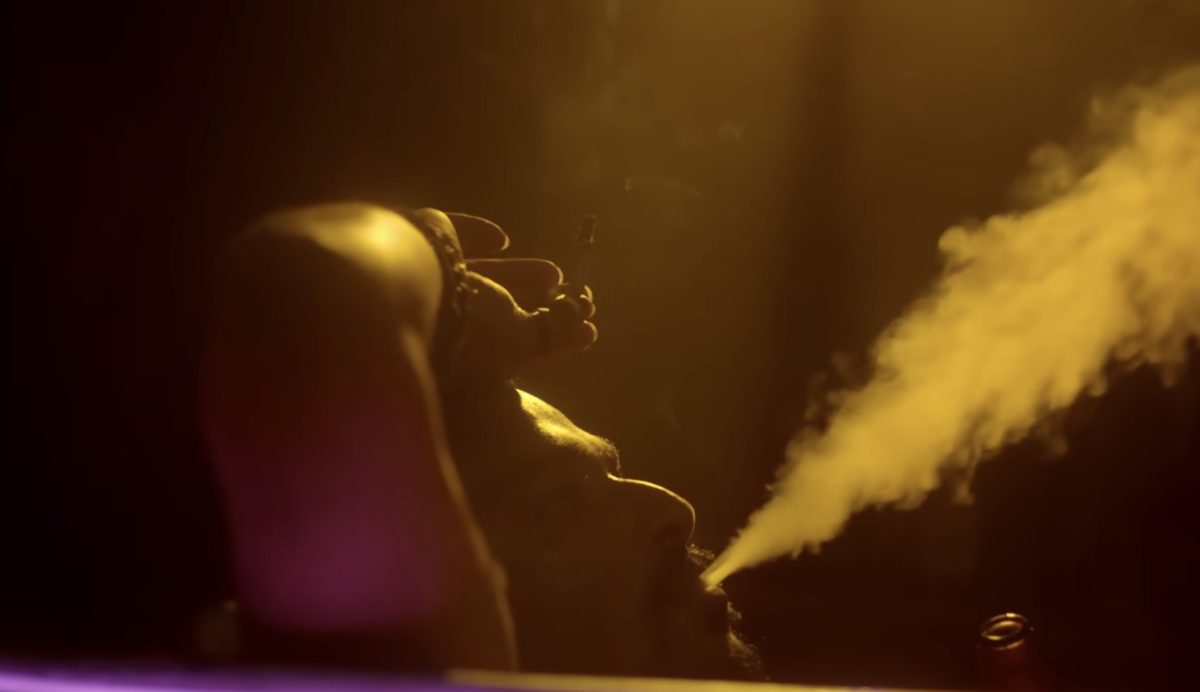
The aesthetic texture of the series, with its saturated colours and claustrophobic frames, amplifies this sense of enclosure and intensity, turning the city into a theatre of intimacy where public and private continually blur. The camera lingers on touches that hover between duty and desire, thereby fructifying the idea of love in a metropolis that often unfolds in fragments. Its politics lies in these fragments, in who can hold whose hand without fear and who is permitted heartbreak without public humiliation.
What becomes striking over time is that Montu’s identity as “pilot” signifies more than professional reinvention, because it evokes the idea of navigation and steering through turbulence. The series suggests that loving in a city requires constant recalibration, that individuals must chart routes through prejudice, ambition, loneliness, and hope, and that this navigation shapes the very texture of their relationships.
The metropolitan skyline, with its flyovers and high-rises, stands in ironic contrast to the narrow lanes of the red-light district, yet both spaces participate in the same economy of desire. With the juxtaposition of these geographies, the narrative hints that the city’s moral boundaries remain porous, that respectable households and clandestine rooms share invisible threads, and that love, in all its forms, circulates across these threads regardless of official approval. In tracing these intersections of a network of lives intersecting under the pressure of a city that promises freedom while imposing constraints, it becomes possible to perceive how metropolitan love oscillates between performance and authenticity.
Montu’s transformation into a pilot unfolds as both empowerment and entrapment. While he gains authority and a semblance of control, he also becomes responsible for sustaining the very economy that commodifies affection, and this responsibility shapes his understanding of love, compelling him to measure it against profit margins and police schedules, to recognise that in a space where everyone is replaceable, emotional investment can appear as liability.
Yet the series resists presenting him as villain or saviour, instead tracing how incremental decisions accumulate into a hardened exterior, how exposure to relentless bargaining dulls certain sensitivities even as it sharpens others, and how the act of dealing, of matching clients with women, demands a compartmentalisation that seeps into his personal life.
As Montu navigates disputes, soothes clients, protects earnings, and anticipates crackdowns, he begins to mirror the city itself, efficient, guarded, pragmatic, and occasionally capable of unexpected warmth. The metropolis imprints its ethos upon those who dwell within its margins. The politics of love, therefore, emerges in the structures that circumscribe them, in the knowledge that a relationship may be interrupted by a raid, that a night’s earnings may depend on the discretion of an officer. and that any aspiration toward romance must contend with these contingencies. When nobody cares in any sustained, systemic way, individuals are compelled to construct their own fragile networks of loyalty, and these networks, however imperfect, begin to resemble a parallel governance, one rooted in survival.