At first glance, “Pusher” looks like a raw crime film about drugs, money, and violent men circling each other in Copenhagen’s underbelly. But beneath the handheld chaos and street-level realism, the film is about time running out, not in a dramatic countdown, but in small humiliations, broken promises, and mounting debt. Every scene tightens the space around Frank until survival replaces choice, and loyalty becomes a currency no one can afford.
This is not a rise-and-fall gangster story. Frank does not dream big. He scrambles. The world of “Pusher” is one where violence is casual, friendships are fleeting, and consequences arrive without warning. Nicolas Winding Refn frames the drug trade not as glamour, but as erosion. One bad day is all it takes for a life already cracked to completely collapse.
Spoilers Ahead
Pusher (1996) Plot Summary & Movie Synopsis:
Who is Frank?
Frank is a small-time drug dealer who lives transaction to transaction. He is not powerful enough to intimidate, nor careful enough to stay invisible. From the opening moments, he is already in debt, already cutting corners, already relying on favors. His partnership with Tonny is not built on trust, but convenience. Tonny follows. Frank decides.
And that imbalance quietly poisons everything. Frank’s life has no buffer. He sells some heroin, wastes time, hangs around the city, and visits Vic, who stores his stash for money and affection. Even here, Frank keeps his distance. He wants access without commitment. Control without responsibility. This pattern repeats everywhere he goes.
Why does the First Big Drug Deal Matter so Much?
The deal with Hasse, a former cellmate, is Frank’s attempt to move up without actually changing who he is. Hasse brings opportunity, scale, and risk. To make it work, Frank approaches Milo, a Serbian drug lord who represents real power. Milo already owes Frank a debt. He lets Frank take the heroin anyway, but only because he expects immediate repayment.
This is the film’s turning point. Frank accepts terms he cannot fulfill. Not because he is reckless, but because refusal would already mean failure. When the police interrupt the deal, and Frank destroys the heroin by falling into the lake, his entire fragile system collapses in one moment. After twenty-four hours in custody, Frank is released without confessing.
The police lie to him, saying Tonny talked. Whether Tonny actually did or not almost doesn’t matter. Frank needs someone to blame. Fear has nowhere else to go. When Frank beats Tonny with a baseball bat, it is not about justice. It is panic trying to look like an authority. Tonny is weaker, more dependent, and easier to punish. The violence exposes Frank’s true position in the hierarchy. He is not a leader, but a man lashing out to delay consequences.
Who is Milo?
Milo never raises his voice. He doesn’t need to. His power is structural. He controls supply, debt, and time. When Frank explains the loss, Milo simply increases what Frank owes. Belief is irrelevant. Payment is all that matters. Milo represents the system Frank thought he could skim off without fully belonging to. There is no negotiation here, only delay. And delay, in Milo’s world, only makes the punishment worse.
What Role Does Radovan Play in Frank’s Downfall?
Radovan enters as Milo’s enforcer, but he is not immediately threatening. He talks, jokes, and shares his dream of opening a restaurant. This false warmth disarms Frank and makes the danger feel manageable. As they collect debts together, Radovan reveals how little human life is worth in this economy. When he pressures an addict to commit a crime to pay what he owes, and the addict instead kills himself, the film draws a hard line.
There is no redemption here. Only damage passed downward. When Frank fails again, Radovan’s friendliness evaporates. The threats become physical. His role is simple. He is what happens when time runs out. Vic wants stability. Not wealth or escape, just recognition. She stores Frank’s drugs, listens to him, and asks for a relationship.
Frank keeps promising later: after this deal, after this problem. He takes her to clubs. Talks about Spain. Mentions her sick dog. But every promise is contingent. Vic senses the truth before Frank admits it to himself. She is not a partner, but a temporary shelter. And shelters collapse when the storm gets worse.
Pusher (1996) Movie Ending Explained:
What Goes Wrong with the Final Deals?
Frank’s last attempts to recover are built on the same flaw. Trusting people who are just as desperate as he is. His drug mule betrays him. Baking soda replaces heroin. Even when Frank robs bodybuilders at a gym, the win is short-lived. Radovan catches him and tortures him. The violence is efficient, not emotional. Frank escapes, but escape no longer means safety. It only means postponement. When Milo calls and offers to settle for a token payment, Frank believes he has survived. He canceled the Spain plan without explanation. Vic finally sees the truth. There is no future here. Only cycles.
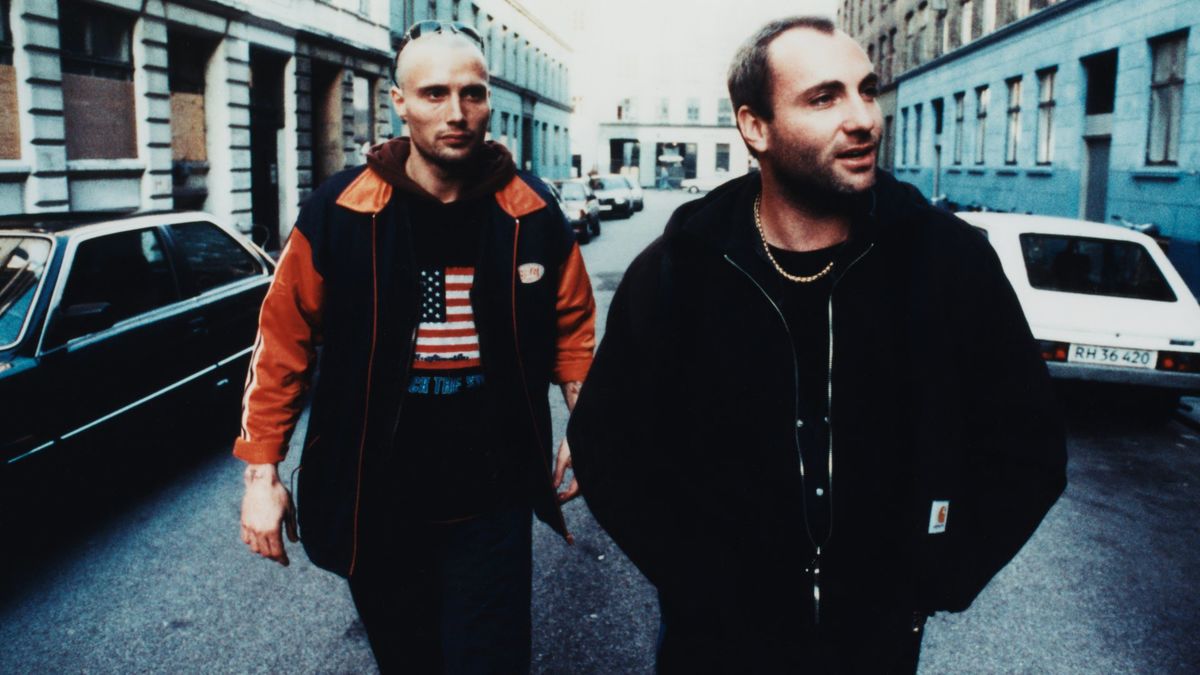
She takes the money and runs. It is not betrayal. It is self-preservation. Vic does what Frank has been doing all along, but with clarity. She chooses herself. As Frank walks through Copenhagen, everyone who wants him dead is already moving. Milo never intended to forgive him. The call was bait. Frank is alive only because the film hasn’t ended yet.
There is no final shootout. No catharsis. Just inevitability. “Pusher” ends where it began. With a man who thought he could outrun consequences in a world built entirely on them. Frank is not unlucky. He is unsustainable. And the film’s greatest cruelty is its honesty. In this world, survival is temporary. Debt is permanent. And nobody gets out clean.
Pusher (1996) Movie Theme Analysed:
Debt, Time, and the Violence of Survival
At its core, “Pusher” is not a crime film about drugs, but about debt. Not just financial debt, but emotional, moral, and temporal debt. Nicolas Winding Refn constructs a world where owing something is more dangerous than committing a crime. Drugs are merely the medium through which obligation circulates. What truly drives the film forward is the slow suffocation of a man who is always behind, always promising tomorrow to pay for today.
Frank does not fall from grace because he never stands on it. From the beginning, he exists in a state of deficit. He owes Milo money and owes Tonny leadership. He owes Vic honesty. And most crucially, he owes himself a future he keeps postponing. “Pusher” shows how debt compresses time. Every scene shrinks Frank’s options until survival becomes his only remaining value system.
One of the film’s most striking themes is how time operates as violence. The plot unfolds over a few days, but the urgency never relaxes. There is no room for reflection or moral reckoning. Time is not something Frank controls; it is something weaponized against him. Milo’s power comes not from brutality, but patience. He can wait. Frank cannot. That imbalance defines the entire hierarchy of the criminal world portrayed here.
This is why the heroin deal going wrong is not the tragedy itself. The tragedy is that Frank cannot absorb the loss. In a stable system, failure can be corrected. In Frank’s world, failure compounds. Losing the drugs does not reset him to zero; it pushes him further below it. Every attempt to fix the situation only deepens the hole, turning action into acceleration toward collapse.
Violence in “Pusher” is stripped of spectacle. It arrives suddenly, often awkwardly, and without narrative reward. Frank beating Tonny is not framed as a dramatic betrayal but as a pathetic attempt to reclaim authority. Tonny becomes the outlet for Frank’s fear because Tonny is the only person Frank can overpower. This reveals a central theme of the film: violence travels downward. Those with less power absorb the panic of those above them.
This downward flow is mirrored in Radovan’s interactions with the addict. Radovan’s dream of opening a restaurant humanizes him briefly, but the film never allows that humanity to redeem his actions. When the addict kills himself rather than continue the cycle of debt, the moment lands not as a tragedy, but as confirmation. There is no escape within this system. The only refusal left is self-destruction.
Another key theme is masculinity defined by endurance rather than purpose. The men in “Pusher” do not talk about ambition, legacy, or meaning. They talk about deals, money, and favors. Emotional expression is replaced by tolerance for pain. Frank’s ability to take beatings, torture, and humiliation becomes his only proof of worth. Survival itself becomes the performance of masculinity.
In contrast, Vic represents an alternative value system that the film ultimately rejects. She wants continuity. Care. A shared future. Her desire for a relationship is not romanticized, but it is presented as incompatible with Frank’s world. Frank does not reject her because he lacks feelings; he rejects her because commitment demands time, and time is the one resource he does not have. Every promise he makes to Vic is conditional, revealing how emotional intimacy is treated as another debt to delay.
Trust is another illusion the film systematically dismantles. Every relationship is transactional, even when it pretends not to be. Hasse reconnects with Frank not out of loyalty, but opportunity. Tonny follows Frank because he has nowhere else to go. Milo’s calm demeanor hides an absolute absence of mercy. Even apparent kindness is strategic. When trust appears, it exists only until it becomes inconvenient.
This lack of trust extends to institutions as well. The police are not saviors or villains; they are another pressure point. Their interrogation tactic of claiming Tonny confessed is enough to fracture an already unstable alliance. The truth becomes irrelevant. Perception is what matters. In a world ruled by fear, belief itself becomes a weapon.
The film’s visual style reinforces its themes. The handheld camera creates constant instability. Scenes feel unplanned, uncontrolled, and invasive. There is no aesthetic distance between the audience and Frank’s panic. This visual chaos mirrors the internal chaos of a man who cannot slow down without losing everything.
The ending of “Pusher” refuses closure because closure would be dishonest. Frank does not receive punishment or redemption. He simply runs out of space. Milo’s final call, offering forgiveness, is the film’s cruelest gesture. It proves that hope is just another tool of control. Frank believes he has survived, but survival in this world is always provisional.
Ultimately, “Pusher” argues that systems built on debt do not allow transformation. They only allow endurance. Frank is not destroyed because he is immoral, but because morality is irrelevant here. The film does not ask whether Frank deserves what happens to him. It shows that in a world governed by obligation, violence, and time scarcity, deserving has no currency.
“Pusher” is devastating precisely because it is unsentimental. It does not punish its characters to make a point. It observes them until the point becomes unavoidable. When survival becomes the only goal, everything else, loyalty, love, dignity, turns into collateral damage. And once that threshold is crossed, there is no way back.