
When the screen finally turned black after the finale of “Something Very Bad Is Going to Happen” (2026), I found myself chuckling a little—how many times have I heard my peers and myself say, “If my current partner doesn’t turn out to be the one, I will die.” Well, hard luck for Rachel. She literally will die in Netflix’s recent horror flick created by Haley Z. Boston, produced by the Duffer Brothers, if she doesn’t marry her soulmate at the altar.
Just when late millennials like me have finally managed to escape the horrors of dating and settled into the comfort of a loving relationship, another rock comes tumbling down the hill. That gnawing voice inside our heads: have we found the one? In the age of Instagrammable pastel weddings, when the wedding industry’s profits are at an all-time high, Boston voices its reality and our anxiety associated with it. Are we marrying for the wedding? Are we marrying for societal norms? Or are we marrying the person because we truly love them and choose them? This impossibly difficult question is at the core of this miniseries, only seconded by questions of fate, trauma, and family.
In a concoction of the aesthetics of Tim Burton’s “Corpse Bride,” the atmospheric foreboding of Mike Flanagan’s “The Fall of the House of Usher,” and the strangeness of Charlie Kaufman’s “I Am Thinking of Ending Things,” the series opens with Rachel walking down the aisle, where we already know that something very bad is going to happen. The edit cuts to a pool of blood right before we meet the ill-fated couple driving up to the groom’s secluded vacation cabin, where the wedding is to happen in five days. The drive looms with a sense of bad luck and apprehension, ensuring the audience does not mistake the story for one of romance and happy endings.
In the darkness of the night, the couple enters Somerhouse and is greeted by a lifelike family portrait, guarded by taxidermied dogs. The painting has a space for the new Mrs. Cunningham, whoever that will be. The next two episodes brilliantly design a red herring for the audience to believe that Rachel has walked into the set of “Get Out,” where chances are that she will be lobotomized to become the perfect bride. Everything in the second episode focuses on Rachel’s growing paranoia around the wedding until we realize it is not an evil ploy by the Cunninghams at all. They are just a perfectly medium-strange, rich, white family whose values are rooted in conventional social institutions that validate their wealth and weirdness. In an interesting turn of events, the ball is suddenly in Rachel’s court, where the actual unfolding of the series begins.
So, if Nicky’s family isn’t the problem, what could possibly interrupt this divine union? After all, Rachel and Nicky seem to be perfectly in love. Nicky listens to Rachel, assures her, validates her, and understands her. He even finds her completely reasonable when she is hysterical. Well, according to Boston, the answer is simple. It is our own tryst with generational trauma, our fears and anxieties associated with long-term commitments, and our struggle to truly know and have faith in another person that ultimately destroys our chances at simplicity and stability.
Boston brings the burden of generational trauma to life in an Ari Asteresque horror portrayal. Rachel carries an age-old curse where the question of marriage cannot be made simple. She has to marry her soulmate, or she dies because Death has been hunting down members of her bloodline who don’t marry their soulmates for centuries. To no fault of hers, she has a real price to pay. Through a twisted, horrifying metaphor, our awareness of generational trauma and our inability to honestly deal with it become the greatest adversary.
At many moments in the series, Rachel appears to pull the rug over all her underlying fears. She has not processed her mother’s death or her estranged relationship with her father. She is terrified of having children because of what it might do to her physically and mentally, and despite knowing that Nicky definitely wants a child, she chooses to overlook that incompatibility.
She says yes to his proposal, not because she primarily wants to be married, but because she does not want to hurt him, very much like her mother, who agreed to marry because she was pregnant. These choices stem from circumstances rather than free will and certainty. It is only when Rachel is confronted with the truth about the curse that she has to decide, with certainty, if Nicky is the one for her or not. This forces her to accept their obvious incompatibilities and explore alternative methods to ensure certainty.
It is here that Boston decides to throw more light on Nicky. Nicky’s nice, soft-boy image is shattered once the truth about their meet-cute is exposed. Nicky is not her fated lover but a sad, single boy who latched on to the next attractive woman in order to escape his own fear of loneliness. Nicky’s idea of a marriage is a product of his sheltered upbringing, where he grew up idolizing his parents’ marriage, which is later revealed to have been far from perfect. Nicky’s inability to see anyone’s truth above his version of them makes him incapable of dealing with reality.
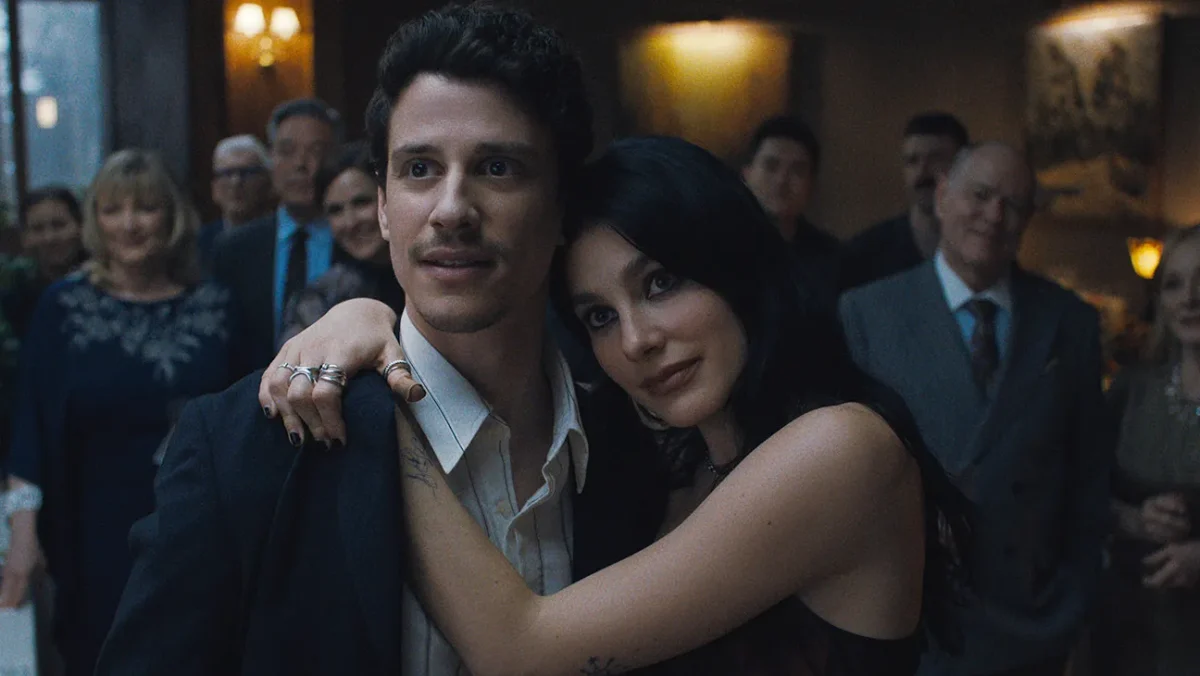
Nicky even fails to believe in the curse because he is not superstitious, pulling the final straw of their relationship. As Boston has revealed, if Nicky had said with conviction, “I do”, at the altar, all would have ended well. But his fumbling faith in every reality outside his own triggers a catastrophe beyond his control. He does say yes after his mother’s persuasion, but by then the dice have been rolled, and the outcome decided.
At the end of the day, the parable of this show is simple. We can possibly never know if someone is the one. But it is important to put our faith in them and have conviction when we choose them. As Nellie points out, we can possibly never know if a marriage will work out, but we must know with certainty that we are willing to take that chance. And that chance should be determined by our faith in our partner alone and not by external factors like family or society. Maybe that is why Jules and Nellie survive, because they are honest with each other, and they choose each other even when things get tough.
As a generation, with all our awareness, maybe we have truly made this question bigger than it seems to be. Our inability to certainly commit to anything because of the illusion of choice around us has posed the greatest challenge to traditional institutions like marriage. And while marriage itself is exposed as a flawed institution, our partnerships should be built on unwavering trust and faith, and not on its prospective ability to fit into a system. Rachel manages to free herself from it, abandoning the relationship through her haemorrhage.
She literally dies and is reborn, even if her life is one of doom. The final scene of the series is not one of defeat, but of moving on from a performative institution that thrives on controlling its subjects and from the person who was never her person to begin with. On a deeper level, this is a story of any jilted lover’s escape from an emotionally abusive, misunderstood relationship, which appears perfect on the surface as long as they refrain from digging into the real problems beneath the façade of perfection.




![Hellraiser [2022] Review: Clive Barker’s hellish vision comes to life in a good-looking but staid remake](https://www.highonfilms.com/wp-content/uploads/2022/10/Hellraiser-2022-Movie-Review-1-768x449.jpg)