“Titli” unfolds with a ferocity and clarity that sets itself apart from the conventions of a standard crime drama, opening up a world where grit, aspiration, love, and transformation converge around a young man’s attempt to define himself beyond the violent orbit of his family. Rather than seeking comfort or easy engagement, the film appears interested in excavating the textures of family, desperation, and the quiet, suffocating violence that seems to simmer beneath the surface of lives lived at society’s margins. It is a work that encourages engagement without offering the safety of detachment.
The opening image of Titli pacing and gazing across an under-construction mall parking lot in East Delhi situates the narrative within a space that feels both physically and psychologically transitional. The landscape suggests a city in flux, where distant towers gesture toward progress while those living alongside them continue to negotiate older arrangements of survival, identity, and aspiration. Titli and his brothers inhabit the underside of this expanding urban sprawl, where life unfolds in cramped apartments beside railway tracks and amid the constant hum of construction. The environment, in this sense, feels less like a neutral setting and more like an active presence, quietly shaping the contours of choice and possibility.
The outskirts of Delhi are rendered with a kind of stark magnetism, their decay punctuated by the unfinished mall that stands as a marker of uneven development. Intended as a symbol of opportunity, it instead seems to embody a promise that remains perpetually out of reach. By positioning Titli as the youngest member of a family of carjackers, Kanu Behl frames violence as a functional response within a social terrain where institutional options are scarce, and dignity is routinely traded for immediate survival. Rooted in the specific textures of the city’s underbelly, the film suggests a world in which violence functions less as a moral rupture and more as an everyday economic logic.
Titli’s pursuit of a parking space can be read as a response to a city organised around ownership, where even marginal forms of property appear to confer legitimacy and mobility. In urban spaces structured by capital and access, a sliver of ownership often functions as a marker of selfhood, a way of registering presence within systems that otherwise render many lives invisible. This aspiration seems shaped by a neoliberal Delhi in which land, movement, and legitimacy are unevenly distributed and dignity is frequently measured in square footage. Set within this logic, the family operates as a kind of micro-state, maintaining order, demanding loyalty, and sustaining itself through calibrated forms of violence treated as routinised labour rather than moral aberration.
Titli’s fixation on ownership may also be understood as an entry point into the economics of inequality, both within India and on a global scale, where land and asset ownership play a decisive role in determining who is able to move, participate, and secure stability. Globally, wealth remains highly concentrated, with a small fraction of the population controlling a disproportionate share of resources, leaving vast numbers with little material leverage. Within Indian cities, rapid urbanisation has produced sharp spatial contrasts, as informal settlements and precarious housing exist alongside polished commercial districts, while a large section of the workforce remains excluded from formal credit systems and secure property rights.
In this context, land and housing emerge as durable sources of wealth and social legitimacy, and their inaccessibility means that even a parking space can assume symbolic significance as a form of agency. From this perspective, Titli’s family can be seen as reproducing the same structures of exclusion that govern access to property and power, including the costs required to sustain the appearance of choice. The film reinforces this reading through its soundscape as much as its imagery: the constant noise of trains, traffic, and domestic movement collapses distinctions between private and public space, underscoring how closely the characters remain tied to their spatial conditions.
Also Read: 15 Must-See Coming Of Age Movies Of 2015
What stands out is how the film aligns its environment with Titli’s interior orientation. His visible restlessness reads as an awareness of his position within the city, shaped by a simultaneous recognition of other possibilities hinted at by the unfinished mall’s distant towers. This sense of aspiration is embedded within the everyday rhythms of family life. His father and elder brothers emerge as figures shaped by circumstance, bound by forms of loyalty that sustain them even as they impose limits.
The way Kanu Behl frames the family bond suggests a relationship shaped as much by care as by obligation, functioning almost like a living ecosystem sustained by its own tensions and contradictions. Titli’s desire to buy a parking space appears intertwined with this collective life, less a solitary dream than one woven into the family’s shared rhythms, hinting that escape is rarely only physical and is often bound up with emotional and social ties.
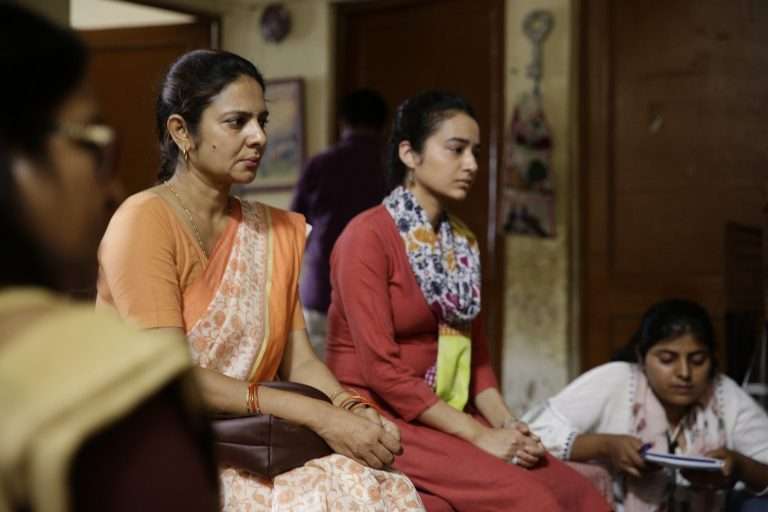
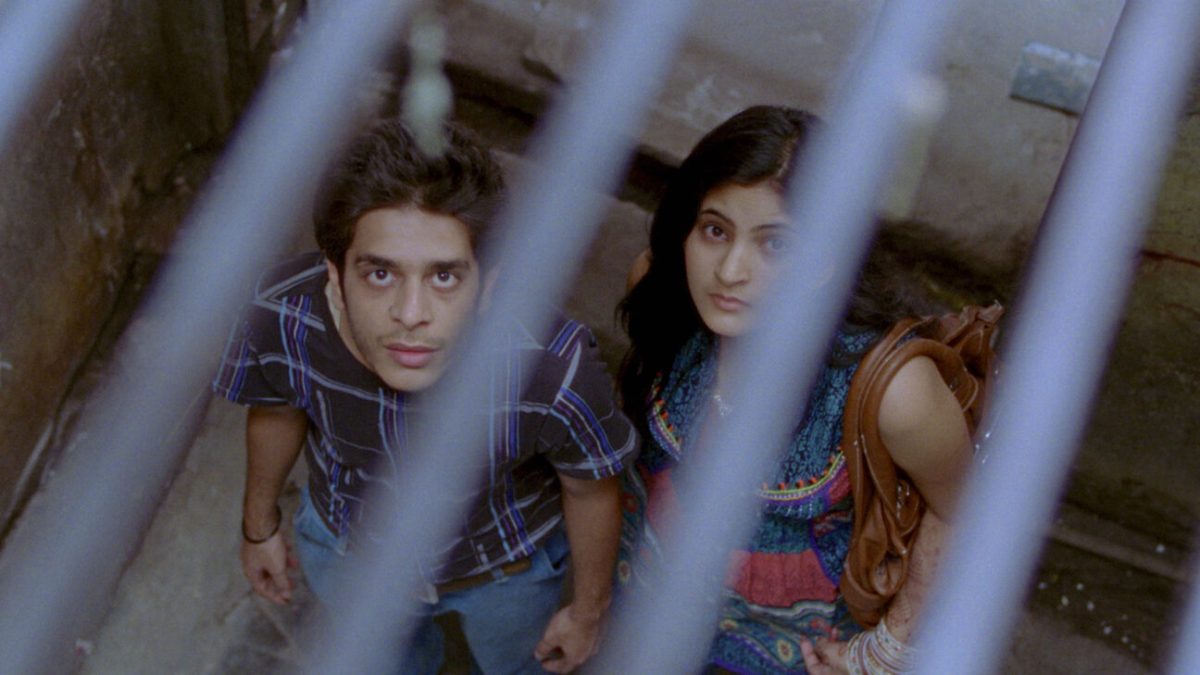
When he is pushed into an arranged marriage with Neelu, whose own aspirations remain quietly defined, the relationship opens up another space of negotiation. Their marriage unfolds as a fragile arrangement shaped by mutual expectation, compromise, and betrayal, reflecting how personal freedom can emerge through difficult and often uncomfortable choices rather than clear resolutions.
One of the film’s most striking aspects lies in its refusal to rely on familiar archetypes. The violence, criminality, and moral uncertainty do not operate as shock devices but seem grounded in lives shaped by restriction, repetition, and limited alternatives. Performances anchored in this world lend the characters a textured humanity: Shashank Arora’s inward-looking Titli is matched by the layered portrayals of Ranvir Shorey and Amit Sial, whose characters are defined as much by vulnerability as by menace. Behl’s direction maintains a clear visual logic, where the cramped lanes of Delhi and the suffocating interiors of the family home echo Titli’s own sense of enclosure, allowing the city and the character’s interior state to move in quiet parallel.
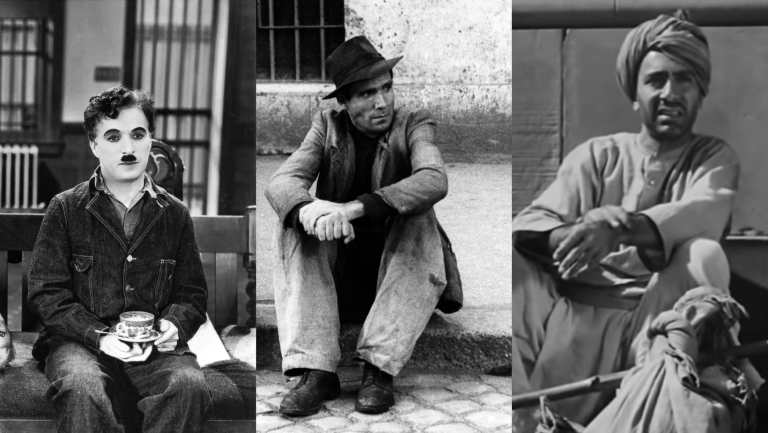
The film has often been discussed in relation to neo-realist traditions, a comparison that seems to arise from its attention to everyday detail and emotional restraint. “Titli” avoids offering easy escape routes or conventional redemption, allowing its conflicts to remain unresolved in ways that feel consistent with the lives it portrays. Change, here, appears incremental and uncertain, emerging through small negotiations rather than dramatic breaks. In tracing this uneasy movement between entrapment and possibility, the film reflects a broader tension around claiming space, autonomy, and selfhood in a world that resists such claims at every turn. It is this unresolved, deeply human tension that gives “Titli” its lasting resonance and makes it a film that continues to linger beyond its final frame.
What lingers after “Titli” ends is the film’s understanding of freedom as an interior condition, something borne within the self even in environments engineered to wear it down. From the opening moment, when Titli stands before the skeletal structure of an under-construction mall parking lot, his restless gaze sets up a tension between the reality of his world and the idea of what freedom might look like beyond it. That tension gradually comes to shape the film’s emotional centre.

Check Out: The 10 Best Hindi Films Of 2015
The film presents freedom as something worked out through daily negotiation within a landscape marked by absence. Institutions, opportunities, and systems that might otherwise offer stability appear either hollow or unreachable. Delhi’s half-built complexes, crowded streets, and constant noise operate less as background detail and more as a visual map of constraint, where economic precarity and patriarchal obligation shape every decision.
Titli’s desire to step away from his family’s violent world does not read as a rejection of them, but rather as an understanding that a life structured around carjacking routines, roadside transactions, and displays of masculinity is organised around survival rather than choice. His desire to own a parking space gains symbolic weight in this context, pointing toward an effort to claim a small portion of the world on his own terms and to anchor his identity beyond inherited patterns of violence and expectation.
Each of Titli’s attempts to assert autonomy – the failed parking deal, the arranged marriage to Neelu, and his involvement in schemes promising quick money– seems to circle back to the same underlying emptiness. These moments reflect a system in which criminal capital offers the appearance of opportunity while ultimately reinforcing the very structures it seems to challenge.
Kanu Behl and co-writer Sharat Katariya approach this condition without framing it as personal tragedy or moral failure. Instead, it unfolds as a lived reality shaped by the overlap between individual desire and structural neglect. The film’s domestic scenes, framed within narrow interiors and accompanied by relentless exterior noise, convey a sense that escape involves confronting internalised habits of survival as much as physical confinement.
In this way, Titli’s journey comes to resemble the experience of many who grow up amid economic and social scarcity, where freedom is pieced together through moments of compromise, defiance, compassion, and self-doubt. The film allows change to remain uncertain and incomplete, acknowledging a protagonist who may carry his roots even as he moves beyond them, and a family that both restrains and sustains him. So, “Titli” suggests it as a process of becoming within limitation.
This is what allows the film to resonate beyond its immediate narrative. It gestures toward how systemic absence shapes not only material conditions but also the ways desire, ambition, and self-understanding take form, situating Titli’s search for freedom within a broader, recognisable human struggle.