If you’re anything like me, your interest in the Second World War probably started in school and only deepened over time—through documentaries, books, and everything in between. But if you really ARE anything like me, you probably also like to be entertained predominantly through Film & TV, and to that I say, you’re in luck.
I have prepared an extensive chronological list of all of the most important moments in World War 2 (WWII), and paired them with dramatisations that depict the events of said moments. These vary from limited series to live-action motion pictures to even animated flicks, with many coming from the minds of some of the finest creatives to ever grace our screens with their work. For your enjoyment, I present as extensive a list as possible, with entertainment at the forefront of the agenda.
1. (1899–1934) Hitler’s Ascendency and the Rise of the Nazi Party:
Hitler: The Rise of Evil (2003)
To officially kick off this journey through WWII, I suggest that the natural liftoff point be every history teacher’s favourite, “Hitler: The Rise of Evil.” Depicting the events of Adolph Hitler’s life from adolescence through to his eventual ascendancy to the ultimate ruler of Germany, this two-part miniseries provides all the context needed to understand the events that are to come throughout the Second World War.
Recounting Hitler’s involvement in the First World War (WW1) and his frustrations at Germany’s ultimate failure, as well as the steps that he would go on to take in the aftermath, in order to avenge it. It details the Nazi Party’s rise to prominence throughout the 1920s and 30s, and introduces key Party members such as Joseph Goebbels and Hermann Göring. Robert Carlyle (“Trainspotting,” “28 Weeks Later”) stars as Adolph Hitler, whilst the likes of Peter O’Toole, Matthew Modine, and Liev Schreiber make up the supporting cast
2. (August, 1936) The 1936 Berlin Olympics:
Race (2016)
The 1936 Berlin Olympic Games acted less as a showcase of the world’s premier athletes and more as a propaganda tool for the rising Nazi Party — a party that wanted to display for the entire world their belief in the idea of Aryan racial supremacy and antisemitism. Despite this, African American track and field athlete Jesse Owens found himself firmly at the centre of the world stage, going for gold in the face of Adolph Hitler-shaped adversity.
The Stephen Hopkins-directed “Race” tells the story of his Olympic triumph, exhibiting what it meant in the wider context of the world’s political climate, and what it would tell us about the fight that was to come just a few years later. These games would be the last for 12 years until the 1948 Winter Games in St. Moritz, Switzerland, due to the massive world disruption caused by the upcoming Second World War.
3. (August, 1937 — November, 1937) The Battle of Shanghai:
The Eight Hundred (2020)
For many, the beginning of the Second World War was not in September of 1939, but rather in July of 1937, in East Asia. This is down to the Marco Polo Bridge Incident, in which the Chinese Garrison of the 29th Army refused units of the Japanese China Garrison Army entry into the walled city of Wanping. Shots were fired amidst the confusion, and from there, what we know as the Second Sino-Japanese War would begin – a war that would see a full-scale Japanese invasion of China.
The Japanese invasion would eventually take them to Shanghai in August, starting what would be a three-month-long battle that would conclude with the retreat of the Chinese army. Guan Hu’s 2020 movie “The Eight Hundred” takes the setting of the defense of the Sihang Warehouse by Chinese NRA troops during the Battle of Shanghai, detailing the heavy Chinese losses of the battle, and covering a chapter of the Second World War that is often far too overlooked.
4. (November 1937 — December 1937) The Battle of Nanjing and the Nanjing Massacre:
City of Life and Death (2009)
Following the hard-fought Battle of Shanghai, the Japanese decided to concentrate 220,000 soldiers to begin a campaign against the then capital of China, Nanjing. Japanese forces would go on to inflict heavy Chinese damage, killing an estimated 50,000 Chinese soldiers who attempted to defend the city, and what would follow is one of the darkest and most brutal hours in Chinese history.
After capturing Nanjing, the Japanese would commit what we now refer to as the Nanjing Massacre, the mass murder and rape of Chinese civilians, totaling an estimated 200,000 deaths and 20,000 rapes. The 2009 movie “City of Life and Death,” written and directed by Lu Chuan, deals with the Battle of Nanjing and the massacre that followed, marking a tragic precursor to the war in Europe.
5. (March, 1938) The Annexation of Austria by Nazi Germany (Anschluss):
The Sound of Music (1965)
In March of 1938, Adolph Hitler’s European expansion would begin with the Annexation of Austria, also known as Anschluss, by sending troops of the 8th Army of the German Wehrmacht to march into Austria on the morning of March 12th, 1938. The troops were met with no resistance whatsoever and, in fact, were met with Austrian applause, Nazi salutes, and flowers. Anschluss was a resounding success for the Nazi’s, and marked the beginning of Hitler’s conquest for a ‘greater Germany’.
The five-time Academy Award-winning “The Sound of Music” takes its setting on the eve of Anschluss, telling the story of Maria, a governess to a large family, and Captain von Trapp, a Nazi-opposed navy officer, as they attempt to flee the now Nazi-occupied Austria. The film is considered amongst the medium’s most revered musicals, and has firmly cemented its place in film history since its release over 60 years ago.
6. (September, 1938) The Munich Agreement and the Annexation of the Sudetenland by Nazi Germany:
Munich — The Edge of War (2021)
Following Nazi Germany’s Annexation of Austria, Hitler’s appetite for expansion only grew larger. Believing that he should now be able to annex Sudetenland, a part of the first Czechoslovak Republic inhabited, at the time, predominantly by ethnic Germans. Fearful of the potential for an outbreak of a Second World War, British Prime Minister Neville Chamberlain flew to Munich in September of 1938 in order to meet Adolph Hitler to discuss the terms of the potential annexation. And on September 30th, 1938, an agreement was reached.
The agreement, which meant Germany could freely absorb Sudetenland in exchange for a promise of peace, was essentially a last-ditch effort to avoid the forthcoming war, with many believing that it had achieved just that — none more than Chamberlain himself. Of course, it did not, and Hitler’s hunger for expanding Germany’s borders only intensified following the annexation. “Munich — The Edge of War” centres around the events, depicting the signing of the agreement as well as Chamberlain’s famous ‘Peace for our time’ speech, and stars the likes of Jeremy Irons, Sandra Hüller, and George MacKay.
7. (September, 1939) Nazi Germany Invades Poland and World War Two Officially Begins:
The Pianist (2002) | To Be or Not to Be (1942)
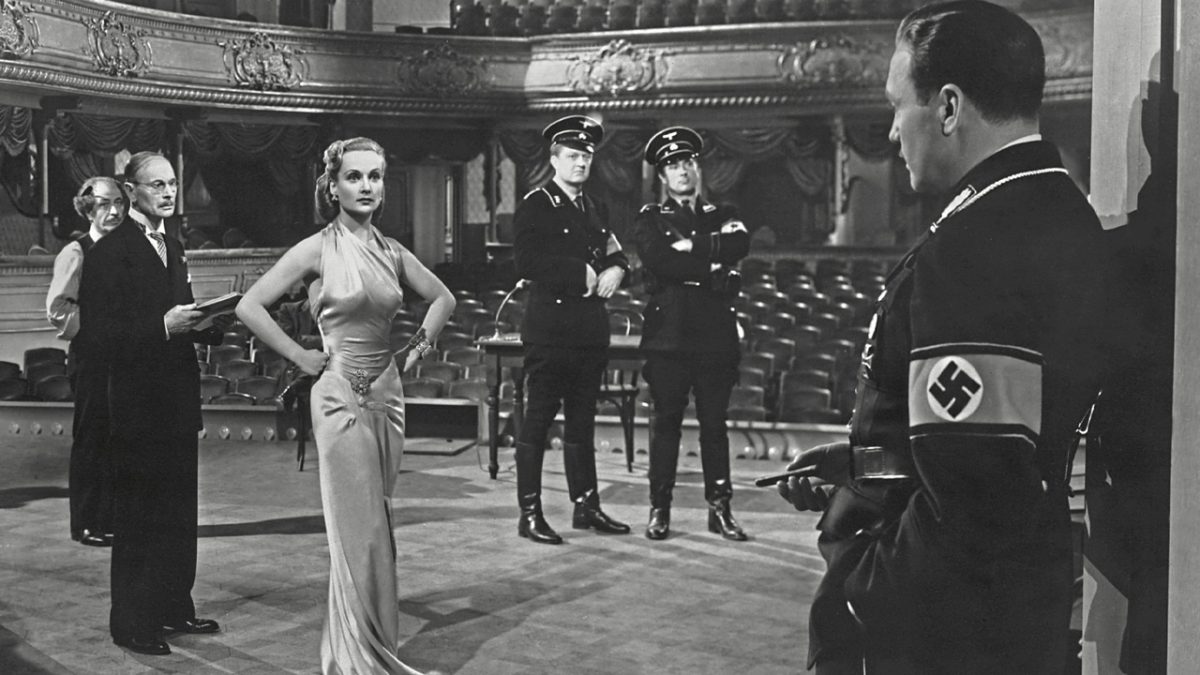
Not content with his initial European expeditions, Adolph Hitler called the Allies’ bluff, not believing that an invasion of Poland would truly spark World War II. And so, Nazi Germany and the Soviet Union struck a deal to invade Poland from two angles, essentially splitting the country between the two powerhouses under the terms of the German–Soviet Frontier Treaty. And in doing so, kicking off the Second World War in Europe. Despite spanning several years across the war, “The Pianist” begins with the Invasion of Poland in 1939.
The film tells the story of Władysław Szpilman, a pianist whose life is flipped upside down by the terrors of war, which is conveyed through the eyes of an Oscar-winning performance by Adrien Brody. “To Be or Not to Be,” also set during the German occupation of Poland, follows a theatre troupe in Warsaw who become embroiled in a Polish soldier’s efforts to track down a German spy. The film, which was released at the height of WW2, is a more comedic take on the situation, and given the heavier tone of “The Pianist,” I thought we might need this one too.
8. (September, 1939) Britain and France Declare War on Germany:
The King’s Speech (2010)
Following the Nazi invasion of Poland, Britain and France would make good on their promise to declare war on Germany in September of 1939, marking the moment that World War Two would officially begin in Europe. The Academy Award-winning “The King’s Speech” tells the story of King George VI, who was faced with the battle of overcoming a stutter to deliver the news to Britain and the Empire that they were, in fact, once more at war.
The film would go on to have a majorly successful night at the 83rd Academy Awards, famously beating out “The Social Network” for best picture, whilst Colin Firth took home the award for Best Actor in a Leading Role. Director Tom Hooper won Best Director over David Fincher, Joel and Ethan Coen, Darren Aronofsky, and David O. Russell, whilst David Seidler won for Best Original Screenplay.
9. (November, 1939) Assassination Attempt on Adolph Hitler’s Life by Georg Elser:
13 Minutes (2015)
In the immediate weeks and months that follow the Allied declaration of war on Nazi Germany, not a whole lot actually happens , which we now know as the period of WW2 dubbed the ‘Phoney War’. But something that did almost happen, which would have certainly changed the entire trajectory of human history, was the near assassination of Adolph Hitler by German resistance fighter Georg Elser. The 2015 movie “13 Minutes” depicts the events in which Adolph Hitler avoided death by just 13 minutes, narrowly evading what could have been an early end to the Second World War.
10. (November, 1939 — March, 1940) The Soviet Union Invades Finland (Winter War):
The Winter War (Talvisota, 1989)
Two months after the Nazi-Soviet invasion of Poland, the Soviets invaded Finland on November 30th, 1939. The invasion would lead to a 105-day battle, culminating in the signing of the Moscow Peace Treaty on March 13th, 1940. The terms of the treaty meant that Finland ceded approximately 9% of its territory to the Soviet Union, but despite this, the battle would be considered a major failure for the Soviets. This is because, despite having superior military strength, they would suffer severe losses and struggle to make much headway.
The poor Soviet performance would serve as the encouragement Hitler needed to know that a future attack on the Soviet Union could be on the cards, something that he had been planning to undertake across his European expansion. The 1989 movie “The Winter War” depicts the events through the story of a Finnish infantry regiment. It chronicles the preparation for the predicted attack, the fight itself, and the signing of the treaty.
11. (April, 1940 — June, 1940) Germany Invades Norway and Denmark (Operation Weserübung):
The King’s Choice (2016)
On 9th April, 1940, Germany would begin to advance into Denmark — occupying the country in just six hours. From there, Germany would then undertake their invasion of Norway, taking just over two months to complete entirely. The Germans deemed the invasion of Denmark to be advantageous because of the country’s proximity to the Baltic Sea, which would be crucial to the control of naval and shipping access to major German and Soviet harbours.
The invasion of Norway, though, was important because of its potential to act as a base for naval units, such as U-boats, to weaken Allied shipping in the North Atlantic, and to secure shipments of iron ore from Sweden through the port of Narvik. Erik Poppe’s “The King’s Choice” focuses on the King of Norway, King Haakon VII, and the Norwegian royal family in the days immediately before and after the invasion commences.
12. (May, 1940) The Battle of France and the Dunkirk Evacuation:
Darkest Hour (2017) | Atonement (2007) | Dunkirk (2017)

Where the Second World War really begins to kick into gear for the Allies is with the 1940 German Invasion of the Netherlands, Belgium, and France — culminating with the evacuation of the British soldiers on the beaches of Dunkirk (Operation Dynamo). This particular sequence of events just so happens to have been depicted by some of the world’s premier filmmakers on more than a few occasions, with the standouts being Joe Wright’s “Darkest Hour” and “Atonement,” as well as Christopher Nolan’s “Dunkirk.”
Wright’s “Darkest Hour” focuses on the then British Prime Minister Winston Churchill and the politics involved in Germany’s invasion of France. “Atonement” takes a more boots-on-the-ground approach and depicts the retreat of the British forces to Dunkirk. Whilst Nolan’s “Dunkirk’ centres on the evacuation itself, concluding what makes a perfect May 1940 triple bill.
13. (July, 1940 — October, 1940) The Battle of Britain:
Battle of Britain (1969)
After the events in France, in which Nazi Germany had overwhelmed the French and British armies to occupy France freely, Britain stood alone in the war against Germany, and before they knew it, the war had landed at their front doorstep. The Battle of Britain, beginning in July 1940 and officially concluding in October, was a pivotal air campaign that saw the Royal Air Force (RAF) defend Britain from German Luftwaffe attacks and marked Germany’s first major defeat of World War 2.
Defeat for the British would likely have meant defeat for the Allies completely, making this one of the most essential battles in 20th-century Europe. Director of “Goldfinger” and “Diamonds are Forever,” Guy Hamilton, tackled the events with his 1969 picture, “Battle of Britain.” The film stars many respected British actors, such as Laurence Olivier, Michael Caine, and Trevor Howard.
14. (September 1940 — May 1941) The Blitz:
Blitz (2024)
Between September 1940 and May 1941, Germany carried out a sustained bombing campaign against Britain, beginning in the later stages of the Battle of Britain; London became the primary target, enduring 57 consecutive nights of Luftwaffe attacks. The bombings started as daylight attacks, but gradually transitioned to night attacks to evade attacks by the RAF, and would expand past London and into Liverpool, Hull, Bristol, Cardiff, Portsmouth, and more.
Over 40,000 civilians were reported to have been lost in the bombings, whilst countless others were injured and homes at large were destroyed entirely. Steve McQueen’s 2024 movie “Blitz” from 2024, Saoirse Ronan, tells the story of the Blitz from the perspective of one little boy evacuated by his mother, and their journey to find each other once again.
15. (1939–1942) Breaking the Enigma Code:
The Imitation Game (2014)
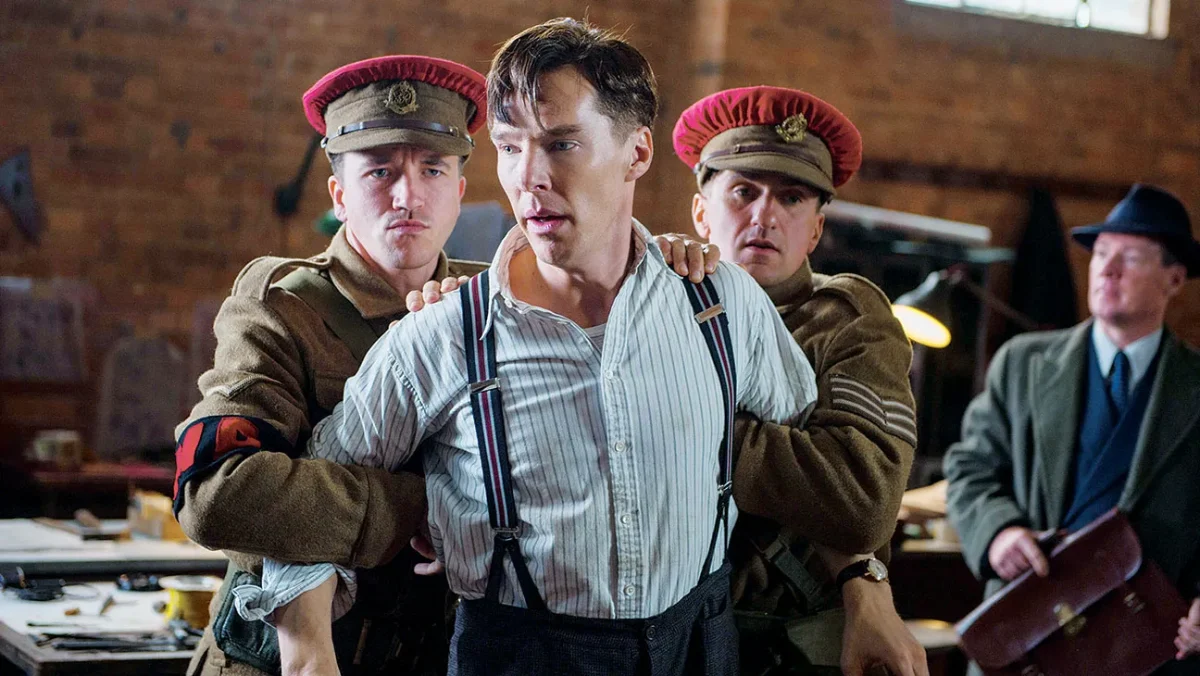
The winner for Best Adapted Screenplay at the 87th Academy Awards, “The Imitation Game,” tells the story of Alan Turing and his team of code crackers in a race against time to crack the German Enigma code. The years they spent at Bletchley Park between 1939 and 1942 working on cracking the code would be crucial in the Allied war effort.
Turing and his team provided crucial intelligence that would shorten the war by an estimated two to four years, saving the lives of countless civilians and soldiers. The Benedict Cumberbatch-starring film was rendered a major success following its grossing of over $233 million worldwide, as well as landing both Cumberbatch and his co-star Keira Knightley acting nominations at that year’s Academy Awards.
16. (June 1941 — December 1941) Invasion of the Soviet Union (Operation Barbarossa):
The Brest Fortress (2010) | The Cranes Are Flying (1957)
In June of 1941, Hitler would finally turn his attention to his long-term ambition of invading the Soviet Union, launching what would become an almost 6-month-long campaign that concluded in December. The attempt would ultimately result in failure, with German offensives stalling on the outskirts of Moscow due to an underestimation of Soviet manpower and resistance, as well as harsh winter weather and stretched supply lines.
This wouldn’t be the last the Soviets would hear from the Germans, but it would be enough for now. The 2010 feature “The Brest Fortress” depicts day one of the invasion with the defence of Brest Fortress, while “The Cranes Are Flying”—a landmark in film history—focuses on the civilian emotional experience, and it also begins on the very day the invasion unfolds.
17. (October, 1941 — December, 1941) German Submarine U-96 During the Battle of the Atlantic:
Das Boot (1981)
The Battle of the Atlantic, the longest-continuous military campaign throughout the Second World War, ran all the way through the war from 1939 to 1945, and was a naval struggle for control of shipping routes between North America and Europe, fought primarily by Allied naval and air forces and German U-boats.
The Germans aimed to sever the Allied lifeline of supplies to Great Britain, whilst the Allies attempted to protect shipping and destroy German submarines. Six academy award nominated film, “Das Boot,” directed by Wolfgang Petersen (“Troy,” “Air Force One”) puts us on a German submarine U-96 between October and December of 1941, and grippingly follow the dangers that came with life at sea.
18. (December, 1941) Attack on Pearl Harbour — USA Joins the War Effort:
Casablanca (1942) | Pearl Harbour (2003)
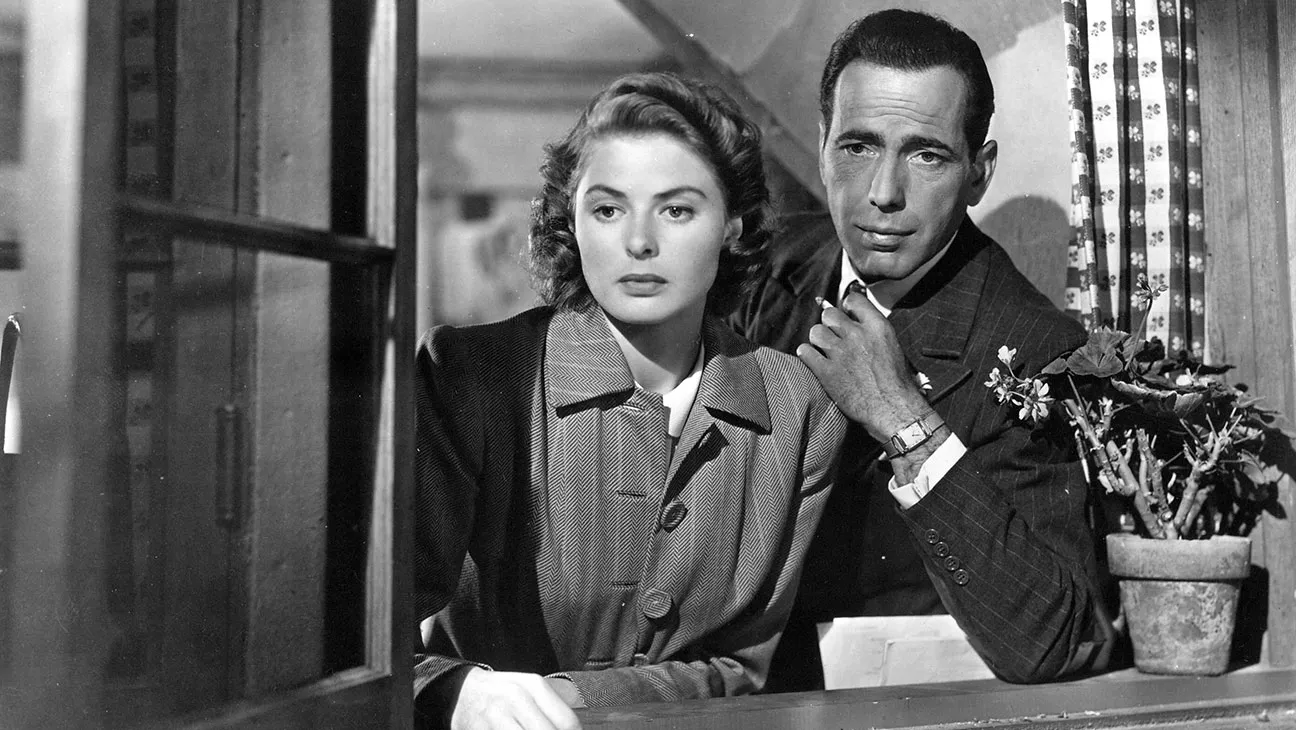
In December of 1941, after months of tension across the Pacific islands between the USA and Japan, the latter would finally strike on Pearl Harbour, devastating the United States with a reported 2,403 deaths, 1178 wounded, 19 ships damaged or sunk, and 188 aircraft destroyed. The attack would mark the official beginning of the USA’s involvement in the war effort, with “Casablanca” and “Pearl Harbour” making for an ideal double feature to depict these events.
“Casablanca,” one of the film’s most iconic pictures, takes place just days before the attack on Pearl Harbour, capturing the American political tension in the lead up to the attack, and the refugee crisis caused by the continued Nazi expansion. Michael Bay’s “Pearl Harbour,” starring Ben Affleck and Josh Hartnett, depicts the events of the attack itself, no matter how romanticised they may be. The attack on Pearl Harbour would mark a major turning point in the war, with the United States’ involvement bolstering the Allies’ manpower to a point previously unattainable, shifting the tide in favour of the Allied Forces.
19. (December, 1941) Japanese Occupation of the Shanghai International Settlement:
Empire of the Sun (1987)
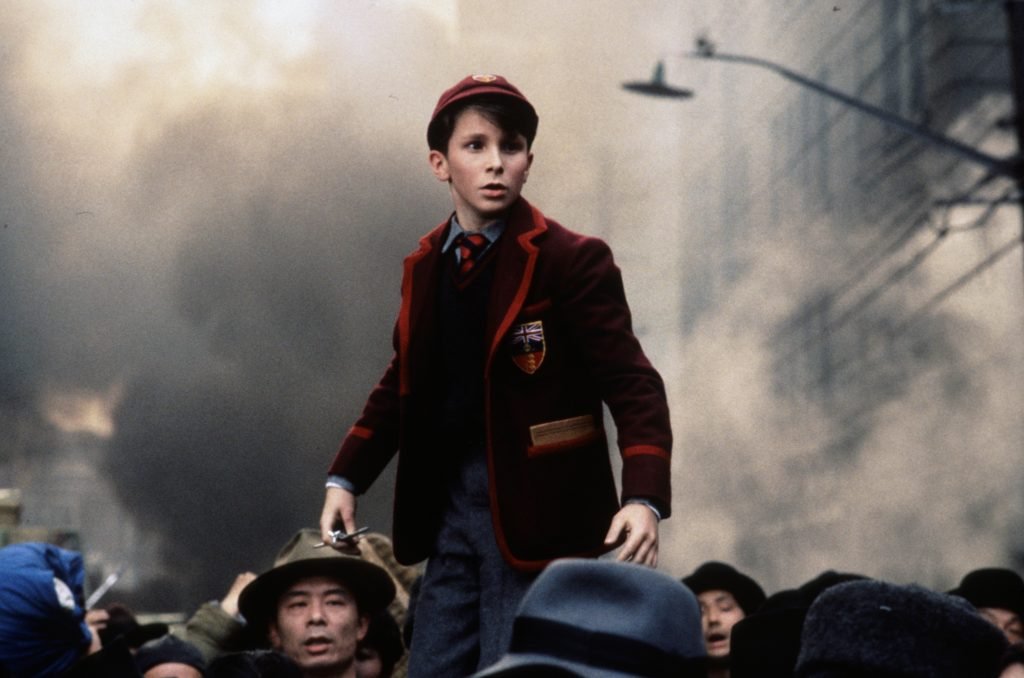
Despite taking control of Shanghai in 1937, Japan avoided occupying the foreign-controlled Shanghai International Settlement until after the events of Pearl Harbour, with the American and British forces now weakened and surprised. After assuming control, the Japanese forced European and American residents of the settlement to wear armbands in order to differentiate themselves, as well as being evicted from their homes and sent to the Lunghua Civilian Assembly Centre — a work camp on the outskirts of Shanghai. Steven Spielberg’s Empire of the Sun portrays these events through the perspective of a privileged English boy, played by a young Christian Bale, who lives in the international settlement until the invasion begins, ultimately leading to his internment as a prisoner of war.
20. (January, 1942) Nazi Officials Gather to Discuss the ‘Final Solution to the Jewish Question’ (Wannsee Conference)
Conspiracy (2001)
In January of 1942, a collection of high-ranking Nazi officials gathered in the Berlin suburb of Wannsee to discuss the terms of what they called the ‘Final solution to the Jewish question’. The solution was, of course, the intensification of the holocaust, a genocide of around six million Jews across German-occupied Europe throughout World War II.
The conference set out to ensure the co-operation of administrative leaders of various government departments in the implementation of the Holocaust, with the meeting detailing how European Jews would be rounded up and sent to concentration camps in German-occupied Poland to be murdered. The 2001 film “Conspiracy,” featuring Kenneth Branagh, Stanley Tucci, and Colin Firth, reconstructs the meeting using a script based on the only surviving transcript.
21. (1941–1945) The Holocaust:
The Zone of Interest (2023) | The Diary of Anne Frank (1959) | Schindler’s List (1993) | Life Is Beautiful (1997)

It’s here, after the Wannsee Conference, that I’d recommend the natural place to watch the myriad of exceptional Holocaust movies that we have seen over the years. From Spielberg’s “Schindler’s List” to Jonathan Glazer’s “The Zone of Interest” to Benigni’s “Life is Beautiful,” some of the most successful and heartbreaking WW2 flicks have depicted this tragic genocide.
The Holocaust remains one of the darkest chapters in human history, with around six million Jews murdered at the behest of one of its most monstrous figures. Its consequences still echo more than 80 years later, and films like these keep its memory alive—urging us to remember, to remain vigilant, and to resist those who would seek to repeat such horrors.
22. (April, 1942) U.S. Air Raid on Tokyo (The Doolittle Raid):
Thirty Seconds Over Tokyo (1944)
The Tokyo Raid of April 1942, spearheaded by Lieutenant Colonel James Doolittle, was an air raid by the United States on the Japanese capital Tokyo and other places on Honshu. The raid caused very minor damage, but did serve as proof that the Japanese were vulnerable to American air attacks, as well as acting as a boost to American morale following the attack on Pearl Harbour.
The raid killed around 50 and injured a further 400 on the ground, with 14 of the 16 American crews involved returning to the United States, confirming the raid a success in the eyes of the U.S. Forces. The 1944 film “Thirty Seconds Over Tokyo” depicts the events of the raid through the story of a young lieutenant who leaves his expectant wife to volunteer for the mission, and is based on the 1943 book of the same name by Captain Ted W. Lawson.
23. (June, 1942) The Battle of Midway:
Midway (1976)
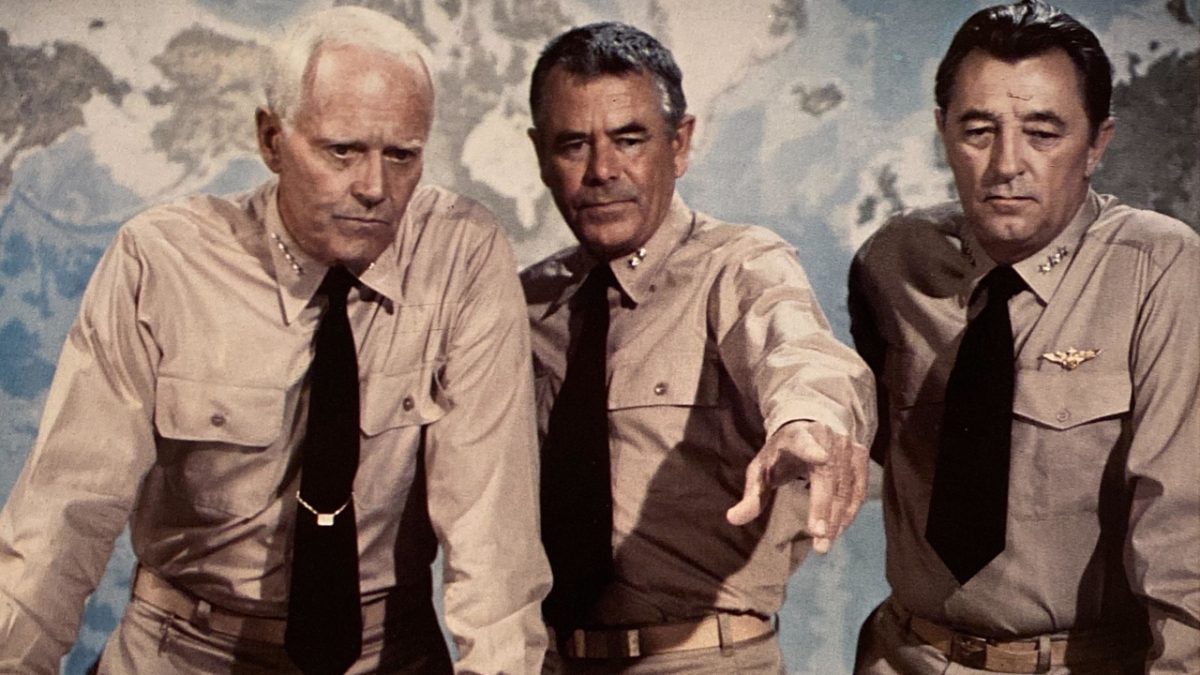
Six months after Japan attacked Pearl Harbour, and just two months after the Tokyo air raid, the USA would score a huge victory against the Japanese at the Battle of Midway, turning the tide in the Pacific Theatre of World War II. The battle unfolded over just three days, resulting in over 3,000 Japanese deaths, while the United States lost approximately 360 personnel.
The U.S. also sank four Japanese carriers, compared to the single carrier it lost. The victory marked the Allies’ first major naval success against Japan and reshaped the strategic importance of air superiority for the remainder of the war. It effectively ended Japan’s ability to launch far-reaching offensive strikes, ensuring that future battles would no longer see the same level of Japanese dominance. The 1976 war drama “Midway” depicts these events, starring Henry Fonda, with a score composed by John Williams.
24. (August 1942 — February 1943) The Battle of Stalingrad:
Stalingrad (1993)
The battle on the Eastern Front was far from over with the failure of Operation Barbarossa, as in August of 1942, Nazi Germany and its Axis allies would attack the Soviet city of Stalingrad. Hitler did so because he knew what control of the city would mean for his war effort: the fall of the Soviet Union as a force in this battle. The city was so important because of its position on the Volga River, making it a crucial supply hub that, if taken, could cut off Soviet resources to a degree that would render them almost entirely vulnerable.
Hitler, too, became enamoured with the idea of its symbolic meaning, seeing the potential taking of the city as a chance for a huge mental victory over Soviet leader Josef Stalin. The Soviets would ultimately prove to be too resistant for their Nazi invaders, and the 1993 Joseph Vilsmaier-directed film “Stalingrad” tells the story of the battle from the perspective of a German Platoon. It captures both the brutality of the conflict and the fragile traces of humanity that endure within those caught in it.
25. (August 1942 — February 1943) The Battle of Guadalcanal:
The Thin Red Line (1998)
The Guadalcanal campaign, or the Battle of Guadalcanal, was an Allied attack against the Empire of Japan in the Solomon Islands that lasted from the summer of 1942 until February of 1943 – ending only when the Japanese decided to abandon Guadalcanal to focus on the defense of the other Solomon Islands. The campaign would result in 30,000 + estimated deaths total, with as many as three-quarters of the deaths not from combat, but from causes such as starvation and tropical diseases.
The campaign was depicted through legendary filmmaker Terrence Malick’s “The Thin Red Line,” with an extensive cast that includes the likes of Sean Penn, Adrien Brody, George Clooney, John Cusack, Woody Harrelson, Nick Nolte, John C. Reilly, and John Travolta. The film was Malick’s first since “Days of Heaven” 20 years earlier, and is widely regarded for its more philosophical angle on war, which got nominated for seven Academy Awards.
26. (September 1942 — December 1943) The Construction of the Burma Railway:
The Bridge on the River Kwai (1957)
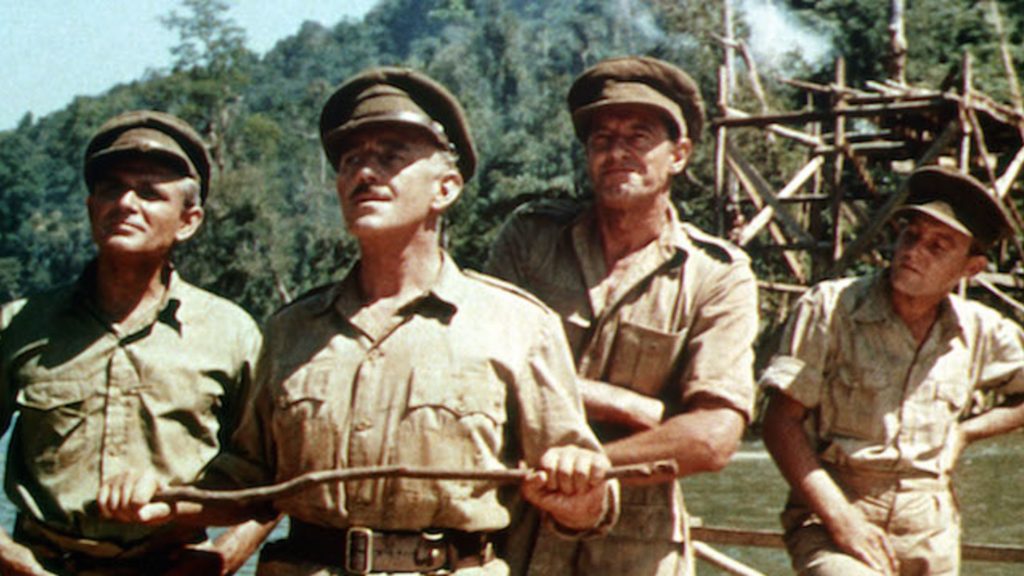
In September of 1942, construction on the Burma railway would begin, built by Allied prisoners of war at the command of the Imperial Japanese Army. Its intended use was to move troops, weapons, and fuel from Bangkok, Thailand, to Thanbyuzayat, Burma, in aid of their effort in the war. The great David Lean’s “The Bridge on the River Kwai,” though a largely fictitious plot, does use the construction of the railway as its central setting.
It tells the story of Col. Nicholson, the commander who supervised the bridge’s construction, and thus has acquired a sense of pride over the creation. He feels conflicted when a plan to blow up the structure was hatched. The Alec Guinness-starring movie would go on to take home Best Picture at the 30th Academy Awards and be the highest-grossing movie of 1957.
27. (October, 1942 — November, 1942) The Second Battle of El Alamein:
El Alamein: The Line of Fire (2002)
The first battle of El Alamein took place in July 1942, but without a dramatisation to date, we skip to the Second Battle of El Alamein, depicted in “El Alamein: The Line of Fire.” The first battle was a battle of the Western Desert Campaign, fought in Egypt between Axis forces of the Panzer Army Africa, which included the Afrika Korps, and the Allied forces of the Eighth Army.
The second battle took place near the Egyptian railway halt of El Alamein; following the first battle, which had halted the Axis advance into Egypt, this engagement marked a major Allied victory. It provided a huge morale boost for the Allied powers, marking the beginning of the end of the Western Desert Campaign — a pivotal turning point in the war. “El Alamein: The Line of Fire” depicts the battle through the eyes of a university student from Palermo who volunteers for the fight, giving us the Italian perspective of the battle.
28. (March, 1943) Khatyn Massacre:
Come and See (1985)

In March of 1943, almost the entire population of the village of Khatyn was massacred by the Schutzmannschaft Battalion 118, a Nazi-occupied auxiliary police battalion. One of the most disturbing war films ever made, “Come and See” is set in Belarus (then Byelorussia) in 1943, a period marked by immense destruction and atrocities, including the Khatyn Massacre.
Often regarded as one of the most realistic and gut-punching depictions of war, “Come and See” has cemented its place in not just war film history, but in the medium as a whole as one of the most important movies ever made. The film depicts not just the brutality of the Khatyn Massacre and Germany’s occupation of Byelorussia, but the psychological impact it had on those affected.
29. (April, 1943) Operation Mincemeat:
Operation Mincemeat (2021)
In April of 1943, Operation Mincemeat would launch — a plan to drop a corpse with false papers off the coast of Spain to fool Nazi spies into believing the Allied forces were planning to attack by way of Greece rather than Sicily. The deception would ultimately result in success, allowing the Allies to liberate Sicily with fewer Allied casualties. John Madden’s “Operation Mincemeat” (2021) depicts the events of the operation. The film follows Ewen Montagu and Charles Cholmondeley, the two British intelligence officers behind the operation, played by Colin Firth, who seems to always be at the scene of the WW2 film, and Matthew Macfadyen.
30. (June, 1943) Bombing of Bremen (First Mission of the 100th Bombardment Group):
Masters of the Air, Episode 1 (2024)
The 100th Bombardment Group, an Air Force unit that flew combat missions between 1943 and 1945, was depicted in the Apple TV+ series, “Masters of the Air,” starring Austin Butler and Callum Turner. The group’s first mission was a daytime bombing mission to destroy military targets in Bremen, Germany. The group, however, encounters adverse weather conditions that disrupt their mission, leaving them exposed to attacks from German Luftwaffe fighters. The attempted bombing highlights a challenge faced by many World War II airmen: their heavy dependence on weather conditions—forces beyond their control—often put lives at risk and led to disasters that could not always be anticipated.
31. (July, 1943) Bombing of German U-boat Pens in Norway:
Masters of the Air, Episode 2 (2024)
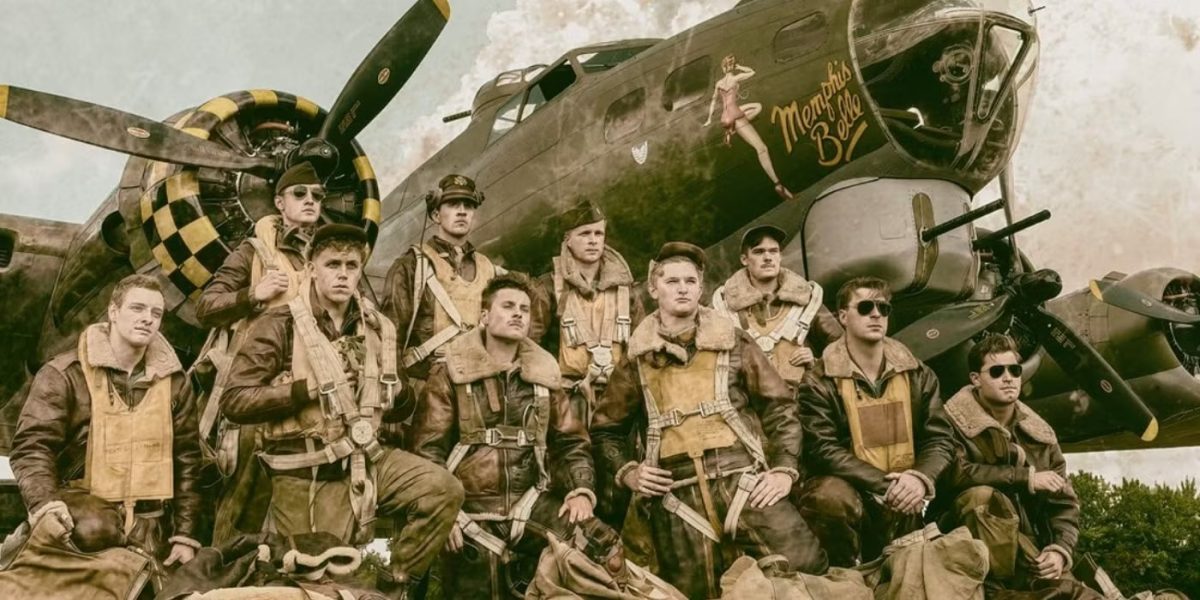
As the group attempts to deal with the repercussions of the losses felt in the attempted Bombing of Bremen, the war, for them, must regrettably continue, and takes them next to German-occupied Norway. The mission was to bomb German U-boat Pens in Trondheim, an important German naval base that was supplying the northern supply route to the Eastern Front. The mission ultimately becomes a 1,800-mile round trip, with over 1,000 miles flown across open sea. Episode two of “Masters of the Air” centres on Lieutenant Harry Crosby as he struggles to overcome air sickness while navigating the mission, while also underscoring the crucial role of the ground crew.
32. (July 1943 — August 1943) Liberation of Sicily:
Paisan (1946) | Patton (1970)
Following the successful misleading of Operation Mincemeat, the Allies would go on to liberate Sicily with limited casualties, during a 39-day campaign known as Operation Husky in July of 1943. The 1946 feature “Paisan” unfolds as a six-episode narrative, with each segment contributing to the broader story of the Allied liberation of Italy; the first episode is set during the liberation of Sicily.
The remainder of the film centres on the Allied capture of the port of Naples, the liberation of Rome, the freeing of Southern Florence, and both the humanity and horrors that were present in the war. “Patton,” on the other hand, is a biographical film about the U.S. General George S. Patton during World War II, with portions of the film recounting his involvement in the Allied Sicilian liberation, as well as acting as a character study of the short-tempered General.
33. (August, 1943) The Execution of Franz Jägerstätter:
A Hidden Life (2019)

The great Terrence Malick returns to the list, but this time with his 2019 depiction of the life and execution of Franz Jägerstätter, an Austrian farmer who meets his fate in August of 1943 after refusing to fight for the Nazi’s. Though this story isn’t imperative to understanding the overarching narrative of the Second World War, it’s a deeply moving portrait of what it means to believe in a cause that you believe is right, regardless of the adversity faced and the consequences to come.
It’s a story that remains as relevant as ever, and one that is expertly crafted by one of the greatest and most thoughtful filmmakers to ever grace the big screen. August Diehl leads the film, with Valerie Pachner and Matthias Schoenaerts in supporting roles; it also features two final screen performances from Bruno Ganz and Michael Nyqvist.
34. (August, 1943) The Strategic Bombing of Vital Aircraft Manufacturing Plants Deep Within Germany (Schweinfurt–Regensburg Mission):
Masters of the Air, Episode 3 (2024)
Episode three of “Masters of the Air” sees the group attempt to carry out the Schweinfurt-Regensburg mission, an attempt at bombing vital aircraft manufacturing plants deep within Germany to cripple the German aircraft industry. The mission would result in heavy damage being inflicted on the target, but with even bigger losses to the force, with 60 bombers lost and many more damaged beyond repair.
The figures were stark: 55 American bombers, carrying 552 crewmen, were reported missing, with roughly half of them taken as prisoners of war by the Germans. In total, 60 aircraft were lost; only five crews were rescued. A further seven aircrew were killed on their return to base after completing the mission, with 21 more injured.
35. (October, 1943) Berlin Bombed Once More and the Bombing of Münster (Münster Raid):
Masters of the Air, Episodes 4, 5 & 6 (2024)
Part four of the show takes us to October of 1943, where replacement B-17 crews arrive to alleviate the losses of the previous bouts and to set forth on their next expedition, another attack on Berlin. The attack would result in heavy casualties for the group. But just days later, they’d be off again to attempt the Münster raid, depicted in episode five of the show.
The raid would end in disaster for them, as they are intercepted by a flock of Luftwaffe fighters, with all but one of their B-17’s being shot down. These two events brought to a close what would become the most brutal few days in the Eighth Air Force’s history up to that point, with losses approaching 900 men, on a scale few could have imagined. Episode six explores the aftermath, introducing Stalag Luft III, a prisoner-of-war camp that held Allied personnel.
36. (March, 1944) Attacks on Berlin and the Great Escape from Stalag Luft III:
Masters of the Air, Episode 7 (2024) | The Great Escape (1963)
In March 1944, Allied bombing raids on Berlin escalated, culminating in the March 6 “Black Monday” mission—a devastating loss for the U.S. Eighth Air Force, as depicted in episode seven of “Masters of the Air” during its first major daylight assault on the city. The result would be the loss of 15 B-17s and 150 men. The episode also depicts later in the month, where prisoners of war at Stalag Luft III build a crystal radio to tune into the BBC news, with a group of British prisoners escaping, and the majority ultimately being recaptured and killed.
John Sturges’ legendary “The Great Escape” from 1963, starring Steve McQueen, gives us the most famous depiction of this escape. Detailing everything from the initial movement to the camp, to the eventual attempted escape, recapture, and murder of the escapees. The film, over 60 years on, has solidified its place as one of the single greatest war flicks of all time, with its reputation only growing in stature since its $11.7 million gross at the box office in 1963.
37. (June, 1944 — August, 1944) D-Day/The Battle of Normandy:
Band of Brothers, Episode 1 & 2 (2001) | Masters of the Air, Episode 8 (2024) | Saving Private Ryan (1999)
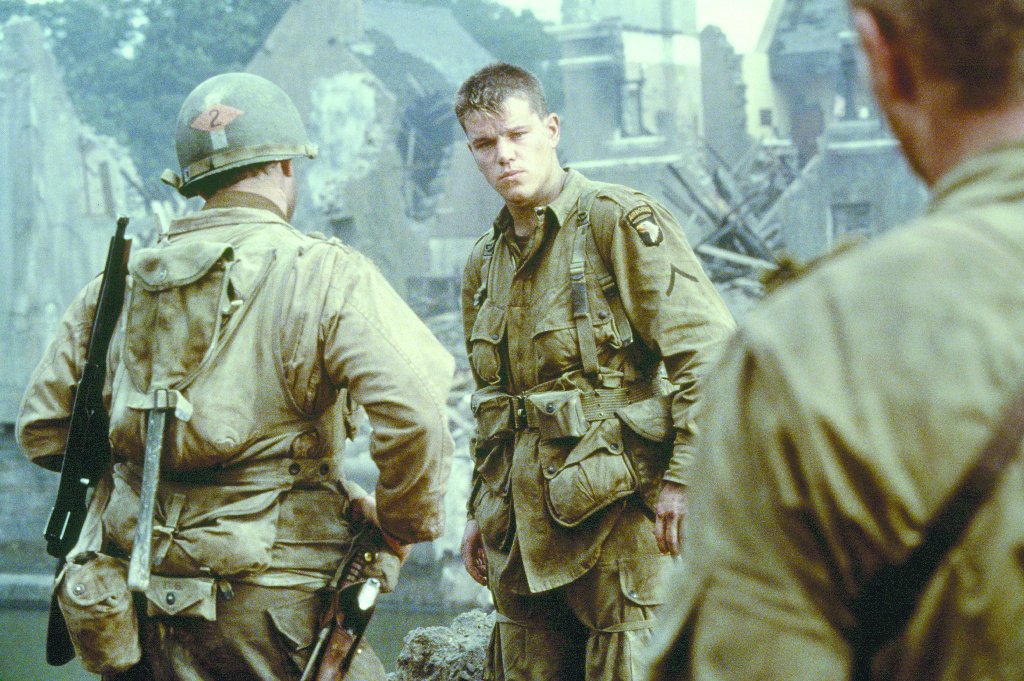
On June 6th, 1944, Allied forces would begin their invasion of Normandy, better known as D-Day. The Normandy landings would mark the beginning of an ultimately successful liberation of German-occupied Western Europe, beginning with nearly 160,000 troops crossing the English Channel on June 6th, and resulting in more than two million Allied troops in France by the end of August.
The two-month-long campaign ended when Nazi troops retreated across the Seine River, marking the liberation of northern France and a decisive Allied victory. Episode 8 of “Masters of the Air” depicts some of the planning process for D-Day, whilst episode 1 of “Band of Brothers” sees the training process for the soldiers themselves. Episode 2 gives us a glimpse into D-Day itself through the Normandy landings, whilst “Saving Private Ryan” gives us the most famous depiction of the invasion envisioned by the great Steven Spielberg.
38. (June, 1944) The Battle of Carentan:
Band of Brothers, Episode 3 (2001)
The Battle of Carentan was a four-day battle between June 10th and June 14th during the Battle of Normandy, fought by airborne forces of the United States Army and the German Wehrmacht. The American forces aimed to solidify their defensive line against German counterattacks, whilst the defending German forces attempted to fend them off long enough for reinforcements to arrive to keep the U.S. Army at bay.
The result would be a check in the win column for the United States, which secured the town and thus could link the Omaha and Utah beachheads, strengthening their defensive lines. Episode three of “Band of Brothers” depicts the battle in the French town, detailing the struggle of the battle itself and the casualties that came with it.
39. (July, 1944) Assassination Attempt on Hitler (20 July Plot):
Valkyrie (2008)
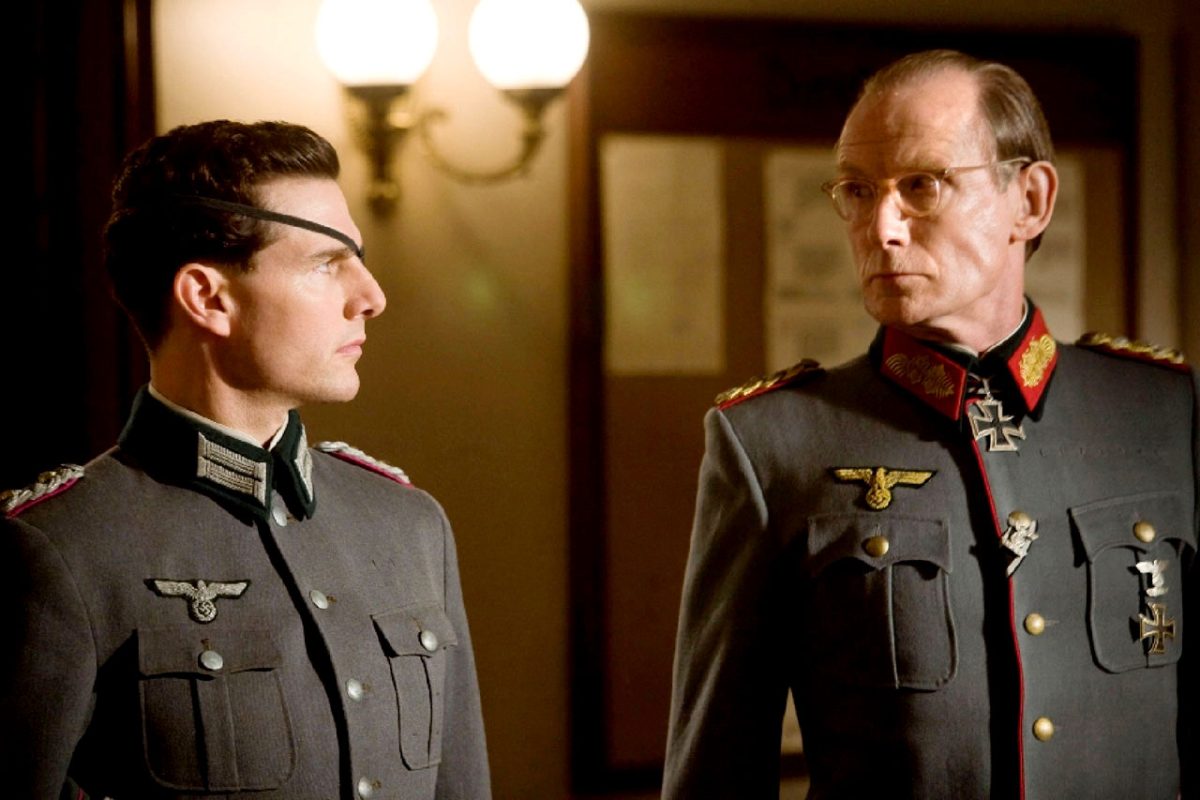
The 20 July Plot was an attempt on Adolph Hitler’s life on July 20th, 1944, plotted by German resistance who aimed to overthrow the Nazi regime. The man most closely associated with the plot, Claus von Stauffenberg, was portrayed by Tom Cruise in the 2008 film “Valkyrie.” The film features von Stauffenberg’s disillusionment with the future of his country under the Nazi regime. Bruised, battered, and fed up with what he’s had to endure, he attempts to propose the employment of Operation Valkyrie, following the unsuccessful assassination attempt on Adolph Hitler’s life in March of 1943.
The operation was the deployment of the Reserve Army in a national emergency, as a means to take control of the country, and thus overthrowing the Nazi Party with a new plot to assassinate Hitler in July of 1944. When the plan fails, von Stauffenberg and his co-conspirators are forced to meet their end.
40. (August, 1944) Nazi Train Attempting to Move Stolen Art Pieces to Germany is Intercepted by Allied Forces:
The Train (1964)
In August of 1944, the Allied forces were approaching Paris, and Operation Overlord was finally coming to its victorious conclusion as the Allies continued their conquest to liberate Western Europe. Knowing their time might just be coming up, the Nazi’s – who always had a taste for fine art – attempted to move thousands of artworks from Paris to Berlin before the Allies could stop them.
John Frankenheimer’s 1964 film “The Train,” though dramatised for the screen, is inspired by the events in which Allied forces thwarted the Nazi attempt to steal the French artwork, which was mostly stolen from Jewish collections. The art attempted to be stolen totaled to roughly 148 crates, with 967 paintings inside, which included works from the likes of Picasso. The Nazi’s saw it as a potential bargaining chip later down the road, with their occupation of Western Europe collapsing before their eyes.
41. (September, 1944) The Failed Liberation of The Netherlands (Operation Market Garden):
Band of Brothers, Episode 4 (2001)
Operation Market Garden, fought between September 17th and September 24th of 1944, was a failed liberation attempt of the Nazi-occupied Netherlands by Allied forces. The operation initially succeeded with its capture of Dutch cities Eindhoven and Nijmegen, but ultimately came to a halt with the failure to secure the bridge over the Rhine at Arnhem.
The British 1st Airborne Division was forced to withdraw after suffering 8,000 dead, missing, or captured men out of the 10,000 that they started with. The attempted retreat, though, resulted in failure too. The lack of sufficient boats meant that not everybody could return, leading to the Germans rounding up most who were left behind, with just a few managing to escape. Episode four of “Band of Brothers” takes place during the failed operation attempt and details the struggle of being one of those unlucky souls left behind.
42. (October, 1944) Charge at the Crossroads:
Band of Brothers, Episode 5 (2001)
Episode five of “Band of Brothers” portrays the Battle at the Crossroads, wherein 35 men with bayonets fixed charge towards hundreds of armed Nazi’s, and acts as a precursor to the major Battle of the Bulge. The battle took place following the attempts in the Netherlands and saw soldiers run as fast as they could, pushing the Germans as far as they could until one too many casualties halted the assault. It was a lesser moment in the grand scheme of the war, but a noteworthy moment and a step closer to the end.
43. (December, 1944 — January, 1945) Battle of the Bulge:
Band of Brothers, Episodes 6 & 7 (2001)
The Battle of the Bulge was the last major German offensive campaign on the Western Front, and lasted from December 16th, 1944, to January 28th, 1945. The battle was a major loss for Germany, resulting in anywhere between 63,000 and 104,000 of their men being killed, missing, wounded in action, or captured.
Following the defeat, many experienced German units were effectively out of men and equipment, with the survivors retreating to the Siegfried Line. That isn’t to say the Allies weren’t hurt too, as Allied damage set back their invasion of Germany by some weeks. Episodes six and seven of “Band of Brothers” depict the battle, depicting the struggles of the battle on low supplies, and the losses that come even with a victory at large.
44. (February, 1945 — April, 1945) Evacuation of Stalag Luft III to Stalag Luft XIII & then Stalag Luft VII:
Masters of the Air, Episode 9 (2024)
“Masters of the Air” concludes with the evacuation of prisoners to Stalag Luft III to Stalag Luft XIII and then Stalag Luft VII, wherein they are liberated soon after as the end of the war closes in. It goes on to explore the postwar lives of the men at its centre, bringing the story of the 100th Bomb Group to a close even as the war itself continues.
45. (February, 1945 — April, 1945 ) The Liberation of Haguenau & the Advancement into Nazi Germany:
Band of Brothers, Episodes 8 & 9 (2001)
Episodes eight and nine of “Band of Brothers” take place during the liberation of Haguenau, a commune in France, wherein U.S. forces secure the town from German occupation, as well as the advancement into Nazi Germany itself. The advancement into Nazi Germany marked the beginning of the end for the War in Europe, as the walls began to close in on Adolph Hitler and his Nazi regime, that has lost much of the land it once acquired.
The Allies’ success in Normandy and elsewhere in Western Europe meant that advances into Nazi Germany could take place with the shattering of the German defence, with over 4.5 million Allied troops surging into the country to force its surrender, and the end of Adolph Hitler’s tyrannical reign.
46. (March, 1945) The Bombing of Kobe:
Grave of the Fireflies (1988)

Whilst the curtain seems to be closing on the war in Western Europe, the United States bombs and destroys most of the Japanese city, Kobe, during the final days of the Pacific War , resulting in a confirmed 8,841 resident deaths. The animated classic, “Grave of the Fireflies,” tells its story from the perspective of two orphaned siblings who desperately struggle to survive the aftermath of the bombings.
The film details the havoc caused, which totalled not just over 8,000 deaths, but the destruction of over 21% of Kobe’s urban area, and the loss of over 650,000 people’s homes, with a further 1,000,000 damaged. “Grave of the Fireflies” has since come to be regarded as a defining work of animated cinema, earning universal critical acclaim and standing as one of Studio Ghibli’s earliest major successes—now widely recognised as one of the most influential studios in the medium.
47. (April, 1945) The Fall of Nazi Germany:
Fury (2014) | Downfall (2004) | Band of Brothers, Episode 10 (2001)
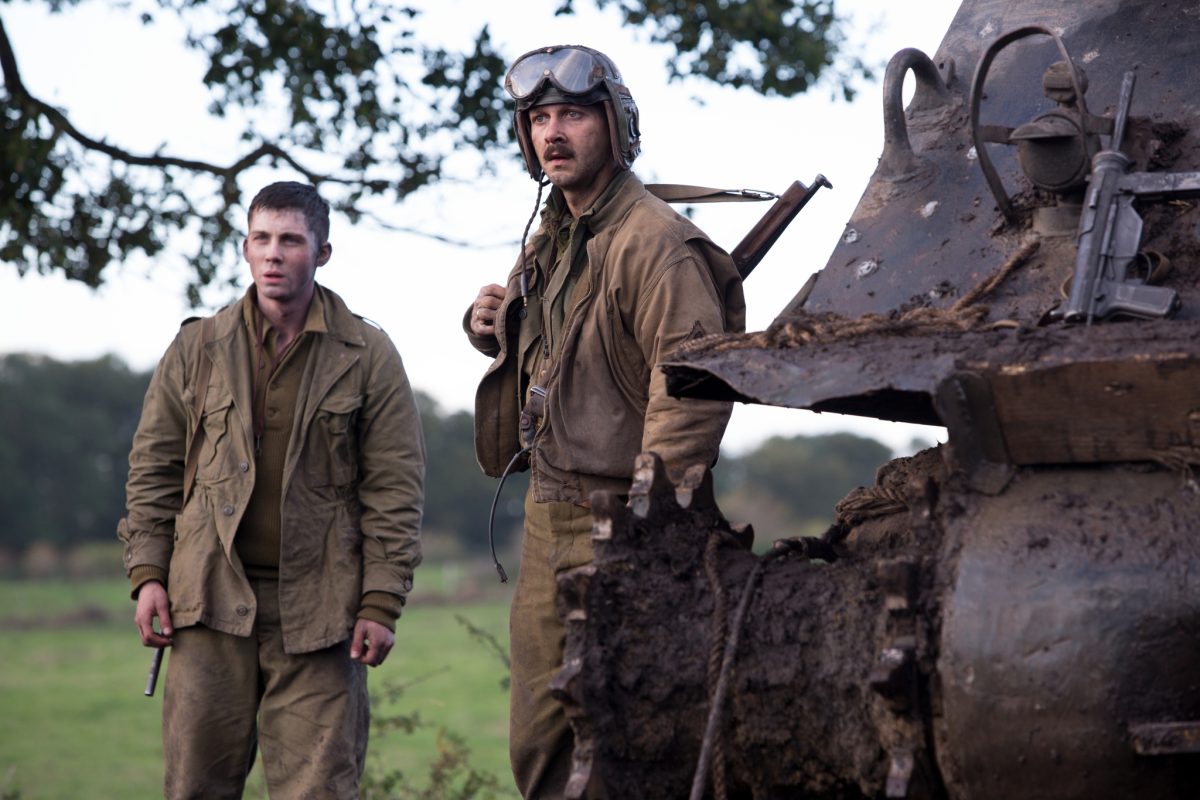
As the Russian Army closed in from the east and the Allied Expeditionary Force attacked from the west, Adolph Hitler and the Nazi Party’s fate seemed to be sealed. World War Two is coming to a close for those in Europe, and the world can begin to look forward once more and see better days ahead. Germany would officially surrender on May 8th, known as V-E Day, following the Soviet Forces’ capture of Berlin, and Hitler’s suicide on April 30th, 1945.
David Ayer’s “Fury” depicts the Allied push into Nazi Germany in April 1945, whilst “Downfall” depicts the month from the perspective of Adolph Hitler leading up to his eventual death. Episode 10 of “Band of Brothers” depicts American soldiers reacting to news of Adolf Hitler’s death, briefly believing their war is over—only to learn that, for some, the fight will continue in Japan.
48. (April, 1945 — June, 1945) The Battle of Okinawa (Operation Iceberg)
Hacksaw Ridge (2016)
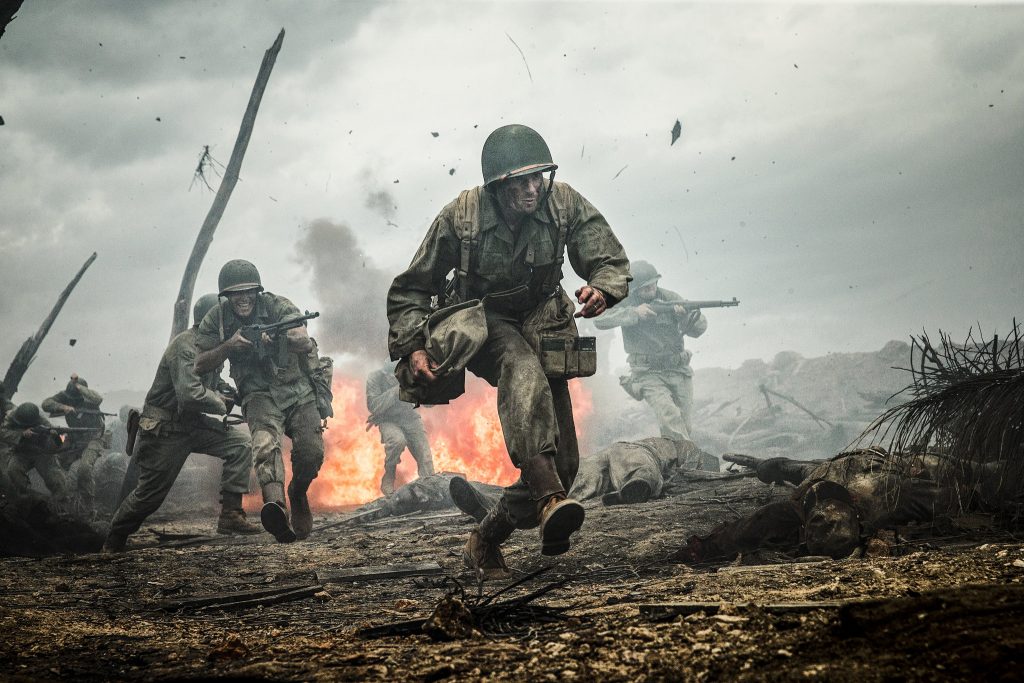
Though the war effort is drawing to a close in Europe, the fight does continue, as battle in the Pacific is still as large as ever, with the battle of Okinawa taking place between April and June of 1945, lasting 82 days. The fight would be the bloodiest in all of the Pacific War, with 242,046 known deaths, including nearly 150,000 Okinawans, over 77,000 Japanese soldiers, and 14,000 Americans.
The fight would eventually conclude with an Allied victory that sealed the final land battle of World War II, though not quite bringing an end to the war as a whole. Mel Gibson’s “Hacksaw Ridge” tells the story of American Army Medic Desmond T. Doss, who, despite serving in the battle, refused to kill. Andrew Garfield stars in the lead role, portraying Doss, who would be awarded the Medal of Honor by President Harry S. Truman for rescuing 75 U.S. soldiers.
49. (June, 1945) Post-Nazi Regime Germany:
Germany, Year Zero (1948)
In the immediate aftermath of Nazi Germany’s surrender in May of 1945, the country would enter a state of severe collapse. Food shortages were high, the country’s infrastructure had fallen completely, and Germany was stripped of all its territorial gains. The future looked bleak for civilians of the country, many of whom had no say in the actions of the fascists that had run their country into the ground for over ten years.
“Germany, Year Zero” depicts the immediate aftermath of post-war Berlin, told through a 12-year-old boy who is left to his own devices in order to help provide for his family. The film details the struggle for survival and the stripping of childhood that came in the wake of the country’s destruction before it could be rebuilt. The film is directed by Roberto Rossellini and is one of the bleakest and most damning depictions of life in a broken and barren landscape.
50. (August, 1945) Hiroshima and Nagasaki were bombed, and WW2 Officially Ends:
Oppenheimer (2023)

World War II would not officially end until Japan’s surrender, following the United States’ atomic bombings of Hiroshima and Nagasaki—attacks that caused an estimated 120,000 immediate deaths, with many more to follow due to radiation. Christopher Nolan’s blockbuster drama “Oppenheimer” details the building of the bomb that would end the war, as well as the making of the man behind it and the consequences that would follow.
The dropping of the atomic bomb remains one of the most controversial decisions in all of human history, and one that’s effects can still be felt today, as nuclear weapons have plagued the world’s security ever since. “Oppenheimer” would go on to take home Best Picture, Best Director, Best Actor, Best Supporting Actor, Best Cinematography, Best Film Editing, and Best Original Score at the 96th Academy Awards.
51. Post-war Readjustment for Soldiers of WW2:
The Best Years of Our Lives (1946)
Though the end of World War Two was a relief to all, its effects would be felt forever for everyone involved. Life would never be the same—for soldiers grappling with PTSD, for those whose homes had been destroyed, for those with no work to return to, and for countless others in ways both seen and unseen.
The simple fact remained that if you lived through it, you’d never be the same again, and the 1946 movie, “The Best Years of Our Lives,” tells the story of three WW2 soldiers returning home and attempting to adjust to civilian life in the aftermath of the war. It details the struggle of returning to civilian lives and social standings that no longer align with the ranks earned in war. The film would go on to win nine of its ten Academy Award nominations, including Best Motion Picture.
52. (November, 1945 — October, 1946) Nuremberg Trials:
Nuremberg (2025)
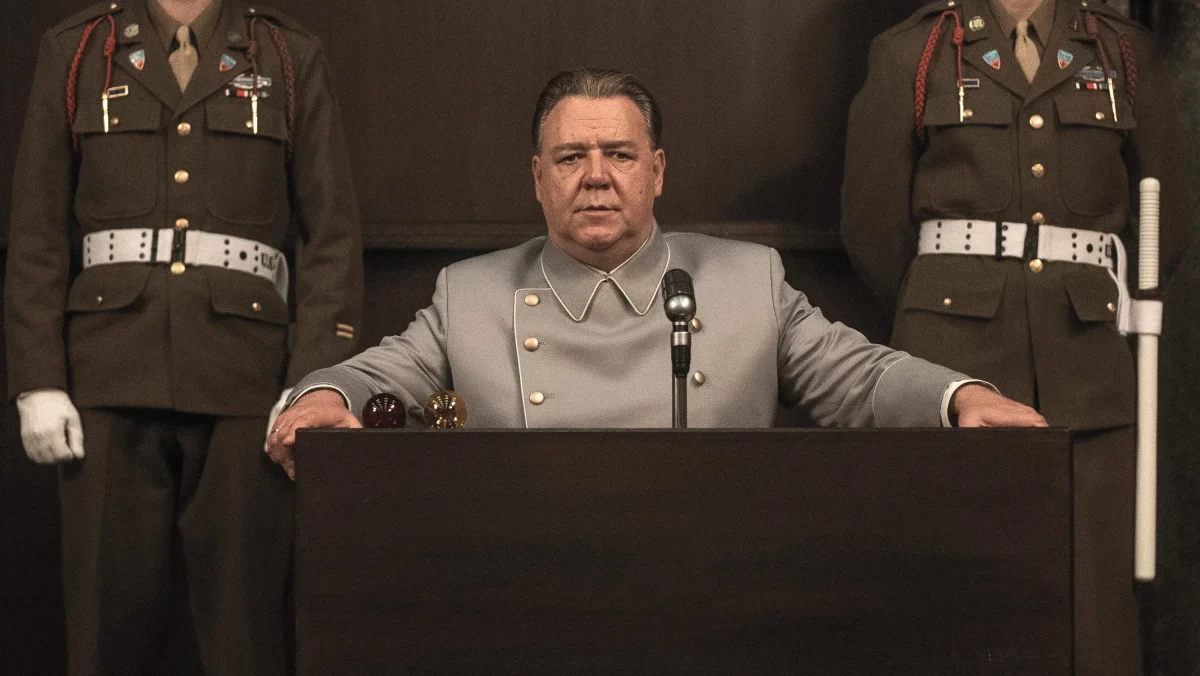
With the war over, the Allied powers turned to the surviving leaders of Nazi Germany, those who had outlasted Adolf Hitler. This led to the Nuremberg Trials—a series of international military tribunals conducted by France, the Soviet Union, the United Kingdom, and the United States to prosecute key figures for waging aggressive war and committing widespread atrocities across Europe.
The 2025 film “Nuremberg” dramatises these proceedings, centring on the psychological and ethical clash between Hermann Göring—Hitler’s second-in-command—and Douglas Kelley, tasked with evaluating whether the Nazi prisoners were mentally fit to stand trial. The conclusion of the trials can be seen as a symbolic endpoint to World War II, as the fates of those responsible were formally determined—though the consequences of their actions would endure far beyond the courtroom.