The samurai — literally meaning “those who serve” — were the warrior aristocracy of feudal Japan. For nearly seven centuries, they shaped the nation’s military, political, and cultural life. Their rise emerged from a long period of political fragmentation in medieval Japan. As the authority of the imperial court weakened and centralized military power declined, provinces increasingly relied on local warriors for protection against banditry, territorial disputes, and regional uprisings.
Powerful landowners and aristocratic families began employing armed retainers and regional fighting clans to defend their estates and interests. Over time, these warriors organized into hereditary military families whose influence steadily expanded alongside the decline of court aristocracy. By the late twelfth century, the balance of power had shifted decisively. In 1192, Minamoto no Yoritomo established the Kamakura Shogunate, the first military government in Japanese history, transforming the samurai from provincial retainers into the dominant political class that would shape Japan for centuries.
The samurai were governed by evolving warrior ideals centered around loyalty, martial discipline, duty, and an acceptance of death. During the Kamakura and early Muromachi periods (in the 14th century), these ideals were not yet formalized under the later term “Bushido.” Warrior ethics were instead associated with concepts such as “the Way of Horse and Bow,” emphasizing military skill, clan loyalty, and battlefield conduct.
The Sengoku period — the “Age of Warring States” spanning roughly from the mid-fifteenth century to the early seventeenth century — pushed these values into even harsher forms. Endless civil war, political betrayals, peasant uprisings, and the introduction of firearms transformed warfare into a brutal struggle for survival. Competing warlords increasingly relied on strict house codes demanding absolute loyalty from their retainers in order to prevent their fragile military alliances from collapsing.
In 1603, the Tokugawa Shogunate unified Japan and ushered in more than two centuries of relative peace. This peace created a profound identity crisis for the samurai class. Warriors who had once lived through constant warfare were gradually transformed into bureaucrats, administrators, and retainers serving a rigid feudal hierarchy. During the Edo period, Bushido evolved into a more codified ethical and philosophical framework shaped by Confucianism, Zen Buddhism, clan regulations, and political necessity. The Tokugawa state sought to discipline and stabilize the samurai class, turning former warriors into loyal servants of a highly ordered social system.
Yet beneath the image of harmony and discipline lay an intensely hierarchical society structured to preserve feudal authority. The Tokugawa order formalized the social hierarchy known as Shinōkōshō, which broadly divided society into samurai, peasants, artisans, and merchants. Outside this hierarchy existed marginalized outcast communities such as the Burakumin, who faced severe discrimination tied to occupations associated with death and impurity. Though far less historically entrenched and complex than the caste system in India, the Tokugawa order similarly relied on rigid social divisions that prevented collective resistance against feudal authority.
It is within this contradiction — between the poetic idealism of Bushido and the realities of authoritarian feudal power — that samurai cinema found its richest terrain. The image of the samurai became a way for filmmakers to wrestle with questions of violence, class, masculinity, loyalty, institutional power, and national identity. Some films embraced the samurai as noble warriors guided by discipline and sacrifice. Others portrayed them as relics trapped within corrupt systems already collapsing under their own contradictions. Postwar Japanese filmmakers in particular used chanbara (sword-fighting films) and jidaigeki (period dramas) to dismantle romantic myths surrounding Bushido, exposing how institutions weaponized ideas of honor and obedience to preserve hierarchy and suppress dissent.
Crucial to this institutional oppression was the absolute marginalization of women, both within the historical feudal order and across the landscape of the genre itself. Because samurai cinema is overwhelmingly preoccupied with the martial anxieties of powerful men and the plight of the male warrior, women are routinely pushed to the periphery of these narratives. Historically and cinematically, they were treated as political capital, reproductive vessels for the clan, or tragic collateral damage to motivate male vengeance. Yet, there are vital exceptions. Films such as Masaki Kobayashi’s “Samurai Rebellion” and Yoji Yamada’s samurai dramas still portray women trapped within brutal feudal structures, but unlike much of the genre, they do not look past them. The films pay attention to their fear, humiliation, affection, and exhaustion, allowing them dignity and emotional reality.
The films in this list trace the many faces of samurai cinema across nearly a century: from silent-era tragedies and postwar revisionist masterpieces to pulpy chanbara adventures, existential anti-samurai films, and modern reinterpretations of the genre. Before diving into the selections, however, an important distinction must be made regarding what defines a samurai film.
In film criticism, movies set in feudal Japan are often grouped together indiscriminately under the umbrella of samurai cinema. Yet a historical setting alone does not automatically make a film a samurai film. Akira Kurosawa’s “Throne of Blood” and “Ran” are Shakespearean epics concerned primarily with political ambition and the collapse of power. “Rashomon” is a philosophical inquiry into truth and human subjectivity, while “The Hidden Fortress” functions largely as an adventure narrative. Similarly, Kenji Mizoguchi’s “Sansho the Bailiff” is a humanist tragedy, and Teinosuke Kinugasa’s “Gate of Hell” operates fundamentally as a psychological melodrama. Samurai exist within those worlds, but they largely serve as part of a broader historical and emotional landscape. Furthermore, this selection purposely excludes samurai films driven by supernatural or fantasy elements.
The films selected for this list are narrower and more specific in their concerns. They are chosen because their central conflict is explicitly bound to the samurai identity and the internal mechanics of Bushido. These are stories about how the warrior class conducted themselves when caught between the jaws of institutional duty and individual morality. Every film on this list is a direct dialogue with the code itself—and the devastating cost of living, or dying, by it.
40. When the Last Sword is Drawn (2002)
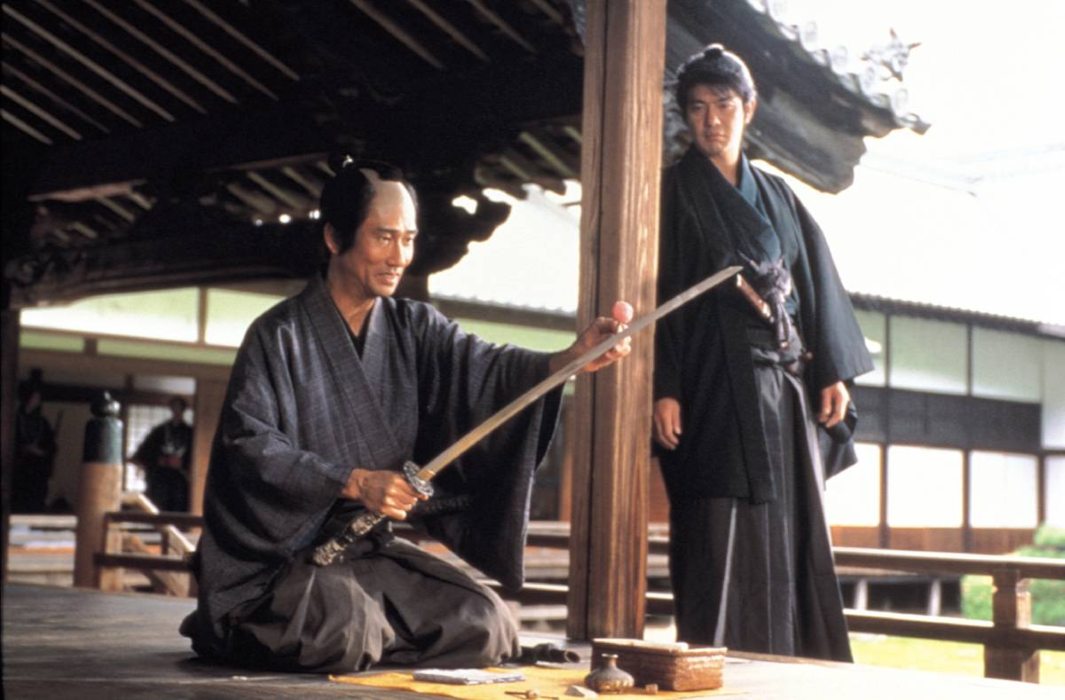
Yojiro Takita’s “When the Last Sword Is Drawn” is set during the Bakumatsu era, the final days of the Tokugawa Shogunate, and revolves around Kanichiro Yoshimura (Kiichi Nakai), a samurai who leaves his clan to join the Shinsengumi, a samurai police force active between 1863 and 1869. The film opens in 1899 with Yoshimura’s friend and chief rival, Hajime Saito (Koichi Sato), reflecting on the past. Nakai’s Yoshimura is portrayed as a country bumpkin known for his miserly habits, yet he remains a deeply kind-hearted man who clings to the ideals of the samurai.
Yoshimura leaves behind his Nanbu clan to send money home to his impoverished family. Though the Shinsengumi are increasingly reduced to mercenary-like work, Yoshimura remains loyal to his adopted clan. He comes to embody the remnants of a fading era and its ideals as Japan rapidly moves toward modernity. The film is based on Jiro Asada’s novel. Asada’s mournful short story “Poppoya,” about a rural stationmaster, was previously adapted by Yasuo Furuhata into “Railroad Man.” “When the Last Sword Is Drawn” inevitably recalls “The Twilight Samurai,” which was released around the same period. Yet unlike Yoji Yamada’s restrained and understated film, “When the Last Sword Is Drawn” often leans too heavily into melodrama, particularly in its final stretch.
Melodrama can, of course, be an effective cinematic device when handled well. Takita’s approach, however, occasionally feels overly contrived and emotionally heavy-handed. Nevertheless, the film offers a compelling portrait of the samurai’s decline, and the image of Yoshimura charging alone into a group of armed men stands as an emblematic vision of these warriors’ final days.
39. Red Lion (1969)
“Red Lion” appears to have been Kihachi Okamoto’s first color film, marking a sharp visual departure from the stark black-and-white aesthetic of his earlier works. His greatest samurai films — including “Samurai Assassin” and “The Sword of Doom” — as well as war dramas like “Japan’s Longest Day” and “The Human Bullet,” were shot in black-and-white, a style that perfectly complemented Okamoto’s cynical humor and pragmatic worldview.
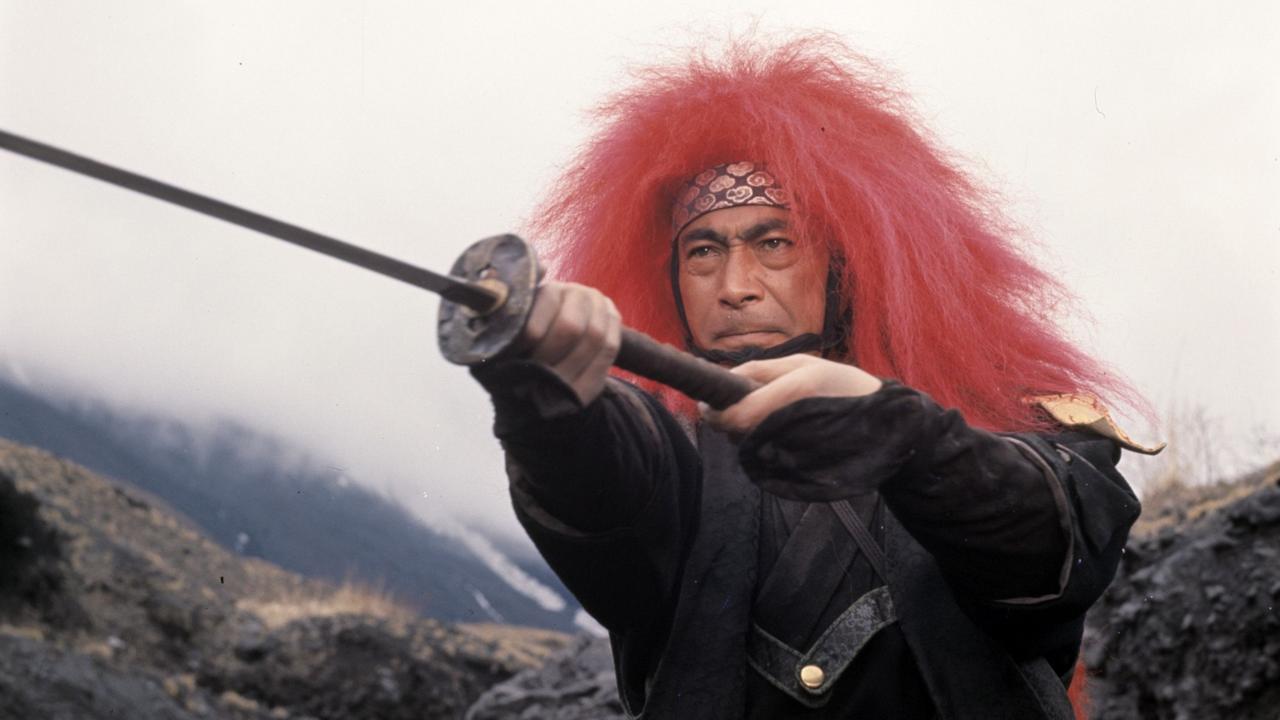
Although the 1960s represented the creative peak of Okamoto’s career, “Red Lion” remains a comparatively minor work beside the masterpieces he produced during the decade. Even so, in retrospect, “Red Lion” and “Zatoichi Meets Yojimbo” feel like the last fully enjoyable films from Okamoto before his later work grew increasingly uneven. Carrying over the sardonic wit of “Kill!,” “Red Lion” also features one of the last great lead performances from Toshiro Mifune. As Gonzo, the stuttering peasant who transforms into a revolutionary figure, Mifune channels the same feral physical energy that once made Kikuchiyo in “Seven Samurai” so unforgettable.
Set during the final years of the Edo era, Gonzo is a low-ranking member of the Imperial Restoration Force, which promises to overthrow the shogunate’s oppressive rule and cut taxes in half. When he learns that the troop will pass near his home village, the impressionable Gonzo begs his captain for permission to ride ahead and spread news of the coming political change.
Because he is merely a foot soldier, Gonzo asks to borrow the ceremonial red lion mane worn by Imperial officials so the villagers will see him as an authoritative figure. And upon returning home, he finds that the social order remains brutally unchanged: peasants are crushed by taxes, while women are pushed into forms of exploitative labor and servitude. Filled with newfound revolutionary zeal, Gonzo rallies the villagers against the local magistrate (Okamoto regular Yunosuke Ito).
Naturally, the rebellion spirals toward disillusionment, as both the shogunate and the Imperial forces ultimately prove indifferent to the suffering of ordinary people. Though “Red Lion” is more openly melodramatic than Okamoto’s earlier revisionist samurai films, it still balances humor and tragedy with remarkable elegance. In the end, Okamoto closes the film on a bittersweet note, with ordinary people celebrating the approaching collapse of the samurai order.
38. The Fall of Ako Castle (1978)
There have been countless interpretations of the “47 Ronin” story, with cinephiles often championing Mizoguchi’s 1941 film as the definitive version. Kenji Mizoguchi’s four-hour epic approaches bushido with a mournful, almost elegiac restraint, treating the tale less as rousing heroism than as a ritual weighed down by duty and sacrifice. Two decades later came “Chushingura,” Hiroshi Inagaki’s sprawling retelling featuring cameo appearances from Toshiro Mifune and Setsuko Hara. Inagaki embraces the grandeur of the legend more openly, framing the ronin as noble embodiments of bushido through broader emotions and stately spectacle. “Chushingura” remains a monumental achievement, although it revisits much of the same material as Mizoguchi’s version through a markedly different stylistic approach. So, for a samurai canon shaped around the dismantling of feudal ideals, “The Fall of Ako Castle” feels like the more fitting inclusion.
Kinji Fukasaku strips away the romantic purity surrounding the revenge narrative. The revenge of the 47 Ronin, or the Ako incident – like the legend of Musashi Miyamoto – is an ideal Japanese tale of samurai, extolling their honor and loyalty. This is the tale of masterless samurai avenging their lord, Asano, by executing the high-ranking shogunate official Kira Yoshinaka in 1703, after two years of careful plotting.
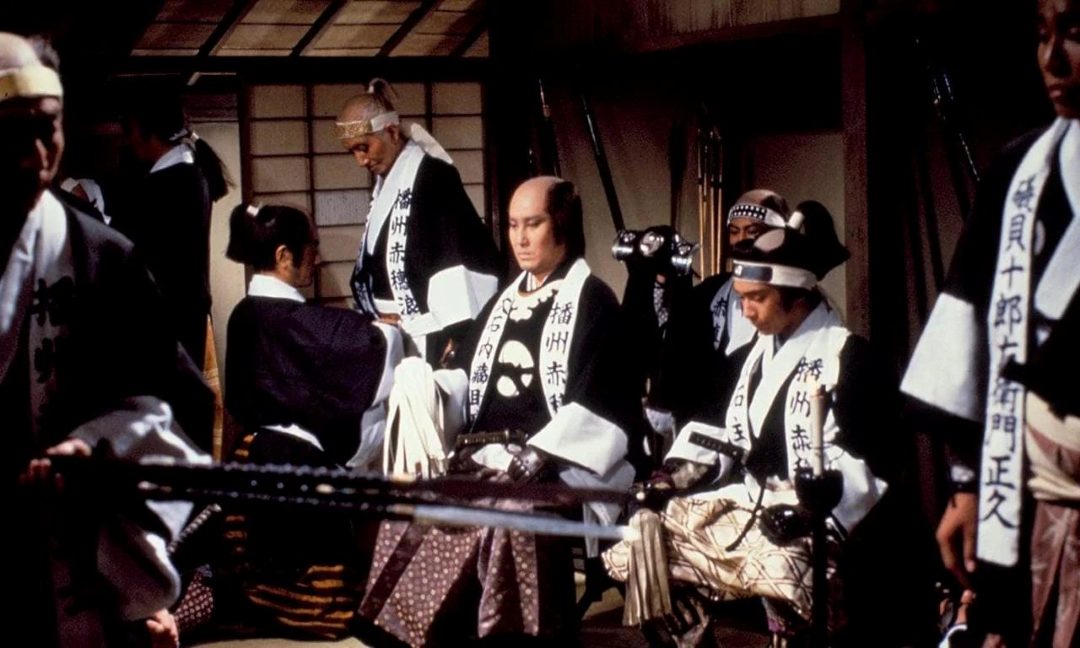
Kinji Fukasaku and screenwriter Koji Takada’s version is considerably sparse — despite its 160-minute runtime — injecting political cynicism into the saga while keeping melodramatic excesses to a minimum. Kinnosuke Nakamura plays the calculating Oishi, the disgraced chamberlain of the Asano clan, whose master is ordered to commit harakiri after attacking Lord Kira. The manipulative nature of Lord Kira had already been explored extensively in Inagaki’s version. “Fall of Ako Castle” begins with Asano’s attack and follows the devastating repercussions of that single act. While Hiroshi Inagaki’s “Chushingura” also examines how the samurai’s lives collapse after the dissolution of their clan, it remains more melodramatic and openly reverential toward the Asano clan and its fallen leader.
Fukasaku respects the endurance of the 47 ronin and the sacrifices behind their revenge, yet he also reminds us that chivalry and honor were hardly universal among samurai of any era. “Fall of Ako Castle” does not conclude with the ronin simply accomplishing their mission through violence. Instead, it lingers on a quiet, introspective moment as the ronin, clad in white, prepare themselves for ritual suicide. Mifune appears here as well. In “Chushingura,” he played the lance-wielding Gemba, while in “Fall of Ako Castle,” he appears as Lord Kira’s neighbor — notably, both characters sympathize with the 47 ronin’s cause.
37. The Last Samurai (2003)
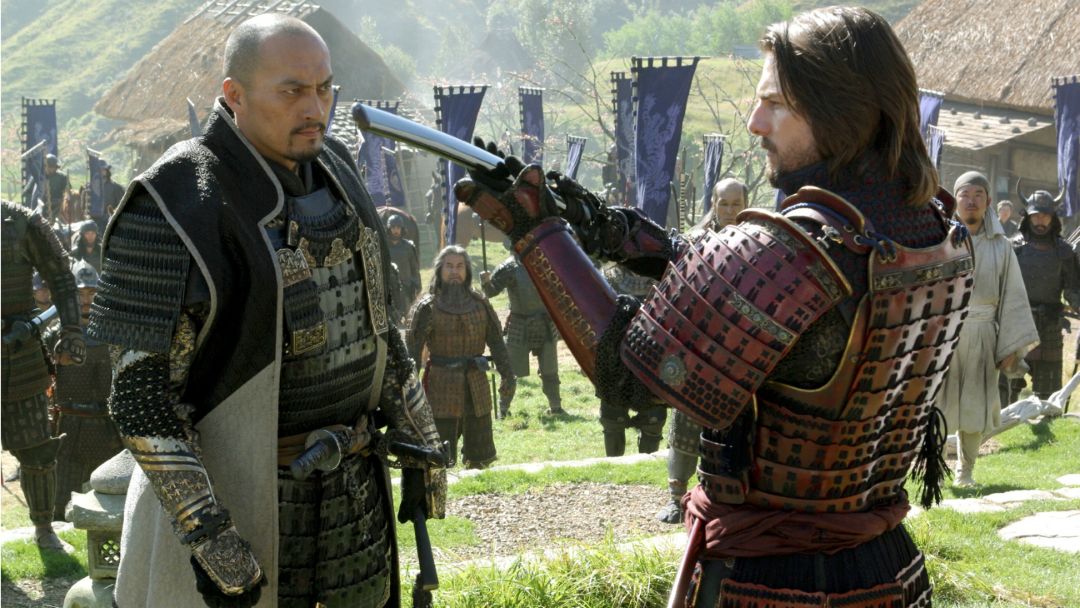
Hollywood has long been fascinated by men shaped by violence, producing idealized images of Spartans, Vikings, medieval knights, and cowboys. “The Last Samurai” brings that romanticized perception to samurai culture. Long before Jake Sully became “more native than the natives,” Tom Cruise’s Nathan Algren – traumatized by his actions during the American-Indian wars – is smitten by noble warrior philosophies, eventually donning the iconic samurai armor to kill the gun-wielding modern Japanese.
Set in 1877, less than a decade after the fall of the Tokugawa shogunate and the Meiji Restoration, the film takes place during Japan’s turbulent transition toward centralized imperial rule under Emperor Meiji. The samurai class was gradually dismantled as Japan rapidly industrialized and adopted Western military and political models. But there was the often mythologized “last samurai,” Saigo Takamori, who revolted against the Meiji government amid growing disillusionment with its reforms and treatment of the samurai class, leading to the Satsuma Rebellion. The real reasons why Takamori – a key figure in the Meiji Restoration – eventually found himself fighting with swords against a vastly superior modern army are much more complex and not often noble, unlike the movie’s simplified take on Katsumoto’s (Takamori’s film version) quest to preserve traditional samurai values.
But this provides a gripping, if occasionally cloyingly Westernized, emotional texture to the narrative. The film features Hollywood’s favorite Japanese actors, Ken Watanabe and Hiroyuki Sanada, alongside Cruise and Timothy Spall, all delivering adequately interesting performances. More than a “white savior” narrative, “The Last Samurai” is a Western fantasy about an alleged lost society. Grounded in practical effects and fight choreography, the action sequences are absolutely riveting. But the film presents samurai culture less as a historically grounded social class and more as symbols of authenticity, discipline, harmony, and honor.
The many Japanese adaptations of the tale of the Forty-Seven Ronin also mythologize the samurai class. But those films usually carry a stronger sense of social weight, fatalism, or contradiction. There’s a mournful awareness that feels emotionally denser than the Hollywood appropriations. The Last Samurai’s perception is almost utopian, with the samurai village becoming a kind of moral sanctuary untouched by modern corruption. It mourns the death of the samurai class. It sees the disappearance of the samurai class itself as a civilizational tragedy. In contrast, Japanese samurai films often mourn individuals destroyed by the system during its many transitions. As I mentioned already, it’s a gorgeously made film. But it feels like a parallel-world Japan designed around contemporary Western longing for ideal values.
Also, Read: All 45 Tom Cruise Movies, Ranked
36. Samurai Fiction (1998)
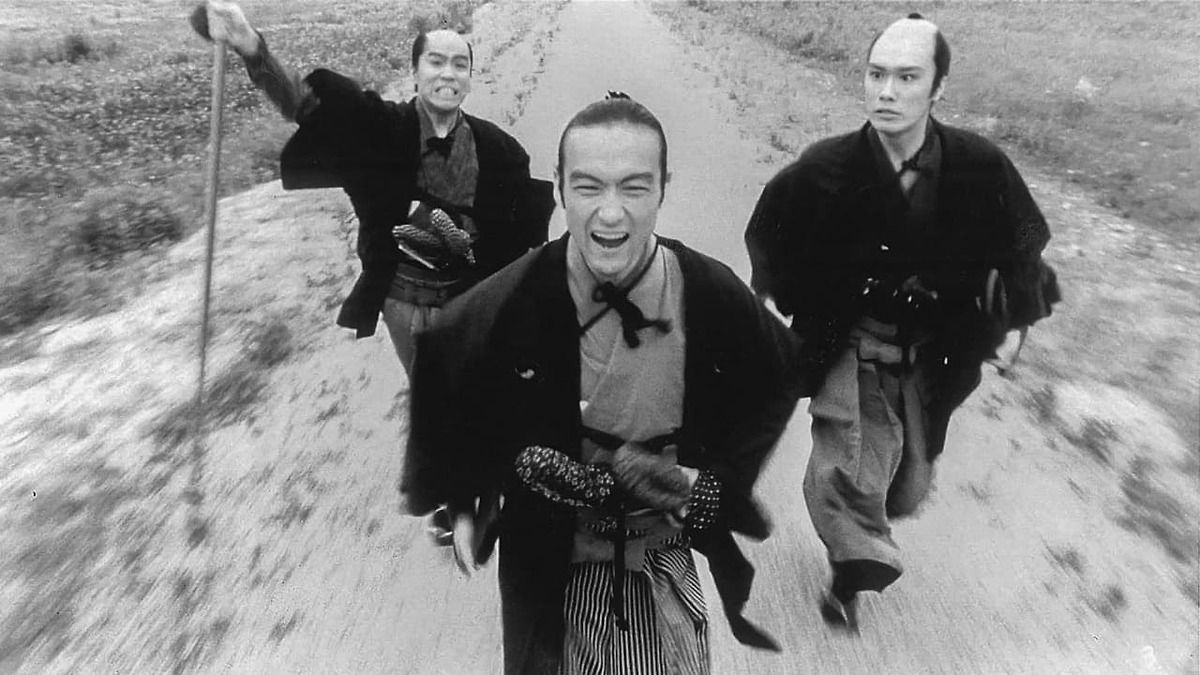
Made in 1998, at a time when chanbara films had long disappeared from mainstream popularity, “Samurai Fiction” approaches the samurai genre with an unusual sense of self-awareness. Co-writer and director Hiroyuki Nakano openly embraces the excesses of samurai cinema as bright splashes of color interrupt monochrome frames. The music swings between period atmosphere and modern coolness, and deadpan comedy cuts through scenes that would once have been treated with solemn grandeur. Every creative choice draws attention to the fact that the film is playing with decades of samurai movie iconography.
The Tarantino-esque touches run throughout the film’s style, including the foot massage of a femme fatale character. Nakano fills the story with abrupt tonal shifts, eccentric side characters, and a pop-cultural energy that feels closer to 1990s genre remixing than classical jidai-geki filmmaking. At the same time, the film carries the satirical spirit of Kihachi Okamoto’s “Kill!”, another samurai film that mocked the romantic image of Bushido during a period of chanbara fatigue.
The plot follows the young samurai Heishiro, who pursues the rogue swordsman Kazamatsuri after the theft of their clan sword. Nakano pushes both characters toward exaggeration. Heishiro’s devotion to clan loyalty and honor turns him into an awkward and impulsive figure chasing an image of samurai greatness he barely understands. Kazamatsuri (played by the popular Japanese musician Tomoyasu Hotei) moves through the film like a violent force of chaos, carrying a theatrical cruelty that borders on dark comedy.
The film’s most compelling character is Hanbei Mizoguchi, an older swordsman who has already seen through the myths surrounding violence and honor. Though highly skilled, Hanbei avoids unnecessary fighting and carries himself with quiet exhaustion. As Heishiro’s romantic obsession with revenge begins losing its grandeur, “Samurai Fiction” starts viewing the samurai code with growing skepticism. Yet Nakano never turns cynical or bitter. The film retains its playful spirit and warmth till the very end, giving it the strange charm of a feel-good samurai movie, gently dismantling the mythology it celebrates.
35. Bushido: The Cruel Code of the Samurai (1963)
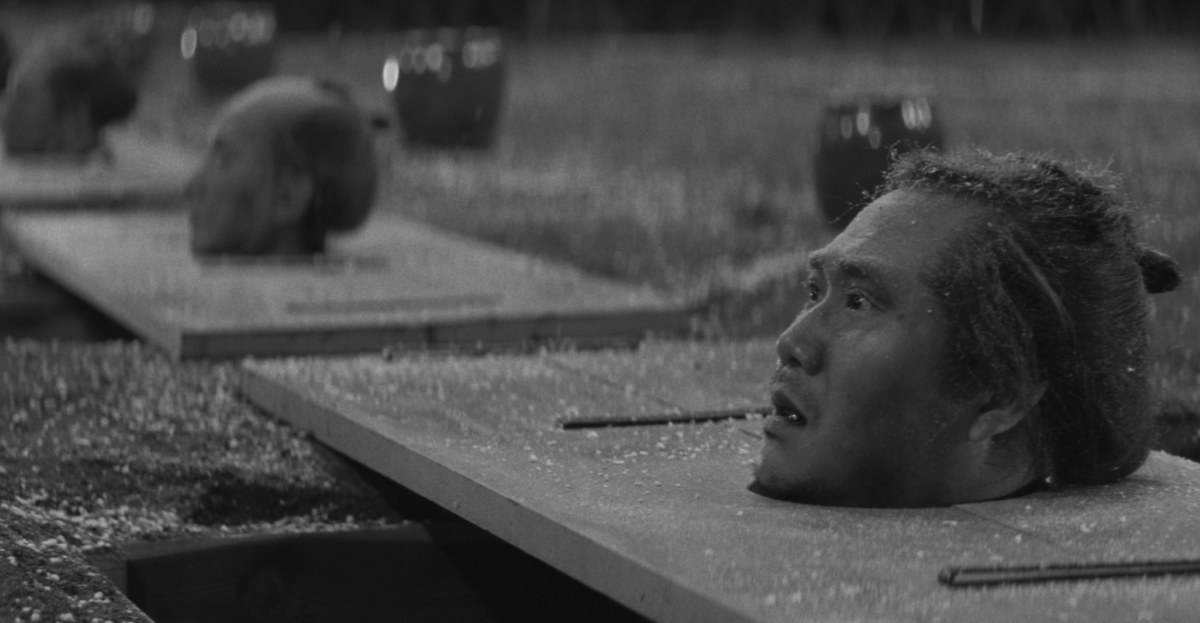
As the title suggests, Tadashi Imai’s film examines how Bushido is weaponized by the feudal order to protect those in power, while generations of samurai internalize its code through repression, obedience, and self-sacrifice. Known for his social realist dramas and staunch left-wing politics, Tadashi Imai opens “Bushido” not in the Edo period, but in contemporary Japan, as an ambulance rushes a salaryman’s fiancée to the hospital after a suicide attempt. The salaryman, Susumu Iikura (Kinnosuke Nakamura), begins questioning how his own behavior may have contributed to her suffering, eventually tracing it back to the legacy of his family history.
Susumu then reflects on a series of journals written by his ancestors, with entries stretching back to the early Edo period, revealing generations shaped and broken by the rigid demands of Bushido. Kinnosuke Nakamura plays seven generations of Iikura men, bringing a distinct emotional texture to each character. Though separated by different historical periods, the stories of the Iikura family follow a recurring pattern: men who devote themselves completely to the samurai code at the expense of both their own humanity and their families’ well-being.
From a lecherous lord who demands that an Iikura retainer serve as his sexual companion to a power-obsessed feudal superior who manipulates another into sacrificing his own child, the generations of samurai retainers remain blindly obedient in ways that grow increasingly infuriating. Once the film establishes that the fate of each Iikura man is essentially predetermined by the rigid structure of Bushido, there are few real surprises in their choices. Still, with every increasingly tragic and scandalous chapter, Tadashi Imai sustains an intensity that keeps the episodic narrative from becoming monotonous.
The film’s political messaging can occasionally feel blunt compared to the more layered revisionist samurai films of the era — even Imai’s own “Revenge” is arguably more nuanced — and some characters drift into caricature or melodrama. Yet the film remains fascinating in the way it connects the mentality of feudal obedience to modern Japan, extending its critique from the age of samurai retainers to the era of Kamikaze pilots and corporate salarymen.
34. Taboo (1999)
The Shinsengumi were a special police force of samurai active in the final years of the Edo period, in the 1860s, just before Japan transitioned into the modern era. Pre-1970s films such as “Cruel Story of the Shogunate’s Downfall” (1964) and “Shinsengumi” (1969) portray them both as the inhumane guardians of order and as instruments of a crumbling regime. In contrast, Nagisa Oshima’s “Taboo” and Yojiro Takita’s “When the Last Sword Is Drawn” (2002) view them through a more tragic lens—as men bound to a code that has already begun to lose its relevance. Yet the two films diverge sharply in tone and intent.
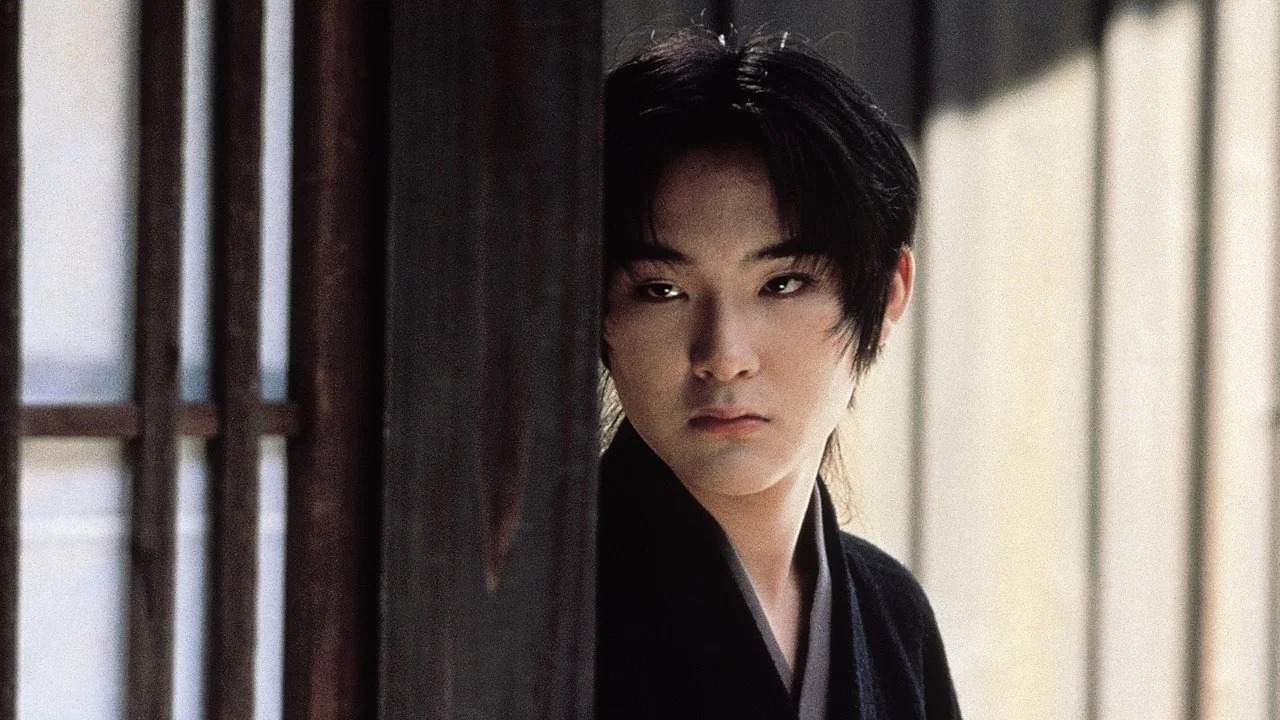
“Taboo,” Oshima’s final film, continues his boundary-pushing approach by situating a story of repressed homosexual desire within the barracks of the Shinsengumi samurai. The film marks the acting debut of Ryuhei Matsuda and features a strong ensemble including Tadanobu Asano and Takeshi Kitano. Matsuda’s Sozaburo Kano stands out for both his skill and his striking beauty. While several men within the Shinsengumi ranks are drawn to him, Captain Hijikata (Kitano) grows increasingly wary of the disruption Kano’s presence causes. Although Oshima largely frames Kano as an object of beauty—an ideal androgynous figure—the character’s refusal to clarify or resolve the desire directed at him allows it to fester, turning attraction into paranoia and, eventually, violence.
Oshima may have intentionally kept Kano opaque, as the film is less about his interiority than about his effect on others. Even so, there remains a slight sense of incompleteness, whether in Matsuda’s deliberately distant performance or in the writing itself. What Oshima captures with melancholic precision, however, is the fading relevance of Bushido. The samurai’s readiness to kill over a casual remark reveals a system so strained that it can no longer accommodate ambiguity or conversation. “Taboo” remains a flawed yet crucial work in the canon, expanding the genre’s concerns beyond honor, duty, and combat into the psychological and intimate tensions that quietly unravel them.
33. Orochi (1925)
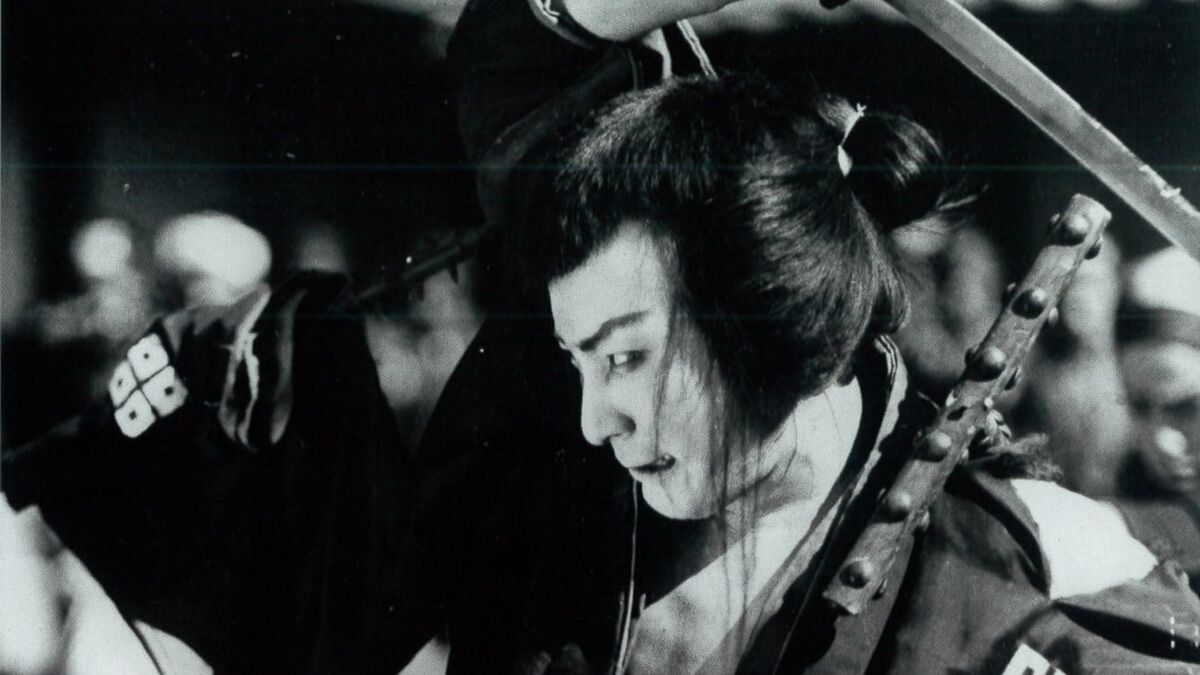
Buntaro Futagawa’s “Orochi,” aka “Serpent,” may now feel like a familiar tragic social melodrama about a decent man repeatedly humiliated by society until he is pushed toward becoming an outlaw. Rokuhei Susukita’s script could easily be transplanted into an American gangster or cowboy film. Yet the film’s portrayal of an anti-hero samurai was far ahead of its time, especially in an era when samurai were often depicted as invincible and morally impeccable figures.
Heisaburo Kuritomi embodies everything an ideal samurai is expected to be: loyal, trustworthy, and highly skilled in swordsmanship. Yet his life gradually spirals downward as his unwavering adherence to Bushido brings him nothing but misfortune. Tsumasaburo Bando, the action superstar of his era, plays Heisaburo as a hotheaded man incapable of suppressing his anger in the face of injustice. Although Heisaburo repeatedly tries to live as an ordinary man and ignore the corruption around him, he is constantly forced into situations where remaining passive becomes impossible.
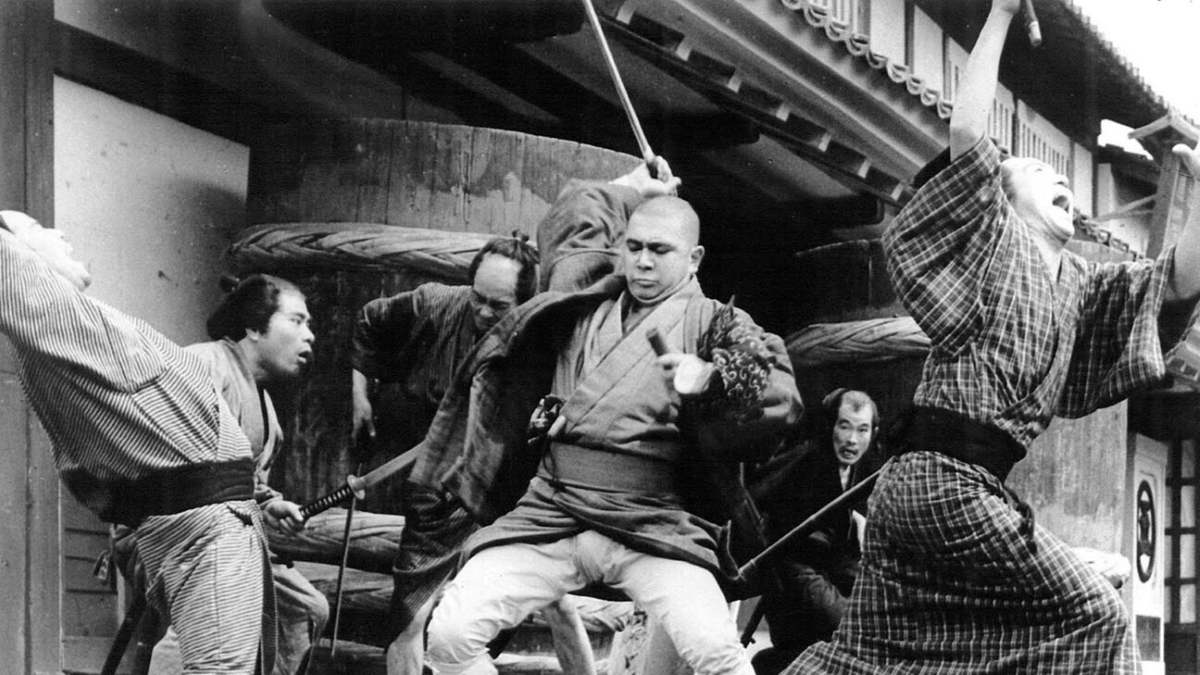
The early samurai films drew heavily from the Kabuki tradition, which is evident in the make-up and the occasionally exaggerated facial expressions. Yet the acting itself remains relatively natural, and it is Tsumasaburo Bando’s sword-fighting sequences that emerge as the film’s greatest highlight. The climactic showdown between the unhinged Heisaburo and a crowd of law officers is phenomenally staged and performed, especially for its time.
As a man trapped within the rigid codes of feudal warrior ethics, Heisaburo serves as a precursor to the anti-hero samurai protagonists that would later dominate the genre. Even his final act of redemption fails to alter his fate. He is ultimately carted away as a criminal, permanently shunned by the society he once tried to serve. The benshi version of “Orochi” available on YouTube often adds layers of character motivation and dramatic context that are absent from the film’s intertitles. Still, that embellishment is part of the experience’s charm.
Also, Read: 15 Essential Japanese Silent Films
32. Samurai Wolf (1966)
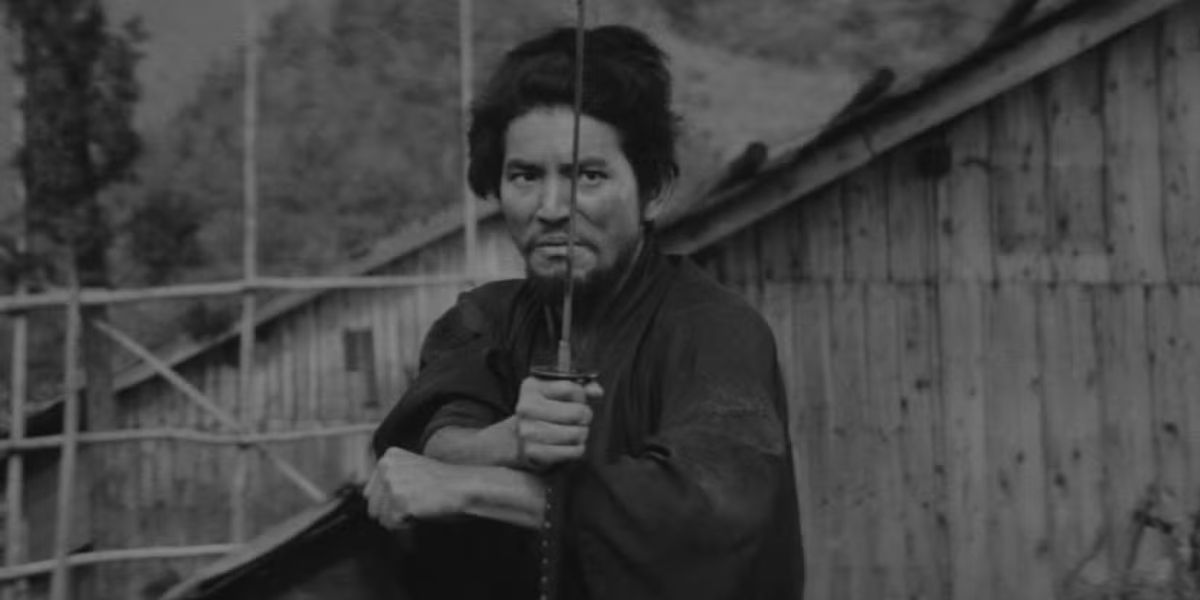
Samurai cinema and the Western genre have long influenced one another. While Akira Kurosawa often cited John Ford as a major influence on “Seven Samurai,” the 1954 film, in turn, inspired a generation of Hollywood filmmakers. One of the defining Spaghetti Westerns, “A Fistful of Dollars,” was an unauthorized remake of “Yojimbo.” This cross-pollination continued with chanbara films like “Samurai Wolf,” where Hideo Gosha borrows key tropes from the Spaghetti Western. Even the film’s use of music and atmosphere occasionally recalls the stylized soundscapes associated with Sergio Leone’s Westerns. Set in a desolate, wind-swept town, the film follows the wandering ronin Kiba, aka Wolf (Isao Natsuyagi), who becomes entangled in a conflict between rival factions vying for control of a local enterprise.
Gosha’s debut feature, “Three Outlaw Samurai,” and Kihachi Okamoto’s “Kill!” similarly occupy a space shaped by Spaghetti Western influences. “Samurai Wolf” is comparatively more stripped down, running a brisk 75 minutes, yet it packs in political intrigue, double-crosses, and twists that enhance its action without muddying the narrative. Largely confined to a single location—a wayward relay station—the film establishes its characters and central conflict within the first half hour. Wolf’s primary objective is to help the station owner, a blind woman named Ochise, transport 30,000 ryo worth of gold to the next post without falling prey to mercenaries employed by the rivals.
The narrative introduces a range of morally ambiguous figures, including an infamous hired swordsman with a murky past. Gosha’s use of zooms, slow motion, and rapid cutting lends the action a flamboyant energy that works to the film’s advantage. Natsuyagi’s scruffy, kinetic performance matches the film’s pace. Gosha followed it up with a sequel, “Samurai Wolf II,” in 1967, which feels comparatively more muddled than the original.
31. Zatoichi: The Blind Swordsman (2003)
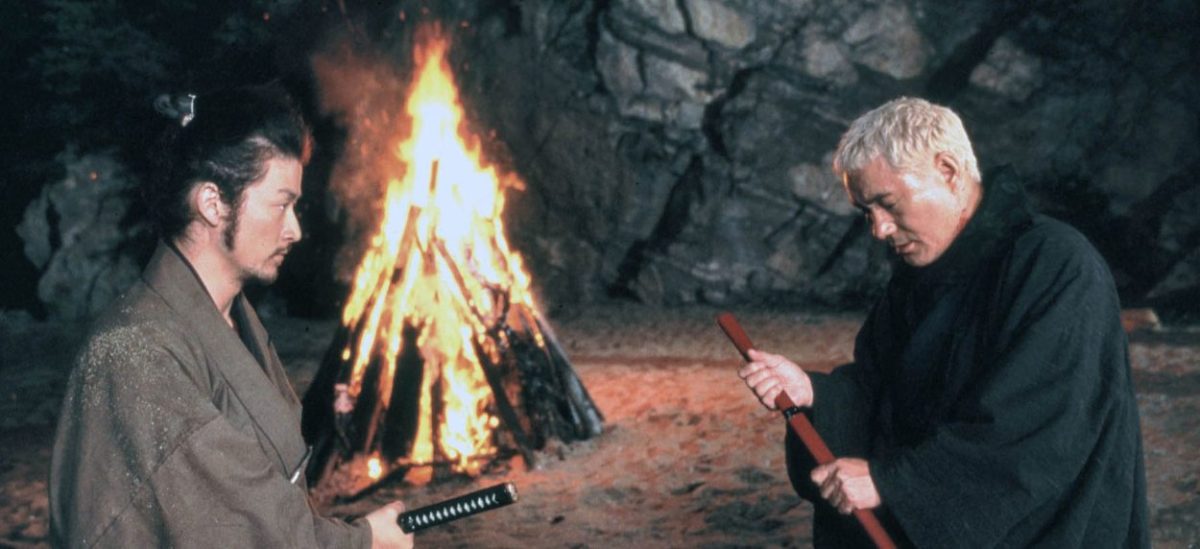
Kitano’s remake—or reinvention—of Japan’s iconic television and film character can be seen as one of his more mainstream works. Yet his take on the jidaigeki genre retains many of his trademark eccentricities. Rather than foregrounding the masseur’s hearing through obvious visual cues like close-ups of his ears, as Kenji Misumi often does, Kitano immerses us in a sonic world where ambient noise guides perception. By turning labour (farming and carpentry) and movement into rhythm, he both inhabits Zatoichi’s sensory experience and playfully stylises it.
Kitano’s films extend genuine empathy toward outcasts without turning them into noble figures. His deadpan comedy continually disrupts moments of emotional identification, preventing us from settling into easy sympathy and instead encouraging us to see these characters as both vulnerable and absurd. He carries this trait into the late Edo-period tale, where the kind-hearted O-Ume, her no-good nephew Shinkichi, the revenge-seeking geishas O-Kinu and O-Sei, are as compelling as Zatoichi within this constructed world. The “Zatoichi” films have long exposed the contradictions of the samurai: figures of discipline and skill who are often defined by rigidity or quiet complicity. In Kitano’s version, Tadanobu Asano plays a destitute ronin who becomes a gang enforcer to care for his ailing wife.
Kitano also playfully deconstructs “Zatoichi” tropes by constantly drawing attention to the film’s artifice and illusion. As with its rhythmic use of sound, disguises abound: a woman turns out to be a man, an unassuming old man is a mob boss, a vulnerable-looking masseur is a master swordsman, and so on. The only off-putting element of Kitano’s “Zatoichi” is the CGI blood, and one could say the auteur had deliberately retained that artifice, too. And while the exuberant musical finale may come across as Kitano at his most self-indulgent, it ultimately feels like part of the film’s larger playful design.
Read More: 5 Essential Takeshi Kitano Movies
30. Samurai Spy (1965)
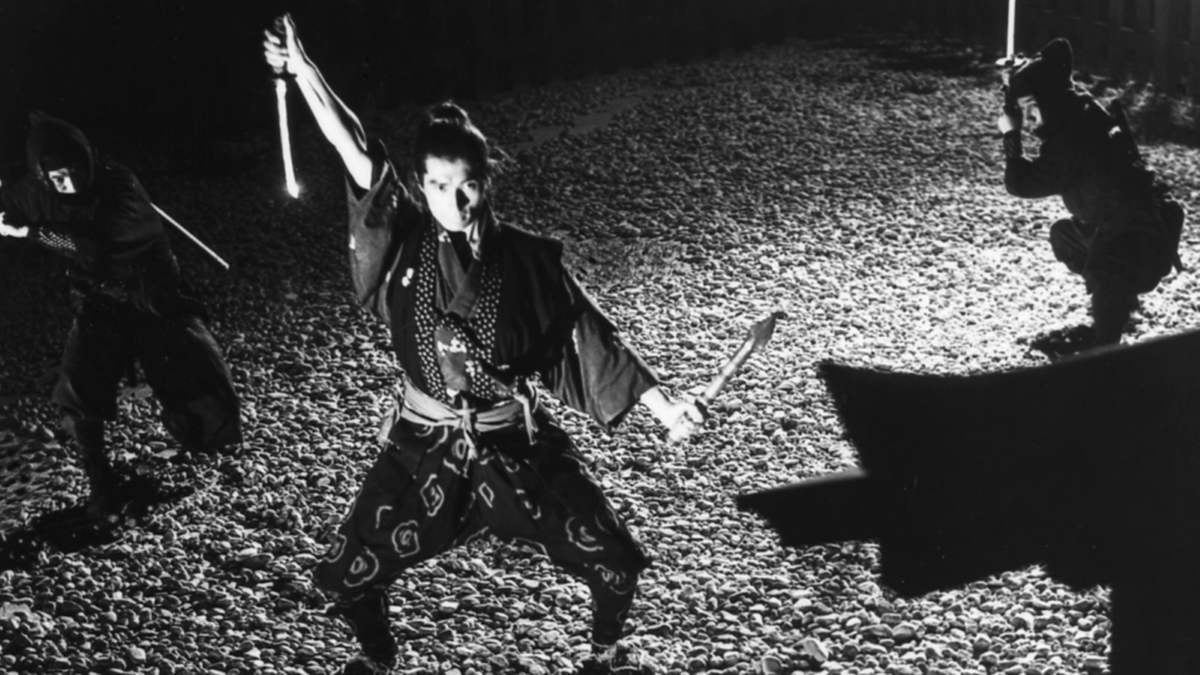
Masahiro Shinoda has made two of the most gorgeously shot Japanese black-and-white films: “Pale Flower” (1964) and “Double Suicide” (1969). One of the greatest talents of the Japanese New Wave, Shinoda infused modern, experimental storytelling techniques into the historical setups. “Samurai Spy” was his second historical drama after “Assassination” (1964), and it had the distant, aestheticized approach to storytelling that belonged more to film noir than jidaigeki. This film isn’t really a beginner’s entry into the genre.
Shinoda leans heavily into political intrigue and a very specific historical moment, so it helps to come in with some familiarity on the Warring States era, Toyotomi clan, Battle of Sekigahara, and the rise of the Tokugawa shogunate. With that in mind, the shifting loyalties begin to make sense, and you start to see who stands where. “Samurai Spy” opens with a narration that gives a brief overview of who the important players are in the two warring sides. But the names it throws at you – Tatewaki Koriyama, Shigeyuki Koremura, Takanosuke Nojiri, Sakon Takatani, etc. – within the first few minutes of the film might disorient you a bit.
Nevertheless, it helps that the film’s protagonist, Sarutobi Sasake (Koji Takahashi), is an outsider navigating his way through the complex clan politics. Sasake serves the Sanada clan, which remains neutral in the Cold War-like standoff between the powerful Tokugawa and Toyotomi clans. The central conflict revolves around the head of Tokugawa’s spy network, Tatewaki, who wants to switch sides, although we hardly see him in the film. As both clans search for Tatewaki, Sasake gets embroiled in the political gamesmanship. Director Shinoda is less interested in who wins the battle and instead explores the murkiness of the human mind in high society. Be it action scenes or character reveals, “Samurai Spy” consistently puts you off balance, and Toru Takemitsu’s otherworldly music only enhances that effect.
29. Revenge (1964)
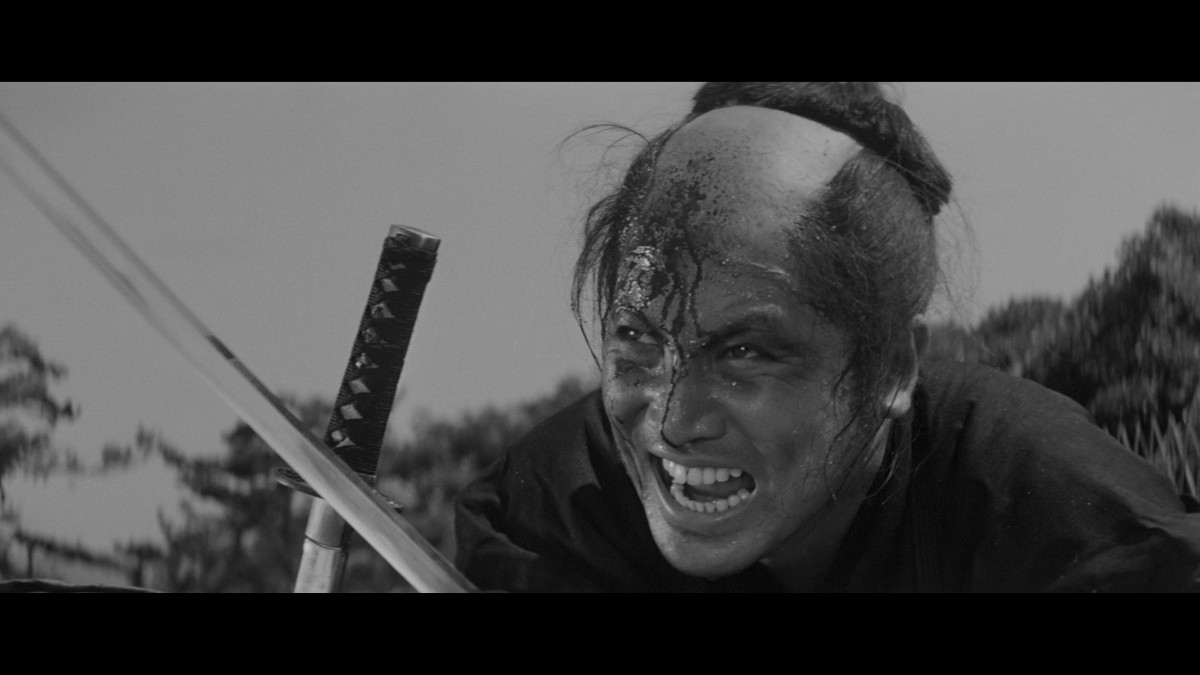
From the silent chanbara classic “Orochi” (1925) to a rōnin exposing the hypocrisy of the samurai class in “Harakiri” (1962), Japanese cinema has often portrayed samurai being punished for adhering strictly to the ideals of bushidō. Shinpachi Ezaki (Kinnosuke Nakamura) in “Revenge” is no different. He is a low-ranking samurai who makes a casual remark directed at Magodayu of the high-ranking Okuna clan, which is perceived as an insult. Magodayu challenges Shinpachi to an illegal duel, in which Magodayu is killed. To prevent further bloodshed and save the face of the Okuna clan, Shinpachi is declared mentally unfit and exiled to a monastery.
However, Magodayu’s brother, Shume (Tetsuro Tamba), goes to the temple to avenge his brother’s death, which only makes the situation bleaker and more absurd. Written by “Harakiri” screenwriter Shinobu Hashimoto, “Revenge” unfolds in a similar manner, moving between past and present. In the present, the shogunate prepares for an official duel that draws a frenzied crowd, where Shinpachi must fight to the death with Magodayu’s youngest brother, Tatsunosuke.
“Revenge” drips with irony, starting with its title. Shinpachi is driven to madness for believing that the codes will be upheld equally for all samurai. At the same time, the film does not present him as an “honorable” hero. He is a frightened, lustful, and despairing ordinary man who believes he has done the right thing. “Revenge” works as a fitting companion piece to “Harakiri” and “Samurai Rebellion,” exposing how codes of honor mask systemic violence—whether from within the institution, in defiance of it, or from the perspective of those most crushed by it. Director Tadashi Imai was best known for his socially conscious dramas of the 1950s, such as “Till We Meet Again” and “An Inlet of Muddy Water.”
The film may not exhibit a distinct directorial signature like the samurai films of Kobayashi or Kurosawa, but Imai compensates for those shortcomings with a riveting final sequence, as Shinpachi desperately slashes through the air to preserve his life. Kinnosuke Nakamura, who plays the central character, brings remarkable physicality to the role, deftly conveying Shinpachi’s conflicted emotions.
28. Yagyu Clan Conspiracy (1978)
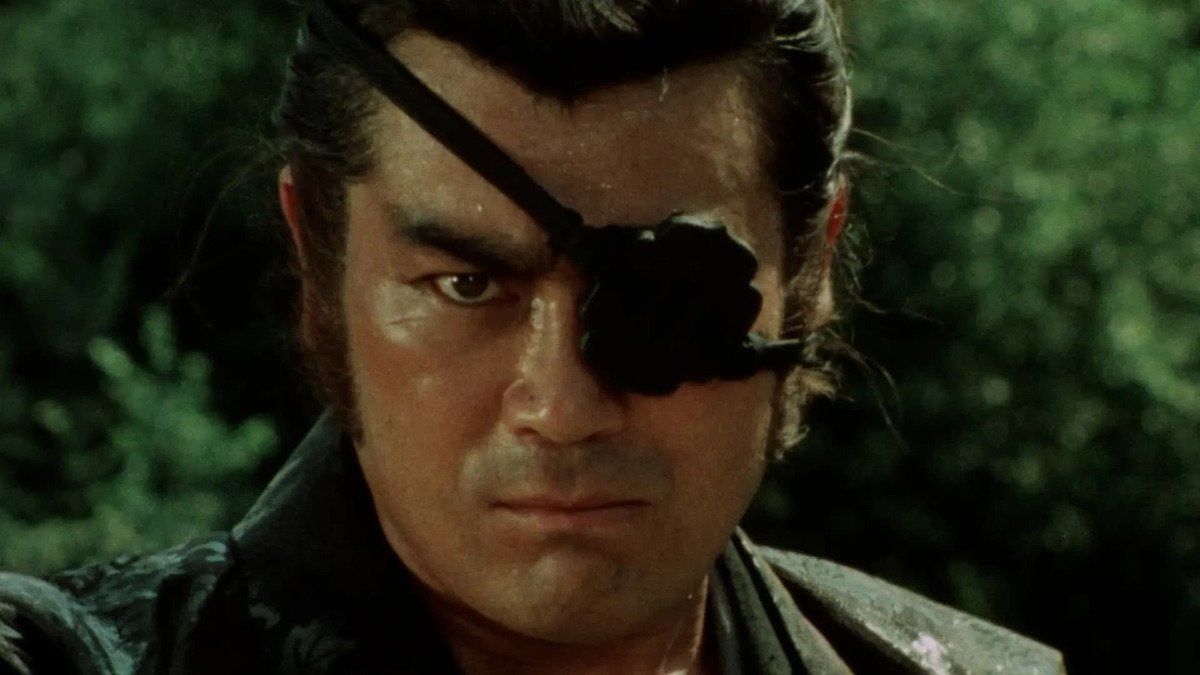
“Battles Without Honor and Humanity,” directed by Kinji Fukasaku, redefined the yakuza subgenre in Japanese cinema through its raw violence and documentary-style storytelling. With “Yagyu Clan Conspiracy,” also known as “Shogun’s Samurai,” Fukasaku transitioned into historical drama. The Yagyu were one of the most powerful and influential clans of the Edo period, rising to prominence through their schools of swordsmanship. The clan is often portrayed as sinister and shadowy, most notably as major antagonists in the manga and film adaptations of “Lone Wolf and Cub.”
Unlike the pulpy depiction of the Yagyu clan in those works, Fukasaku’s film focuses on the political struggle following the shogun’s suspicious death in 1624, driven by the manipulative swordmaster Yagyu Munemori (Kinnosuke Nakamura). The narrative’s labyrinth of secret alliances and violent betrayals makes it resemble feudal epics like “Throne of Blood” or “Ran” — films we have avoided for this list. Yet “Yagyu Clan Conspiracy” is not merely a feudal political drama. Beneath its sprawling power struggles, it remains deeply rooted in the samurai genre through its examination of how ideals like honor, loyalty, and righteousness are manipulated to serve those in power. The samurai here function as extensions of authority, committing brutality under the weight of duty and obedience.
Fukasaku repeatedly exposes the emptiness behind these celebrated virtues, particularly through the film’s treatment of innocent villagers who are massacred once they outlive their usefulness to the ruling elite. Though Munemori’s son, Jubei (Sonny Chiba), is among the story’s more honorable figures, even his moral code becomes entangled in preserving political power at the expense of ordinary lives. Still, Jubei ultimately delivers a memorable act of retribution in an ending that feels distinctly Shakespearean. The performances occasionally veer into theatrical excess, but Nakamura’s final “It’s only a dream” scene is exceptional. The film’s commercial success paved the way for a 39-episode television series of the same name.
27. Lone Wolf and Cub: Baby Cart at the River Styx (1972)
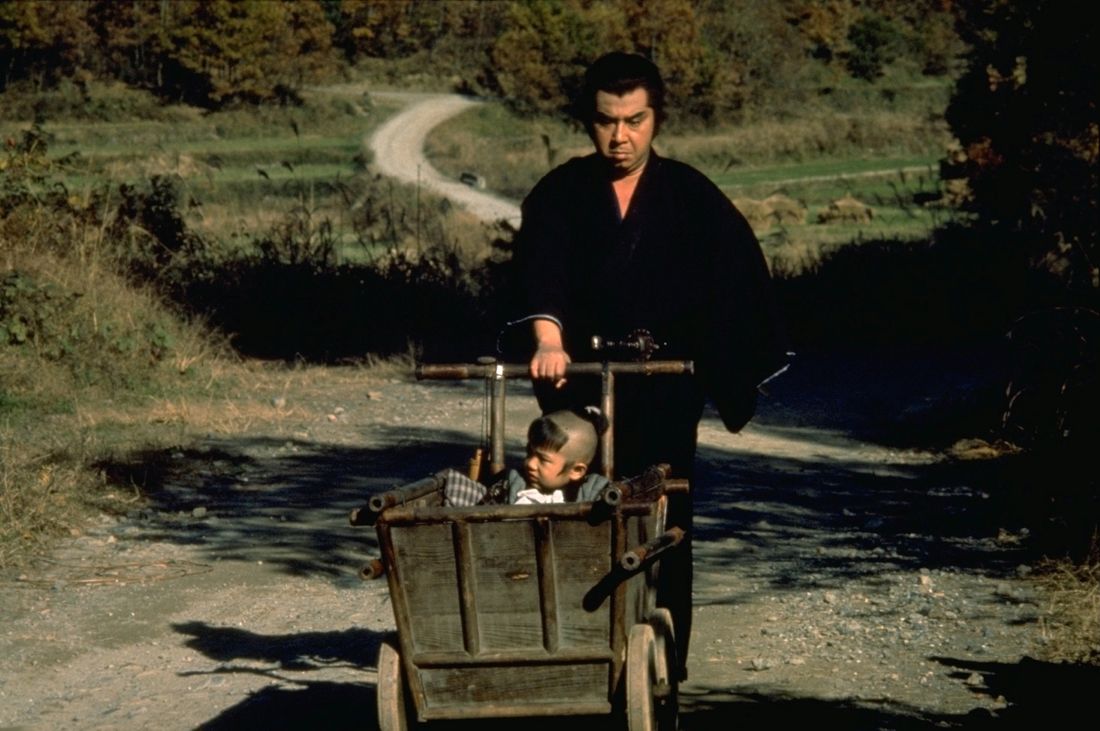
Based on Kazuo Koike’s manga, the “Lone Wolf and Cub” film series follows Ogami Itto, the shogun’s executioner, who is framed by the Yagyu clan and forced onto the path of a wandering assassin seeking revenge. Accompanying Itto through this journey through hell is his toddler son, Daigoro. “Sword of Vengeance,” the first film in the series, establishes the Yagyu clan’s treacherous scheme that sends the stoic Itto on the run. In the second film, “Baby Cart at the River Styx,” Itto is approached by the Awa clan, whose monopoly over indigo dye is threatened when a man connected to their trade secrets attempts to seek protection from the Shogunate. Itto is hired to eliminate the target, but his mission is complicated by a group of female Yagyu assassins led by the fierce Sayaka.
Four of the six “Lone Wolf and Cub” films were directed by Kenji Misumi, who also directed several “Zatoichi” films. Shintaro Katsu produced the series, while Itto was played by Katsu’s elder brother, Tomisaburo Wakayama. While these films function as wildly entertaining revenge sagas, unlike the high-art seriousness of filmmakers like Masaki Kobayashi or Kihachi Okamoto, they often attack feudal and samurai hypocrisy, portraying the system as one sustained through assassination, paranoia, and ritualized violence. The film’s worldview is as nihilistic as “The Sword of Doom” or “Demons,” though they replace complex social dynamics with darkly exhilarating action sequences.
The action embraces comic-book absurdity and exaggerated bloodshed, with one limb-severing moment recalling Monty Python’s famous “‘Tis but a scratch!” gag. Considering that the film came out three years earlier, did Monty Python see this one? There are several other memorable set pieces, including a shipboard encounter and a forest battle where even the baby cart becomes a deadly weapon. Beneath all the carnage, the film also finds room for tenderness, especially in the moments involving the adorable Daigoro. All six films in the series are enjoyable, but “River Styx” reaches a level of comic-book wildness unmatched by the others. The first two films — “Sword of Vengeance” and “River Styx” — were later re-edited into a single American release titled “Shogun Assassin.”
26. Sword of the Beast (1965)
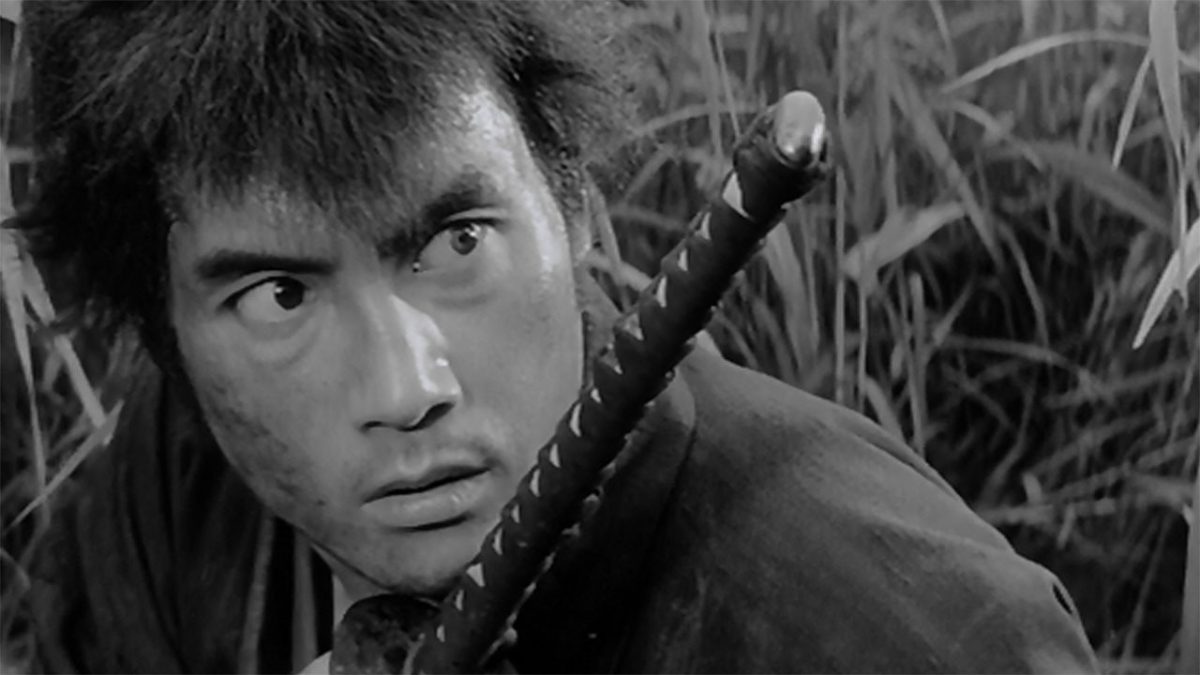
Though the wandering ronin Yuuki Gennosuke in “Sword of the Beast” is called a “beast,” he isn’t a heartless villain. He becomes a beast roaming the forest because he sought reform within the samurai class. Gennosuke is tricked by a man in the clan’s high command into assassinating a counselor, believing the act would bring social mobility to low-ranking samurai. The counselor’s daughter, Misa, and her fiancé, Daizaburo, pursue Gennosuke, who, while on the run, meets a young samurai, Jurata (Go Kato), and his wife, Taka (Shima Iwashita). The couple is there to poach gold from the mountains on behalf of their impoverished clan, even though they know that stealing the Shogun’s gold will bring them a death sentence.
Hideo Gosha’s films are often about doing the right thing within an immoral system. Gennosuke, despite his grave past mistake, turns out to be the only character who scoffs at the facade of the samurai code and acts morally when the situation demands it. “Sword of the Beast” is set in 1857, during the waning years of the Edo period, when the samurai class stood on the verge of dissolution. The film traces Gennosuke’s journey from an overly ambitious samurai to a humane ronin who rejects the feudal system. Gennosuke also sees an echo of the manipulation he once suffered in Jurata and Taki’s plight.
Gosha is rarely subtle in his approach, but much of the pulpy pleasure of watching the film lies in the staging of its action scenes. Shot entirely on location, Gosha vividly captures Gennosuke’s chaos-inducing bursts of violence, from the opening sequence set in a field of tall grass to the final confrontation in a forest beside a mountain river. Gosha’s treatment of female characters has often been problematic, and “Sword of the Beast” is no exception. Yet it remains an alluring samurai film that fuses pulp action with an examination of class oppression.
25. Killing (2018)
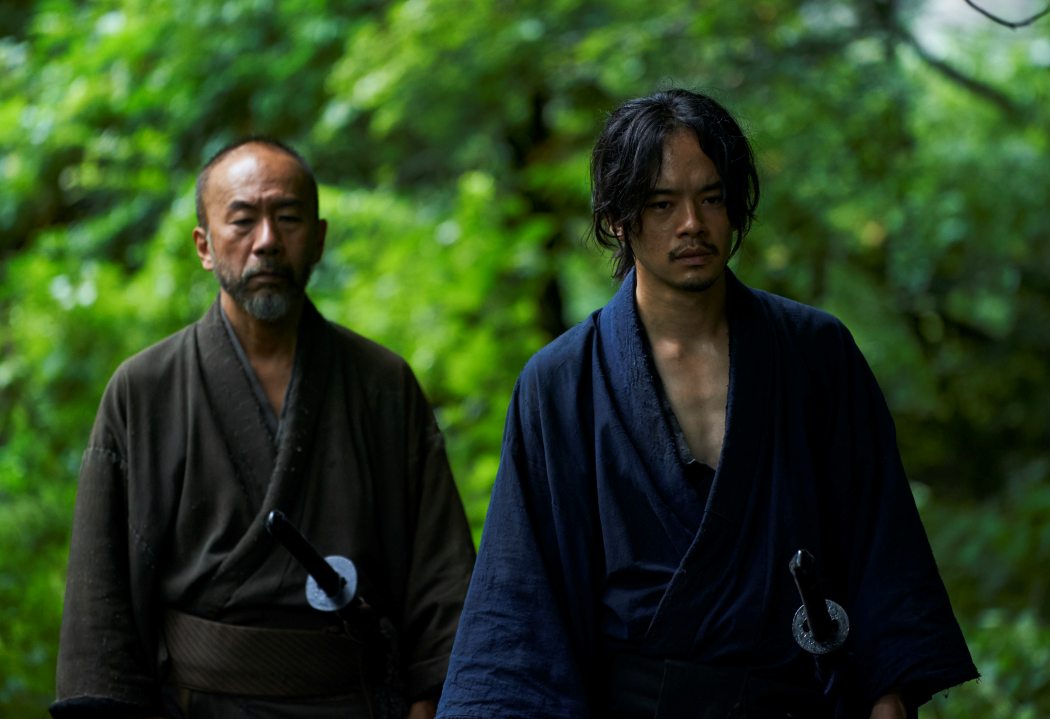
Shinya Tsukamoto’s “Killing” has a deliberately flattened look, much like its title. Stark, single-word titles are a familiar feature of samurai cinema. But while films like “Harakiri”, “Kill!”, “Demons”, “Taboo”, and “Revenge” interpret violence through social or cultural frameworks, “Killing” refuses to grant violence any symbolic weight, leaving us only with the ugly nature of killing – whether it’s done for revenge, honor, or survival. Tsukamoto—known for his twisted masterpiece “Tetsuo: The Iron Man” (1989)—is a fiercely independent filmmaker whose extreme visions may not suit every taste. Like his other sparse, pared-down films—”Haze” and “Kotoko”—”Killing”, though set in the late Edo period, explores his recurring preoccupation with the fragility of the self.
While samurai cinema often relies on precisely composed frames, “Killing” opens with a friendly duel shot in a shaky handheld style, suggesting an instability not just in the world, but within the self. The 80-minute film revolves around a skilled young rōnin, Mokunoshin Tsuzuki (Sosuke Ikematsu), who has temporarily found refuge in a farming village. He develops a quiet bond with a farmer’s daughter and trains her brother in swordsmanship. Soon, Sawamura (played by Shinya Tsukamoto), an experienced ronin seeking glory in Edo, attempts to recruit Mokunoshin. This fragile calm is disrupted when a band of rōnin arrives in the village.
Sawamura recalls figures like Takashi Shimura’s Kambei in “Seven Samurai,” yet his intervention carries a far more destabilizing charge. His act of violence, initially intended to protect the villagers, spirals out of control, and soon we learn that Mokunoshin, despite his skill, has never killed anyone. “Killing” strips away any sense of spectacle associated with violence and replaces it with a gnawing emptiness, forcing us to confront what it truly means to kill. Violence may destroy its targets, but it also takes the self hostage.
24. The Tale of Zatoichi (1962)
Before “The Tale of Zatoichi” launched one of Japan’s most enduring film franchises, Zatoichi existed as a relatively small literary character created by writer Kan Shimozawa in the late 1940s. Shimozawa introduced him as a blind masseur and gambler wandering through the Edo period, surviving at the edges of society.
The transformation to screen arrived through Daiei Studios in 1962 with Kenji Misumi’s film adaptation and, more importantly, through the casting of Shintaro Katsu. Katsu was not yet the iconic star he would become. Coming from a background in traditional music and supporting film roles, he brought an unusual physicality to the role. His Zatoichi shuffled through towns like a harmless drifter, speaking with humility and often inviting ridicule from the people around him. Then, in sudden flashes of violence, the same man revealed himself as a master swordsman.
Katsu shaped the traits now inseparable from Zatoichi: sly humor, unpredictability, warmth toward ordinary people, and the sadness lingering beneath his wandering life. Zatoichi occupies a unique place in samurai cinema because he exists outside the samurai class. Through his perspective, the films repeatedly expose the arrogance, hypocrisy, and casual violence hiding beneath the image of samurai honor.
“The Tale of Zatoichi” introduces such conflict through Zatoichi’s bond with the young ronin Miki Hirate (Shigeru Amachi), one of the few samurai he genuinely respects. Hirate carries himself with the composure of a man who understands his skills now serve petty gang rivalries and pointless killings instead of any noble ideal. Their friendship hangs over the film’s final duel, stripping the confrontation of any heroic grandeur.
Unlike the stoic wandering swordsmen who came to dominate chanbara cinema — from “Sanjuro” to Lone Wolf and Cub’s Ogami Itto — the masseur allows moments of embarrassment, longing, and insecurity to surface. One exchange with O-tane captures this side of Zatoichi beautifully. Misumi frames the blind masseur in a low-angle close-up with the moon hanging above him, surrounding his face with a faint glow that deepens the melancholy etched across it. The image captures a man unable to fully step into the warmth surrounding him.
23. Zatoichi Goes to the Fire Festival (1970)
Among the twenty-six Zatoichi films, I have many favorites—from the solid introductory chapter to the whimsical and self-aware “Fight, Zatoichi, Fight”, the duel of minds in “Zatoichi and the Chess Expert,” and the subdued, emotional “Zatoichi Challenged.” But if I had to choose one as the best, I would go with the fun, pulpy, and operatic 21st Zatoichi film: “Zatoichi Goes to the Fire Festival.” Shintaro Katsu took full creative control of the series around the time of “Zatoichi Meets Yojimbo” (1970). “Fire Festival” was also written by Katsu and directed by Kenji Misumi, marking his sixth and final Zatoichi film.
The film is more violent than the 1960s entries and carries a sense of madness and high-wire energy in its action sequences—especially the bathhouse fight, where Ichi uses water buckets to save both his life and his modesty. It also does away with the recurring child-saving subplot. “Fire Festival” pits Zatoichi against a powerful local yakuza lord, Yamikubo (Masayuki Mori), who, despite his blindness, controls the gangs and extorts the townspeople. Mori, best known for playing refined protagonists in films like “The Idiot,” “Ugetsu,” and “Floating Clouds,” delivers one of the series’ most memorable antagonists.
In many ways, he feels like Ichi’s evil doppelgänger. Both share vulnerable exteriors, but where Ichi channels his inner strength toward compassion, Yamikubo is manipulative and ruthlessly self-serving. Another unexpected element is Umeji, an effeminate young man who runs a small brothel. Played by Pita of “Funeral Parade of Roses” fame, Umeji’s repeated plea—“make me a man”—lands with a deliberately ambiguous, darkly comic edge. “Fire Festival” leans further into its camp by casting Tatsuya Nakadai as a psychotic rōnin, whose thousand-yard stare adds to the film’s volatile energy. By this 21st film, Zatoichi no longer feels like a wandering underdog entering a town for survival. He actually moves through the film like a feared folk legend.
22. Samurai Revolution Trilogy (1963-1967)
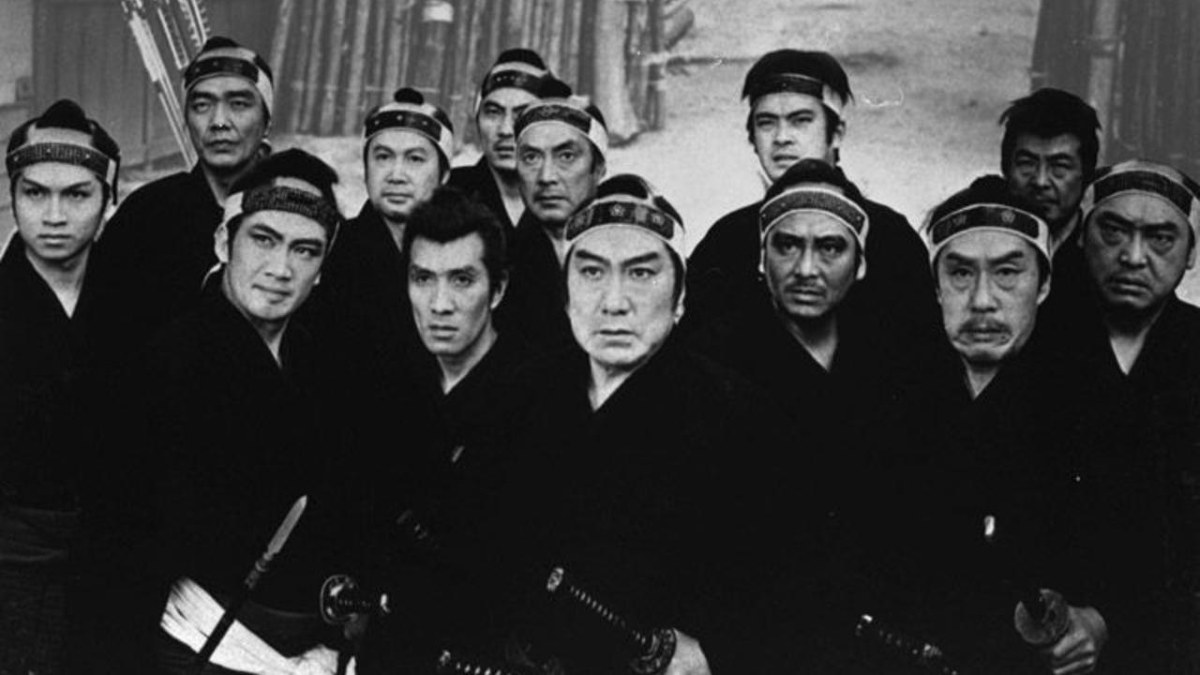
Released between 1963 and 1967, Eiichi Kudo’s unofficial “Samurai Revolution Trilogy” — “13 Assassins,” “The Great Killing,” and “Eleven Samurai” — draws loosely from historical events to depict bands of honorable samurai rising against corrupt and inhumane feudal authority. While “13 Assassins” and “Eleven Samurai” unfold during the late Edo period of the 1830s and 1840s, portraying sadistic lords who commit atrocities with near-total impunity, “The Great Killing” is set in the late 1670s, where samurai rebels move against a powerful shogunate elder manipulating succession politics from behind the scenes in order to install a puppet ruler.
Unlike the melancholic and ritualistic treatment of samurai loyalty found in many adaptations of the Forty-seven rōnin tale, Kudo’s films lay bare the brutality and moral decay of the Tokugawa order. The avenging samurai often emerge as the only figures still capable of recognizing the system’s corruption, even as their rebellion inevitably pushes them toward self-destruction. Structurally, all three films follow a similar trajectory: the narrative begins by establishing the cruelty or political rot at the center of the feudal hierarchy, moves into long stretches of strategic planning and emotional deliberation among the samurai, and finally erupts into astonishingly choreographed action sequences marked by chaos, desperation, and mass sacrifice.
Kudo’s visual compositions are often as meticulous and formally controlled as the works of Hiroshi Inagaki and Kenji Mizoguchi. Yet he is equally celebrated for the gritty, kinetic energy of his action filmmaking, particularly in “The Great Killing.” His battle sequences frequently alternate between dynamic close-range camerawork and distant observational framing that captures the chaos and confusion of combat as collective disorder rather than heroic spectacle. Set amidst rain, fog, mud, collapsing interiors, and obstructing tatami mats, Kudo’s sword fights radically redefined how chanbara action could be staged and photographed during the 1960s.
21. Cruel Story of the Shogunate’s Downfall (1964)
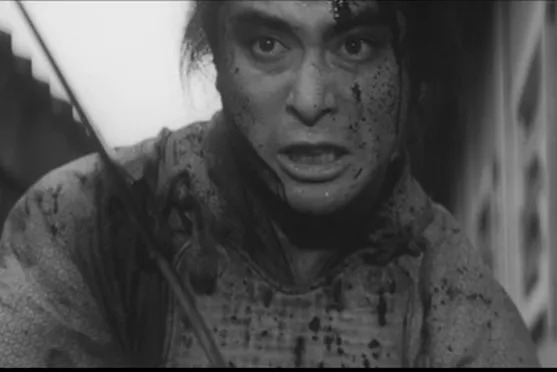
Tai Kato’s “Cruel Story of the Shogunate’s Downfall” belongs to the wave of 1960s samurai films that openly attacked the hypocrisy and brutality underlying the samurai code of honor. While some works portray the Shinsengumi of the Bakumatsu era as tragic anti-Imperialist heroes, Kato presents them as a ruthless paramilitary force willing to sacrifice human lives to preserve a collapsing order. Set in 1864, the film opens with the Ikedaya Incident, where the Shinsengumi killed seven ronin rebels (and captured twenty-three) associated with the Choshu, Tosa, and Higo domains and captured twenty-three others.
Yet the politics of the era were far more complicated than a simple divide between progressives and reactionaries. Both the Shinsengumi and many of the anti-shogunate domains still believed in elite samurai rule. The difference lay in their response to the crisis facing Japan after Western powers forced the country open in the 1850s. The imperial loyalists increasingly believed the Tokugawa shogunate had failed the nation, while the Shinsengumi believed reform should occur within the existing system and feared that destroying the shogunate would plunge Japan into chaos. The ideological contradictions and factional tensions within the pro-Imperialist movement, particularly among figures connected to the Tosa faction, are explored with far greater ambiguity in Hideo Gosha’s “Hitokiri.”
The Ikedaya Incident earns the Shinsengumi widespread notoriety and draws a steady stream of young recruits, including Enami (played by Hashizo Okawa). Initially naive and idealistic, Enami is gradually indoctrinated into the organization’s ruthless ideology until he himself becomes a cold-blooded killer. Much like modern war films centered on boot camp indoctrination, Tai Kato’s film follows a group of young men through a grim transformation that teaches them to kill or be killed. The unexpected turn near the climax further complicates the film’s moral and political perspective.
Stylistically, the film is marked by low camera angles and rigorously composed frames that emphasize the oppressive atmosphere surrounding the characters. The violence is staged with an ugliness that feels sudden and genuinely disturbing rather than heroic. Kato films the final bloodletting within a cramped interior space, creating a suffocating sense of panic and frenzy. By the end, the assassinations and executions carried out in the name of preserving order reduce the organization’s ideals of honor and nobility to little more than hollow rhetoric.
20. Three Outlaw Samurai (1964)
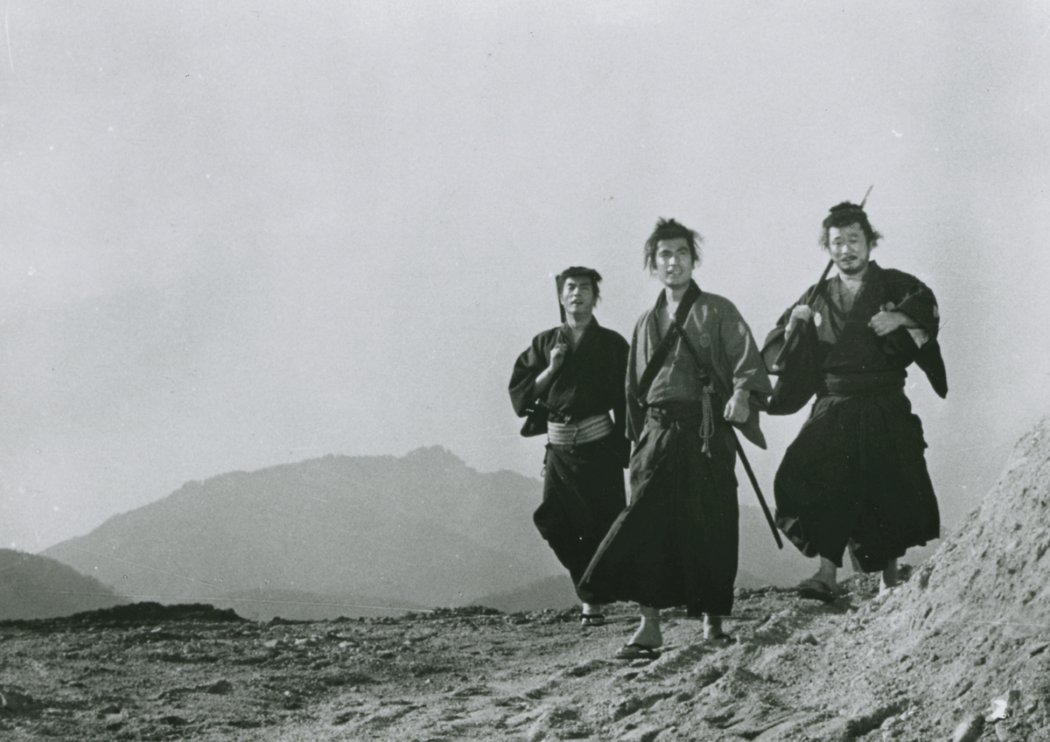
Hideo Gosha’s feature directorial debut is a Yojimbo-influenced film in which a wandering ronin becomes embroiled in a local conflict, ultimately siding with oppressed peasants. The fearless Shiba (Tetsuro Tamba) comes across a group of farmers holding the local magistrate’s daughter, Aya, hostage. Their demand for reduced taxes is met with scorn, and the magistrate sends his men to kill the farmers and rescue Aya. Shiba, however, intervenes and supports the peasants’ struggle for justice. When the magistrate hires ronin mercenaries to kill Shiba, one honorable swordsman — Sakura (Isamu Nagato) — changes sides after learning the full story. Then there is the cynical Kikyo (Mikijiro Hira), whose resolve to support the magistrate gradually breaks down after witnessing the depths of the man’s treachery.
The signature elements of Gosha’s storytelling are already visible in this first feature. His protagonists are often outsiders who cling to their own sense of samurai honor and morality while navigating political schemes that sacrifice the samurai code in the pursuit of power. While Shiba is the ideal samurai among the three outlaws, Kikyo remains morally ambiguous, barely reacting when a peasant’s daughter is brutally beaten. Sakura, too, is given an emotional dilemma involving a widowed farmer’s wife, though it emerges as the narrative’s least compelling subplot.
Gosha’s skill as a craftsman is evident in the fluid and superbly staged action sequences, particularly the scene in which Sakura infiltrates the magistrate’s residence to free Shiba. “Three Outlaw Samurai,” like Gosha’s other films from the era, carries a touch of realism, acknowledging that the ronin’s heroic deeds do not magically solve systemic problems. The film features many female characters, though they are often vulnerable and victimized. Gosha would later create some formidable women in his yakuza films, but even they rarely escaped tragedy.
19. 13 Assassins (2010)
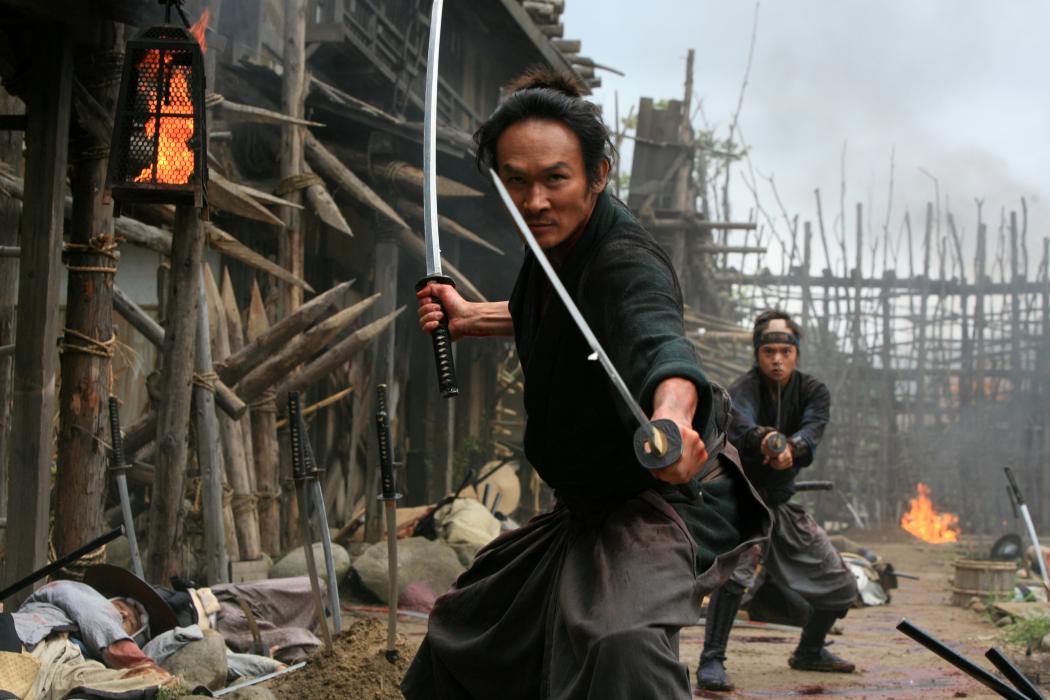
Takashi Miike can deliver both surprisingly restrained dramas and darkly humorous visceral horrors. His remake of Eiichi Kudo’s 1963 classic contains some of Miike’s signature excesses while still operating within the framework of a classical samurai epic. Set in 1844, two decades before the collapse of the Tokugawa Shogunate, thirteen samurai band together, under the covert sanction of senior Shogunate officials, to eliminate the increasingly sadistic Lord Naritsugu Matsudaira, the Shogun’s half-brother. The serene yet formidable swordsman Shinzaemon Shimada leads the assassins, believing this is the right way to meet his end amid the decay of the samurai order.
Miike’s version initially feels emotionally manipulative as he devotes an extended setup to Naritsugu’s sadism, provoking a bloodlust in us. Yet he preserves the political cynicism of the original while showing how the samurai code itself forms part of the machinery that enables such horrors. Lord Naritsugu embodies the monstrous extreme of a feudal system that transforms Bushido into a cult of death and unquestioning loyalty. In opposing him, Shinzaemon’s band carries out an act that feels both politically necessary and deeply cathartic. We relish the sight of Naritsugu writhing in pain, his precious robes soaked in mud and blood.
At the same time, Miike doesn’t shy away from capturing the madness of combat and the absurd heaviness of violence. By the end, when Shinrokuro Shimada walks through a battlefield piled with bodies, and a mangled soldier shuffles toward him like a zombie, the moment feels closer to an apocalypse than noble combat. Miike also introduces the wild woodsman Kiga Koyata as the thirteenth assassin, a folkloric figure untethered from rigid social hierarchy. He disrupts the grim procedural realism of the original film while fitting naturally within Miike’s occasionally delirious tone. Overall, “13 Assassins” proves Miike’s mastery of genre pleasures while exposing the grotesque theatricality beneath the samurai mythos.
18. Goyokin (1969)
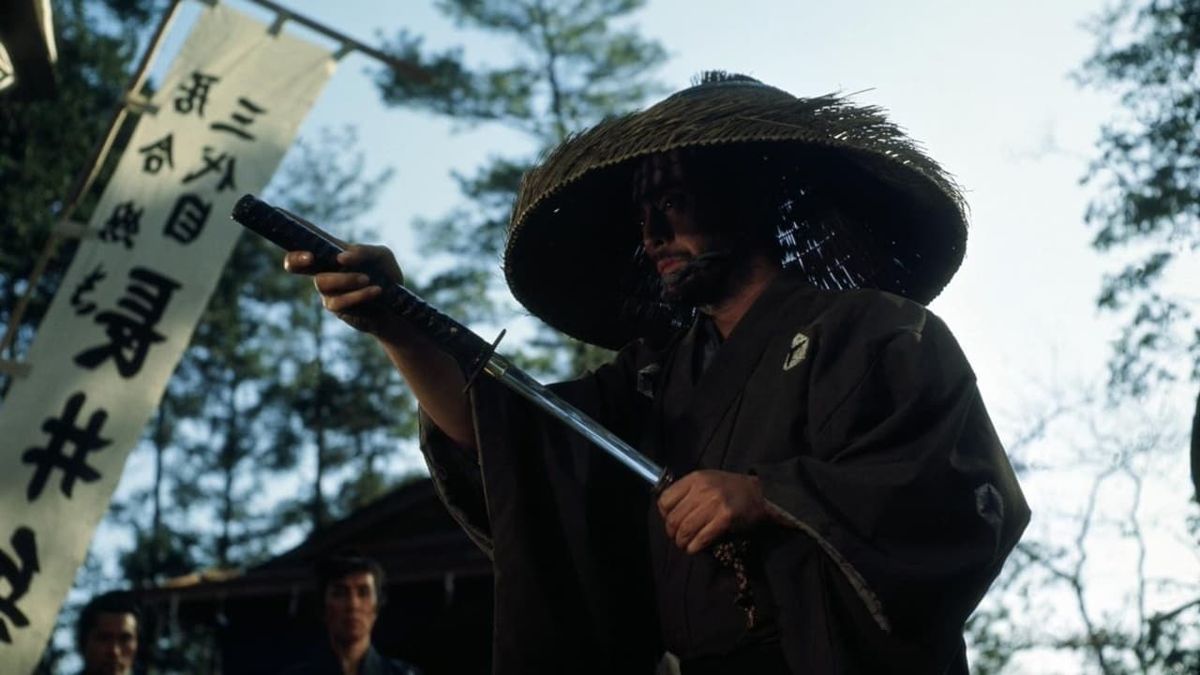
“Goyokin,” aka “The Steel Edge of Revenge,” feels like Hideo Gosha’s first truly operatic film, expanding beyond the lean, stripped-down style of his earlier chambara features. Gosha’s move into widescreen color spectacle and a larger emotional scale also marked the second of his ten collaborations with Tatsuya Nakadai. The legendary actor would later become a commanding presence in several of Gosha’s yakuza films, including “The Wolves” and “Onimasa.” Set in the 1830s, “Goyokin” follows Nakadai’s Magobei, an exiled ronin who turns against his former clan leader, Tatewaki (Tetsuro Tamba).
Three years earlier, Magobei had been part of Tatewaki’s group when they orchestrated the sinking of a shogunate ship carrying gold from nearby Sado Island, using the fishermen of the coastal village of Kurosaki as unwilling pawns. After seizing the cargo, Tatewaki ordered the massacre of the villagers to erase all witnesses. His Sabai clan, drowning in debt to the shogunate, viewed the atrocity as a necessary act of survival.
Horrified by the killing of the villagers, Magobei abandons the clan and forces Tatewaki to promise that such cruelty will never happen again. But three years later, after killing a group of assassins sent after him, Magobei discovers that Tatewaki intends to repeat the massacre in another fishing village. Determined to stop him, he sets out on a grim journey alongside Oriha (Ruriko Asaoka), a survivor seeking revenge for the destruction of Kurosaki, and Samon (Kinnosuke Nakamura), an elusive sword-for-hire.
Tetsuro Tamba’s Tatewaki is never reduced to a one-note villain. He does not steal the gold out of simple greed, but out of a desperate desire to preserve his clan, genuinely believing that the massacre is justified for the survival of the samurai order itself. Nakadai’s Magobei occupies a similarly murky moral space. During the original crime, he lacks the resolve to oppose either the robbery or the killings, choosing loyalty to his clan over his conscience.
Like Nathan Algren in “The Last Samurai,” Magobei later drifts through the margins of society, using his swordsmanship to survive alongside traveling performers and hucksters. Tatsuya Nakadai, as expected, gives Magobei the weight of a deeply tormented man, while Kinnosuke Nakamura injects a more playful and unpredictable energy into the narrative.
Filmed amid harsh snow-covered landscapes and muddy winter terrain, “Goyokin” stages several striking action sequences, particularly the climactic confrontation involving the ship and the fishermen. Overall, “Goyokin” stands as a beautifully crafted and engrossing chambara epic that balances thrilling entertainment with thoughtful commentary on samurai loyalty and moral compromise, even if it lacks the sharper political fury of Gosha’s “Hitokiri,” released the same year.
17. Hitokiri (1969)
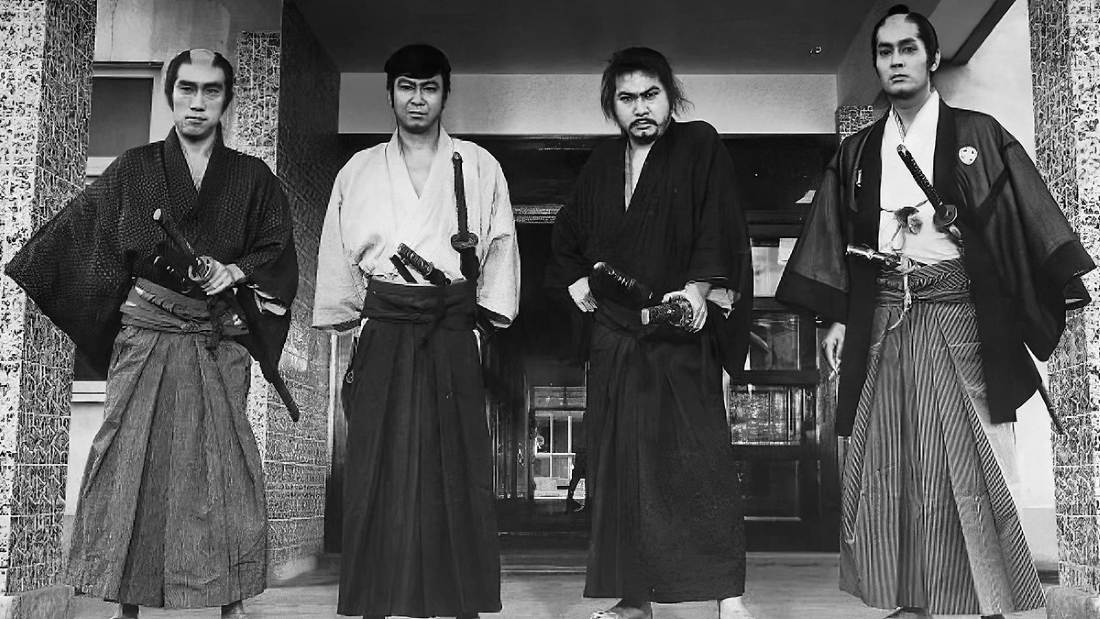
‘Hitokiri,’ which literally translates to ‘manslayer,’ refers to the politically motivated assassins active during the Bakumatsu, the final years of the Tokugawa shogunate. Hideo Gosha’s film centers on Okada Izo, perhaps the least politically conscious of the assassins, portrayed as a fiercely loyal and brutal instrument of his masters. As Japan moved toward imperial restoration amid the collapse of the shogunate, many believed political power would merely shift hands rather than fundamentally transform the rigid social order. The so-called ‘Four Hitokiri of the Bakumatsu’ largely supported imperial restoration and were shaped by the era’s intense anti-foreign sentiment. Yet after the Meiji Restoration, the new government rapidly embraced Western institutions and modernization while dismantling much of the feudal structure, leaving many former assassins and samurai politically obsolete.
In “Hitokiri,” one of the factions profiting from the political unrest is the Tosa Loyalist Party, led by the elusive Takechi Hanpeita (Tatsuya Nakadai), a calculating strategist pursuing his own ambitions beneath the rhetoric of imperial loyalty. Much of Takechi’s fearful reputation rests on his ‘loyal dog’ Okada Izo, a crude and emotionally stunted assassin whose bloodlust and childlike naivety go hand in hand.
Shintaro Katsu delivers a remarkable performance as the boorish Izo. Best known for playing Zatoichi, Katsu gradually transforms the assassin into a tragic figure utterly incapable of comprehending the political machinations unfolding around him. The sheer physicality of his performance is as mesmerizing as Toshiro Mifune’s portrayal of Kikuchiyo in “Seven Samurai.” One striking example comes in the scene where a frenzied Izo runs for miles to join his fellow assassins, desperate not to miss the bloodshed, a moment that captures both Katsu’s feral energy and the character’s pathetic quest for glory.
Author Yukio Mishima appears as Tanaka Shinbei, one of the Four Hitokiri and a pivotal figure in the narrative. The character’s violent fate carries an added grimness in retrospect, as Mishima himself would commit seppuku just a year after the film’s release. Like many of Hideo Gosha’s films from the era, “Hitokiri” tears into the feudal system, exposing the samurai code as a façade masking ruthless power struggles. Bound in a cruciform pose during his execution, Izo finally comes to understand that even in death, hierarchy exists, hoping only that the afterlife might release him from the grip of his masters. In 2004, Takashi Miike directed the divisive yet fascinating “Izo,” an experimental fever dream following its time-hopping titular assassin through an endless cycle of violence and vengeance.
16. Kill! (1968)
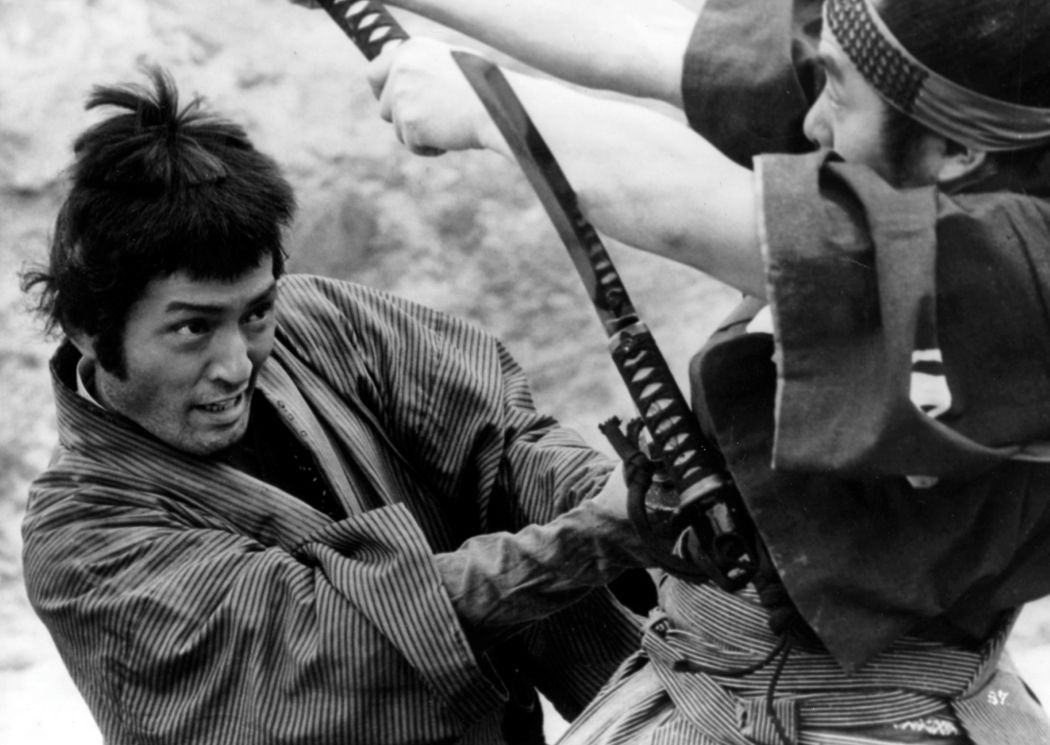
After the somber nihilism of “Samurai Assassin” and “The Sword of Doom,” Kihachi Okamoto pivoted toward the playful, spaghetti-western-inflected “Kill!,” using comedy and genre parody to both mock chanbara conventions and sharpen his critique of the samurai class itself. Based on a story by Shugoro Yamamoto, “Kill!” recalls films like “Sanjuro” and “Three Outlaw Samurai” in its setup, following the wandering ronin Genta (Tatsuya Nakadai) as he helps seven naive young samurai overthrow a corrupt chamberlain.
Okamoto and Akira Murao’s screenplay complicates this familiar premise by pairing Genta with two sharply contrasting figures. One is Hanjiro (Etsushi Takahashi), a luckless aspiring samurai whose confidence depends almost entirely on brute force. The other is Jurota Arao, an honorable swordsman trapped on the opposing side, fighting only to save his wife from being sold into sex work.
“Kill!” stands among the finest samurai films shaped by the influence of spaghetti westerns. Its playful spirit announces itself immediately in the opening scene, as the perpetually hungry Hanjiro and the vagrant Genta stumble into a deserted, windswept town while chasing after a chicken. Tatsuya Nakadai once again proves his remarkable ability to reshape himself from role to role, giving Genta an easygoing charm that conceals sharp intelligence and deep cynicism. Okamoto largely withholds displays of his swordsmanship, allowing only a single moment to reveal the full extent of Genta’s skill.
Most of the time, the former samurai survives through observation, manipulation, and an instinctive understanding of how power operates. To Genta, the entire conflict feels painfully familiar — another cycle in which political opportunists turn yakuza, peasants, and samurai against one another for personal gain. At the same time, like Sanjuro, Genta remains detached and amused by the foolishness around him. On the other hand, Okamoto uses the guileless and overeager Hanjiro to puncture the mythology of masculine heroism. Every attempt by the aspiring samurai to appear brave or dignified collapses into humiliation, turning his dream of warrior glory into a running joke.
Also, Read: 30 Best Tatsuya Nakadai Movie Performances
15. Sword Trilogy (1962-1965)
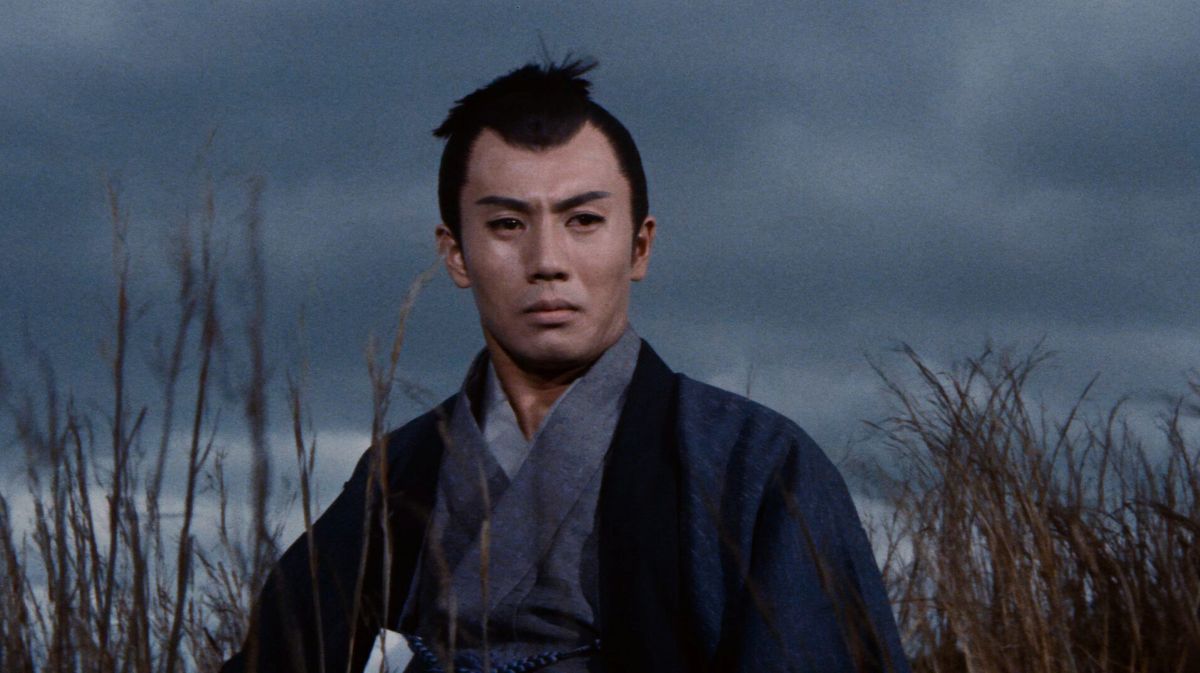
In the same year that Kenji Misumi launched the “Zatoichi” franchise with Shintaro Katsu, he also directed the relatively obscure “Destiny’s Son,” the first entry in Misumi’s unofficial “Sword Trilogy,” later followed by “Ken” and “Ken ki.” Across all three films, exceptional swordsmanship becomes a source of alienation, spiritual isolation, and self-destruction. Each film stars the prolific Raizo Ichikawa, the kabuki actor-turned-matinee idol who tragically died at thirty-seven.
In “Destiny’s Son,” Shingo Takakura is a wandering swordsman with an invincible technique, driven by revenge and the possibility of reclaiming his humanity. In “Ken,” Jiro Kokubu is a rigorous kendo student whose ascetic devotion to discipline gradually destabilizes him. In “Ken ki,” Ichikawa’s Hanpei is a humble florist burdened by the stigma surrounding his birth. After mastering swordsmanship, this gentle caretaker of flowers is transformed into an instrument of violence used to preserve the very hierarchy that rejects him.
“Ken” is neither a jidaigeki nor a conventional samurai film. Set in contemporary Japan, the film nevertheless treats Kokubu’s outlook on kendo as the lingering ghost of bushido. Based on a story by Yukio Mishima, “Ken” reflects the writer’s fascination with death, discipline, and masculine purity. Yet beneath its severe exterior lies a tenderness that Raizo Ichikawa and Kenji Misumi bring poignantly to the surface. Mishima’s short story also carries the anxieties of a postwar Japan drifting away from its martial identity. In fact, Kokubu’s obsessive pursuit of purity transforms his own body into a battleground between modernity and idealized feudal warrior ethics.
“Destiny’s Son” and “Ken ki” are set during the Edo period, with the former unfolding in the late Edo era. Across all three films, Kenji Misumi replaces heroic fulfillment with an overwhelming sense of melancholy. Shingo’s quest for revenge and Hanpei’s longing for acceptance within the social order gradually erode their humanity. Feudal hierarchy and the violence sustaining it are portrayed as psychologically corrosive forces. Whether through the stark black-and-white imagery of “Ken” or the controlled use of color in “Destiny’s Son” and “Ken ki,” Misumi captures his protagonists’ existential turmoil with unusual restraint, especially when compared to the flamboyant stylization of his “Zatoichi” and “Lone Wolf and Cub” films.
14. Sanjuro (1962)
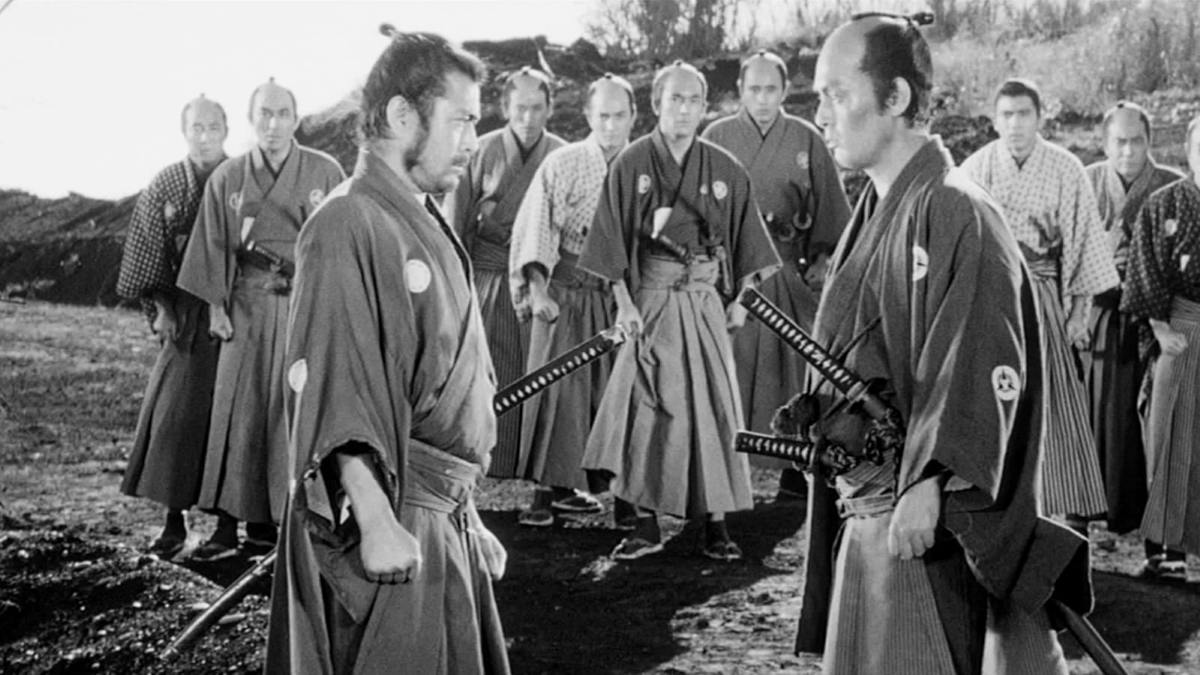
Akira Kurosawa’s “Sanjuro” works as a spiritual sequel to “Yojimbo,” following Toshiro Mifune’s wandering ronin as he drifts into a society consumed by corruption and political decay. Though Kurosawa never specifies an exact year, the film appears to be set during the final years of the Tokugawa shogunate, likely around the Bakumatsu era, when the old feudal order was beginning to collapse under internal corruption and social unrest.
Unlike “Yojimbo,” which focused more broadly on the moral rot of feudal society, “Sanjuro” places its titular ronin in the middle of a tense institutional power struggle between an honest Chamberlain and a corrupt Superintendent. The nine young samurai are portrayed as sincere but naive idealists, easily deceived by appearances, etiquette, and empty rhetoric. Much of the film’s humor comes from watching these bumbling retainers slowly grasp the ambiguous and often unpleasant methods Sanjuro employs to outmaneuver cunning enemies.
Mifune’s ronin also feels more developed here. Once again, the character hides a compassionate and morally upright core beneath his rough exterior, though “Sanjuro” reveals this side with greater clarity and sadness. Kurosawa also balances the political tension with an unexpectedly playful comic rhythm. The Chamberlain’s wife and daughter bring a gentle humor that constantly undercuts the masculine seriousness surrounding the samurai. The wife, in particular, quietly becomes the film’s moral center through her belief that “the best sword is kept in its sheath,” a philosophy that deeply unsettles Sanjuro himself.
In fact, while “Yojimbo” encouraged us to relish the downfall of villains and the cool brutality of its antihero, “Sanjuro” grows increasingly skeptical of violence itself. The film repeatedly suggests that killing leaves behind spiritual ugliness, even when done for the right reasons. Sanjuro wants to protect decent people, yet he also resents being forced into bloodshed on their behalf. Perhaps that is why he remains a wandering ronin unwilling to serve any clan permanently, understanding too well how institutions eventually turn men into instruments of violence for somebody else’s agenda.
13. The Samurai Trilogy (1954-56)
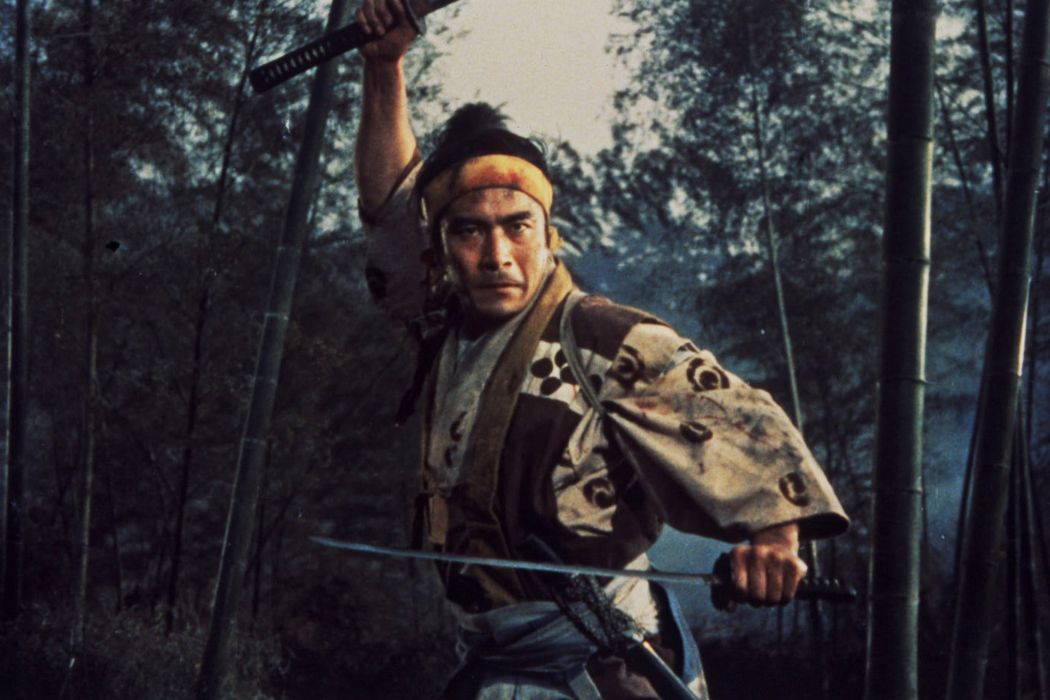
Musashi Miyamoto was a real historical figure, one of Japan’s most famous swordsmen in the 17th century. He is also a philosopher and painter, who in his later years lived as a hermit and wrote “The Book of Five Rings,” which is still considered an insightful text on strategy and conflict resolution. Like Robin Hood or King Arthur, Miyamoto’s saga was constantly retold after his death. But the movie version of Musashi Miyamoto is largely based on Eiji Yoshikawa’s novels, serialized between 1935 and 1939. Hiroshi Inagaki’s “The Samurai Trilogy” elegantly romanticizes Miyamoto’s transition from a wild, undisciplined young man to a steadfast warrior-philosopher.
Similar to what John Ford did to Wyatt Earp (in “My Darling Clementine”), Inagaki did for Musashi, and in the following years, the trilogy became the definitive cinematic version of the popular ronin, thanks to Mifune’s commanding performance. While “Carmen Comes Home” (1951) was Japan’s first color film, it was Japanese films like “Gate of Hell” (1953) and “The Samurai Trilogy” that brilliantly used color in storytelling. The humanist and classical filmmaker Inagaki employs color to heighten the story’s emotional palette.
The first film was largely shot on location, but the next two – “Duel at Ichijoji Temple” and “Duel at Ganryu Island”- were shot more on sound stages. It was also because there were many indoor scenes featuring many characters, as Musashi was gradually getting embroiled in the complex social world. Mifune’s pitch-perfect performance captures Musashi’s evolution from an untamed lout – similar to the energy of his performance in “Seven Samurai” – to a level-headed warrior. Though Inagaki elevates Musashi into a great folk hero, the film reclaims Bushido as a spiritual discipline: a path of personal cultivation rather than an instrument of nationalist or militaristic ideology.
12. After the Rain (1999)
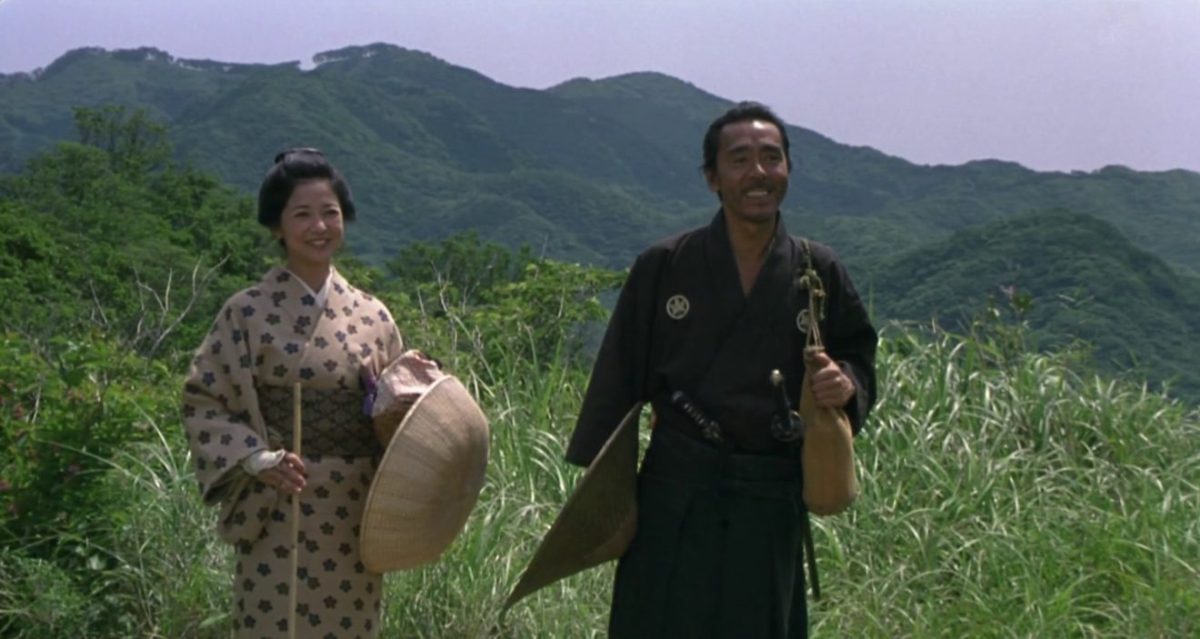
Takashi Koizumi served as an assistant director on several of Akira Kurosawa’s later films, including “Ran” and “Dreams.” The then 55-year-old Koizumi made his feature-length directorial debut with “After the Rain,” written by Kurosawa based on Shugoro Yamamoto’s short story. The film revolves around the wandering ronin Ihei Misawa (Akira Terao) and his wife, stranded at an inn as relentless rain floods the nearby river. Within minutes, as weather and landscape quietly shape the rhythms of this humane drama, it becomes clear that such emotional clarity could only come from a genius like Kurosawa.
Set during the Tokugawa era (the exact year isn’t mentioned), the film turns the stranded people into a metaphor for a society trapped within rigid hierarchies. The flooded river suspends everyone in place, temporarily dissolving the distances between classes and temperaments. In this state of social paralysis, Ihei’s kindness destabilizes the atmosphere of suspicion and resentment. Samurai in cinema, including many of Kurosawa’s own renditions, often carry masculine roughness, pride, or warrior charisma. But Ihei is different as he smiles easily and empathizes without calculation. The character almost feels like Kurosawa reflecting late in life on the archetype he himself helped shape.
While ordinary people naturally gravitate toward Ihei’s warmth, the samurai who uphold rigid decorum are quietly disturbed by it. Even the clan chief, Lord Nagai, who admires Ihei enough to offer him the position of fencing master, seems unable to reconcile such extraordinary martial skill with such visible gentleness. Ihei’s swordsmanship constantly threatens to pull him back into the feudal structures he instinctively resists. The film is less interested in celebrating violence than in imagining what a decent man might look like within a violent social order.
It is difficult not to see echoes of Ihei in the wave of vulnerable, melancholic samurai who followed in films like “Twilight Samurai,” “When the Last Sword is Drawn,” and “Hana.” These films moved away from the mythic warrior image toward ordinary men struggling with poverty, domestic responsibilities, aging, grief, and moral compromise. In many ways, “After the Rain” feels like a bridge between classical samurai cinema and the deeply humanist samurai dramas of the 2000s.
The film also portrays its female characters with a tenderness and agency rarely afforded to women in samurai cinema. Ihei’s wife understands his moral nature more clearly than the samurai who wish to recruit him. Their marriage carries an unusual sense of equality and emotional intimacy for the genre. Apart from Kurosawa’s screenplay, the film features several other Kurosawa connections, including Tatsuya Nakadai in a cameo and Toshiro Mifune’s son, Shiro Mifune, brilliantly playing the temperamental Lord Nagai.
11. The 47 Ronin (1941)
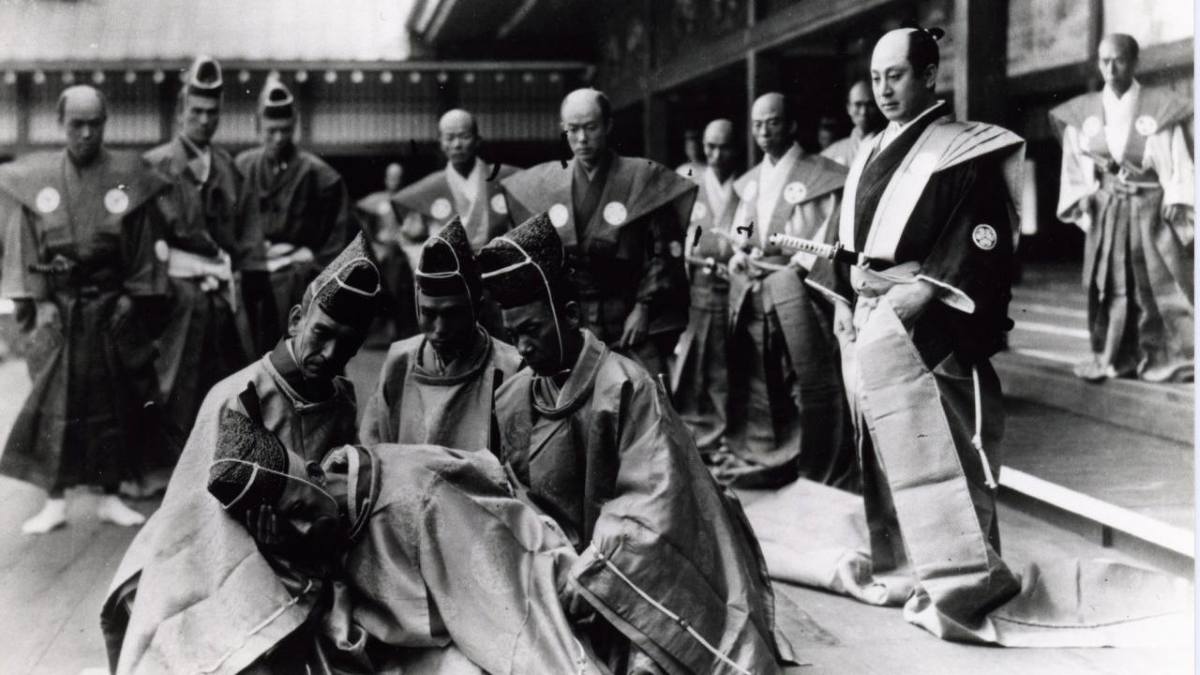
The tale of the Forty-seven Ronin occupies a near-mythic place in Japanese cultural memory. It is tied to ideas of loyalty, sacrifice, honor, and national identity, much like the legends of King Arthur, William Wallace, and Joan of Arc in their respective cultures. The story has been endlessly retold through kabuki, bunraku, theater, films, and television dramas. The Forty-seven Ronin incident took place between 1701 and 1703 during the Edo period. After Lord Asano was forced to commit seppuku for attacking court official Kira Yoshinaka, his samurai became ronin. Two years later, forty-seven of them avenged Asano by killing Kira before surrendering and committing seppuku themselves, embodying the ideals of Bushido.
The “47 Ronin” might look far removed from the social dramas Kenji Mizoguchi made during the era, such as “Osaka Elegy,” “Sisters of the Gion,” and “The Story of the Last Chrysanthemums.” The film was made during wartime Japan, when the government encouraged works that promoted loyalty, sacrifice, and national duty as the country prepared for war against the United States. Mizoguchi, however, delivered a deliberately slow and mournful film that barely explores Lord Kira’s antagonism toward Lord Asano. In fact, he keeps many of the tale’s most dramatic moments off-screen, including the attack on Kira’s residence.
One Letterboxd review states, “…it’s almost a four-hour film of people kneeling and talking…” That’s true. But, though its themes of sacrifice and loyalty are shaped by wartime propaganda, Mizoguchi’s version explores the complexities of 18th-century Japanese social order. It is fundamentally about the samurai class navigating a society where protocol and decorum are inseparable from honor, status, and self-worth.
Rage, grief, love, loyalty, and vengeance must all be disciplined and expressed within the rigid codes prescribed by feudal culture. Honestly, despite the film’s gorgeous visual compositions, I struggled to keep my eyes open the first time I watched it. But after watching various samurai films and several other adaptations of the same story, Mizoguchi’s treatment became more understandable and fascinating to an extent. The film was released in two parts, and both were commercial failures at the Japanese box office.
10. Samurai Assassin (1965)
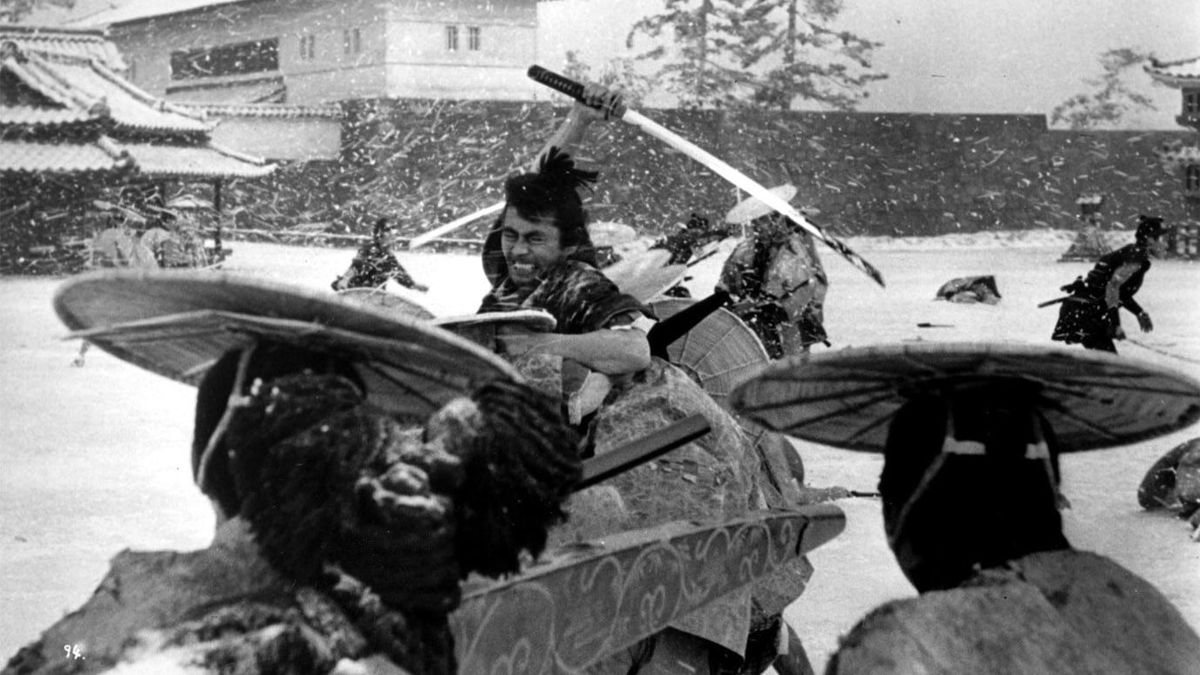
Kihachi Okamoto’s bleak samurai drama is based on Jiromasa Gunji’s work, a fictionalized account of the assassination of the top shogunate official, Ii Naosuke, on March 24, 1860—also known as the Sakuradamon Incident. Naosuke had effectively become the de facto ruler of Japan after installing the 12-year-old Tokugawa Iemochi as the 14th shogun in 1858. He negotiated with foreign envoys and opened Japanese ports to American merchants, which generated widespread resentment. Naosuke also brutally suppressed opposition, executing rival clan leaders and their samurai retainers in what came to be known as the Ansei Purge.
Naosuke’s assassination was the culmination of this mounting hostility, much of it led by the Mito clan. Okamoto’s dramatized version features Toshiro Mifune as Niiro, a disgruntled ronin whose ambition to rise through the ranks of the samurai is thwarted by his social status. Although Niiro’s father belongs to the ruling class, he was born out of wedlock, and his parentage is kept secret from him. He is a skilled swordsman but is denied recognition as a full-fledged samurai. Niiro falls in love with a princess but cannot marry her because his lineage is constantly called into question.
Niiro’s fixation on attaining glory brings him into contact with members of the Mito clan, who promise a shift in power following Naosuke’s assassination. However, early in “Samurai Assassin,” the clan’s leader, Hoshino (Yunosuke Ito), suspects that there is a mole within their group passing information to Naosuke. Niiro becomes one of the two suspected informants. Okamoto and screenwriter Shinobu Hashimoto use this atmosphere of paranoia and desperation to chart Niiro’s gradual descent into madness.
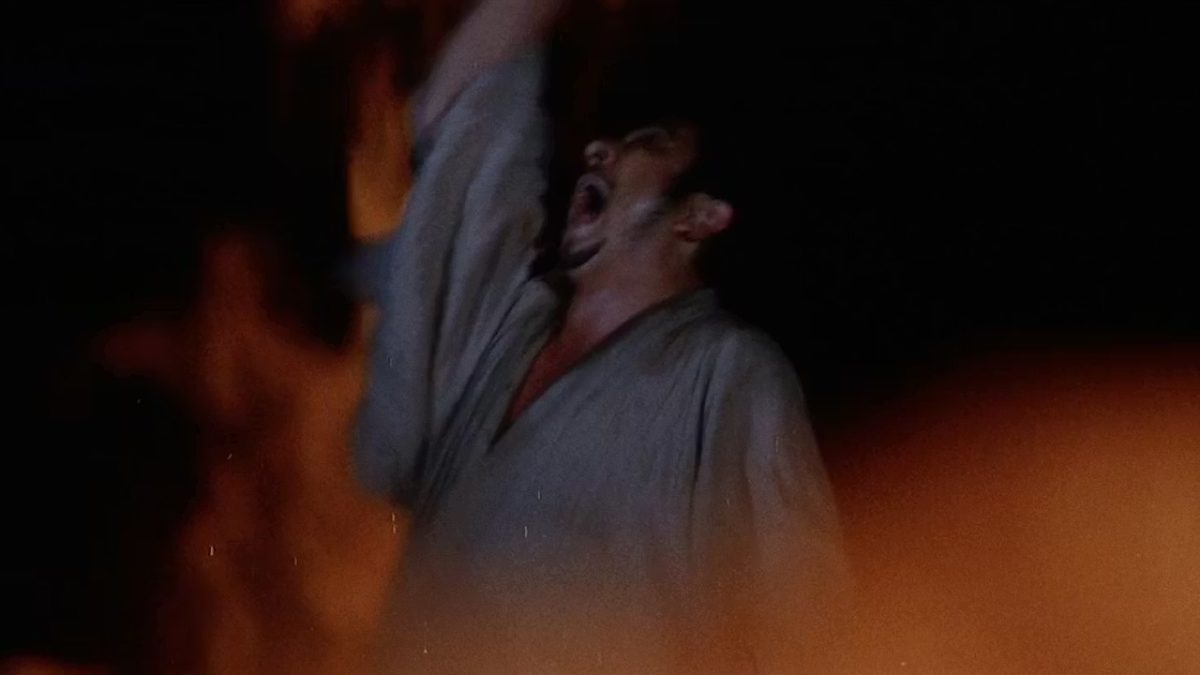
Naosuke’s assassination set in motion a series of conflicts that contributed to the end of the Edo period, which had lasted for over 250 years, and ultimately led to the decline of the samurai class. In this context, “Samurai Assassin” becomes an intriguing study of the twilight years of the samurai. The dispassionate voiceover in the film, which suggests that historical accounts often sanitize uncomfortable truths, recalls “Harakiri.” Mifune powerfully conveys Niiro’s tragic self-destruction in the second half. The frantic swordfight finale in the snow-covered compound stands out as one of the most distressing sequences in samurai cinema, culminating in the unforgettable image of a deranged Niiro. Screenwriter Hashimoto and director Okamoto would later collaborate again on an even more nihilistic work, which went on to become one of the genre’s masterpieces.
9. Yoji Yamada’s Samurai Trilogy (2002-2006)
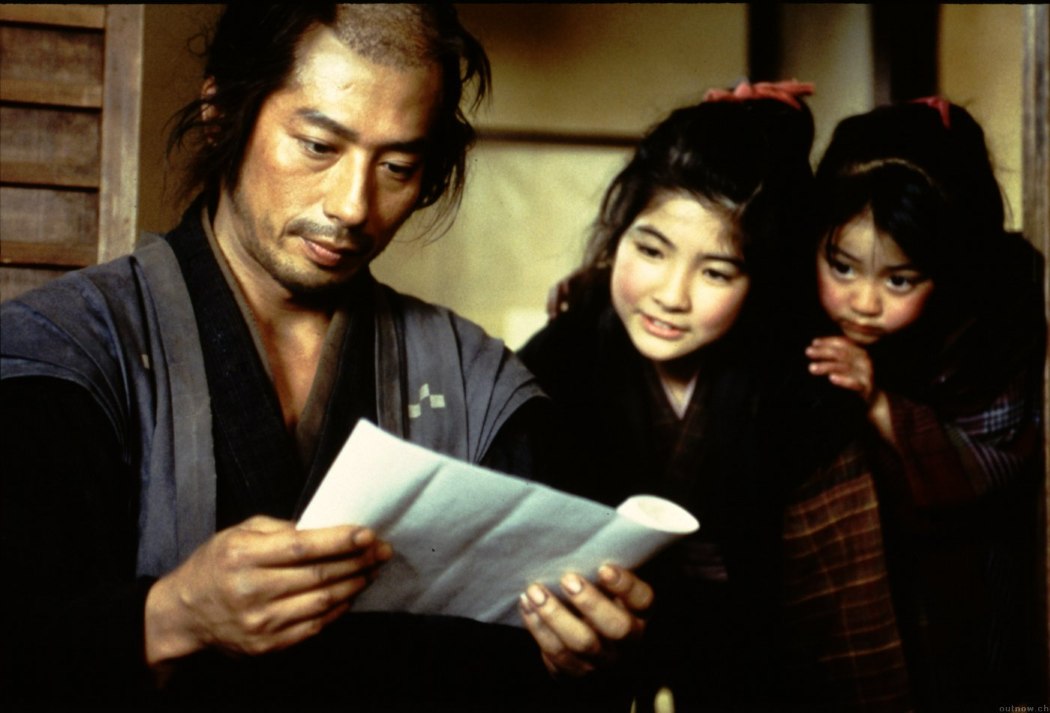
Yoji Yamada’s portrayal of samurai is utterly different from the morally resistant warriors of Masaki Kobayashi, the pragmatic tacticians of Akira Kurosawa, the frighteningly nihilistic swordsmen of Kihachi Okamoto, and the brutal survivors of Hideo Gosha. His samurai trilogy — “Twilight Samurai,” “The Hidden Blade,” and “Love and Honor” — is set during the final years of the Edo period, where samurai serve as low-ranking bureaucratic functionaries trapped within a decaying feudal order soon to be displaced by the modernizing Meiji state.
The three protagonists of Yoji Yamada’s samurai trilogy are 30-koku samurai — low-ranking retainers surviving on a modest annual rice stipend (one koku being roughly equivalent to 150 kilograms of rice). Marginalized and disillusioned by the rigid feudal hierarchy, these men struggle to preserve dignity within a decaying social order. My favorite of the three is “The Twilight Samurai,” where the superb Hiroyuki Sanada plays Seibei Iguchi, a widowed samurai supporting his two young daughters and an aging mother. Apart from working as a low-level bureaucrat, Seibei supplements his income by farming and crafting insect cages. “Twilight Samurai” also introduces a rare female perspective into samurai cinema.
The film unfolds partly through the memories of Seibei’s daughter, Ito, lending the narrative a tender domestic intimacy. Seibei encourages his daughters to pursue “book learning” and interacts with those around him without constantly performing the rigid etiquette demanded by feudal hierarchy. The film also centers on Seibei’s growing relationship with his childhood friend Tomoe (Rie Miyazawa), who has left her physically abusive samurai husband.
All three films follow a similar emotional trajectory, where love becomes the low-ranking samurai’s only refuge amidst the cruelty and instability of the feudal order. In “The Hidden Blade,” Katagiri (Masatoshi Nagase) and his fellow samurai are trained to use newly imported firearms and artillery as Japan approaches modernization. Yet when a rebellious samurai must be eliminated, Katagiri’s traditional swordsmanship is ultimately called upon, even though the fugitive is his close friend. During this turbulent period of transition, Katagiri finds emotional stability in his love for Kie (Takako Matsu), a former servant whom he eventually marries after renouncing his samurai status.
In “Love and Honor,” Shinnojo (Takuya Kimura), a daimyo’s food taster, loses his eyesight after consuming poisonous shellfish. Within the feudal system, provisions exist for people with disabilities, though such assistance comes with humiliating concessions. Exploiting Shinnojo’s vulnerability, a powerful retainer manipulates his wife Kayo (Rei Dan) into sexual servitude. Devastated upon learning the truth, Shinnojo challenges the man to a duel. What ultimately survives the humiliation, violence, and rigid feudal codes is the love between Shinnojo and Kayo.
It is true that the lives of women in Yamada’s “Samurai Trilogy” often revolve around men. Yet the films are observing an inhumane feudal system rather than endorsing its gender hierarchy. The women portrayed are not merely framed as victims, even when they occupy positions more vulnerable than low-ranking samurai and other socially marginalized men. Yamada presents them as emotionally complex individuals who assert whatever agency is available to them within the rigid constraints of feudal society.
The three films are far removed from the epic humanism of “Seven Samurai” and the radical revisionism of “Demons” and “The Killing.” Yamada quietly merges intimate human struggles with the historical decline of the samurai class through a deeply melancholic lens.
Read More: 55 Best Japanese Movies of the 21st Century
8. Humanity and Paper Balloons (1937)
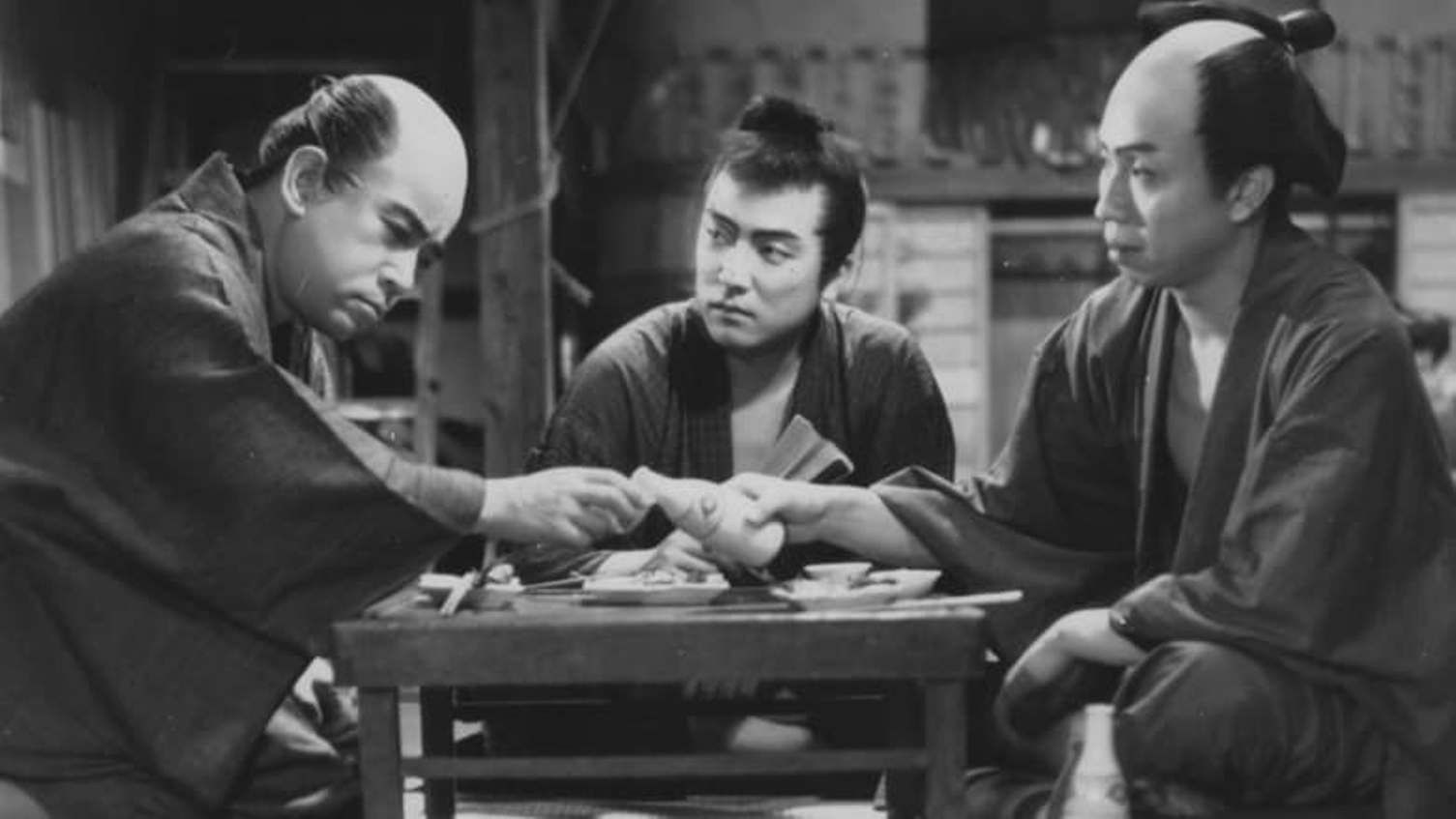
Sadao Yamanaka began his filmmaking career at the age of 20, working as a writer and assistant director. Between 1932 and 1937, he made twenty-two feature films, many of which were lost during the war. Drafted into the army, Yamanaka died in a hospital in Manchuria in 1938 at the age of 28. “Humanity and Paper Balloons” was his last film. In fact, the film’s bleak tone reportedly disturbed the censors so much that Yamanaka’s exemption from military service was revoked, and he was sent to the army on the day the film premiered.
Set in a nagaya slum during the late Edo period, “Humanity and Paper Balloons” is a jidaigeki that focuses on the underclass, preceding classics such as “The Lower Depths,” “Sun in the Last Days of the Shogunate,” and the “Zatoichi” films. The film’s central characters are the penniless ronin Matajuro Unno (Chojuro Kawarasaki) and the wily hairdresser Shinza (Kan’emon Nakamura). Unno hopes that his dead father’s friendship with the wealthy samurai official Mori will land him a job. He and his wife survive by making and selling paper balloons. Meanwhile, Shinza’s attempts to run a gambling den put him in trouble with the local gangsters.
To make the gangster leader Yatagoro lose face, Shinza kidnaps the daughter of a wealthy pawnbroker who employs Yatagoro. Though temperamentally opposite, Shinza and Unno are both crushed by the same rigid hierarchy. Unno’s quiet despair and humiliation mirror Shinza’s anger and rebellion against the feudal order. “Humanity and Paper Balloons” also contains several minor underclass characters whose casual conversations and daily routines provide texture to the narrative and deepen the sense of communal hardship.
The film opens with the funeral of another ronin, and from there, Yamanaka steadily dismantles samurai romanticism. Unno drinks heavily and can barely defend himself. Mori is merely a puffed-up samurai bureaucrat who depends on gangsters to maintain his authority. Yamanaka’s critique of feudal society was also directed at the increasingly militarized Japanese society of the 1930s. The film’s stripped-down realism and anti-romantic view of the samurai feel startlingly modern even today.
The title’s “Paper Balloons” refers to the fragile existence of the underclass, including the ronin, who are left exposed to poverty, humiliation, violence, and rigid class hierarchy. Like paper balloons, these people are briefly inflated by hope or dignity before collapsing under social pressure. Overall, it is a heartbreaking and visually powerful drama that anticipates Kobayashi, Kurosawa, and Gosha’s later critiques of the social and political conditions underlying the age of the samurai.
7. Demons (1971)
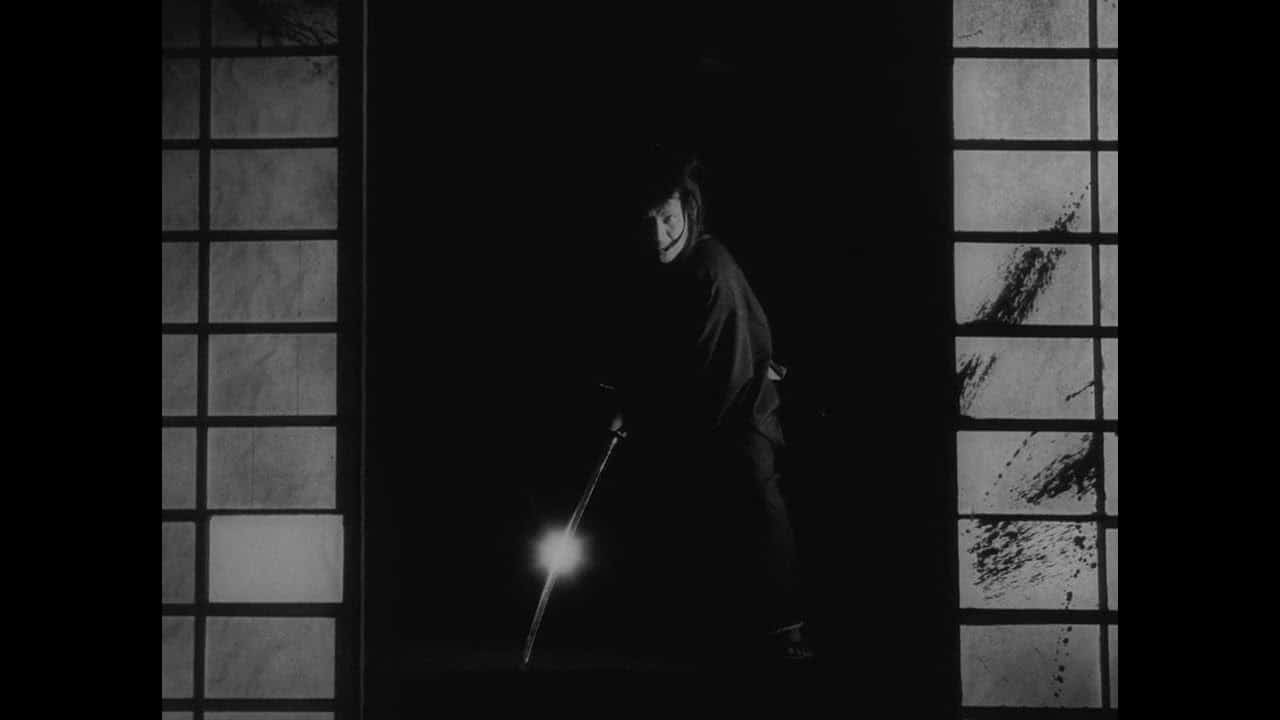
Toshio Matsumoto was a video artist and film critic whose debut feature, “Funeral Parade of Roses,” now regarded as a queer masterpiece, was loosely inspired by Sophocles’ “Oedipus Rex.” Matsumoto’s bleak, paranoia-tinged sophomore feature, “Demons” (“Shura”), draws from the kabuki traditions associated with Tsuruya Nanboku IV, the playwright behind the famous Japanese ghost story “Yotsuya Kaidan.” While the film incorporates the exaggerated emotionalism of kabuki, it also employs distinctly avant-garde techniques that intensify its atmosphere of hopelessness and madness. The wandering ronin Gengobei (Katsuo Nakamura) is as dark and morally corroded a samurai figure as Tatsuya Nakadai’s Ryunosuke Tsukue in “The Sword of Doom.”
The tale of the “47 Ronin” stands as one of the defining expressions of the samurai code, yet Matsumoto positions Gengobei almost like a discarded “48th ronin.” Having disgraced himself, he desperately seeks 100 ryo in the hope of reclaiming some sense of honor and contributing to the clan’s vendetta. Gengobei’s loyal servant manages to gather the money for his master, only to lose it to the scheming couple Sangoro and Koman. The betrayal pushes Gengobei toward a spiral of insanity and revenge from which even a crying toddler is not spared. Samurai cinema has often exposed the hypocrisies of the feudal system that manipulates the samurai code, while still locating nobility and righteous anger within acts of rebellion.
But “Demons” dismantles the very ideals keeping the samurai afloat, leaving behind only a sword in search of victims. Unlike Ryunosuke in “The Sword of Doom,” however, Gengobei does not begin as a soulless force of destruction. He is terrifying precisely because he remains recognizably human — a man gradually destroyed by the absurdities of feudal structures and his own moral corruption. Matsumoto further destabilizes Gengobei’s world through scenes that first unfold in his imagination before materializing in reality. Ideals of honor and justice may shape a samurai’s life, yet it is also inseparable from violence. “Demons” ultimately becomes a portrait of what happens when a man is trapped within that endless cycle of meaningless bloodshed.
Read More: 20 Best Japanese Horror Films
6. Yojimbo (1961)
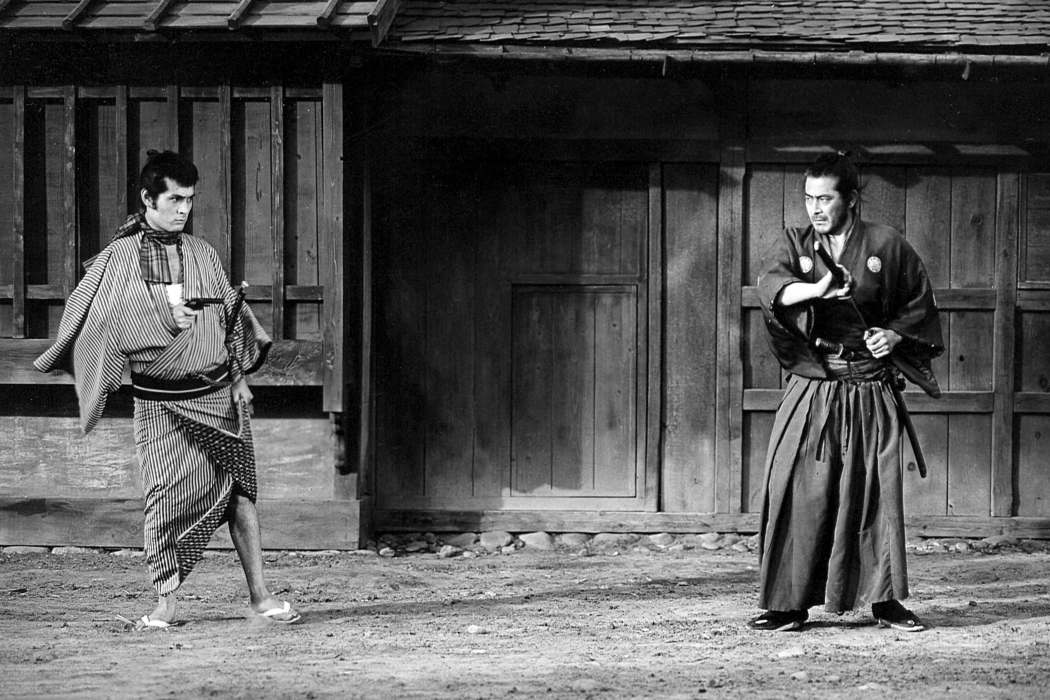
Akira Kurosawa’s “Yojimbo” made a scruffy samurai the coolest movie character, leading to the creation of its American counterpoint in the form of Clint Eastwood’s sardonic cowboy. Just like the seven samurai who remained outside the class and system, Toshiro Mifune’s smart ronin swiftly navigates his way around a corrupt, lawless town as a man with his own sense of justice. Kurosawa never gives an exact year or era when “Yojimbo” is set, which adds a timelessness to the story. But the presence of a modern Western-style revolver suggests it takes place in the 19th century, likely during the Bakumatsu era (1853-1867).
Mifune’s nameless ronin throws a stick up in the air to decide the path to take. Fate leads him to an embattled town, where two rival criminal gangs’ constant fighting has made the townspeople leave or hide in their dwellings. The ronin – who jokingly calls himself “Sanjuro” – pretends to work for both gangs while secretly pushing them toward mutual destruction. Though he initially seems motivated by money, there’s a strong moral core that, like the bitter tavern keeper, we slowly come to understand. Mifune’s ronin almost feels like a ghost wandering through the ruinous final years of feudal Japan, exposing the rot within the outdated social system.
The modernity – represented by Tatsuya Nakadai’s pistol-sporting flamboyant villain – also feels reckless and doubles down on greed. Unlike “Throne of Blood” or “The Hidden Fortress,” where the samurai setting primarily frames a Shakespearean tragedy or an adventure narrative, “Yojimbo” directly engages with the decay of the samurai class itself. Kurosawa strips down the noble facade attached to the samurai and shows the ronin at its center as an opportunistic and distrustful individual with the ability to survive the rotten system (without entirely losing his morality). The dusty streets, stray dogs, gambling dens, and merchant-controlled factions portray a feudal order in its diseased final stages, where honor has become transactional and violence merely another form of business.
“Yojimbo” is also one of the greatest genre pictures from the master. Mifune’s charismatic, witty performance goes perfectly with Kurosawa’s supreme command over the craft. The abrupt eruptions of violence, the wide framing of the empty streets, and the dark humor all contribute to a film that feels both classical and startlingly modern. While “Yojimbo” ushered in the wave of Spaghetti Westerns, Kurosawa’s film itself had Western influences, particularly the crime fiction of Dashiell Hammett.
5. Bloody Spear at Mount Fuji (1955)
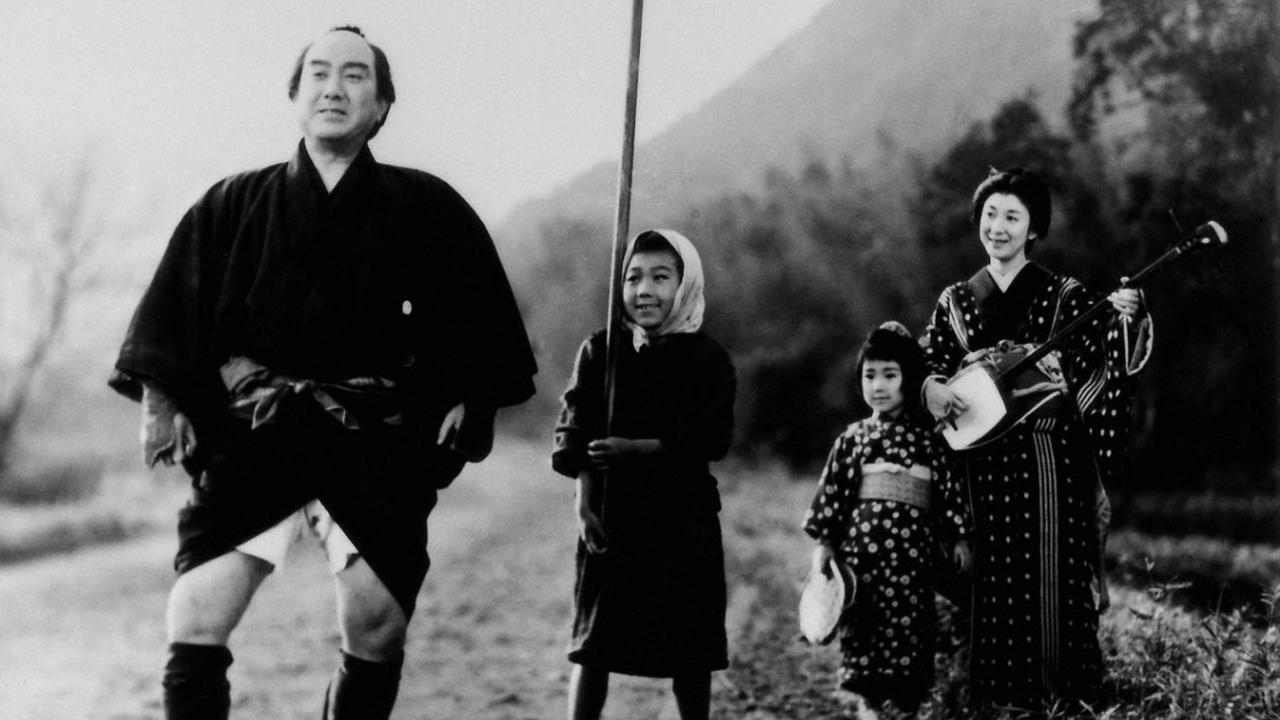
Tomu Uchida began his career during the silent era, first working as an actor before serving as an assistant director to Kenji Mizoguchi and Minoru Murata. In the late 1920s, he started directing comedies before shifting toward social realism in the 1930s, focusing on marginalized people and working-class life. Uchida traveled to Manchuria during the war and stayed there, joining the Manchuria Film Association, where he helped train Chinese filmmakers.
After spending nearly a decade there, he returned to Japan and made the remarkable humanist drama “Bloody Spear at Mount Fuji.” He continued directing acclaimed genre films into the 1970s, including the riveting crime drama “A Fugitive from the Past.” Yet it is the deceptively simple “Bloody Spear at Mount Fuji” that stands as his finest achievement, offering a deeply humane indictment of the feudal order from the perspective of those trapped beneath it.
The “bloody spear” in the title might make you expect relentless action, but until its explosive and heartbreaking final movement, “Bloody Spear at Mount Fuji” unfolds more like a gentle road movie. Uchida follows a young samurai journeying to Edo alongside his trusted spear carrier Gonpachi (Chiezo Kataoka) and the bumbling servant Genta (Daisuke Kato). Along the way, they encounter a drifting collection of fellow travelers: Jiro, an orphaned boy who comes to admire Gonpachi; a traveling mother and daughter who perform music for a living; an investigator; a suspicious man carrying a large sum of money; and a desperate father preparing to sell his daughter into sex work.
Uchida balances comedy and drama with remarkable ease, especially in the warm, deeply affecting scenes between Jiro and Gonpachi. The young samurai is also drawn with unexpected complexity. His swings between drunken volatility and genuine kindness suggest a man crushed by the performative demands of samurai masculinity, with alcohol becoming a temporary escape from the burden of maintaining that ideal.
At one point, the travelers’ journey comes to a halt so noblemen can leisurely conduct a tea ceremony, and Uchida quietly mocks the pomposity and self-importance of the ruling class. For much of the film, the young samurai and Gonpachi remain observers to the ugliness and decency unfolding around them. Uchida repeatedly shows how the oppressed classes are capable of extraordinary generosity and sacrifice, virtues often absent among the warrior elite who claim moral superiority. Even the young samurai’s attempt to save the impoverished girl from being sold only exposes the hollowness beneath the feudal rhetoric of honor and status.
Then comes the devastating final movement. A group of samurai becomes enraged at the sight of a servant sharing a drink with his master, and the resulting bloodshed carries none of the exhilaration associated with chanbara violence. Uchida withholds his sharpest critique of the samurai class until the very end, when the lord insists that Gonpachi cannot possibly be guilty of the crime because a mere servant could never have killed a samurai. Gonpachi, who embodies courage, restraint, and discipline more fully than the samurai themselves, is ultimately erased as a subject because the feudal hierarchy refuses to acknowledge the possibility of such a man existing outside its rigid order.
4. Samurai Rebellion (1967)
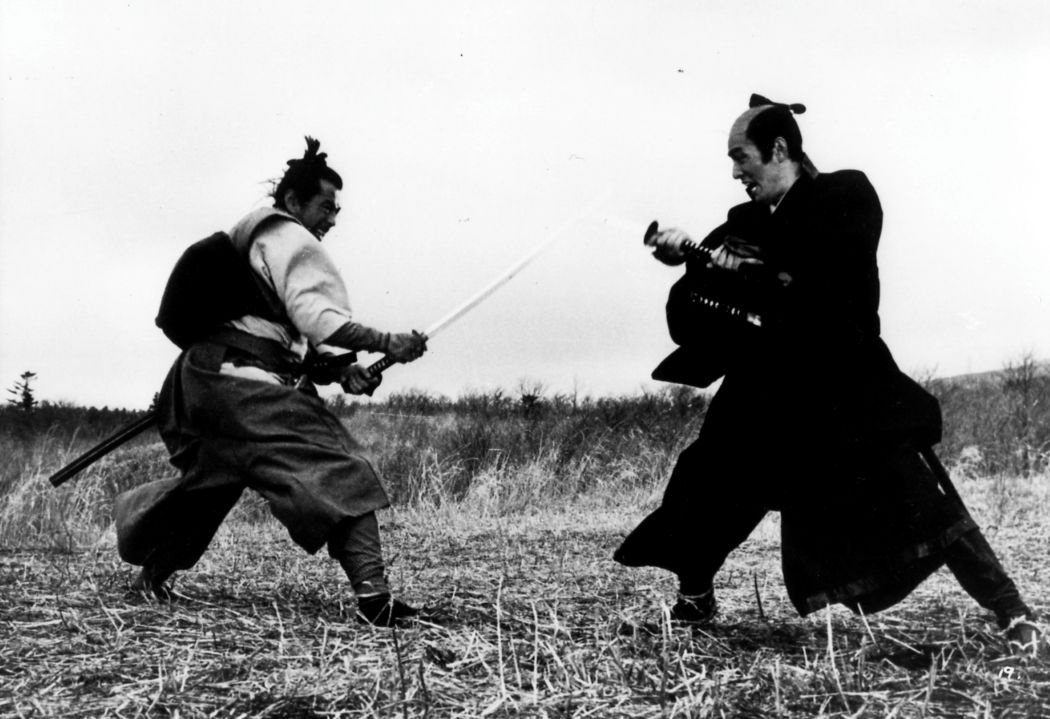
“Samurai Rebellion” is set during the most stable phase of the Edo Period, where hierarchies are iron-clad and totalitarian excesses are treated as the norm. Based on Yashiko Takuguchi’s story, the film is set in 1727, where the samurai have become little more than bureaucrats sustaining a feudal system. While Toshiro Mifune’s Isaburo Sasahara is known as the clan’s finest swordsman, his skills are reduced to testing his lord’s sword by slashing straw dummies. The central conflict begins when the daimyo (feudal lord) orders Sasahara’s eldest son, Yogoro, to marry his mistress, Ichi (Yoko Tsukasa).
Samurai films rarely feature substantial female characters, and when they do, they are often relegated to victims or love interests. In this regard, Ichi stands out as one of the rare strong female characters in samurai cinema. The 18-year-old is taken from her household to serve the 50-year-old lord. Resentful of her fate, Ichi performs the duty expected of her: giving him a son. But when she sees the lord grooming another teenager to become his mistress, she lashes out at him.
Since the reason behind Ichi’s ‘disgraced’ status is revealed only later, Sasahara is initially skeptical of her. Over time, however, Ichi becomes a loving wife to Yogoro. Sasahara, who himself never married for love, finds hope and strength in their relationship. But two years into the marriage, the lord demands that Ichi return to the castle after his first son dies in an accident.
Though Yoko Tsukasa’s Ichi is shaped by the demure image of the ideal Japanese woman, she refuses to remain a victim and becomes an essential part of Sasahara’s rebellion against his lord’s men. Unlike Harakiri’s Hanshiro Tsugumo, Sasahara is not an impoverished ronin, yet the film similarly dissects the deceitfulness of history, exposing how authoritative powers suppress dissent while rewarding conformity. The gatekeepers of such a society (with Tatsuya Nakadai literally playing a gatekeeper) are forced to carry out the will of the powerful, despite retaining a shred of humanity. Ultimately, it is Masaki Kobayashi’s marvelously detailed symmetrical compositions and Mifune’s restrained performance that make “Samurai Rebellion” one of the masterpieces of the genre.
3. The Sword of Doom (1966)
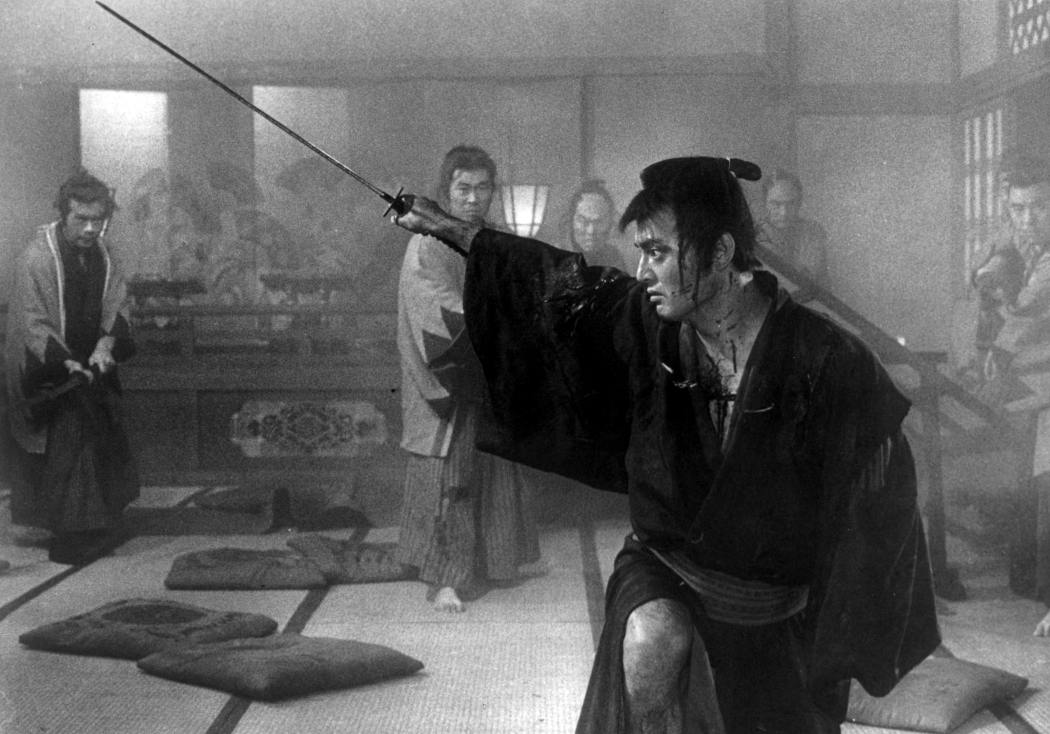
Kihachi Okamoto’s darkest samurai film, “The Sword of Doom,” is based on Kaizan Nakazato’s serialized novel “Daibosatsu Toge,” which began publication in 1913 and continued for decades. Tomu Uchida adapted the novel into a trilogy of films (“The Sword of the Moonlight” trilogy) between 1957 and 1959. There was also the “Satan’s Sword” trilogy, directed by Kenji Misumi and Kazuo Mori, released between 1960 and 1961. But Okamoto’s take on the nihilistic anti-hero Ryunosuke Tsukue easily makes him one of the most unforgettable and disturbing swordsmen in samurai cinema.
If there’s one minor issue with the film, it’s that “The Sword of Doom” seems made for an audience already familiar with the novel’s characters. While the lack of a conventionally cohesive narrative effectively explores Ryunosuke’s fractured psychology, other peripheral characters—like the merchant and his foster daughter Omitsu—drift in and out of the narrative with minimal development. Yet despite this slight unevenness, screenwriter Shinobu Hashimoto brings a sense of circularity, as Ryunosuke’s brutal act at Daibosatsu Pass in the opening culminates in his total descent into madness at the end.
Samurai films have often featured flawed and misunderstood protagonists, but Tatsuya Nakadai’s Ryunosuke is simply one of the coldest villains. Within the first thirty minutes, he brutally kills two men and sexually exploits a woman—acts he commits without hesitation or remorse. “The Sword of Doom” unfolds between 1860 and 1863, when the Tokugawa shogunate and the samurai class were nearing their end. But unlike Okamoto’s earlier film, “Samurai Assassin”—set in the same era—“The Sword of Doom” poses an existential question: whether a man can become so consumed by violence that he no longer wields the sword—the sword, in effect, wields him.
Toshirō Mifune plays Shimada, a minor yet highly impactful character, whose words—“evil mind, evil sword”—suggest that Ryunosuke has become an instrument of his own inner void, where the distinction between man and weapon no longer holds. Within that wider resonance, there is also a critique of the samurai class: the mastery of technique endures, while its moral foundation quietly drains away. Though “The Sword of Doom” plays largely as a character study, it features three top-notch sword fights that stand alongside the most striking action sequences of its era.
Okamoto had planned to adapt the novel into a trilogy, but the film’s limited commercial success meant the sequels were never made. Though the film ends on a wildly abrupt note—Ryunosuke slashing at everyone and everything in sight – it leaves behind a perfectly sustained mood of bleakness. Ultimately, the film greatly benefits from Nakadai’s towering performance, especially those soulless, vacant eyes of Ryunosuke that feel like an abyss.
1. Harakiri (1962)
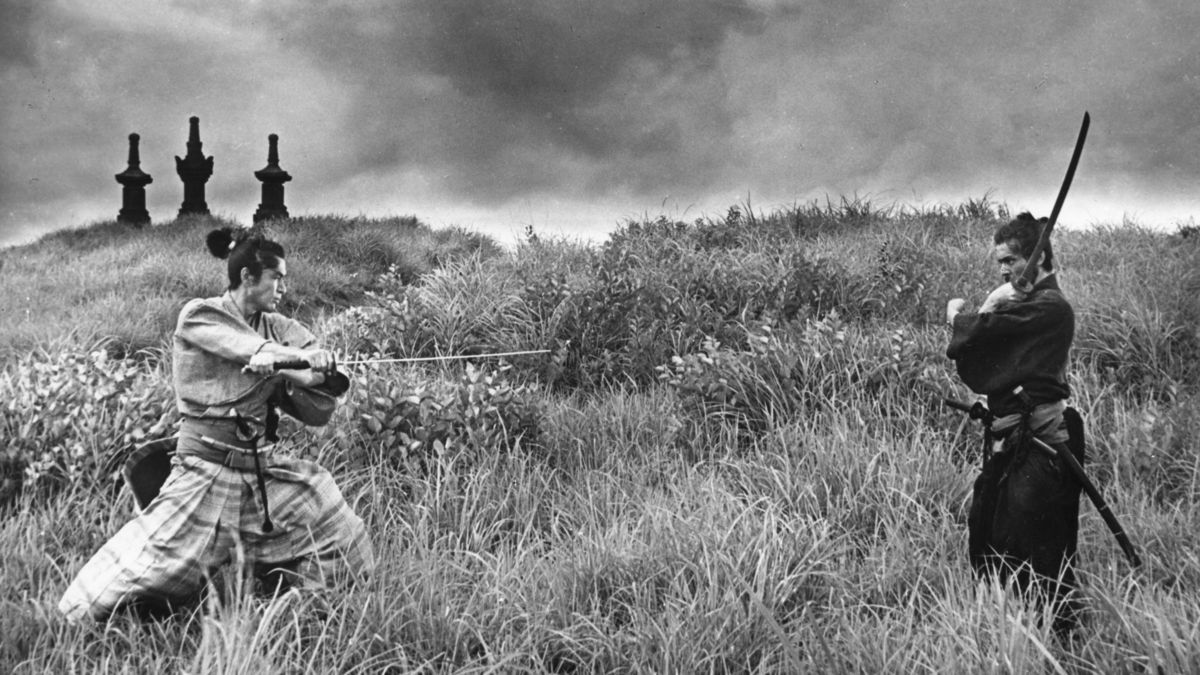
The samurai serve as instruments of a larger social order, upholding a hierarchy designed to protect and be loyal to those in power and regulate the lives of everyone beneath them. There’s a quiet paradox in that life: it speaks of honor and discipline, yet closes ranks the moment those ideals are used to question the powerful. And this paradox is brilliantly explored in Hanshiro Tsugumo’s crusade in Masaki Kobayashi’s masterpiece, “Harakiri”.
Kobayashi’s films consistently question systems of authority and obedience, with militarism forming a crucial part of that critique. A humanist shaped by the devastation of wartime and postwar Japan, he explored these concerns most powerfully in “The Human Condition” trilogy. With “Harakiri,” his first historical drama, he turns to an earlier moment to examine the foundations of that same mindset, exposing a world built on unquestioned loyalty and rigid hierarchy through the experience of a starving ronin.
“Harakiri” is set in the early Edo period, between 1619 and 1630. The Battle of Sekigahara made the unification of Japan under the Tokugawa Shogunate possible, which roughly brought two hundred and fifty years of stability to Japan. However, this transition to a centralized peace systematically eroded the autonomy of the daimyō – territorial lords – resulting in the mass displacement of thousands of samurai. Trapped between a strict moral code that forbade manual labor and a society that no longer required their swords, these masterless warriors found themselves drifting into destitution.
Chijiwa Motome is one such impoverished ronin living with an ailing wife and a child. Motome’s decision to visit the Iyi clan stemmed from a tragic precedent. He had heard of other starving ronin who made requests to commit ritual suicide (seppuku) at the gates of great houses. In those cases, the clans, moved by the desperate circumstances of a fellow warrior, would offer a small gift of food or money as an act of charity, allowing the man to leave with his life and dignity intact. Unfortunately for Motome, the Iyi clan decides to make an example of him. This leads to the arrival of another destitute yet resolute ronin, Hanshiro Tsugumo, who is sincere about committing seppuku but has a few requests.
“Harakiri” deconstructs the myth of the samurai and shows how bushido becomes a hollow facade when it serves only the rulers. Kobayashi opens the film in the Iyi clan’s hall, observing the samurai armor with immense reverence. But through the plight of Motome and Tsugumo, he systematically strips away that reverence. When Tsugumo finally smashes the empty armor to the floor, he indicts the nature of institutions, whose ideals are as empty as the armor. “Harakiri” also ends on a chilling note, with ‘peace’ being maintained and the blood erased. The film’s endless rewatch value is only further strengthened by Tatsuya Nakadai’s electrifying performance—the eyes of a desperate, disheartened, and enraged Tsugumo will haunt us forever.
Also, Read: A Man of Many Faces: Remembering the Cinema of Tatsuya Nakadai
1. Seven Samurai (1954)
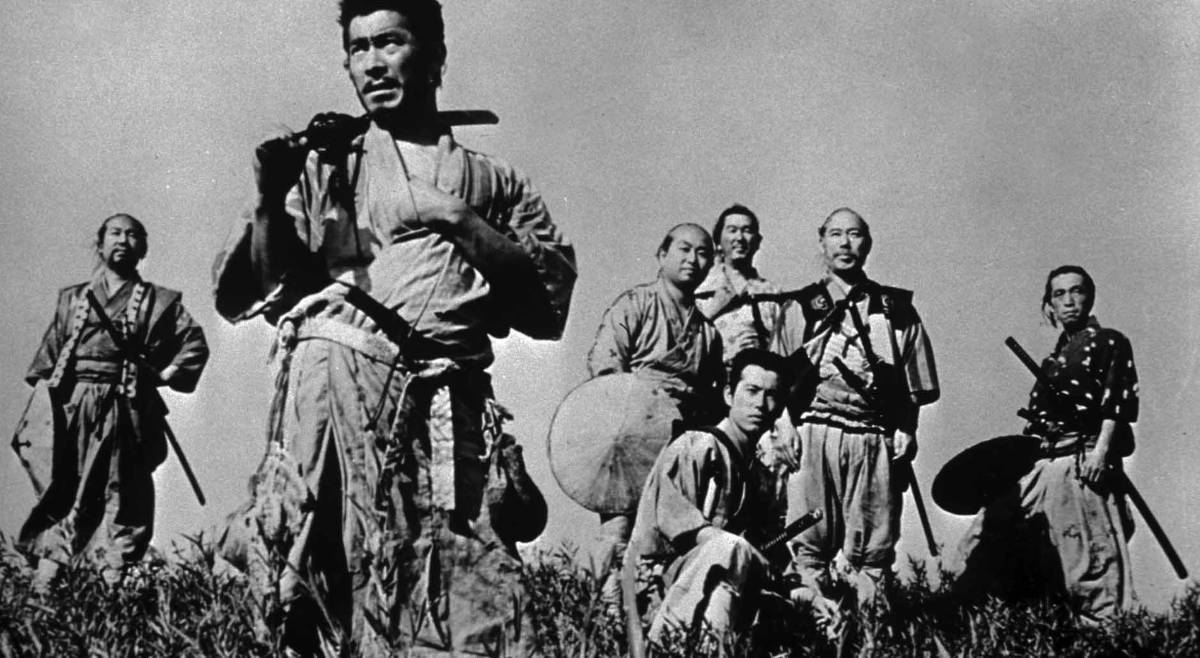
Akira Kurosawa’s evergreen classic “Seven Samurai” is the godfather of all the ‘team assembly’ or ‘ensemble mission’ movies. At the end of the 207-minute running time, we will understand what Ebert meant when he said, “No good movie is too long, and no bad movie is short enough.” The tale of skilled outsiders protecting a vulnerable group might endure centuries of storytelling. But it is Kurosawa’s mastery over the tone, elements – particularly the frantic staging of the showdown – and performances – the right mix of loud, goofy, and nuanced – that turn “Seven Samurai” into a profound epic.
“Seven Samurai” is supremely entertaining, but the film offers more riches if you dig deeper into its commentary on class or the impossibility of truly bridging the gap between classes. Screenwriter Shinobu Hashimoto is as important to samurai cinema as the legendary auteurs who created this genre’s masterpieces. He has adapted and collaborated on the scripts of the top four samurai films in this list, and all four question the samurai’s worth from different perspectives. If “Sword of Doom” and “Harakiri” examine the samurai through existential collapse and systemic critique, and “Samurai Rebellion” frames their defiance within the fragile sanctity of family and personal dignity, “Seven Samurai” looks at them through lived ethics. It gently observes how they act, protect, and slowly fade once the danger passes, and life goes on without them.
Set in 1587 (with a 13-year-old Kikuchiyo!), the film unfolds during the late Sengoku Period (aka the Warring States Period), when the breakdown of central authority and social instability forced many samurai to become ronin, and created desperate conditions for peasants due to rampant banditry. The Battle of Sekigahara (1600), of course, led to Japan’s unification and peace. Still, it brought different challenges for the samurai class as seen through the eyes of Hanshiro Tsugumo in “Harakiri.” “Seven Samurai” contemplates the fading relevance of Samurai and Bushido, and yet creates a magnificent ‘heroic’ narrative that serves as an elegy.
Tsugumo of “Harakiri” is caught in the Shogunate system that uses words like ‘honor’ and ‘code’ to keep the desperate in line. Kurosawa’s “Seven Samurai” remains outside the system or institutions – shogunate and clan – and hence those noble ronin serve as free agents, able to remain true to their code. Still, Kurosawa and screenwriter Hashimoto balance the heroism with unbridgeable clashes between the classes. The foundation of the samurai and peasant classes’ mutual distrust doesn’t truly go away. Yet the transactional nature of their union – which finds its echo in the ‘forbidden’ romance between Katsushiro and Shino – has its functions only when waging war against a common enemy.
“Seven Samurai” observes that the victory will belong to the peasants – the common people – and the samurai will always remain ghosts of a system that can’t accommodate them in a peaceful world.