Some films move through their stories with a clear, deliberate sense of direction, where every scene seems carefully arranged to push the narrative forward and guide the viewer steadily toward a defined conclusion. In such films, the structure is visible in how conflicts appear, complications arise, and resolutions eventually follow, creating a rhythm that feels purposeful and tightly controlled.
The viewer moves along with the story almost as if travelling on a well-planned route, aware that each moment exists to bring the narrative closer to its final destination. Yet some films operate very differently, films that appear far less concerned with the mechanics of plot and far more attentive to the quieter movement of emotion and experience. In these works, the story unfolds through atmosphere, silences, and seemingly ordinary moments that slowly gather meaning over time.
The result is a form of storytelling that feels less like a sequence of events and more like an unfolding mood, where the viewer becomes attentive not only to what is happening but to how it feels to exist within that particular emotional space. Sofia Coppola’s “Lost in Translation” is set within the restless, glowing landscape of Tokyo, a city that pulses with neon light and constant motion, and a language that moves with a rhythm unfamiliar to its visitors.
“Lost in Translation” brings together two Americans whose lives seem to have reached quiet moments of uncertainty. Bob Harris, played by Bill Murray with a kind of weary self-awareness, arrives in Tokyo as an aging actor invited to film a commercial, a task that carries with it the faint suggestion of a career that has already passed its brightest peak. Charlotte, portrayed by Scarlett Johansson, is younger and at a very different stage of life. She carries her own form of quiet restlessness, wandering through hotel corridors, temples, and city streets while her photographer husband remains absorbed in his own professional commitments.
When the two characters encounter each other in the anonymous, floating environment of a luxury hotel in Tokyo, their meeting carries the quiet quality of coincidence. The moment unfolds with the gentle ordinariness of two lives briefly intersecting within a space designed precisely for transience. Hotels, after all, exist in a peculiar state between belonging and departure. They are places where people arrive with luggage and leave without leaving traces, where identities feel temporarily suspended, and where the routines of everyday life dissolve into a neutral, almost placeless rhythm.
Must Check Out: All Sofia Coppola Movies, Ranked
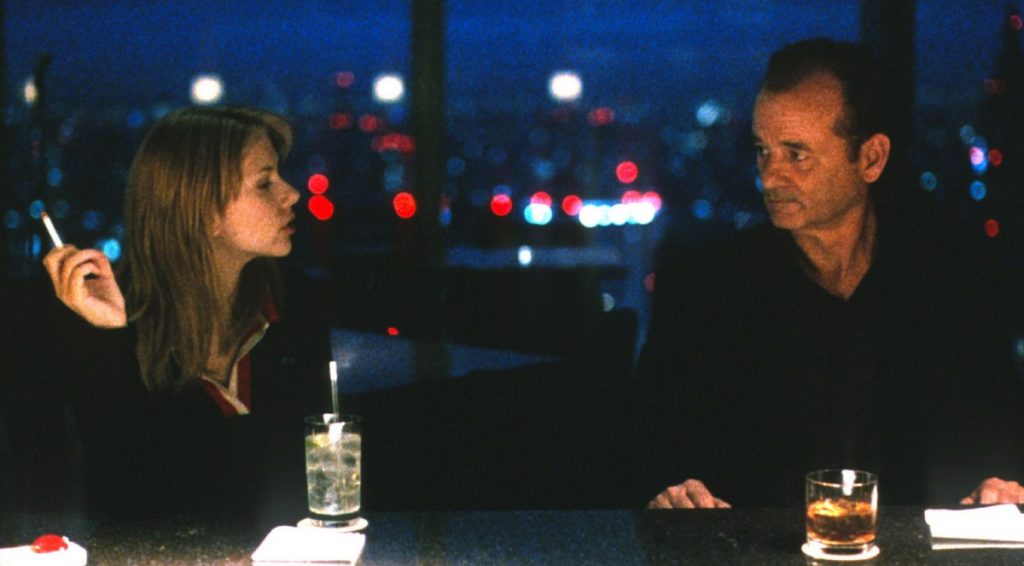
Within this environment, the encounter between the characters in “Lost in Translation” feels less like the beginning of a conventional relationship and more like the quiet recognition of two individuals who happen to occupy the same moment of displacement. Both Bob, played by Bill Murray, and Charlotte, portrayed by Scarlett Johansson, seem to drift through the hotel’s elevators, corridors, and softly lit bars with a similar sense of suspension, as if their lives outside these walls have momentarily paused. Their conversations begin almost tentatively, shaped by the slow discovery that the other person shares a comparable feeling of being slightly out of place.
What makes this encounter particularly delicate is that it remains grounded in the modest awareness that two strangers, equally removed from the familiar coordinates of home and routine, have simply noticed each other’s presence. The anonymity of the hotel allows this recognition to emerge without expectation or obligation. And it appears to be a meeting made possible precisely because both characters exist there only temporarily, free from the social roles and definitions that structure their lives elsewhere.
At first, this unfamiliar environment seems to explain their sense of being “lost”. They are foreigners, after all, surrounded by a culture whose social cues, humor, and everyday gestures feel difficult to read. The unfamiliar environment simply exposes feelings that might have remained hidden within the familiar structures of home. However, as the narrative continues, it becomes increasingly clear that the film is not primarily concerned with cultural confusion alone. The sense of disorientation that surrounds Bob and Charlotte gradually reveals itself to be more inward than external.
Their distance from the city mirrors a deeper uncertainty within their own lives. Bob, despite his professional recognition, appears quietly detached from the routines that once defined him. His conversations with his wife feel distant, almost procedural, and his work, though successful, seems to carry little emotional urgency. Charlotte, meanwhile, moves through the city with an introspective curiosity, visiting temples, watching strangers, and reflecting on the uncertainty of her marriage and her future. And, Tokyo becomes a source of a reflective surface that makes their inner disquiet visible.
What gradually emerges, therefore, is the understanding that the film’s idea of being “lost” cannot be reduced to geography or language alone. The estrangement is the subtler difficulty of understanding one’s own place within the unfolding trajectory of life. Both characters appear suspended between versions of themselves – Bob between the fading memory of earlier success and the uncertain meaning of what comes next, Charlotte between youthful possibility and the responsibilities that adulthood seems to demand.
Their eventual friendship unfolds through the slow accumulation of shared moments, like that of a conversation about marriage whispered across a bed, an awkward television appearance, and a night of karaoke where music becomes a temporary language both of them can inhabit. What feels most delicate about these encounters is the way the film resists defining their relationship in any rigid emotional category. It occupies that ambiguous terrain where two people recognise something of themselves in each other’s solitude, a recognition that can feel unexpectedly intimate precisely because it occurs outside the frameworks that normally organise relationships.
What is perhaps most striking is the film’s refusal to impose a clear emotional resolution. By the time Bob and Charlotte part ways, nothing in their external lives has dramatically changed. Their marriages remain complicated, their careers remain uncertain, and the city continues moving at its own indifferent pace. Yet something subtle has shifted in the space between them, as if the brief recognition of another person’s loneliness has momentarily made their own easier to bear. The famous final whisper, whose words remain unheard by the audience, encapsulates this approach with unusual grace.
Yet admiration for the quiet reputation of “Lost in Translation” does not necessarily prevent a more hesitant response from emerging when the film is experienced in its entirety, because beneath its celebrated stillness lies a certain narrative fragility that gradually becomes difficult to overlook. The film is often praised for its restraint, for the way it allows silence, distance, and fleeting encounters to shape the emotional atmosphere. However, what initially appears as careful subtlety can slowly begin to resemble a reluctance to move beyond surface contemplation.
Also Read: How Spike Jonze’s ‘Her’ and Sofia Coppola’s ‘Lost in Translation’ Turned Loneliness Into Cinema
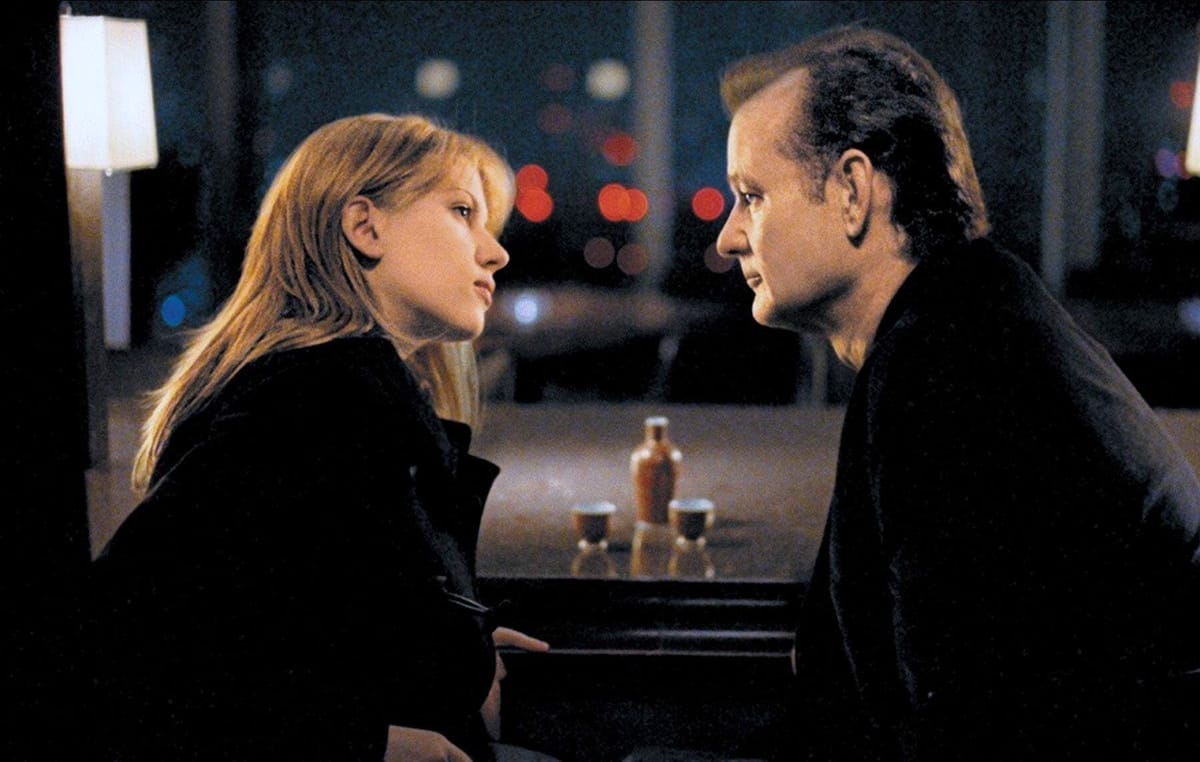
The languid pace, the extended pauses, and the fragments of conversation shared between Bob Harris, played by Bill Murray, and Charlotte, portrayed by Scarlett Johansson, certainly construct a mood of introspective melancholy, yet this mood does not always deepen into genuine emotional revelation. Instead, the film seems content to circle around the feeling of loneliness without ever fully examining its origins or consequences. The characters remain suspended within a delicate emotional fog. While that suspension is often interpreted as poetic ambiguity, it can equally give the impression that the narrative hesitates to ask more difficult questions about who these individuals truly are beyond their temporary dislocation.
The setting of Tokyo contributes powerfully to the film’s visual identity, yet it is also here that the film reveals one of its most noticeable limitations. Tokyo frequently appears as an aesthetic landscape observed from a distance, a luminous stage upon which the emotional introspection of two foreign visitors unfolds. The city becomes a collection of neon reflections, hotel interiors, karaoke bars, and quiet streets glimpsed through taxi windows. But rarely does the film allow the surrounding culture to emerge with the same depth granted to the protagonists’ private uncertainty.
This distance can create the impression that the film’s idea of alienation is less a meaningful exploration of cultural encounter and more a convenient atmosphere that allows the central relationship to appear more poignant than it might otherwise feel. That relationship itself, which forms the emotional center of the film, carries a similar ambiguity.
The connection between the two characters is clearly meant to feel intimate in a quiet and unspoken way, yet the narrative offers surprisingly little that reveals why this bond should resonate as deeply as it is often assumed to. Their companionship unfolds through several fragmented moments of wandering through the city together. But these fragments rarely accumulate into a clearer sense of what they recognize in one another beyond a shared feeling of being momentarily adrift.
The story seems to rely heavily on atmosphere to carry meaning, trusting that silence and distance will naturally suggest depth. Yet silence does not always guarantee complexity, and stillness does not automatically produce insight. When the film concludes, it leaves behind a lingering impression that is certainly gentle and contemplative, but also curiously insubstantial, as though the narrative has carefully constructed an exquisite emotional surface without ever quite allowing the deeper currents beneath it to fully emerge.





![Hard-Core [2019]: ‘NYAFF’ Review – The Hikikomories’ Tale](https://www.highonfilms.com/wp-content/uploads/2019/07/Hard-Core-highonfilms-768x432.jpg)