We live a multitude of lives in this one life based on singularity and mass entropy. It is not that peculiar or strange to have memories of what we used to be in our past lives. The concept of having a memory that does not sound familiar to our surroundings is not metaphysical or astrological. We delve into the science of energy when we speak about memory. Even when we revisit our memories, we are investing joules of energy to bring out what lies in our subconscious or sometimes, unconscious (which requires maximum energy).
Memory, conceived as a form of energy – primarily thermal in nature – seeks a host, an abode, once it is released from another living being. In accordance with the fundamental principles of energy and the first law of thermodynamics, energy is never destroyed; it merely transfers from one body to another.
Amitav Ghosh’s “Ghost-Eye” engages deeply with these complex dynamics of reincarnation, where memory functions as a migratory force rather than a static residue. The novel’s layered visualization and its time-shifted narrative style prompt a reconsideration of “The Sixth Sense” by M. Night Shyamalan and “Hawa” by Mejbaur Rahman Sumon, two films that approach reincarnation and visualization through distinctly personal and social registers.
Across these works, reincarnation is not limited to metaphysical rebirth. It unfolds through memory, perception, and the transference of emotional energy. The movement of memory across bodies, timelines, and consciousnesses becomes a narrative strategy through which both cinema and literature articulate the invisible continuities between life, death, and experience. Before examining how the novel and these films construct such layered meanings, it becomes essential to return to a foundational principle of cinema itself: the craft of film editing, which governs how time, memory, and perception are shaped, fragmented, and reassembled.
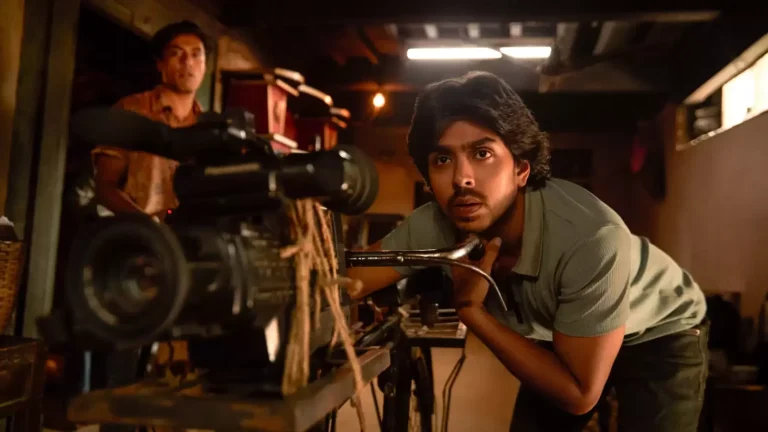
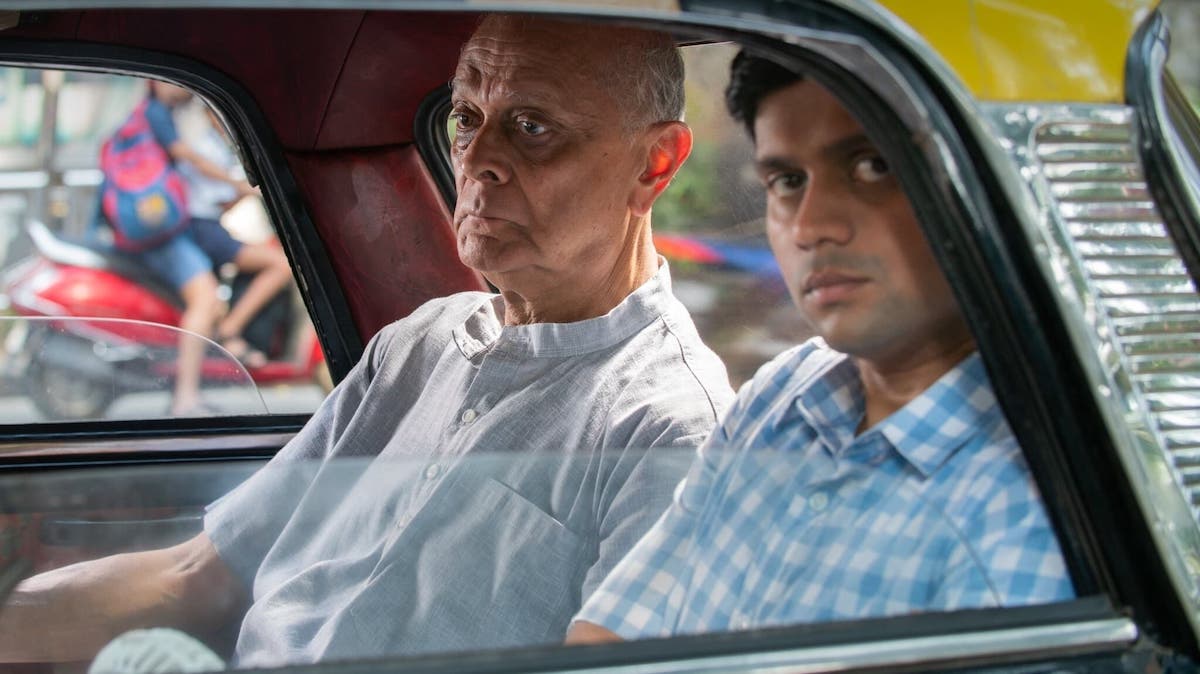
In “The Disciple,” directed by Chaitanya Tamhane, there is a striking shot during a conversation between Sharad, played by Aditya Modak, and Guruji, portrayed by Arun David, in which the camera deliberately withdraws its attention from the two speakers and begins to linger on surrounding objects and spaces instead.
This visual displacement compels the audience to activate its listening impulse. While the images on screen continue to engage our visual senses, the true return on investment emerges through sound, through dialogue, pauses, and tonal inflections. The image no longer explains the conversation; it merely coexists with it, allowing meaning to surface aurally rather than visually.
More Related: The Best Films Watched in 2020
Although this technique has appeared in various cinematic traditions, Tamhane’s execution gestures unmistakably toward its originator, Andrei Tarkovsky. Tarkovsky first experimented with this form of visual restraint in “Ivan’s Childhood,” particularly in the scene between Ivan, played by Nikolai Burlyayev, and Captain Kholin, portrayed by Valentin Zubkov. In this sequence, the camera’s refusal to privilege faces or dramatic action reorients spectatorship itself: the audience is asked not to see meaning but to listen for it.
By diverting visual focus away from narrative centres, both Tarkovsky and Tamhane foreground cinema’s acoustic dimension and reaffirm that editing and framing are not merely tools of representation, but instruments of perception. The scene becomes an exercise in attention, one that reminds us that some of the most consequential cinematic moments unfold not in what is shown, but in what is withheld.
The intention behind these scenes has consistently been to blur temporal markers and unsettle the audience, not through direct visual exposition, but through implication and restraint. In such moments, even silence acquires the weight of sound, functioning as an active auditory presence rather than an absence. As readers draw closer to the inner lives of Amitav Ghosh’s characters, the underlying logic of the narrative becomes increasingly apparent. The subtle shift in the writer’s language, along with the gradual convergence of individual character arcs, is far from incidental.
By drawing these seemingly disparate lives toward one another, Ghosh establishes a single, intimate point of origin from which a much larger existential landscape unfolds. The personal narrative becomes a gateway to the universal; a small, almost imperceptible centre expands outward to encompass questions of time, memory, mortality, and belonging. In this process, narrative intimacy does not limit scope. Rather, it becomes the very mechanism through which the text attains its philosophical breadth.
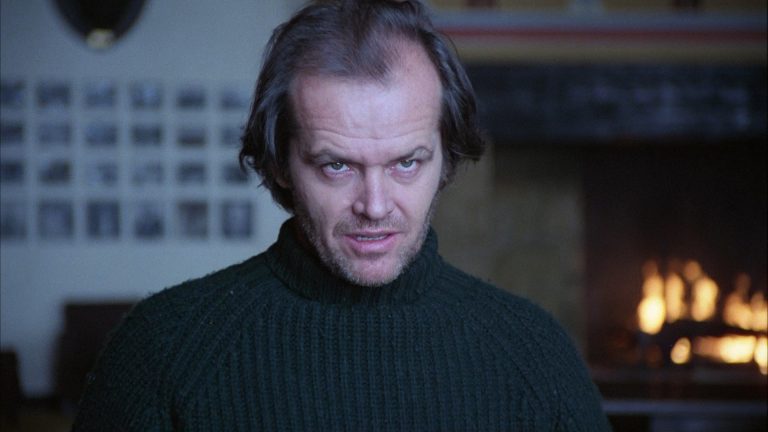
In “Silver Linings Playbook,” the screenplay is not written from the detached perspective of its director, David O. Russell. Instead, Russell has explained in interviews that he revisited his own experiences with bipolar disorder during adolescence to shape the script authentically. He believed that, in adaptation, mental health narratives resonate more deeply when the writer locates himself within the story.
Ghosh’s scepticism emerges vividly in Monty, while Shoma reveals his agnostic inclinations. In Dev, we encounter a writer navigating the harsh and uncertain terrain of diaspora, and in Varsha, we recognize a figure who continually reconnects with his homeland through longing, loss, and erasure, mainly expressed through appetite, absence, and ablation.
Reincarnation In The Sixth Sense And Ghost-eye
The reincarnation sequence in Shyamalan’s “The Sixth Sense” is rooted in Christian theology, and therefore, the theme is often perceived through a binary, monotheistic lens. This framework makes it easier for audiences to situate the film within the horror genre. Yet, beneath this familiar structure, the film raises profound and unsettling questions: How overwhelming can guilt become? How does one preserve innocence amid bleak and traumatic circumstances? And to what extent are we willing to struggle in order to reclaim the virtues that once shaped our lives?
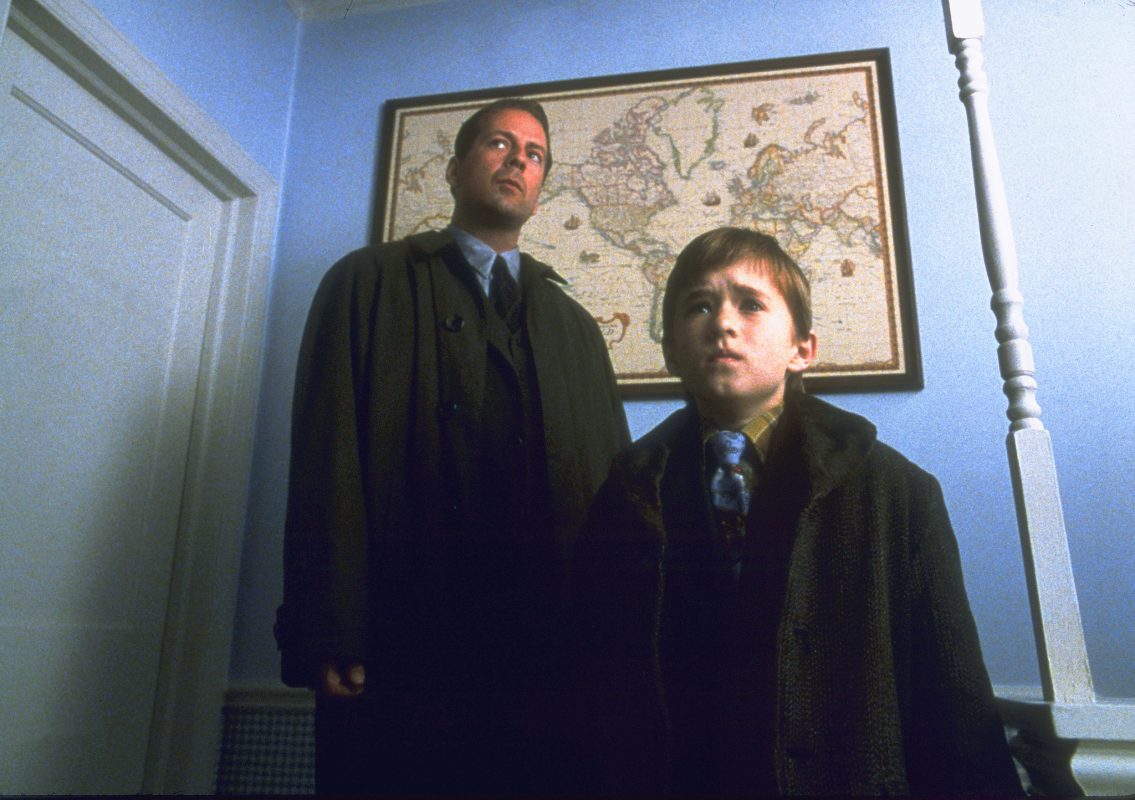
Practices that demand change often fail to resonate with those who have grown accustomed to stability and permanence. When the director introduces Malcolm Crowe, portrayed by Bruce Willis, his compassion is revealed as something that has germinated from past trauma. Although he attempts to transgress the rigid boundaries of psychoanalysis, it is not the patient’s psyche but civic society itself that emerges as the greater obstacle. Shyamalan thus foregrounds the dominance of the human mind, even over those who attempt to understand and regulate it through clinical means.
Read: All M. Night Shyamalan Movies, Ranked
Similarly, Ghosh’s characters inhabit a space where horror, magical realism, drama, and thriller coexist, an intersection that is not uncommon in cinema or literature. What distinguishes Ghosh’s work, however, is the manner in which these elements are rendered. Varsha is portrayed as a figure capable of unsettling the habitual and conditioned thinking of her parents, the medical professionals responsible for diagnosing her, and even successive generations that remain directly or indirectly influenced by her presence. Her mind exists simultaneously in two temporal and psychological states, allowing her to live dual lives at once.
The premonitions she experiences are grounded in fact, yet Ghosh deliberately situates them within the realm of probability rather than certainty. A parallel can be drawn with Cole Sear, the nine-year-old boy in “The Sixth Sense,” who witnesses events that appear inevitable when facts are aligned, but which Shyamalan carefully balances between the probable and the improbable. In both Ghosh’s writing and Shyamalan’s cinema, the mind is allowed to outgrow the physical character, as it is memory – rather than action alone – that shapes the arc of the book’s characters, irrespective of their class, ethnicity, or gender.
The Road To Death By Shyamalan And Ghosh
Death is not nullified in a narrative concerned with reincarnation; rather, it becomes more forceful and definitive through the understanding that the conclusion of one life is intrinsically dependent upon the completion of another. Shyamalan deploys death as a symbolic force that terrifies not merely because of its finality, but because of what individuals have done – or continue to do – while alive. The aftermath of death renders the reincarnated existence more unstable and unsettling, as life and death remain connected through an invisible impulse, much like the synaptic gap between two neurons.
This impulse – a form of energy – does not exist beyond the physical realm. Instead, it resides quietly within it, working incessantly to bridge the divide that defines us as either living or dead. The images Cole encounters are undeniably linked to death, yet they are infused with a diabolical undertone. By mediating between life and death, Cole enters a space that borders on violence, a territory where energy is restrained from fully infiltrating the humane sphere.
Ghosh, on the other hand, employs death as a lens through which personal and social dynamics are magnified while individuals are still alive, revealing how humanity and anthropology are continuously redesigned within the same life or across different incarnations. Varsha, in the narrative, is driven both by her visceral hunger for fish and by her premonitions of death, which are largely rooted in environmental degradation.
Her psychologist’s moment of epiphany compels her to interrogate the very foundations of the life-death cycle. This inquiry emerges from the realization that questioning the world around us is often motivated by a desire to leave conceptual space for an afterlife – or for the lives of those who continue to hope that the Earth might sustain a little longer and they will be able to thrive for a few more decades.
Ghosh further extends the idea of reincarnation to time itself, portraying it as something that returns in unfamiliar and unsettling forms. By juxtaposing the unpredictability of the pandemic with images of old Calcutta, marked by labour strikes, overcrowding, and sudden eruptions of violence, he reveals how temporal references shift within the physical realm. Unlike Shyamalan, who emphasizes psychological continuity, Ghosh foregrounds the mutable units of time and history, demonstrating how they shape human behaviour, influence ideological formations, and redefine the purposes we seek in moments of collective uncertainty.
Scepticism In The Worlds Of Hawa And Ghost-eye
At some point in our lives, all of us have been sceptical of what we see, think, hear, and choose to follow. Scepticism compels us to interrogate both the elements that sustain a conditioned lifestyle and the uneasy process of fitting new ideas into old, familiar frameworks. “Hawa,” directed by Mejbaur Rahman Sumon, is fundamentally a tale of revenge, yet its narrative expands to explore a constellation of human traits like greed, lust, anger, dissociation, and belief.
The sudden arrival of a woman aboard a cargo ship inhabited solely by men – who possess an unquestioned authority over the sea, fish, and survival – does more than instill fear within the crew. Her presence unsettles their moral certainties, forcing them to confront their own choices, the boundaries they have violated or avoided, and the inevitability of judgment before the final curtain of life descends.

The reincarnation of long-settled emotions into their most volatile forms is channelled through Gulti, portrayed by Nazifa Tushi, whose restrained yet chilling composure embodies a quiet, controlled chaos. Through this character, Mejbaur articulates the idea of internal reincarnation, a process in which dormant emotions are resurrected by purpose and intent.
Like nature itself, this resurgence does not discriminate. It acts with an indifferent precision that mirrors the sea surrounding the ship. In “Hawa,” reincarnation takes shape within the psyche, where suppressed or subdued impulses resurface with renewed force, demanding recognition, reckoning, and an inevitable consequence.
Amitav Ghosh, in this novel, either deliberately or by a seeming coincidence, constructs multiple forms of incarnation around a central act of reincarnation. This multiplicity demands attention, for it mirrors the human condition itself: we are constantly shedding old skins to assume new ones, transformations that make us either indistinguishable within collective monotony or strikingly different from it.
From Shoma’s epiphany about an unseen dimension that gradually intrudes upon the visible world, to Varsha’s unwavering and authentic memory of her previous life, and finally to Dinu’s unexpected pursuit of Shoma’s concealed truths – only to confront a future we consciously refuse to imagine – Ghosh persistently animates emotions buried deep within the subconscious of his characters. The investment they make to bring them out is also reincarnation.
Simultaneously, he introduces figures grounded in rationality, individuals who attempt to explain every metaphysical disturbance through logic and empirical reasoning, so as not to destabilize our inherited understanding of the universe. Yet Ghosh repeatedly unsettles these rational frameworks. By doing so, he compels readers to recognize that when questions of life and death arise, scepticism cannot remain confined to logic alone.
Instead, it must venture into territories often dismissed as unnatural, or uncritically labelled as divine or devilish. In this tension between belief and doubt, reason and intuition, Ghosh suggests that true understanding emerges not from denial of the metaphysical but from the courage to confront it, irrespective of whether it exists or not. It stems from curiosity and becomes the fundamental construct of a questioning mind.
Future Through Visualization
Human beings instinctively seek hope, and this emotion is almost always oriented toward the future. We rarely imagine hoping for a better past; consequently, both “The Sixth Sense” and “Ghost-Eye” position their storytellers as fundamental purveyors of hope rather than mere architects of fear. It is therefore inaccurate to reduce Cole’s visions solely to violence and death.
The film’s visual grammar transforms the vulnerable child into a medium through whom the audience glimpses a future shaped by moral consequence, where actions inevitably generate outcomes. Visualization, in this sense, becomes not just a narrative device but a profound storytelling skill that allows cinema to communicate ethical foresight without overt exposition.
This technique of visual mediation through a fragile or understated character recurs in contemporary popular narratives as well. In “Stranger Things,” created by the Duffer Brothers, Will Byers, portrayed by Noah Schnapp, evolves from a weak and hunted child into a figure capable of perceiving and controlling the very force that once terrorized his childhood and adolescence. His vulnerability becomes the locus from where everything has to originate if balance is to be reached, allowing the narrative to visualize danger, memory, and anticipation simultaneously.
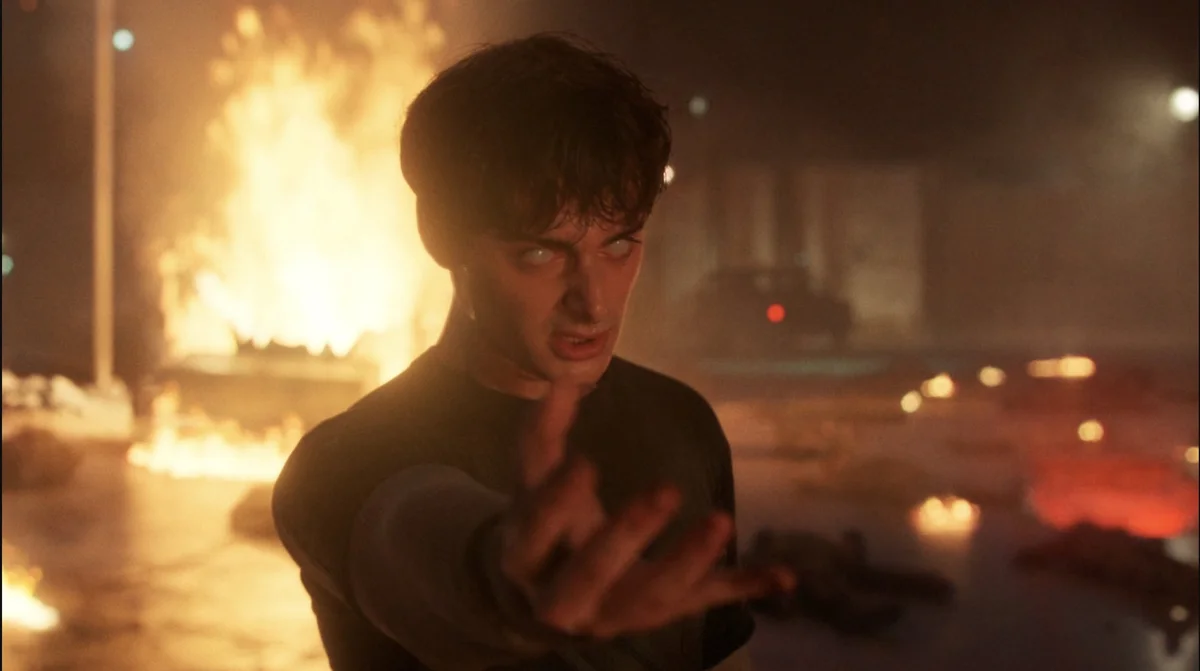
Read More: The 11 Best “Stranger Things” Episodes (Including Season 5)
A similar structural strategy can be observed across the films of Quentin Tarantino, where one character often functions as a third voice, someone who both inhabits and distances themselves from the unfolding events. This voice neither fully intervenes nor remains entirely passive. Instead, it frames the narrative through selective association and dissociation. Such understated characters enable filmmakers and writers to communicate layered meanings indirectly, allowing crucial references to emerge without explicit articulation.
In this manner, storytelling borrows from the logic of paradox, where what must be shown cannot always be stated outright. Visualization that operates through restraint, silence, and marginal presence gains its power precisely because it underplays itself across scenes and chapters. Only through such subtle framing can narratives sustain tension between what is known and what is yet to be realized, holding hope as an act of futuristic imagination rather than retrospective correction. It is here that storytellers get tested because if done badly, it becomes distant from the audience.
Amitav Ghosh achieves this narrative layering through several characters, but most prominently through Tipu, Dinu, and Dev. The narrator, Dinu, emerges as a seeker – someone marked by vulnerability and curiosity – allowing him to retrieve fragments left behind in neglected territories of memory. His act of remembering is not passive. It is a deliberate excavation of the self, where personal history becomes inseparable from collective experience. Tipu, by contrast, functions as an impulse, a catalyst or trigger, propelling both the storyteller and the protagonist forward.
His presence energizes the narrative, preventing stasis and ensuring that the story continues to unfold rather than collapse inward. Dev, meanwhile, assumes the role of a fundamental third voice, the perspective through which mystery becomes legible, rooted realism expands into diasporic narration, and lived experience gradually transforms into folklore. These shifts are crucial, for they explain how the text transitions from one plot to another, plots that are distinct enough to stand as independent narratives, yet interconnected through perspective and memory.
This raises an essential question: what is the purpose of these third voices beyond facilitating narrative movement? The answer lies not only in how the story progresses through them, but in how they allow other characters to complete their arcs. The third voice remains personally entangled with the first and second voices, creating a web of relationships in which each perspective reflects, refracts, and comments upon the others.
Ghosh intricately aligns timelines, relationships, and individual utterances so that one character’s narrative becomes a commentary on another’s. This is a sophisticated and demanding technique, particularly within a deeply personal narrative, because it places every character in a state of relational entropy, each constantly shaped and reshaped by the presence of the others.
As a result, the reader’s affinity with the text intensifies. Continuity emerges from narrative interdependence, not from abstract assertions or imposed opinions. It is at this juncture that belief takes hold. Readers, once again, begin to recognize echoes of their own experiences within the text. Characters gain relevance, plots become identifiable, and what might otherwise remain submerged in subtext rises into visibility. In this convergence of memory, voice, and relational storytelling, the narrative achieves both emotional credibility and interpretive depth.
Stories of reincarnation are not uncommon, particularly within subcontinental art, whether in cinema or in the novel. What is often missing, however, is the flesh of the idea, the intimacy that allows audiences to feel a genuine connection with something that may appear natural or supernatural to the mind. When a work of art succeeds in making its readers or viewers logically believe in the existence of what is otherwise deemed impossible, it reveals a clear awareness of its own artistic intent.
“The Sixth Sense” frames reincarnation and premonition within the conventions of horror, using fear as an entry point to ethical and emotional reckoning. In contrast, “Hawa” draws its audience toward an examination of humanity through the lens of memory and internal rejuvenation, where the supernatural emerges from psychological and emotional residues rather than overt terror.
“Ghost-Eye” approaches the idea of life beyond death – or death folding back into life – by cultivating a form of eerie disturbance rather than outright fright. Ghosh constructs a horror that unsettles and a drama that travels across temporal frames, ultimately revealing how human existence remains a little, finite possibility within a world defined by infinite alternatives. In doing so, these works demonstrate that reincarnation is not merely a thematic device but a narrative method – one that demands emotional credibility, philosophical depth, and an acute understanding of how belief is shaped through storytelling.