
Last year felt like the year of Paul Thomas Anderson—the moment when the love and recognition he had long deserved finally arrived. There’s another lane of thought that would think of 2025 as a year for horror Renaissance, and it would hardly sound like a stretch for anyone who understands the genre. Yet, instead of analyzing those threads, I would like to draw attention to another recurring theme from last year, particularly in films: parenthood.
2025 offered us various portraits of parents dealing with complicated relationships with their families. Yet, two that didn’t get as much attention as others but manage to break my heart every time I think about them are the way Mark Ruffalo portrayed a father in shows like Brad Inglesby’s “Task” and Cooper Raiff’s “Hal & Harper.”
During a conversation with Tom Pelphrey (Robbie Prendergrast from “Task”), while on a promotional tour for the show, Ruffalo mentioned something that his wife said: “Your genre is ‘sad dad’!” Although it was said in jest and may have merely been a part of one of their casual conversations, that isn’t far from the truth if you look at Ruffalo’s body of work, even before that show.
Of course, he is not limited to that specific type of role; he is charming and quick-witted, and if you’ve seen him speak as himself and not one of his characters, you would already know that. Sadly, he hasn’t worked in out-and-out comedic projects to exercise those chops, even though he clearly has a knack for them. His foray into action blockbusters hasn’t introduced him as an action star either, but he radiates with the kind of affability that ‘sad dad’ archetype immediately brings to mind.
That subset isn’t particularly rare in film or television. Even last year, we received a few portraits that can fall into that vein. There was Matthew McConaughey, playing a bus driver, whose act of courage helped him heal from some of his bleakest self-assessments. Will Arnett also brought the middle-aged dad blues through a cathartic representation of a post-divorce stand-up comic.
Leonardo DiCaprio played an ex-revolutionary struggling to be a good role model for his daughter, while Stellan Skarsgård portrayed a revered director trying to make up for his familial absence through art. Yet, despite the gravity of their pain and suffering, especially Skarsgård’s, Ruffalo’s work kept pulling me back toward it.
While looking at his past roles as a father, I was quite surprised by the variety he has managed to bring, even within this niche. Every role offered something specific, and the credit isn’t only due to the writing, which most of these were great at, but to the detail he managed to capture beyond what was on the page. Let’s start with his most recent ‘sad dad’ role: Tom Brandis in “Task.”
The HBO series sees Rufallo playing an FBI agent investigating a string of robberies in a small town in Philadelphia. It’s not the first time he has played a detective. Even his latest character in “Crime 101” is an idealistic detective. Yet, there’s more bite to this character than his previous roles and more intensity to his performance. That’s not just because he is at the centre of an ongoing conflict, but because of a grave personal tragedy that affects his life in and outside of work.
Brandis appears stoic, not reluctant to share his deepest emotions but almost afraid to be vulnerable. His stoicism isn’t the kind that makes Rust Cohle a brooding, elusive presence. He is also not a nihilist, nor is he putting on an act to appear unfeeling, thus intimidating. Instead, every time you see him on screen, you almost want to check on him and see if he is doing fine.
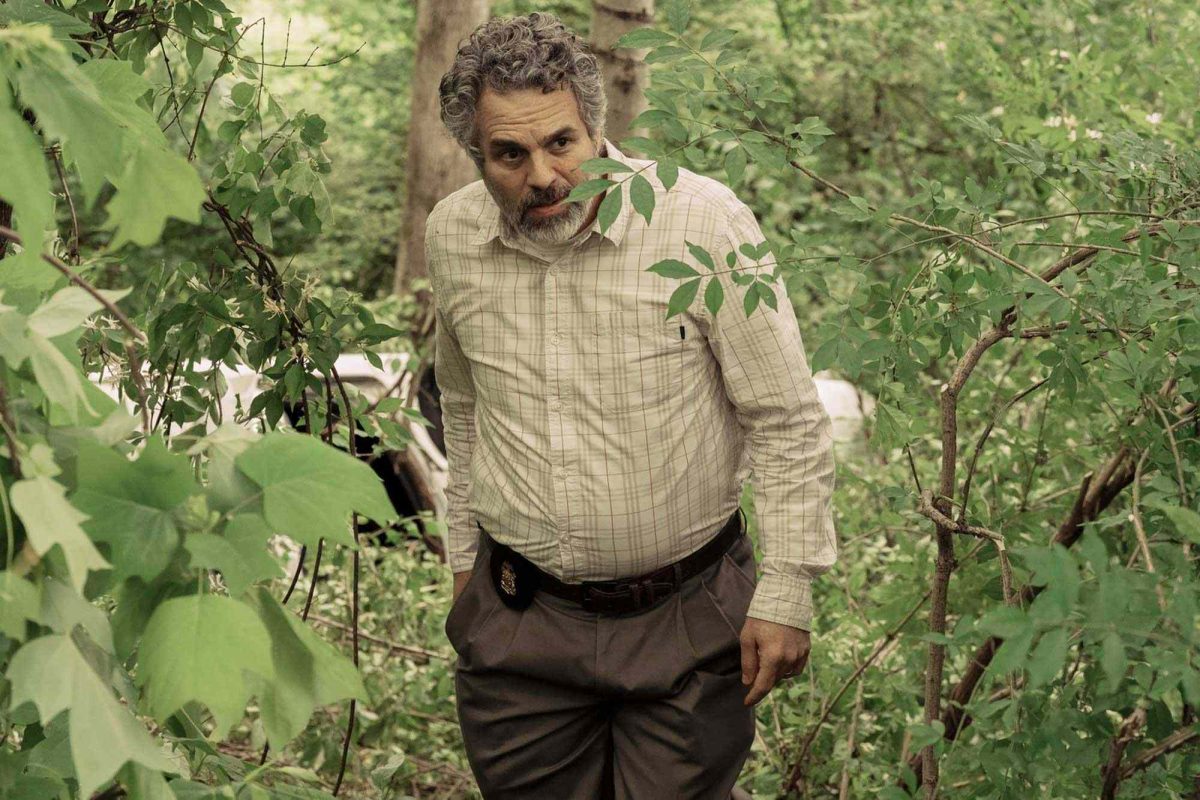
Ruffalo manages to bring an uncommon tenderness to his performance, revealing the enormous heart of this man who is ready to do so much for others, even while being crushed under the weight of an ethical dilemma. The script paints his arc very well, showing his transition from the priesthood to detective work, intersecting with his struggles to live with the truth. As a priest, he helped people forgive themselves even when it seemed impossible for them to do so. Yet, when it came to forgiving his own family, he struggled to relieve them from the same burden.
In that precarious state, Bradis is both numb and overwhelmed, hurt and hurting. His performance could have been one-note, conveying the numbness simply through a lack of expression. Yet, Ruffalo’s calculated intensity compels us to dig deeper into Bradis’s reclusive nature, letting every point of confrontation or confession reveal a little more about his anguish.
That isn’t exclusive to somber moments in his life at home, where he tries to bridge the gap between his daughters, who are also struggling to find a common ground between forgiveness and grief. Ingelsby’s writing is intricate and potent in revealing Bradis’ qualms, but Ruffalo makes it resonate through his overbearing quietude. He never rushes to react and lets his sustained silence take you to a reflective moment of truth.
As a father, he learns to forgive his son even when it breaks his heart to spend even a moment without his wife. He seems exhausted to the point of an emotional breakdown, but instead of letting his anger take hold of him, he remains cautiously expressive. Even when he is momentarily cruel or blunt, it’s like he immediately yearns to amend. That’s because Ruffalo’s performance comes from a mature and sincere place. It makes us not only sympathize with Bradis but also be gravely concerned about his well-being, hoping for him to break through every layer of isolation he has wrapped himself in.
“Hal & Harper” presents Ruffalo sucked into a similar whirl of isolation, where every instinct to react needs to be thought of cautiously. Raiff’s show doesn’t centre around him but on his children, a pair of siblings, detailing ups and downs in their platonic and romantic relationships. Yet, Ruffalo’s character, cleverly credited only as ‘dad,’ makes you realize much of what’s there to know about their emotional patterns.
Widowed when he was not too old, Dad remains in the murky shadows of his wife’s loss, which was as traumatic to him as it was for his kids. When the cops arrived at his doorstep with the heartbreaking news, he nearly collapsed on the floor. Suddenly, he became a lone parent to two kids who looked at him with as much hope as they did before. He couldn’t afford to be bitter and resigned, processing her loss. Yet, every piece of advice is easier said than done. When it’s your turn, it isn’t always easy to muster the courage to do the right, noble thing.
Ruffalo manages to convey the same struggle through the fleeting moments he appears in the show, which has its own way of presenting the characters’ interiority. It shows Dad running toward something, panting, and struggling. At other times, it shows him sitting in a room all by himself, surrounded by barely anything. These moments flash by between scenes, making it seem as if we’re briefly peeking into their lives when they are most vulnerable and alone, so personal that it feels like we’re intruding in their sacred space.
While we see him struggling, we also see him getting impulsively angry at his children when he needs to be the responsible figure that they can rely on. That makes Harper prematurely step into a caregiving position, a burden that she is barely old enough to understand, let alone cope with. Because of that, Dad becomes quite easy to judge or scorn. Ruffalo’s performance doesn’t aim to rationalize Dad’s flawed behavior. Instead, it conveys his painful struggle in accepting himself despite his flaws and his gradual attempts at correcting them on a path toward being a better parent.
When you shut yourself off from the world as he does, it gets increasingly painful to open up to the possibility of trusting someone with your whole heart. Ruffalo conveys it through Dad’s gradual recovery from losing the fear of losing someone. So, by the end, when he catches young Harper and holds on to her, letting her be the child that she is, you feel as intensely for him as you do for her.
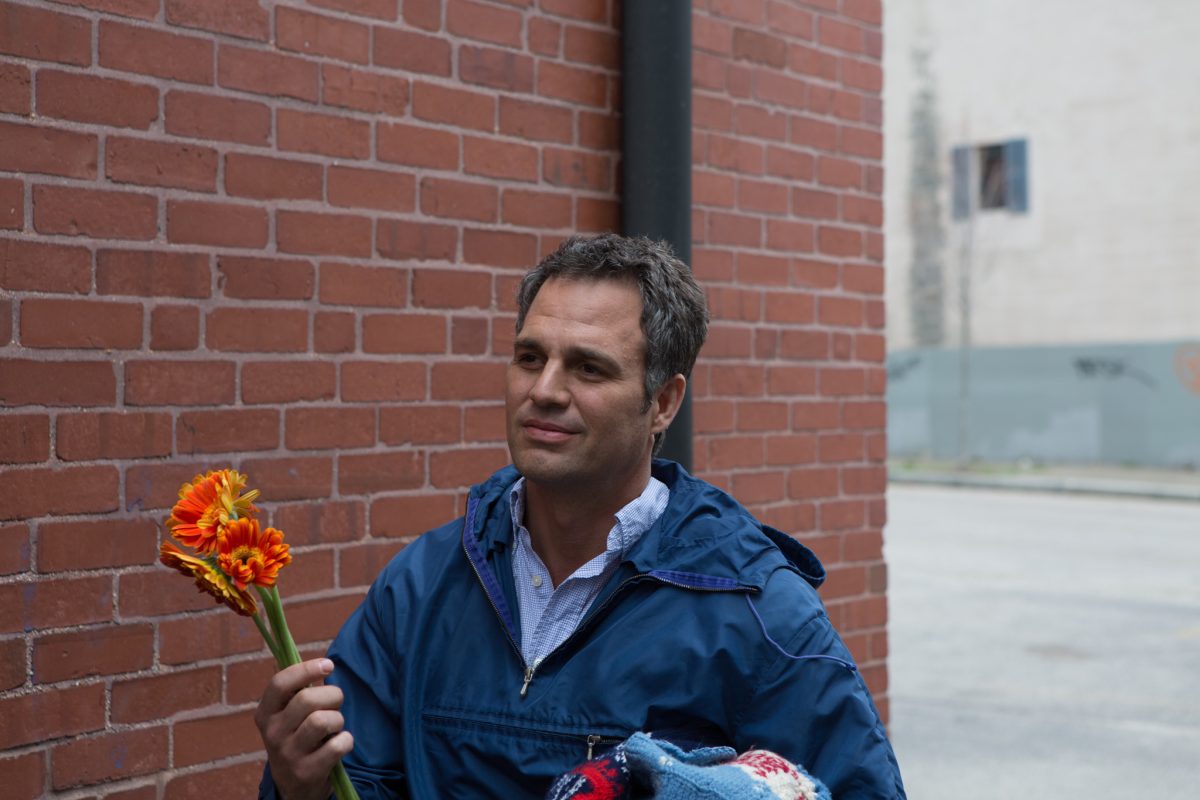
Unlike those roles, “Infinitely Polar Bear” introduces him in a far more gracious role. He plays Cam Stuart, a father who would spend hours to ensure his daughters experience some pockets of unbridled pleasure, but at other times, he would probably be as messy and rebellious as they are at their young age.
The project was close to writer-director Maya Forbes’ heart, and in some conversations, Ruffalo said that his daughter feels the same way. “That’s my daughter’s favorite movie I’ve ever done,” he said during his recent interview with GQ. It doesn’t feel surprising, considering the infectious goofiness he brings to this character, without letting us feel comfortable disparaging him for how he presents himself to the world.
Cam is characteristically affectionate but clumsy, which leads to a push-and-pull dynamic between him and his wife, Maggie, who realizes how much he means to their daughters, but is left with the burden of caring for every one of them.
Yet, he represents a side of fatherhood that is rarely explored on screen. He becomes the dad to take care of his daughters, even if clumsily, knowing the toll it was taking on Maggie to continue running their whole operation from Boston, while struggling to find a foothold in her professional life. Despite the grace in his decision, he doesn’t let it be a burden or drag their relationship back by expecting anything more than a wordless display of gratitude.
Unlike the roles mentioned before, this one required Ruffalo to express himself more openly. It didn’t demand the kind of restraint that his brooding characters needed him to possess in order to reveal every detail of their anguish. Even then, he reveals Cam’s underlying pain at trying but failing to be the person others may have expected him to be, while presenting him as a joyous presence to be around.
Unlike Cam, who remained present through every possible moment in their child’s growth, Paul in “The Kids Are All Right” didn’t or couldn’t do so. This 30-something character feels more conventionally appealing, even if awkward and reckless in his own way. He discovers his fatherhood only through his daughter’s attempt to find her biological father. That’s how he steps into their family equation, trying to carve his own place that Nic isn’t comfortable offering, as opposed to Jules, who seems more open in that respect.
While that friction leads to some awkward moments, it also shows Ruffalo as a different kind of father, an absent parent, and a free-spirited man, who is both likable and unlikeable. He clearly charms his kids with his youthful energy, which is in contrast with the dull rigidity of their suburban upbringing. Yet, he, knowingly or unknowingly, becomes a homewrecker, while taking the family through a breezy but at least partially inappropriate detour. Ruffalo conveys Paul’s charming confidence while revealing his naivety through scenes that analyze his struggle in holding on to relationships.
That reminds me of his character from “You Can Count on Me,” Terry, a 20-something man at a crossroads with his life because he is unsure what to do with it. He’s also not great at sustaining healthy relationships with people, which brings him back to his hometown on an awkward detour to his estranged daughter.
While not a father in a traditional sense, he does represent a father figure to Sammy’s son, who had to grow up without really knowing him. Terry and Sammy had to experience a similar estrangement after losing their parents when they were about Rudy’s age, which adds another dimension to their stories.
While it may not be the only reason behind Terry’s stunted emotional growth, it seems to have made more than a dent in his arc. In this film, Ruffalo doesn’t exactly portray a calm and composed man, hoping to make Rudy happy all the time. Yet, Terry presents an endearing possibility in Rudy’s life by offering the privilege of his presence instead of abandoning him. Terry isn’t a role model that a parent usually hopes to be, but his unfiltered honesty makes him an interesting addition to this list.
It also reveals Ruffalo’s skill in revealing a different side of fatherhood, one who does the bare minimum but is still loved and cherished. Put that against his latest character in “Task,” and you will notice how the actor has come a long way, exploring emotional maturity with a refined understanding of life, forgiveness, and growth.





![The Turin Horse [2011]: The Futility of Existence](https://www.highonfilms.com/wp-content/uploads/2017/08/the_turin_horse_by_lllololll-d6vxn69-768x611.jpg)