Founded just over nine years ago in January 2017, NEON has quickly become one of the foremost indie film distributors on the market, making a name for itself as one of the fiercest acquisition and production forces on a scene that has become increasingly averse to bold distribution choices. Fostering a steady, stable of recurring collaborators and new waves of talent with each passing year, NEON has firmly cemented its place as a name that turns heads on the festival market, carving that four-letter name into the sky with the scintillating glow of its namesake. With less than a decade in the game, the studio has developed an oeuvre expansive enough to pick out 25 of the most noteworthy titles, borrowing the growing prestige of that logo just as they themselves have invaluably contributed to that reputation.
While we have, in the past, made note of the abject silliness that comes with ascribing an implied personality to any film distribution company—in other words, our transparent side-eye towards the notion of A24 fandom—in a way, that inability to find any real linkage between the films on this list aside from the flickering red logo that precedes them is, as it was with our previous A24 list, part of the fun. What better guarantee is there that the following list of films will be completely eclectic and diverse in tone, scale, and vision?
25. Palm Springs (2020)
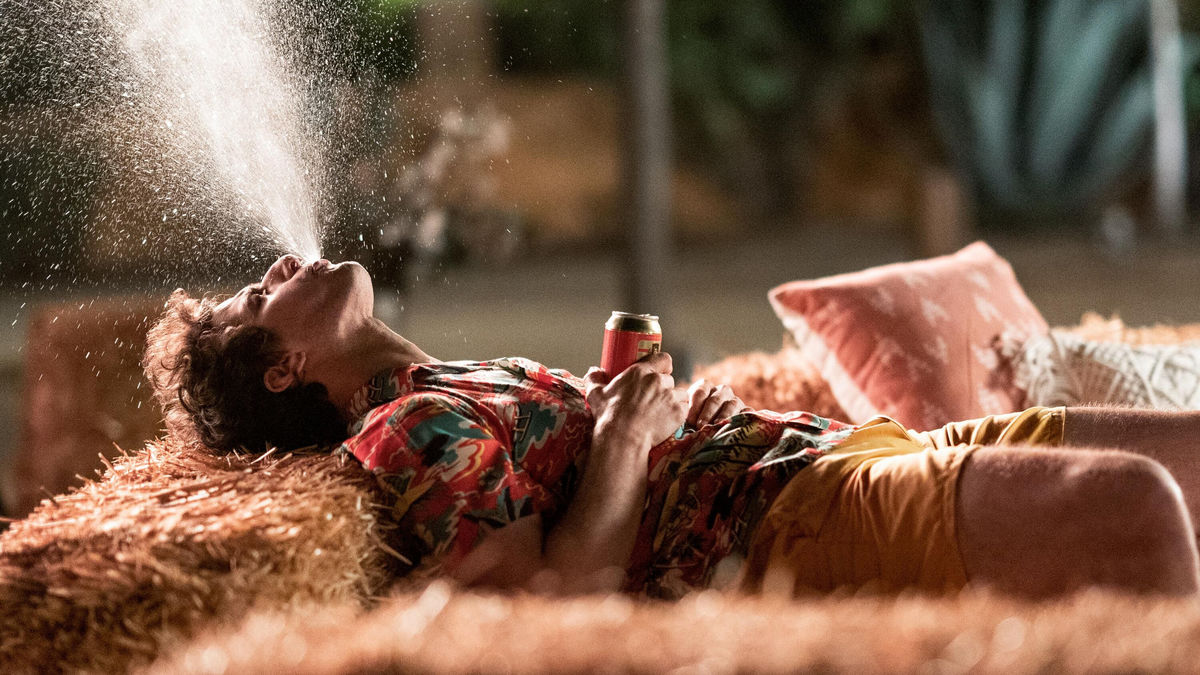
In a year where just about any shred of joy was welcome with desperately open arms to escape from the nonstop social, political, and medical horror show that was the year 2020, a boisterously earnest time-travel comedy like “Palm Springs” was a slam-dunk guarantee for a good time at (what in any livable year would have been) the theatre. Consequently, the world’s understandable desire to leave any and every remnant of that cursed year in the darkest, most inaccessible recesses of the collective consciousness meant that Max Barbakow’s efforts to bring just a sliver of levity to our lives would be equally lost to the aether of a post-COVID world.
Suffice it to say, this status is grossly unwarranted, as “Palm Springs” brings together the dynamite duo of Andy Samberg and Cristin Milioti to finally find a suitable venue for the former’s internet-bred sarcasm at the same time that it gave many of us a warm, proper introduction to the latter’s biting onscreen allure. Together, Barbakow’s stars offer a refreshing mixture of high-concept intimacy reminiscent of the era of “Groundhog Day,” but not without its own modernized sense of outlandish humour in an age more and more desensitized to the older modes of comedy and romantic sincerity.
24. All the Beauty and the Bloodshed (2022)
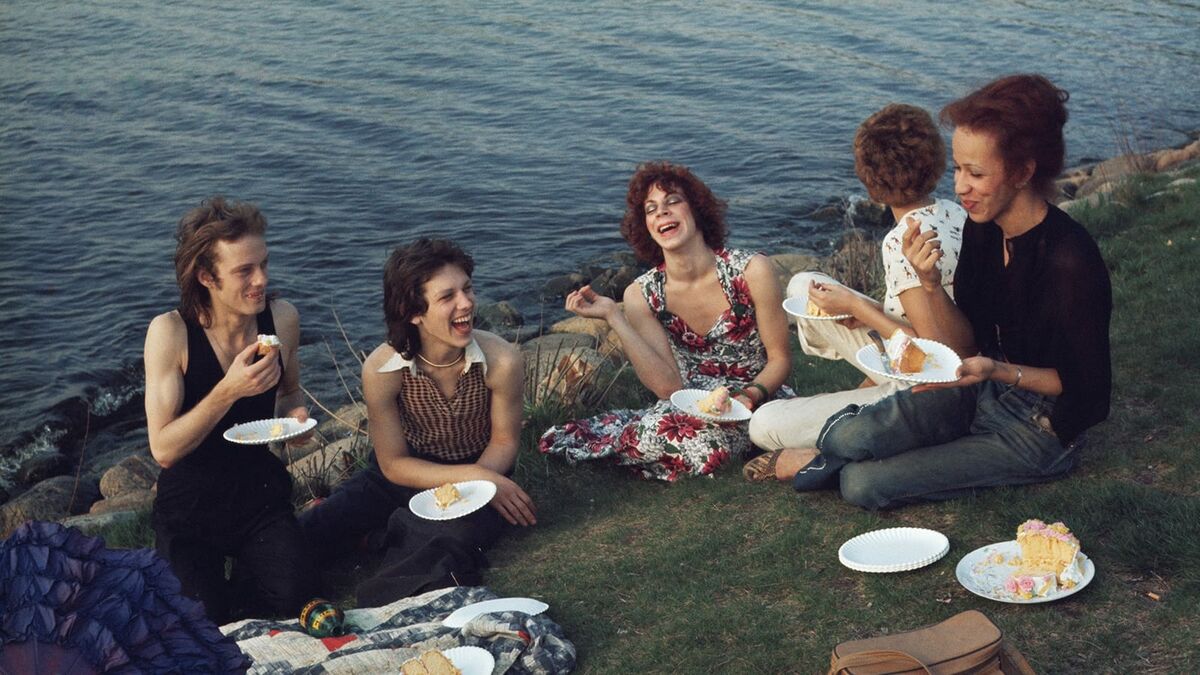
Though NEON has developed a notoriety for scooping up every single Palme d’Or at the Cannes Film Festival that they could get their greedy mitts on, “All the Beauty and the Bloodshed” shows how the distributor’s greed is as varied as their output, with their first and only (so far…) grasp at Venice’s coveted Golden Lion. More notable is the distinction the film holds as one of only two documentaries to ever even win the prize, and such distinction is well-deserved in the face of such a sharp piece of politically driven humanism. Laura Poitras’s documentaries always cover subjects who lead compelling lives, but her best work thrives on subjects who are interesting people in themselves. In Nan Goldin, Poitras has found her most stimulating subject up to that point.
Fully attuned to the melancholy of the artist’s personal losses during the HIV/AIDS crisis while simultaneously tapped into the ferocity of her activism, “All the Beauty and the Bloodshed” frames Goldin’s endless battle against pharmaceutical corporatism as a victory measured in every moment spent keeping the battle alive in the minds of an increasingly resigned public. Poitras captures Goldin’s refusal to let that resignation take root with a parallel sense of vigour, opening up her subject’s hope for a better future to the rest of the viewing world.
23. Anora (2024)

As we begin our trek through NEON’s quest to covet every Palme d’Or for the foreseeable future (spoiler: every one of them will appear somewhere on this list), we begin with Sean Baker’s somewhat-controversial but undeniably energized “Anora.” Most of those controversies are, naturally, the result of terminally online, anti-Oscar juggernaut smearing—Baker got way too much flak for hiring nonactors with questionable politics and not enough flak for making what amounts to a slapstick comedy that runs about 40 minutes longer than a slapstick comedy has any right to—because when Mikey Madison struts into the frame, there’s no denying that she owns absolutely every inch of it through the sheer force of her confrontational charisma.
Baker frames one woman’s refusal to step aside at the threat of annulment for her marriage to an oligarch’s son not as a desperately opportunistic Hail Mary, but rather as the increasingly upsetting delusion of a woman whose self-sufficiency has slowly given way to a comfort provided by a man who will never see her as anything beyond her pleasure-based profession.
“Anora” dignifies its titular sex worker far more than its detractors would admit, as Baker and Madison both find in Ani’s continuous dismissal by those around her a persistence to fight against classism with the only tools at her disposal: a viciously profane vocabulary, a firmly defensive disposition, and an overt willingness to throw hands with the most inept of goons.
22. Triangle of Sadness (2022)

Nobody is going to look you dead in the eye and assert that Ruben Östlund’s variety of satire is of the utmost tasteful subtlety. Whether or not the rampant goofiness of his “eat the rich” antics is to your particular liking, though, the appeal of that unapologetic inanity is just as obvious. “Triangle of Sadness” may not be bolstered by the same astute commentary on fragile masculinity as the director’s earlier “Force Majeure,” but Östlud’s most recent piece of class commentary sizzles with an effervescent grasp of its caricatures in the face of the filmmaker’s more austere camera compositions.
Rigid in structure but malleable in its focus on the characters who persistently make fools of themselves in the name of oblivious comfort, “Triangle of Sadness” mines plentiful comedic material by engraining its sense of tone into the exact notion of self-seriousness it’s parodying. Östlund’s eclectic ensemble brings a distinct European flavour to the film’s specific brand of bourgeois entitlement that makes its potentially staid commentary hit with a transparency that makes their self-inflicted downfalls all the more amusing with each passing second. And if nothing else, Östlund deserves massive praise for managing to make the mere concept of male modelling even the slightest bit watchable.
21. Memoria (2021)
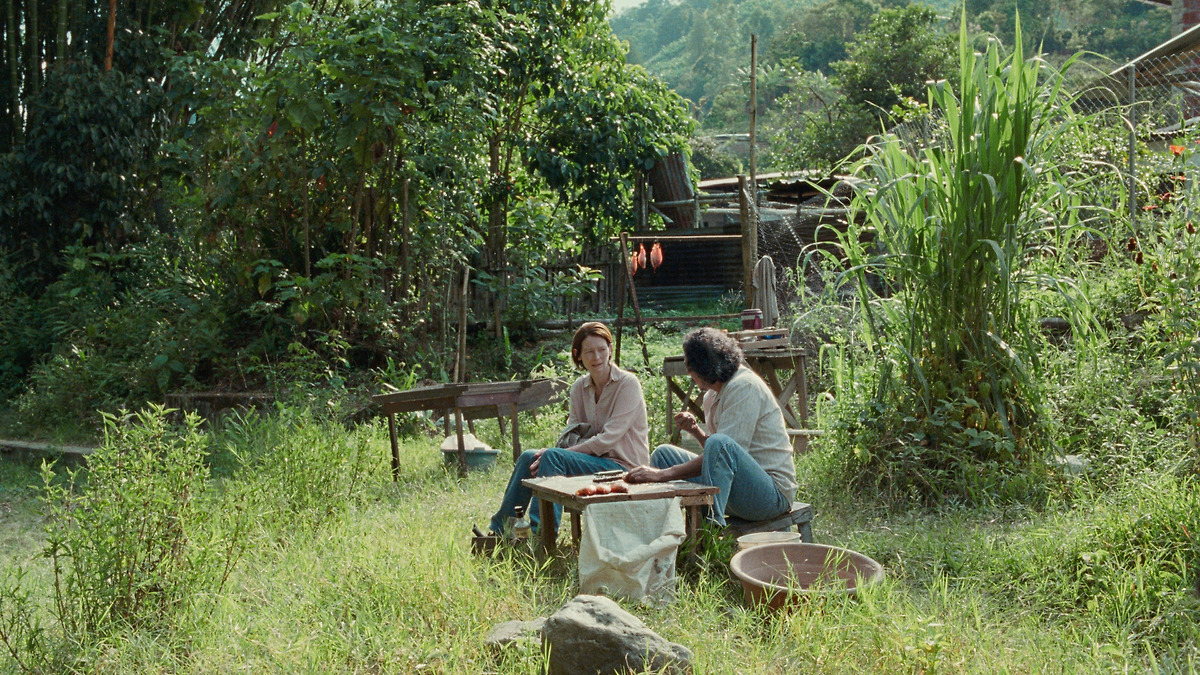
If the cinema of Apichatpong Weerasethakul oozes with the sensory depth that defines his native Thailand, then “Memoria” constitutes the most tangible distillation of that essence applied to an entirely new space. Shifting his sights (and sounds) towards Colombia, Weerasethakul trusts the ever-reliable global citizen that is Tilda Swinton to usher viewers into a space where the most destabilizing bang is just as integral as the calmest sway of a rushing stream. Weerasethakul thrives in the specificity of his environments, but his relentless embodiment of the mysteries of serenity proves universal in its reach.
Describing what makes the oeuvre of the Thai filmmaker colloquially referred to as Joe so appealing is, in truth, somewhat challenging. His meditative spirituality transcends mere vocabulary and enters a realm of completely intuitive attraction. “Memoria,” in its own way, seeks to quantify that almost extra-dimensional appeal in its search for the origin of a mysterious booming noise, and in the process, firmly cements the impossibility of doing so, as sound and sight meld together into a kaleidoscopic sensorial pilgrimage. And frankly, we, the Weerasethakul faithful, wouldn’t have it any other way.
20. Anatomy of a Fall (2023)
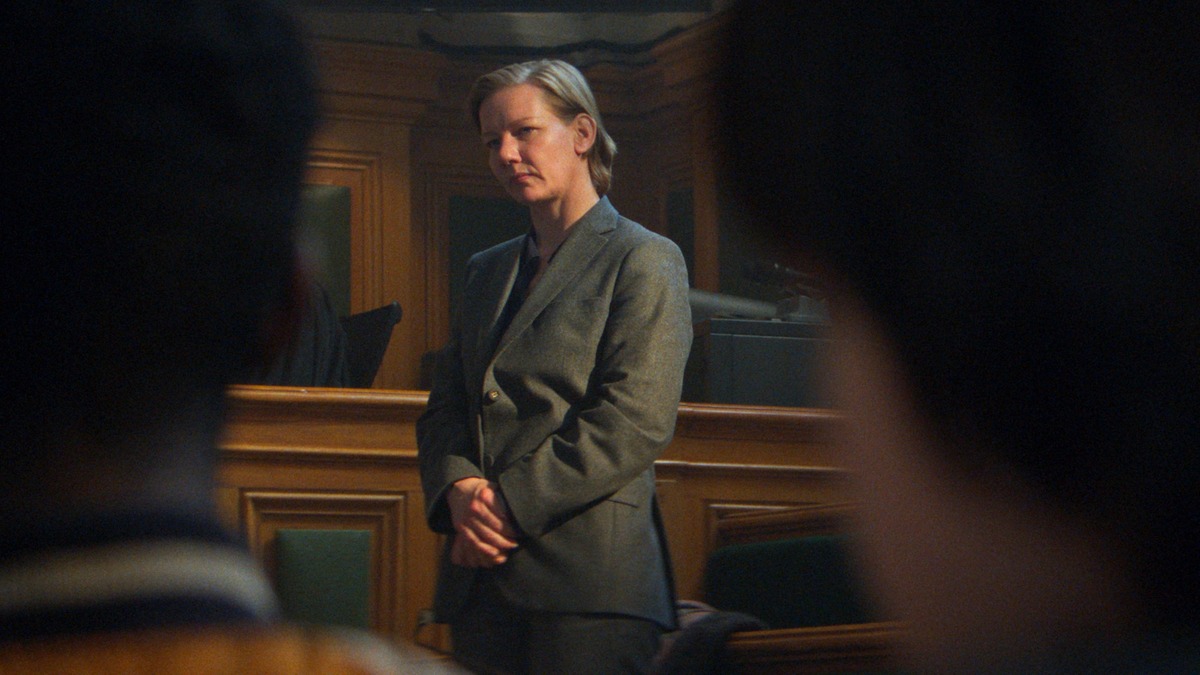
Justine Triet has always had a quietly distinct and frustrated perspective on the various societal implications of womanhood in modern France, and with “Anatomy of a Fall,” the director has channeled that frustration into her most potent examination of systemic anguish yet. Filtered through the prism of a classic courtroom drama and embodied with a foreign ferocity by a career-best Sandra Hüller, the third woman-directed film to ever win the Palme d’Or earns that status with a damning ruthlessness in shaping a bitter battle for self-preservation.
Whether or not Hüller’s Sandra Voyter is even guilty of her accused murder is beyond the point, as “Anatomy of a Fall” finds in that question of innocence an even more persistent question of self-worth in the modern day. Triet examines these competing facets with laser-precision at the script level (alongside co-writer and partner Arthur Harari), whilst her lens captures the freneticism of a constantly evolving case with a more decidedly loosened focus, all adding up to an interminably tense take on one of cinema’s most reliable genres, brought to life with its own uncompromising urgency. And this is to say nothing of Messi—the goodest boy!—stealing every frame of the film with his canine charisma.
19. The End (2024)
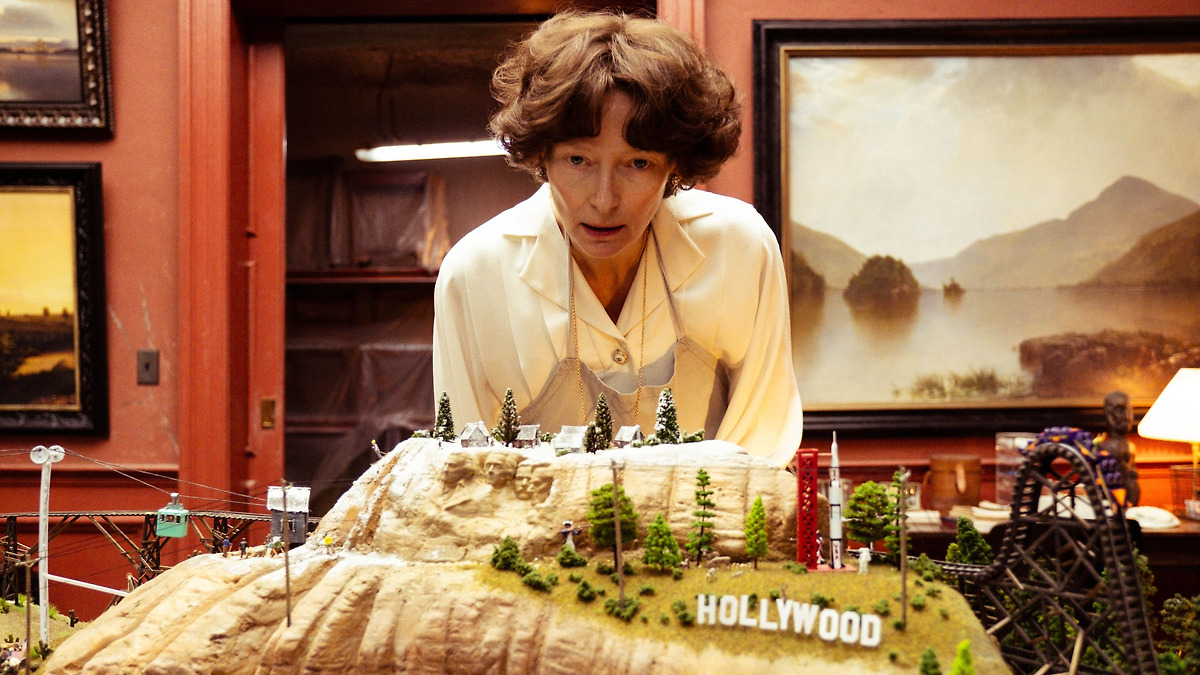
We all love a committed anti-musical, don’t we? Well, I do, at least, and “The End,” for all of the mixed sentiment surrounding its overarching effectiveness as a piece of musical cinema, makes perhaps the most distressing case imaginable for its vitality in a world where our most privileged few refuse to admit to their complicity in the state of destitution that engulfs us all. They say that when words are insufficient to express our deepest emotions, we sing, but Joshua Oppenheimer makes the case that we sing when we have no desire to express those depths of feeling at all, lest they reveal anything far too pertinent, and as a result, far too shattering to our frail egos.
Oppenheimer’s background in documentary filmmaking imbues his directorial voice with a cutting realism that seemingly clashes with the film’s reliance on more abrasive musical elements, but that focus on musicality as a means of intentional dissonance pairs rather seamlessly with the examined atrocities depicted in “The Act of Killing” and “The Look of Silence.” “The End,” as a result, eschews all forms of escapist comfort in favour of enlivening the desolate caverns of a post-apocalyptic ruin with a rhythm that does nothing but call further attention to the desolation right in front of us.
18. Nirvanna the Band the Show the Movie (2025)
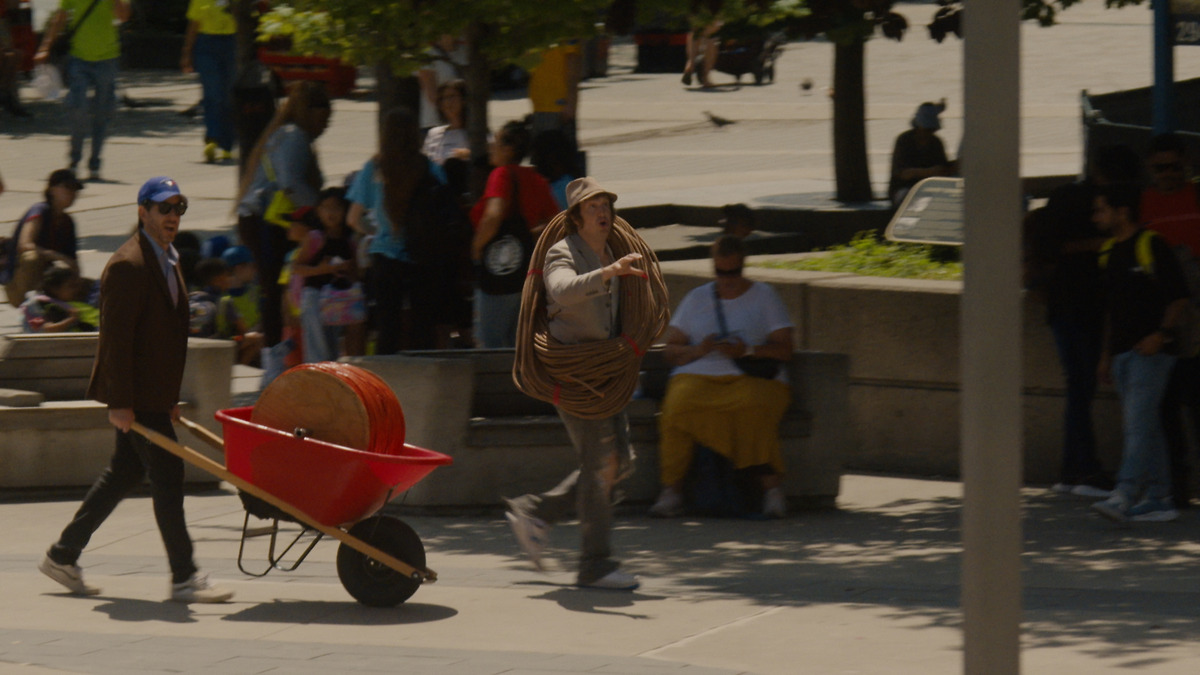
You obviously don’t require the preexisting context of Matt Johnson and Jay McCarrol’s “Nirvanna the Band the Show” web-series and subsequent Vice show to fully enjoy the abject absurdity of “Nirvanna the Band the Show the Movie,” but the film’s admirable refusal to relent even the slightest bit on the frenetic, non-sequitur spirit of the duo’s existing output gives this film a wily sense of stamina that flies entirely in the face of anyone not already willing to attune themselves to their comedic sensibilities.
Leveraging the amassed clout from his more palatable but no less distinctly off-kilter features like “BlackBerry,” Johnson dives right back into the unapologetically obnoxious but undeniably sincere antics of his fictionalized self to prove without a shred of doubt that all preceding films were merely a pretence to amass funding for this one.
The result is the culmination of two musical nitwits in arrested development, hopped-up on unfiltered rocket fuel and discontinued Orbitz, with no place to go but back into each other’s arms as the prospect of one night at Toronto’s quasi-famed Rivoli is the greatest—and only—ambition they can muster. But that meagre ambition is more than enough to keep us all flailing about in totally breathless amazement.
17. The Secret Agent (2025)
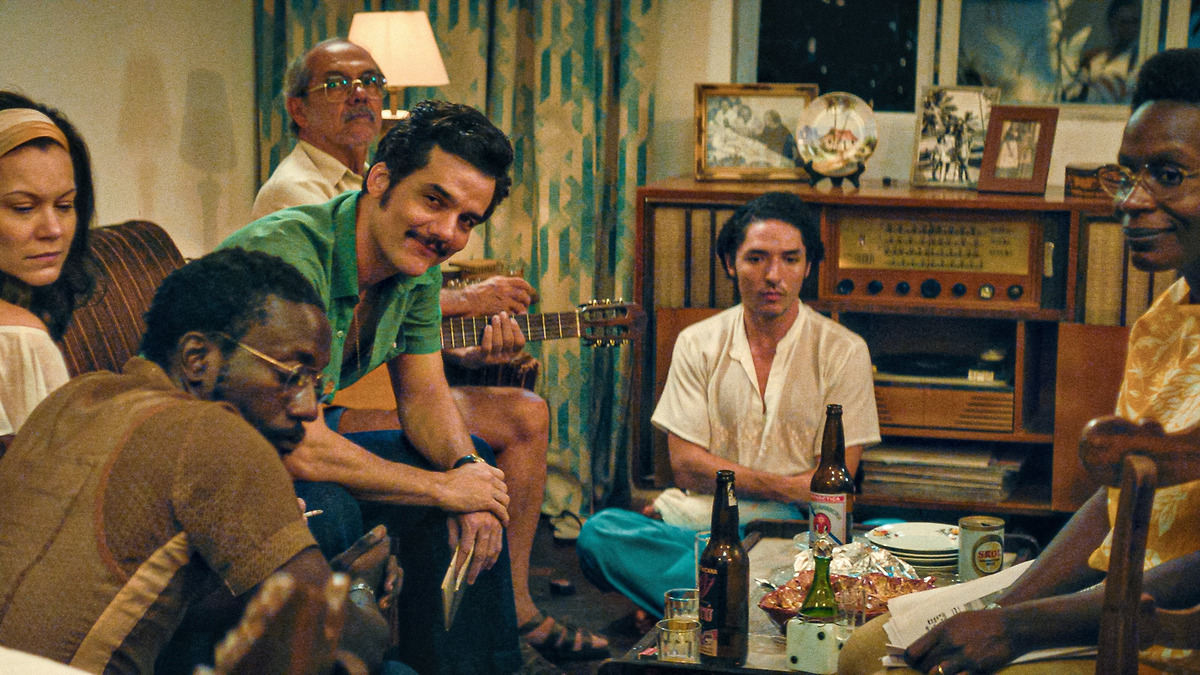
In NEON’s especially shameless efforts to scoop up the Palme d’Or this past year in particular, their decision to board themselves to the hype train for “The Secret Agent” may very well, in the end, prove to have been their most fruitful gamble of that festival season. Kleber Mendonça Filho has never been shy about configuring his history as a film critic to examine the corresponding history of his native Brazil in all its complexity, and his most recent feature brings that prickly admiration for a nation that refuses to let its political stains be scrubbed away to its most acutely poignant ends yet.
Wagner Moura’s controlled yet minutely furious performance envelops that historicity with a finger firmly on the pulse of what this resistance symbolizes in a nation so often on the brink of corruptible collapse. “The Secret Agent,” in that respect, acts as a distressingly relevant and ultimately hopeful microcosm of resilience in the face of tyranny that echoes across all the world’s nations, poisoned by an ideologically bankrupt force with their index hovering over the button that will wipe out the disenfranchised. Mendonça shows how such forces are always lurking in the dark, but are at their most sinister when hiding in plain sight in the scorching light of day.
16. The Seed of the Sacred Fig (2024)
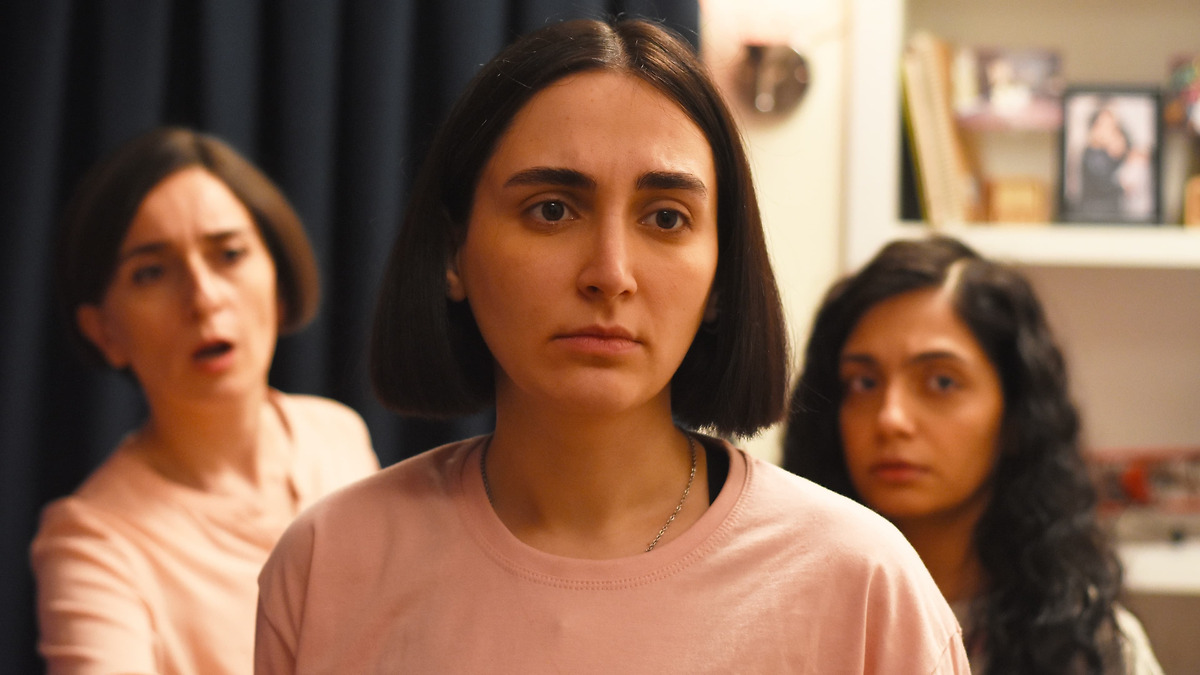
I won’t sit here and deny that I—and by extension, just about every other critic—have expressed on more than one occasion something along the lines of “The mere fact that ‘The Seed of the Sacred Fig’ exists at all is a miraculous triumph in itself,” but with the redundancy of that statement comes an irrefutable kernel of truth.
Mohammad Rasoulof’s perpetual indignation towards the Iranian regime manifests in his most nakedly judicious condemnation of an institution that itself passes off inhumane mistreatment as its own form of twisted justice, and the lamentable timeliness of Rasoulof’s fury gives his film far greater gravity than can be quantified in a few sympathetic headlines.
The governmental reaction to Rasoulof’s work (and his subsequent punishment that more than validates the film’s critical perspective) may inevitably overshadow the film itself, but “The Seed of the Sacred Fig” overcomes the accusations of festival exoticization that more skeptical viewers would readily assign it, thanks to the filmmaker’s airtight grasp of character not through the struggles that threaten to define them, but rather through their persistence and personal evolution in the face of those horrifying tribulations.
15. Moonage Daydream (2022)
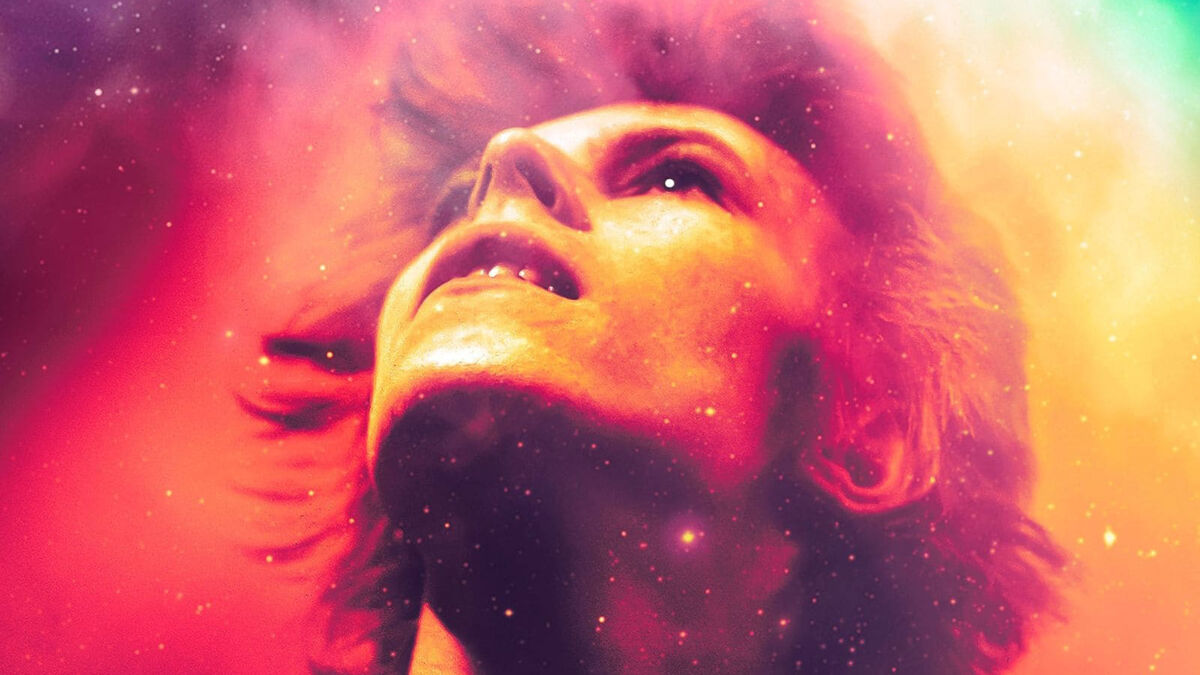
A kaleidoscopic fever dream of a documentary entirely befitting the magnetically enigmatic subject it’s meant to tribute, “Moonage Daydream” explores the abstract essence of David Bowie through the most tangible means imaginable. Spending much of his career on nonfiction portraits of complex figures like Kurt Cobain and Jane Goodall, director Brett Morgen found in Bowie the very source of energy that propels postmortem homages into existence to begin with, finding in the most casual and personal of his subject’s archives the twinkle that explains everything while detailing almost nothing.
Morgen sees in Bowie’s forward-thinking disregard for labels the means through which his own documentary can transcend boundaries, merging archives, sound bytes, and fever-dream coloration into a celebratory eulogy of almost intimidating proportions. That said, while indulging in the myth of Bowie, the glam rock icon, “Moonage Daydream” never loses its grasp on the timid humanism buried beneath the eyeliner, as Morgen fills the IMAX frame with the tender generosity of art and spirit that emanated from the Starman’s every infinitesimal movement. In “Moonage Daydream,” existentialism collides with a cavalier openness to whatever music and imagery have to offer, and Morgen fully inhabits that malleable space between life and death that his subject and his legacy will forever dominate.
14. Spencer (2021)
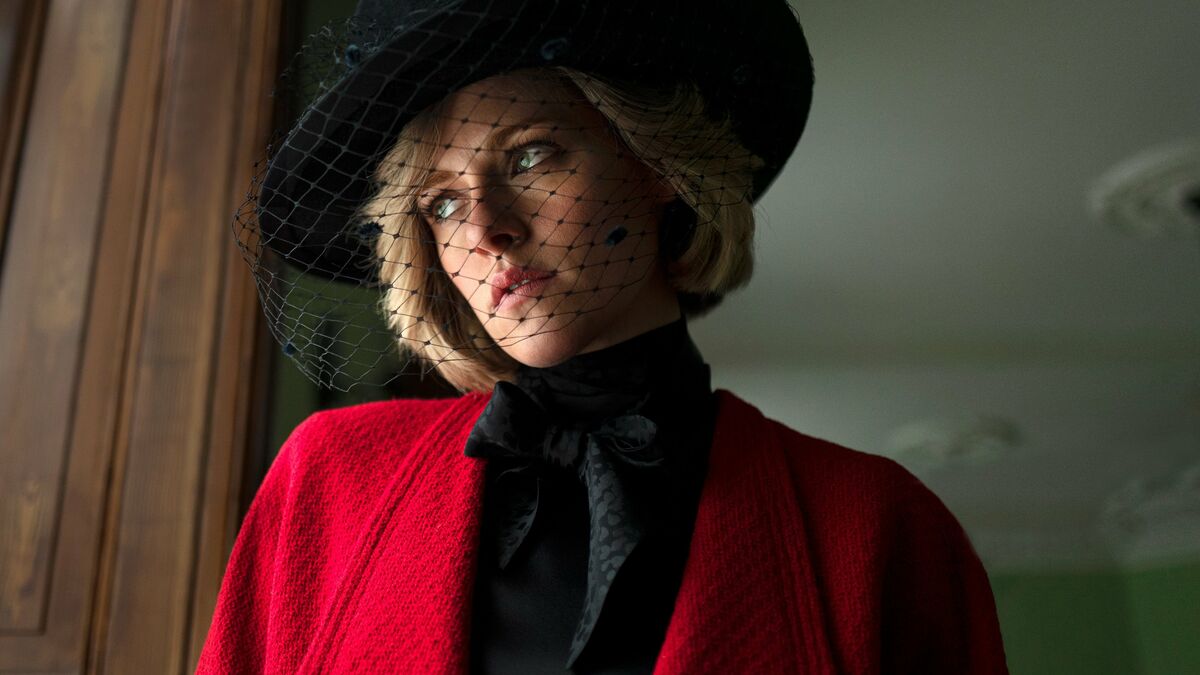
It’s a fine line to walk for a film that seeks to empathize with one of the most famously tragic figures of modern history while also subjecting us to the torturous experiences that afflicted their state of mind. “Spencer,” a recounting of the famed Lady Diana and her horrific subjugation to the calculated mythos of the British royal family, certainly risks falling under an exploitative umbrella that uses its subject’s pains as a venue for morbid fascination (think the following year’s “Blonde” for a contemporary example of how to do this as wrong as humanly possible). Fortunately, Pablo Larraín can see the light peering through that crucial space between morbidity and compassion.
The middle film in Larraín’s trilogy of tragic women—preceded by “Jackie” in 2016 and followed by 2024’s “Maria”—proves to be by far the best, as “Spencer” channels Kristen Stewart’s typically jittery disposition into a moving vulnerability that results in by far the actor’s best and most clearly motivated performance. Through Stewart’s efforts, the film digs into the weights of expectation and the unreasonable standards imposed by the monarchy that would make even the most ardent of Elizabethan loyalists squirm with disgust, without ever letting Diana’s imprisonment remove whatever agency she could muster to stand another day within the walls of Buckingham Palace.
Also Related: The 50 Best A24 Movies
13. Dear Comrades! (2020)
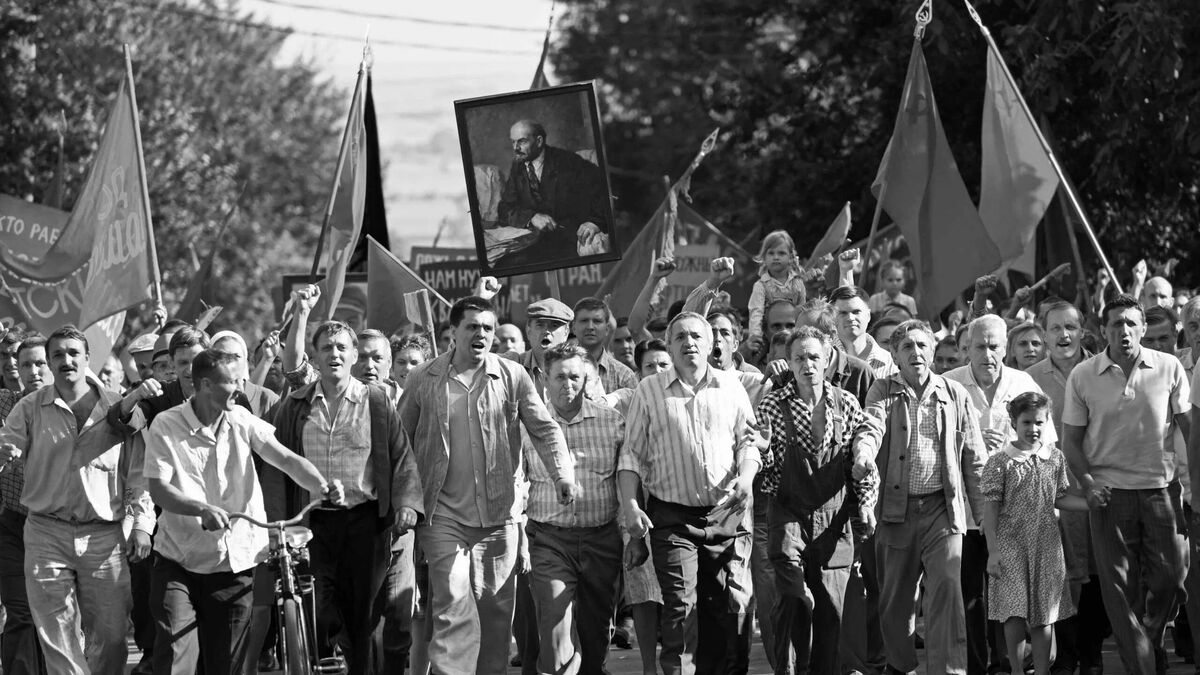
Andrei Konchalovsky has been a fixture of Soviet/Russian cinema since the 1960s—having started his career as a co-writer on none other than Andrey Tarkovsky’s debut “Ivan’s Childhood”—but his recent local output has placed him at an interesting juncture in cinema history. Balancing back and forth between Eastern and Western film industries (yes, this is the “Tango and Cash” guy), Konchalovsky’s grasp of his home country’s place in the modern world seems to have one foot in both the American and Russian perceptions of what post-Stalinist Russia has become. “Dear Comrades!” then serves as the director’s most haunting rumination on the reverberating echoes of USSR history.
Shot with the crisp, monochromatic intimacy of a Paweł Pawlikowski film but framed with the sort of calamitous urgency of an event that would sneakily shape a nation from the margins, “Dear Comrades!” draws the eye to its unshakingly gorgeous compositions while almost daring you to look away from the systemic horrors that are, themselves, just offscreen. Konchalovsky envisions the aftermath of the Novocherkassk massacre as a microcosm of Soviet-era cruelty through the lens of a single mother’s terrified search for her daughter, and just as well, Konchalovsky himself searches for any shred of meaning in the blackened bloodshed.
12. No Other Choice (2025)
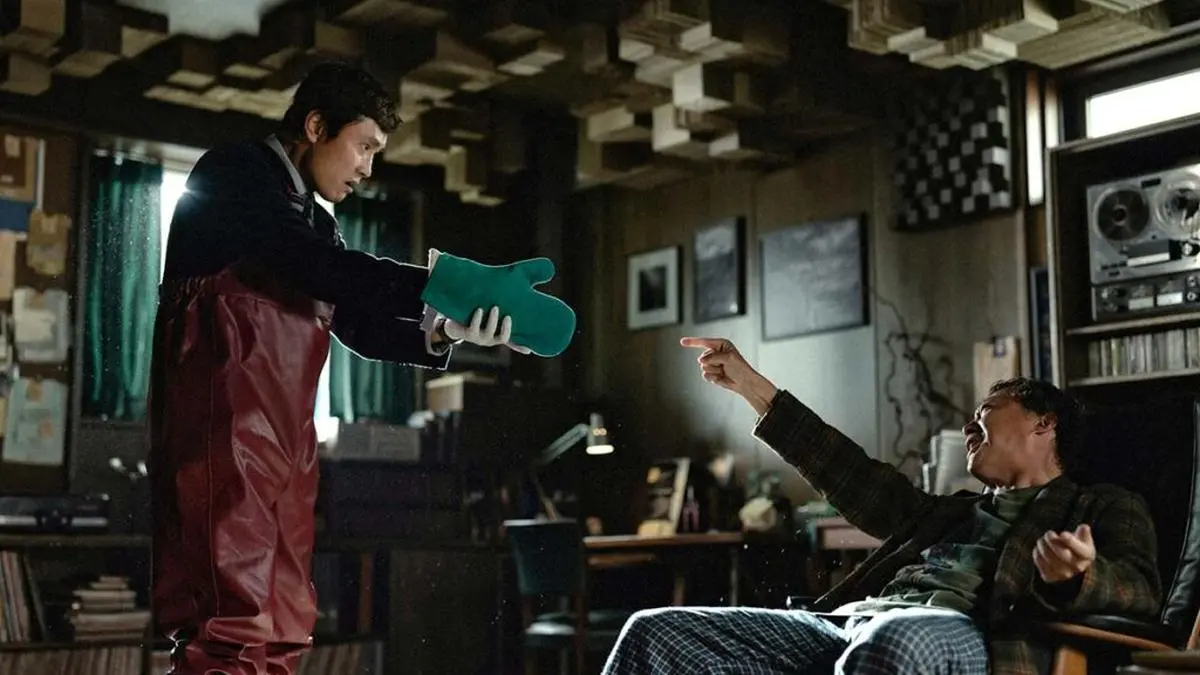
Park Chan-wook may continue to be grossly ignored by The Academy, but around these parts, there will always be room for his particularly sadistic philosophical perspective on how we carry ourselves in an increasingly isolated, tech-dependent world. “No Other Choice” takes that pessimism to its most gleefully sinful place yet. But amid all the slapstick and confused mugging from Lee Byung-hun at peak desperation, Park never loses track of what that stupidity ultimately entails for a society continually driven on an unsustainable model of capitalistic aspiration.
Park’s grasp of form further sells the contradictory tone of a destitute social standing that should feasibly be a disaster of tonal and thematic confusion, but in the hands of a genius, becomes equal parts hilarious and solemn. NEON’s own acquisition of the film may in fact have cost “No Other Choice” its Oscar potential—when a studio spreads itself so thin, casualties are inevitable—but in a way, Park’s marginal award status is its own testament to his refusal to relent on the ultimate despair that defines the world we inhabit today. Park simply had to go this hard; he had no other choice…
11. Sirāt (2025)
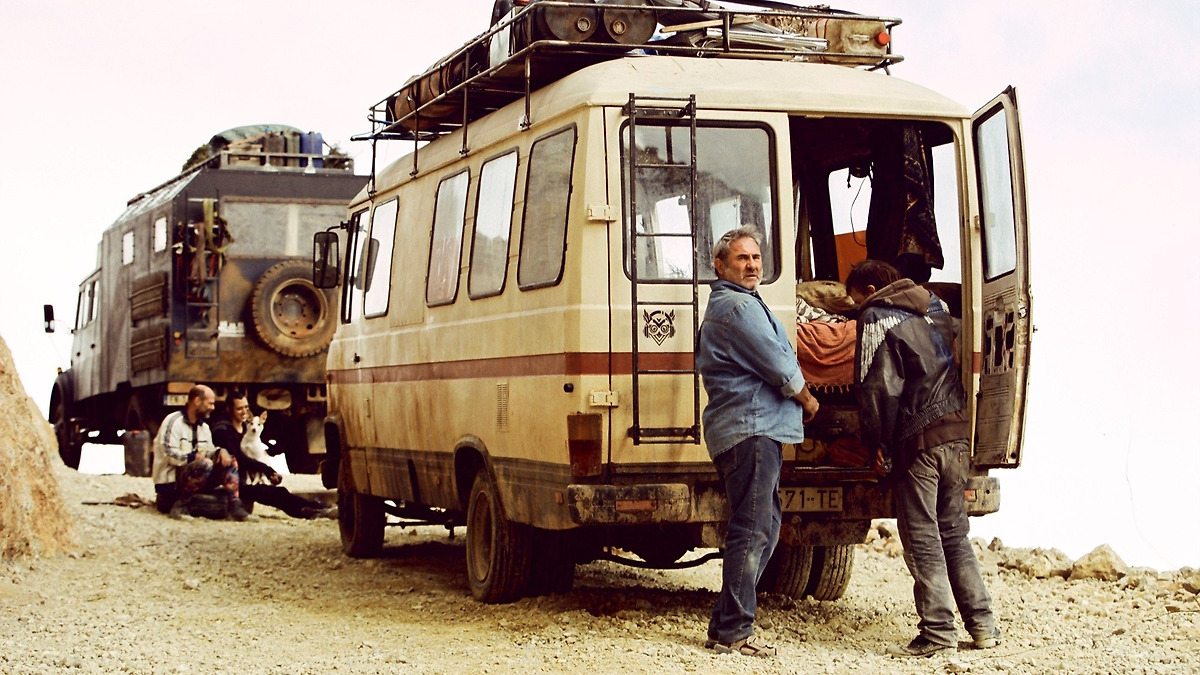
For the better part of a year now, Óliver Laxe’s transcendent “Sirāt” has been gripping the film sphere with a particular variety of noble hopelessness the likes of which we haven’t seen since the days of peak Werner Herzog or William Friedkin’s “Sorcerer.” Tapping into a euphoric musical rhythm that underscores a need to move when there’s demonstrably nowhere to go, Laxe’s most acclaimed feature to date searches for a pulse and finds only the metronomic vibrations of a solitary dance that never ends, where bodies find whatever unity they can in each other’s presence, but can only move at their own somnambulistic pace.
A film that finds itself in the eternal listlessness those bodies feel in the stifling desert heat, “Sirāt” takes a compellingly diagonal view of postcolonial ignorance, as an oppressed Africa becomes a haven for bored Europeans just as its colonized borders become a hellscape for those unable to leave when the party’s over. But in Laxe’s reality, nobody can leave. We are all slaves to the hopelessness that can only be temporarily shaken by an instinctive drive to dance until our feet fall off, and keep writhing around when nothing remains of us but a husk of what once heard purpose in that music.
10. Petite Maman (2021)
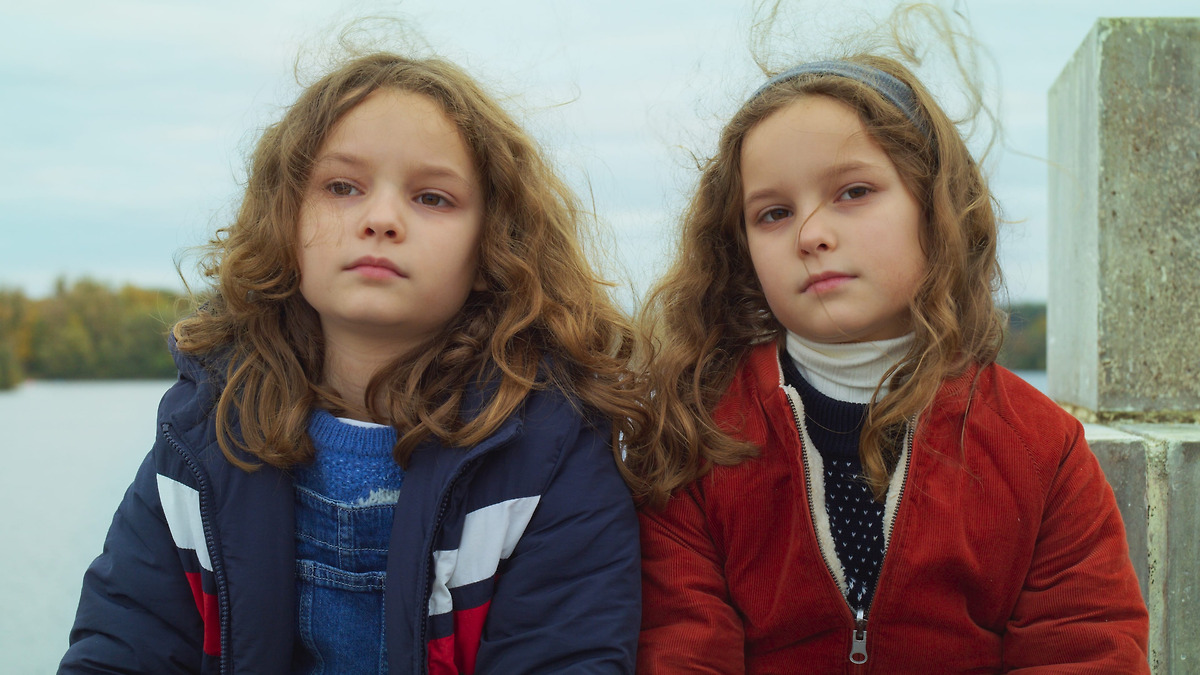
Across a filmography largely defined by her trailblazing reconfiguration of what many scholars have deemed the first hardened argument for a “female gaze,”—itself primarily backed by her interest in exploring same-sex identity in the lives of young women—Céline Sciamma’s most recent film “Petite Maman” took a step back. In scopes both thematic and craft-related, Sciamma’s treatise on the unexpected extent of parental connection is of far smaller scale than the sprawling historical romance that preceded it and solidified her as one of the premier woman directors to watch for years to come, but its emotional centre is no less bolstered by a fundamental curiosity towards the many conflicting facets of the human experience.
Wrapped in an autumnal coziness that cushions the heartbreak to come, “Petite Maman” finds Sciamma engaging with a retrospective lens that simultaneously looks to the future in the hopes of reconciling the uncertainties of childhood with the parallel uncertainties that come with guiding the next generation. At the end of the day, we’re all still growing, and Sciamma’s warmly egalitarian perspective on an isolated adventure by way of a casual stroll through the woods becomes a benchmark for the unsuspecting impact of embracing the blurred lines where friendship and family lose their distinction in a pile of fallen leaves.
9. It Was Just an Accident (2025)
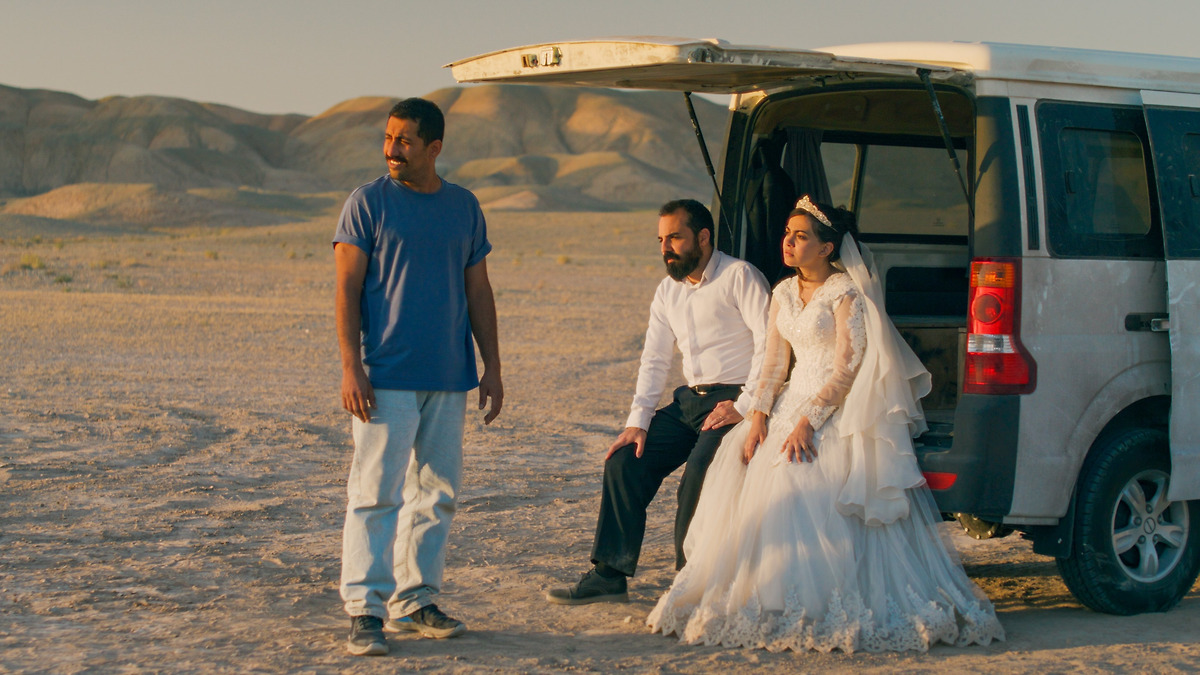
As Jafar Panahi continues to harden one of the most casually confrontational filmographies in modern cinema, his Palme d’Or winner “It Was Just an Accident” feels like a culmination of his frustrations and achievements in persistence even beyond the scope of the film’s much-deserved accolades. Seeking some form of closure in the aftermath of inhumane systemic treatment, Panahi draws upon his own experiences—and, implicitly, those of many of his fellow suppressed Iranians—in an attempt to see where righteousness should supersede the unquenchable thirst for revenge. Where the film finds its greatest insight is in asking whether integrity under such humiliation is even possible at all.
“It Was Just an Accident” subsequently proves to be a film whose aesthetic and structural tightness is in no way diluted by a prioritization towards complex messaging above “entertainment value” (as if this label is even relevant for such an urgent reflection of everlasting corruption, anyhow). On the contrary, Panahi’s concentrated dialogue filtered through precise but unobtrusive long takes ensures that the film maintains formal clarity at the same time that it seeks to untangle the futility of moral clarity in a world defined so consistently by everyday cruelty.
8. Perfect Days (2023)
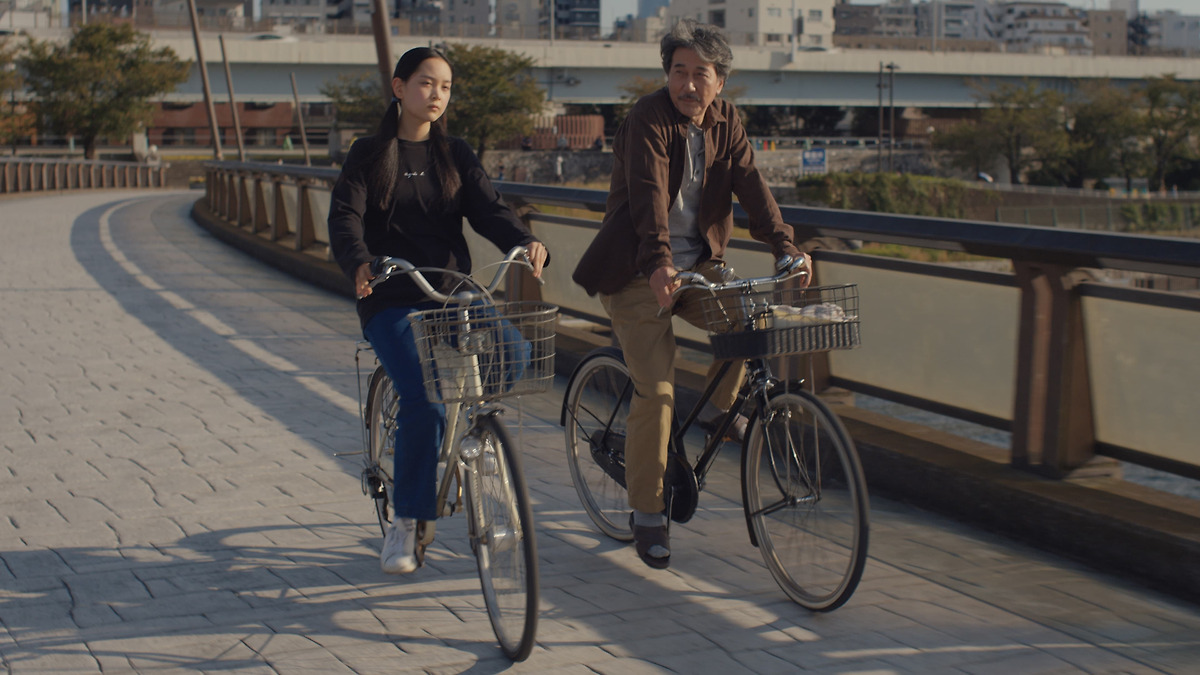
“Perfect Days” might, to some, appear as Wim Wenders’s cheaply schmaltzy attempt at cinematic tourism, but like all other remaining vestiges of the German New Wave—which is to say, himself and Werner Herzog—Wenders has always sought answers to the atrocities of which his home country has proven itself capable by examining the consistencies of the human condition across all possible borders. The unadorned joys of life found in “Perfect Days,” therefore, constitute an oft-undervalued exhale in a time where the perception of global interconnectivity has segmented us to such a severe degree (a revelation that proves, in praxis, bracingly sincere if not earth-shatteringly revelatory).
By way of Kōji Yakusho’s brilliantly unhurried performance, the film engages with life’s greatest question (“What’s the point?”) not by aggressively seeking it out, but rather by letting it come at its own pace; even if (when) such an answer never comes, Wenders is content to search through every shadow against the bathroom wall and each inspired flicker in Yakusho’s eyes to find satisfaction in the uncertainty. Wenders may not be the first filmmaker to be inspired by a toilet that needs to be cleaned, but he may very well be the first to do so intentionally.
7. The Worst Person in the World (2021)
If you haven’t deduced as much this far down the list, I’m afraid I must be the bearer of bad news and inform you that Joachim Trier’s “Sentimental Value” will not be appearing anywhere in this ranking (at least, not in its current iteration). Trier-heads need not despair, though, for NEON’s relationship with Norway’s premier would-be family therapist stretches back somewhat further, to a project whose sticky perceptions skew just a bit richer in the long run.
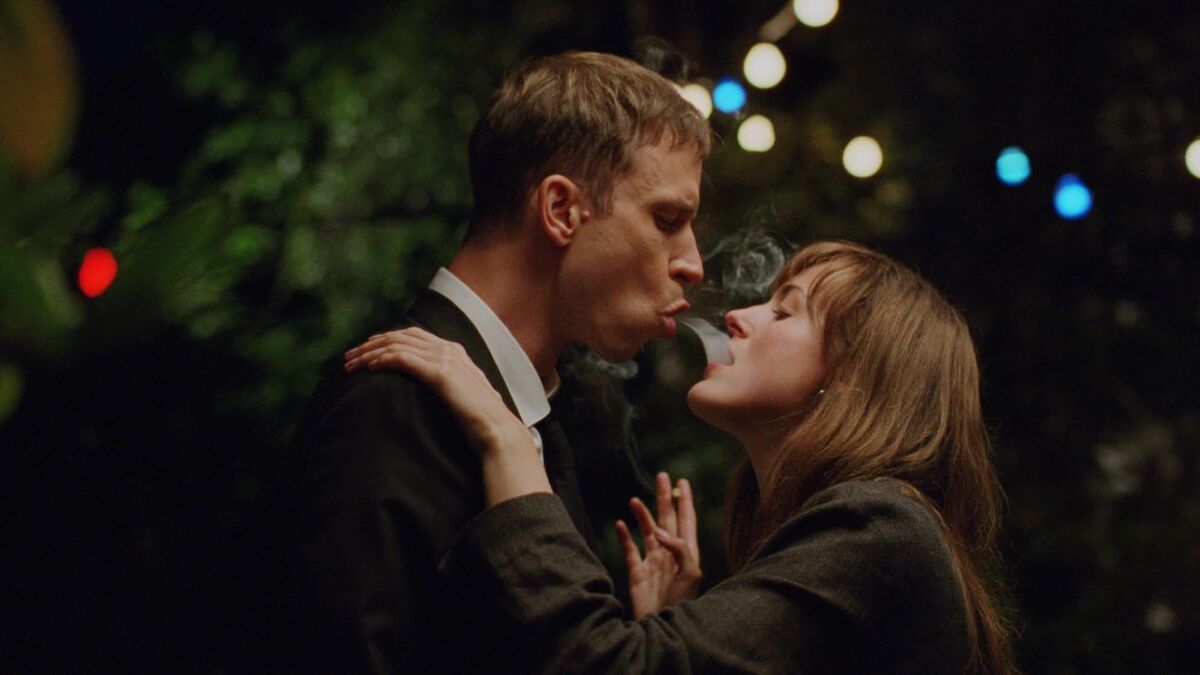
“The Worst Person in the World” may fall prey to some of Trier’s cutesier narrative tendencies—the quaint narration and the chapter divisions—but Renate Reinsve’s flawlessly flawed presence anchors it all within a late-20s confusion that proves increasingly perceptive as our places in the world eschew all forms of certainty and stability.
Neither victimizing itself nor reveling in its ignorance, “The Worst Person in the World” taps into the exasperations of a very real sense of indecision filtered through some reprehensible relationship choices that nonetheless remain grounded by a persistent desire to find the path of least mutual anguish. Still, Trier’s efforts remain disarmingly funny and, yes, charming amid the more venomous realizations about undying egotism, and his film finds its most stable footing when stylistic pretence comes in service of that transparency rather than distracting from it.
6. Honeyland (2019)
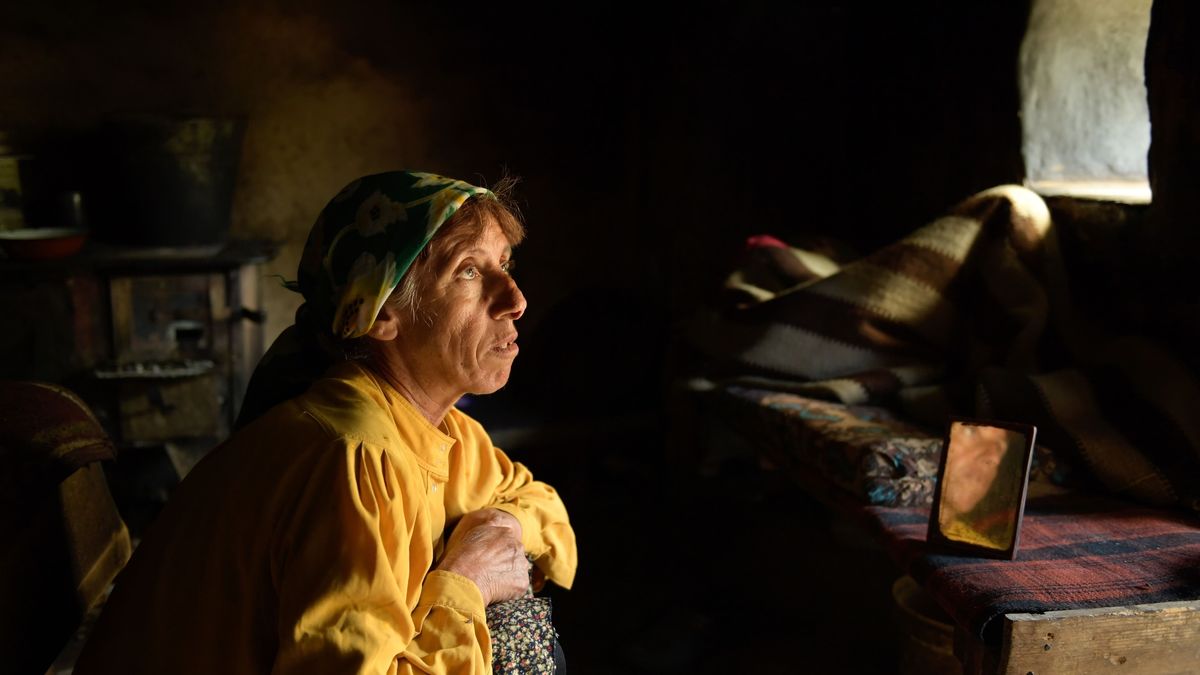
When undertaking a sort of anthropological observation of remote populations in largely unrepresented parts of the world, there always exists the distinct risk of twee exoticism drowning out any proposed perspectives of authenticity or even innocent intention. “Honeyland,” about a lone beekeeper in the isolated heights of the North Macedonian mountainside, proves that such documents can tightly grasp every value they claim to cherish, as long as they are undertaken with a careful combination of observational distance and unmistakably human curiosity.
Directors Tamara Kotevska and Ljubomir Stefanov peer inquisitively at the routine goings on of Hatidže Muratova as her solitary existence reveals more about the social destitution of the current day than it does about any faults of sociability on her part. Through this channel, “Honeyland” finds a forceful environmental priority at the intersection between the natural world and an increasingly endangered style of life that complements it rather than razing it in a flurry of wildfire and toxic smoke. Kotevska and Stefanov, in their almost empirical humanism, transfer Muratova’s individual struggle into a universal testament to the last vestiges of cultural endurance in the face of capitalist extermination, and that resilience tastes as sweet and soft as the bee’s humble nectar.
5. La chimera (2023)
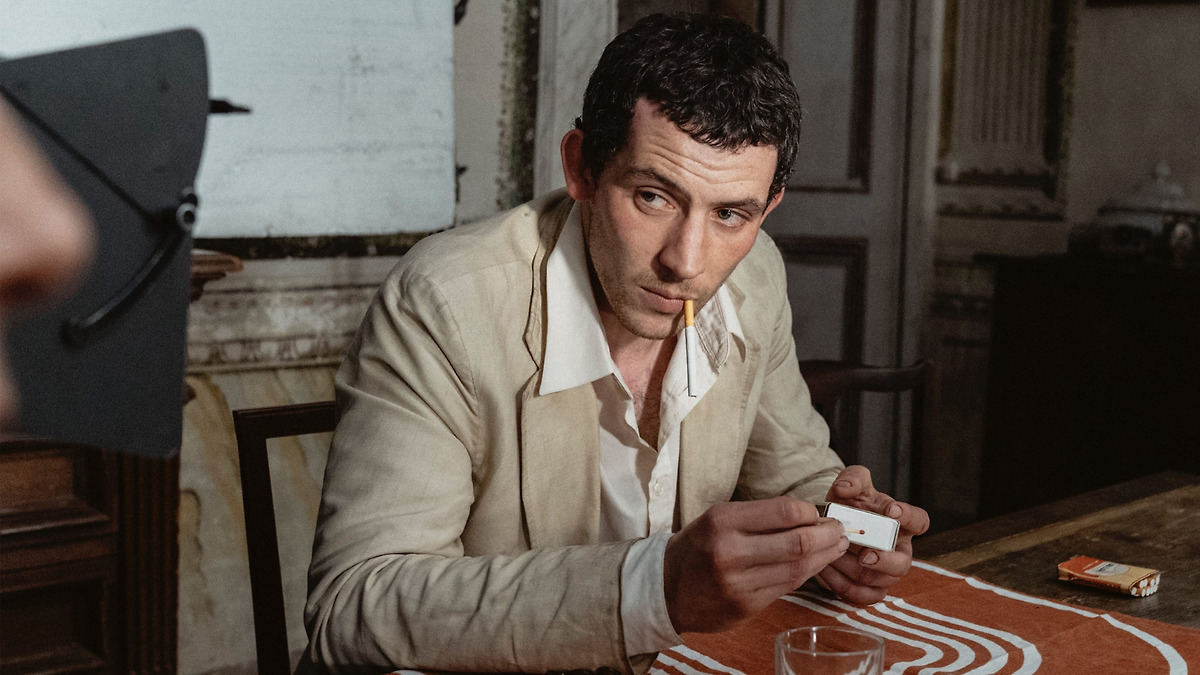
With each subsequent film, Alice Rohrwacher proves her increasingly essential presence on the arthouse scene as one of the medium’s most persistently curious souls. “La chimera” finds the Italian auteur continuing this trajectory with her most hauntingly charming views of her nation’s perpetually lively countryside. Even in the face of a rot spread by the futile promise of fortune, the distinct faces that populate Rohrwacher’s world find the time to smile over a smudged glass of wine and a hastily prepared plate of penne.
Making his way through the auteurist Rolodex at a pace that would make Adam Driver green with envy, Josh O’Connor slides into this milieu with surprising seamlessness, his own scruffy indifference tethering us to the seaside sand as Rohrwacher’s distinct concoction of magical realism leaves us floating through the euphoria of hypnotic enchantment. “La chimera” is a fairy tale soiled by the disillusionment of capitalism, and from O’Connor’s exhausted gaze, Rohrwacher’s inhuman wizardry toes the line between a world lost to history and a world lost to the idealism of a grandeur that could only sustain itself in the short-term fantasies of a few wayward dreamers.
4. Titane (2021)
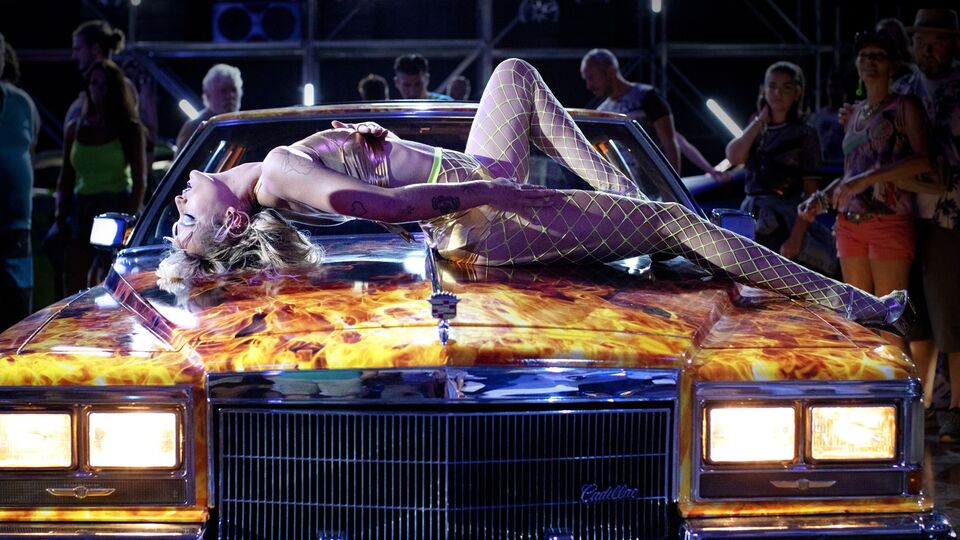
Both the second NEON film and the second woman-directed film ever to win the Palme d’Or in Cannes, Julia Ducournau’s “Titane” made good on the promise of her tantalizingly stomach-churning debut “Raw.” A film whose stylistic ambitions never overshadow its director’s investment in the strains of familial connection through the gushing byways of a ruptured circulatory system, “Titane” explores the middle-ground between earnestness and perversion that only the French could find with such effortless balance. Cars move fast, but the human libido moves faster.
Trading in the more clinical view of mechanical sexual experimentation of its most obvious influence( David Cronenberg’s “Crash”) in favour of a sleeker and sexier sense of motorized attraction, “Titane” narrows itself through the prism of a lost youth in the throes of an unexpected stage of life to show that a hot car needs to be maintained and nurtured just as much as a struggling young adult just beginning to find their way in the world. And whether or not that path involves the occasional serial homicide or automotive fornication, Ducournau makes the case that we could all use a loving hand with its grip firmly on the steering wheel.
3. Flee (2021)
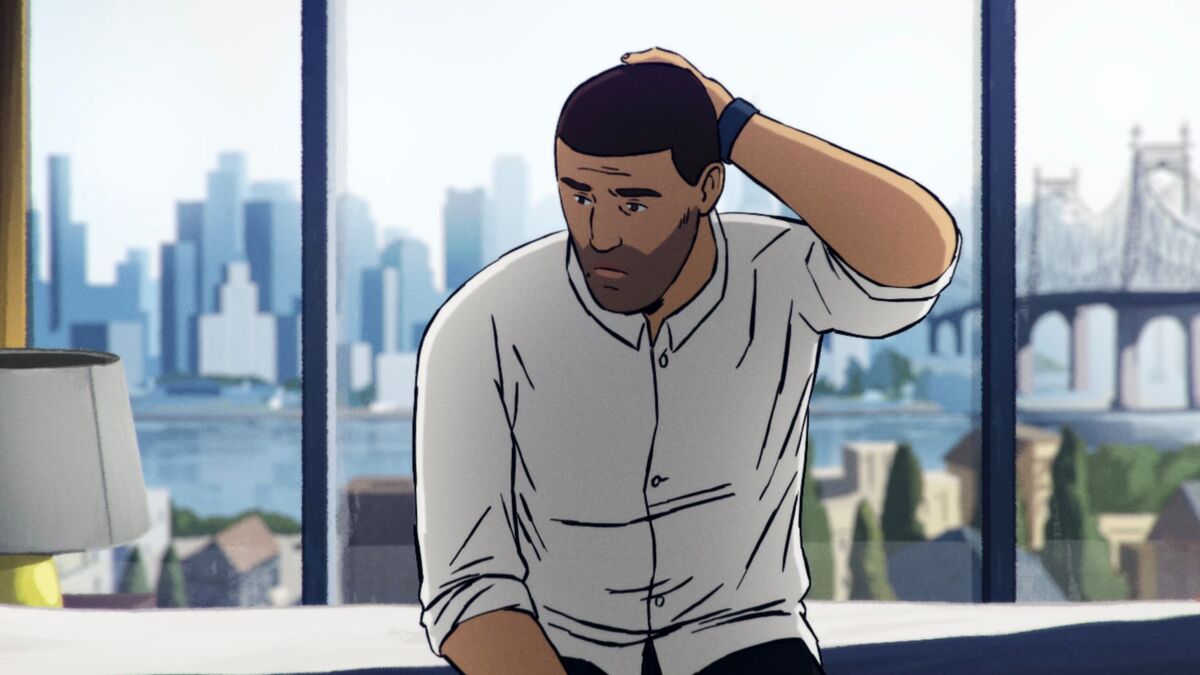
By no means the first documentary to ever use animation as a means of challenging the indexical relationship between trauma and memory, “Flee” may very well be the most effective film to ever explore such avenues in an age of increasing global displacement and waning empathy. Jonas Poher Rasmussen’s interrogation into the immigration experiences of “Amin Nawabi” (an alias to protect his subject’s identity) amid the fall of Afghanistan utilizes its uniquely blended medium to find tenderness in the endurance of such horrors, all while foregrounding the dehumanizing harshness that makes such endurance so commendable to begin with.
That Rasmussen manages to blend two styles of filmmaking that so blatantly call attention to their own craft while maintaining a gripping sense of traditional narrative focus is a testament not only to his skills and sympathies as an artist, but also to the distressing relatability of Amin’s struggles and the familiarity they invoke within the context of our fraught political landscape increasingly devoid of this exact variety of compassion. “Flee” is, therefore, one of the defining humanist stories of the decade, and one whose relationship with that decade is as essential as the relationship between its ostensibly contradictory storytelling tools.
2. Portrait of a Lady on Fire (2019)
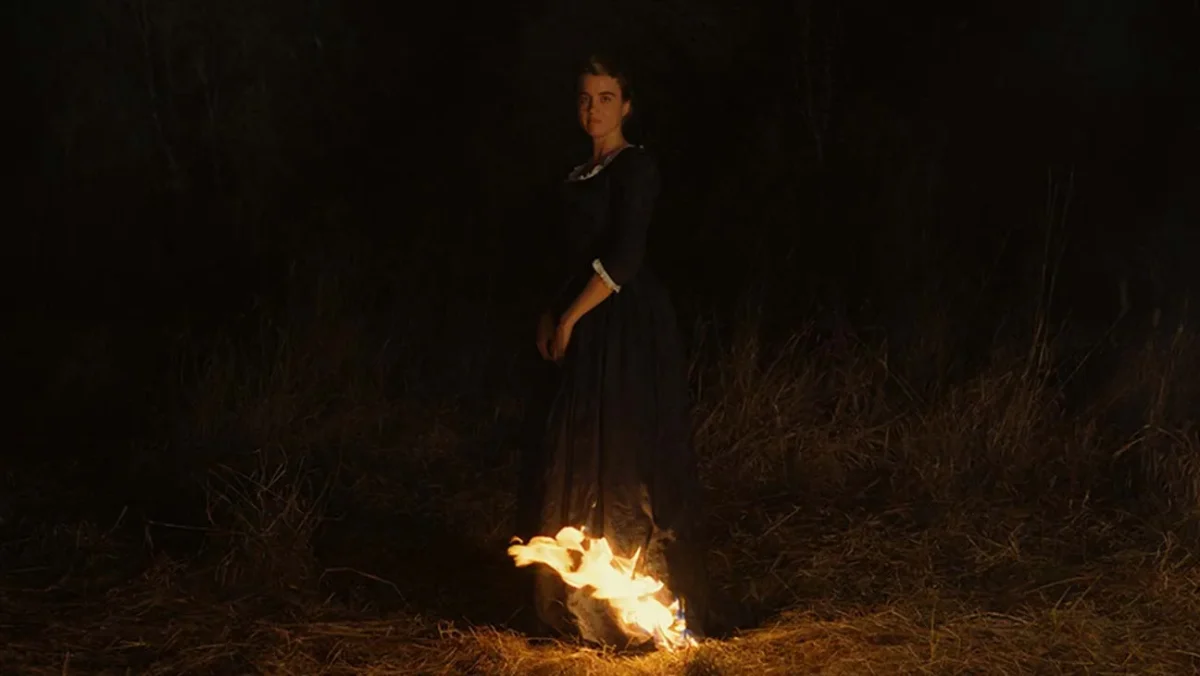
With each passing year, the status of “Portrait of a Lady on Fire” as one of cinema’s defining expressions of womanly attraction and affection solidifies itself with increasingly immovable firmness. Gorgeously crafted with a care for detail so minute that it could very well have been a direct export from a remote, centuries-old manor by the sea, Céline Sciamma’s magnum opus captures a timeless atmosphere in its quest to unravel the purity of love forsaken in a space and time hostile to the needs of women, showing where such hostilities are far more than relics of a bygone era.
Patient and haunting with no pretences of grandeur beyond the miles of space felt in the inches of separation between forlorn gazes, “Portrait of a Lady on Fire” distills the very essence of longing into one of the most painfully perfect exhibitions of a very specific and very tangible sort of heartbreak: not love without reciprocation, but reciprocation without means. As each creeping footstep echoes across the wooden floors, the spectre of a life that could never be hangs over the darkened hallways, desperate to find a reflection as it looks back in the mirror to prove that it can truly exist.
1. Parasite (2019)
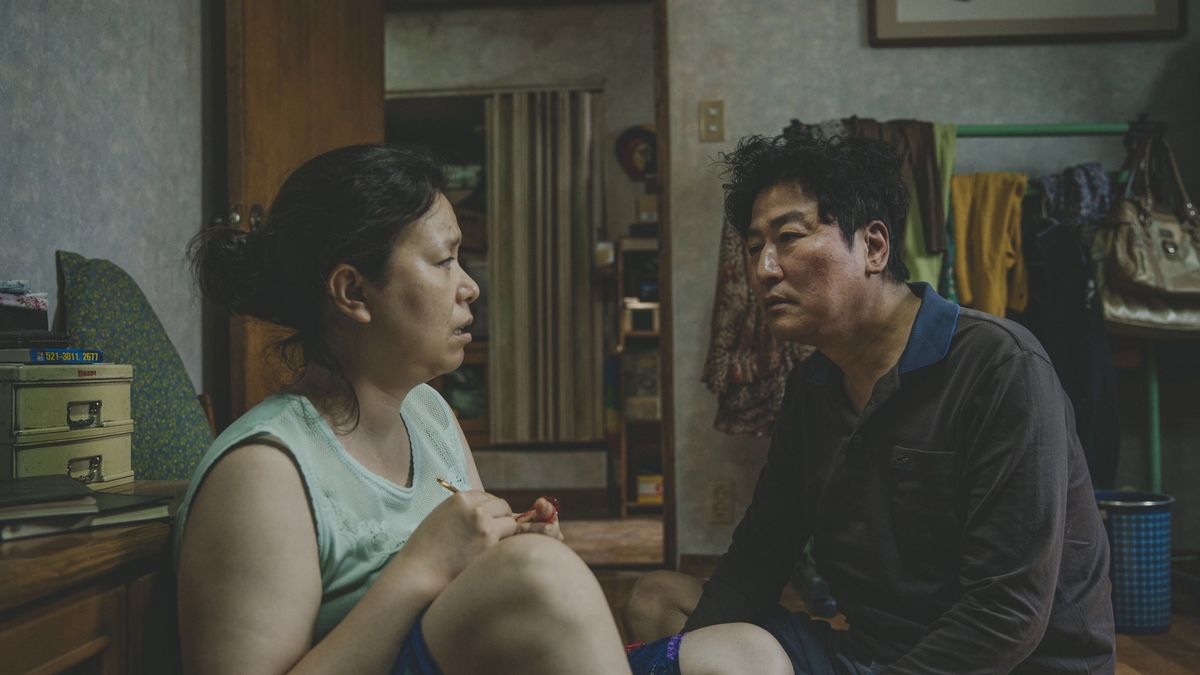
In the interest of variety, it would have probably been just as feasible and valid to place “Portrait of a Lady on Fire” in the top spot of this list, but at this point, who are we kidding? Has any film appeared in the past decade that has so thoroughly embodied the possibilities of cinema as a global expression of entertainment and thought-provoking commentary in an era so desperate for significant meaning? At a moment in which the ravages of capitalism reached the cusp of their cannibalistic capabilities, “Parasite” appeared to expose every layered frustration and have us all laughing and gasping along with it.
With his undisputed masterpiece, Bong Joon-ho tore right through the fabric of assumed populist cinema capabilities to shine a magnifying glass on the great sociological perils of our time, and with enough time, the light focused through that glass began to burn a hole right into our eye sockets. “Parasite” remains one of the few undisputed instant classics of the 2010s, sneaking right in under the wire to meld genres and stimulate conversations about both its thematic tenacity and inspirations to a growingly incurious moviegoing audience that proves more influential with each passing day. Praise the bountiful wifi!