
As the city is juggling its economics with its politics, a hero, possibly in khaki, reaches for the lion’s den. He prowls the lavish red carpet of the hallway and turns with a dash. The gun is pointed directly at the camera, and suddenly, there are three junior artists behind our hero. They brought knives and sticks to a gun fight. But the hero only needs his arms. He wins eventually, but now everyone in this mansion knows about his arrival. As he makes his way through the side characters, he reaches for the main villain, possibly in all whites (or all blacks, no in between). The encounter can be funny or gruesome, pick your poison. Well, it’s already been picked for you. We have all seen this exact scene in movies, especially Indian movies. You probably thought of one or more movies while reading this.
Anurag Kashyap’s “Kennedy” does the same. One buff police man from a humble home, with a sweet wife and two children (one boy and one girl, obviously), fighting the whole rotten system from inside. There would be a stereotypically beautiful, rich lady somewhere in his mission. And of course, there’s Violence. Lots of it. It is the exact same movie… or is it?
“Cheating, cheating, cheating karta hai tu”, Jaykant Shikre cries in hysteria as this policeman in front of him has turned his own cop army against him. How long we have longed for a person who turns the whole corrupt system upside down in one night, or at least exposes it. And this desire keeps showing up in 35mm every once in a while. Heck, they have made universes out of this cash cow. But maybe its wildest representation came in the form of “Wanted” when one man does all kinds of weird things for most of the length of the movie, only to be revealed as an undercover secret super cop in the climax to win back the audience.
“Kennedy” is a direct result of this filmy phenomenon. At this point, it’s clear that Anurag Kashyap does things differently. “Kennedy” has also been done differently. Subverting the trope, as they say. Like Tarantino makes his violence “fun” with exaggerated sound design, Anurag made it “artsy”. He uses jazz and violins as a background to violence. Rap becomes the rhythm to rampage, and poetry becomes the beat to the protagonist’s psyche.
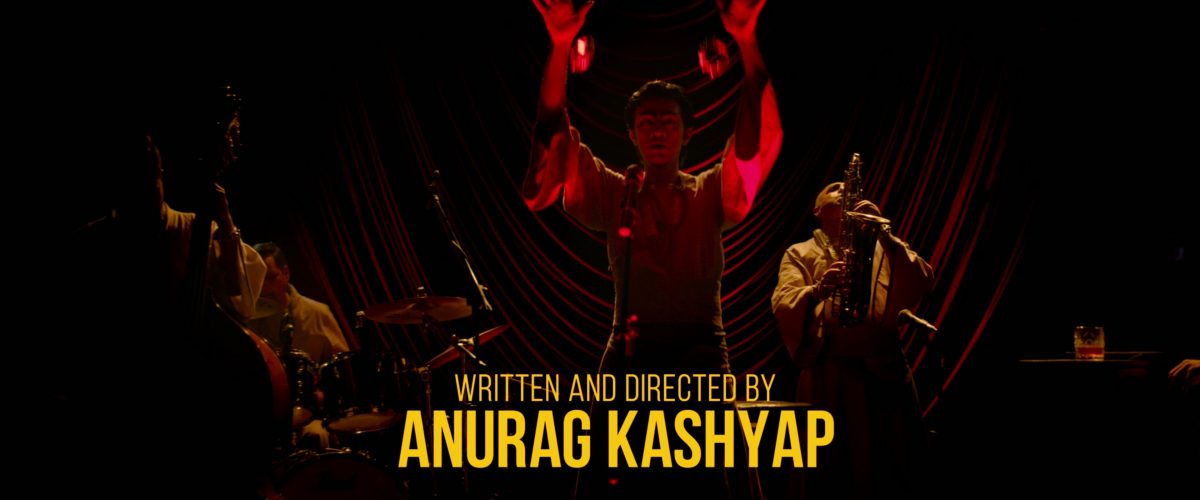
Even the “night club” isn’t used for a sexualized item song, but rather a poetry performance by Aamir Aziz.
Like some of the movies you thought of above, “Kennedy” casts no “superstar”. This is not just a factoid or a rebellious choice; with no superstar to relish, there is no Halo Effect to adore every little action. First, it casts Sunny Leone as Charlie, who had sadly been typecast into one type of role and certain scenes. She was obviously a conscious choice, and Anurag has been very vocal about her role. Then, Rahul Bhat as Kennedy, whose performance will not only be more closely scrutinized, but the violence done by him will be a little less glorified. Good choice on his part, too, to do a movie with fewer dialogues and a hidden face.
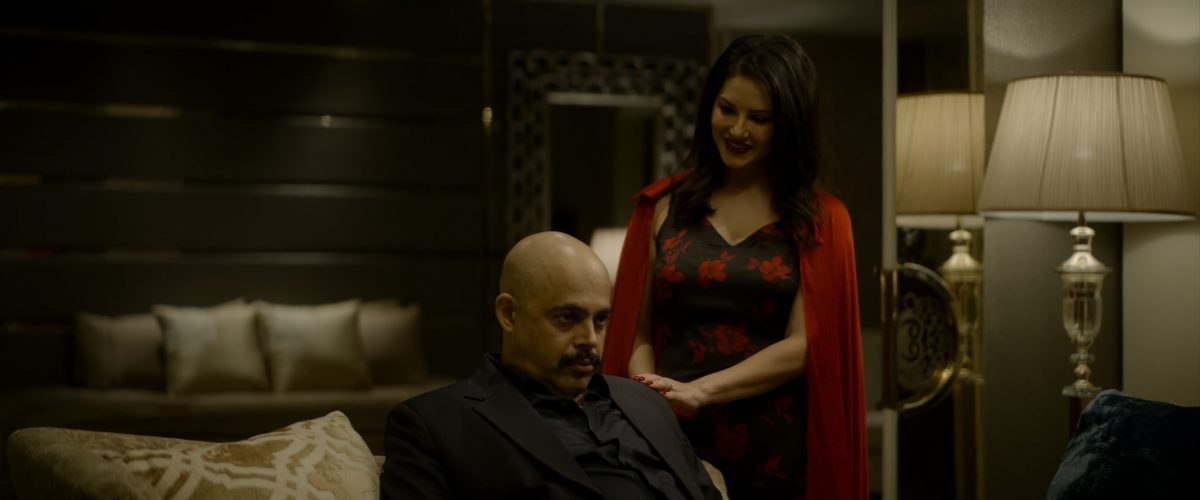
This sequence hints at Charlie copulating with Commissioner Rasheed, but subverting the expectations, the scene is skipped, which I believe is a subtle mocking of the typecast scenes Sunny has been getting.
Ironically, movies of this cop genre are generally either devoid of any politics or unaware of it. In the worst cases, they blow the whistle in favour of the powerful. “Kennedy,” on the other hand, casts the amazing Aamir Aziz, whose most popular work was a brilliant piece of poetry in support of the CAA protests in 2020. Considering this movie was shot right after COVID, his casting is quite telling. With cameo of Varun Grover, scenes involving news channels being parodied, and an invisible character of “Bade Papa” running the city of Mumbai, there is no holding back on the politics of the movie.
With Anurag himself calling this a “moody” film, the attention isn’t grabbed by one character and is allowed, in fact, to shift towards factors like its neo-noir setting, its music, the characters, its politics, and importantly, the ethics of violence. While cop movies have gained much popularity in this part of the world, there is an equal need to view them through a critical lens, through the lens of “Copaganda”.
Wikipedia defines Copaganda (a portmanteau of cop and propaganda) as propaganda intended to positively shape public opinion about police or counter criticism of police and anti-police sentiment. Everyone loves a good underdog movie, especially when it shows rage against the machine, but any movie depicting a single noble policeman as the saviour of last resort is devoid of nobility itself.
In the West, there has been a counterculture to Copaganda during the Black Lives Matter movement, which grabbed the popular attention. However, such a narrative has largely been absent from Indian pop culture. The most popular criticism of the police probably comes from Marx. For him, the police are the first line of the “bodies of armed men” that are intended to defend the interests of the ruling class and not social justice. “Kennedy” directly captures how a caricature cop can be carried to caress the concerns of the controlling class. Or as Aamir puts it, “do waqt ki roti ke kaaran mera mahboob maaraa gaya”.
On June 27th, 2025, a 29-year-old temple security guard, B Ajithkumar of Sivagangai, Tamil Nadu, was accused of theft of gold by two ladies visiting the temple. On June 28th, he was pronounced dead in a government hospital after taking several beatings by the so-called “Special Team” over the past day. The interim court order by Madras High Court reads: “In the said place, the deceased Ajithkumar was brutally beaten up with lethal weapons and chilli powder was poured on his face and private parts.” On January 31st 2026, CBI informed the court that the alleged jewellery theft case had been closed due to a lack of evidence.
According to a 2025 Report, the National Crime Records Bureau (NCRB) reports 76 cases, the National Human Rights Commission (NHRC) reports 90 cases, while the National Campaign Against Torture (NCAT), a civil society initiative, documents 111 cases of custodial deaths in the year 2020, and majority, of these deaths occur within first 24 hours of arrest. NCRB data from 2021 reveals that over 49,000 complaints were filed against police officers, yet fewer than 28% resulted in any disciplinary action. And less than 1% of officers implicated in custodial deaths were convicted between 2019 and 2022.
This curse of power resting in the hands of a few individuals is a regular theme of “Kennedy.” While Kennedy stands in the position of an outsourced hitman for the police, he can’t help but repent for all the innocent lives he has taken. Kennedy doesn’t have the guts to do a slow-motion walk past the human corpse hanging on rails, he collects belongings of his victims as evidence – evidence for the court of law and evidence that they were once humans to have walked the earth. Acting as another subversion of the popular trope, the hallucinations actually show the impact of these extrajudicial killings on the perpetrator, often touted as “encounter specialists”. Quoting Aamir again, when he sings “Bata kitne qatl kiye tune, bata kitna mazaa aaya”.
Another layer of morality exists not inside the movie but outside it. The morality of on-screen violence. The Uses and Gratification Theory of media and communication studies gives a window into this phenomenon, indicating that the viewer gratifies their repressed and latent need for aggression through harmless acts of voyeuristic indulgence by consuming diverse forms of violent media, ranging from popular commercial films to cartoons to pornography. Maybe that’s why cop genre movies are popular in India – the usage of hero cop as a catharsis and a relief, a projection of desires of the masses to topple the system overnight.
Cultivation Theory and similar schools of thought propose that the more time people spend ‘living’ in the television world, the more likely they are to believe that social reality aligns with reality portrayed on television. While there are studies showing effects of on-screen violence on our brains, there is not a single consensus. Until the consensus grows, we need to question our responsibility on an individual level. While researchers have differing views on what is on-screen violence – therapy or fatal provocation, a worrying point stands still – that is, the appearance of several movies that present serial killers in a sort of positive way.
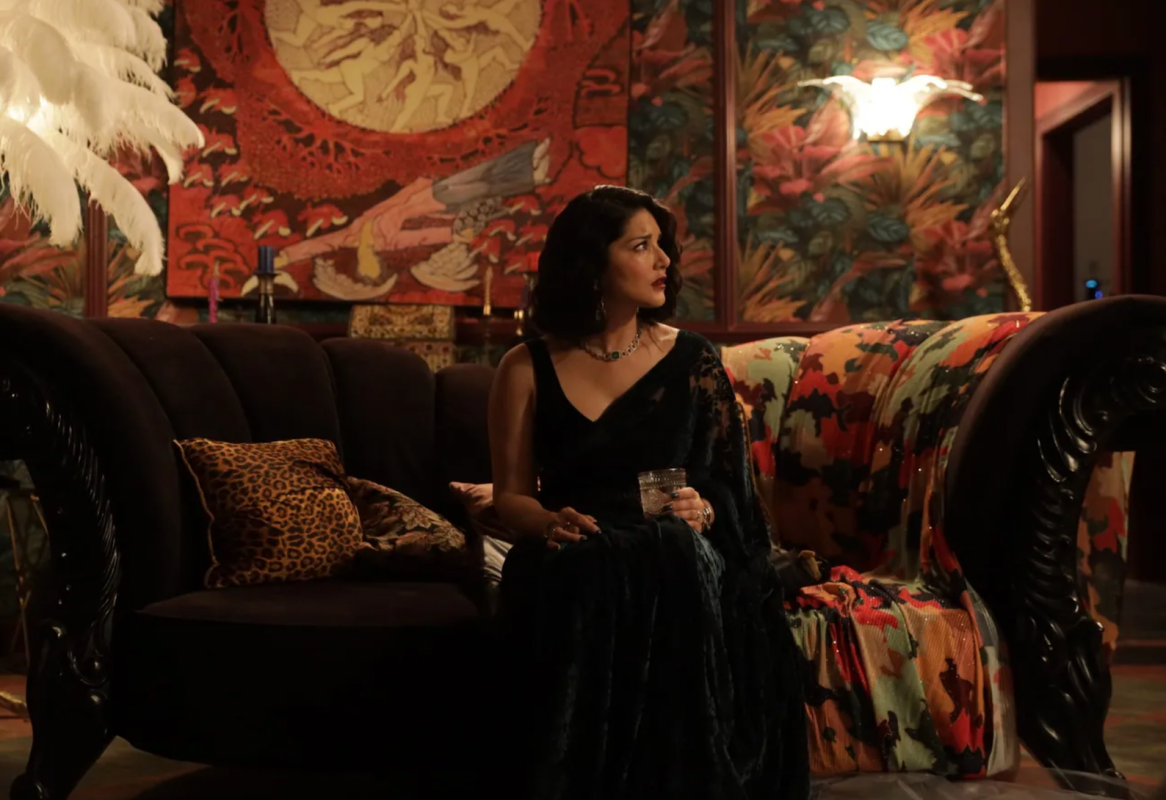
A still from “Kennedy” (2026).
“Kennedy” tries its best not to glorify the violence by giving the victims a story and a voice. A common device to reduce the credibility of violent means is to give the culprit a devastating end. Kennedy did have a happy family and a sweet home with him, but now he sits lonely in a dungeon, talking to ghosts of his victims and watching his own daughter from a distance. He is even declared a psychopath in the movie itself. The movie has breathing space between the killings. It’s like the movie has been directed in a way to make the audience think about the morality of the movie and the act of watching it.
Maybe the movie itself prompts the viewer to ask questions. Is a sad ending enough to “de-glorify” the acts of our hero committed throughout the runtime of the movie? Is well-choreographed close combat enough to lift the morality of producing an inherently violent movie? In times of propaganda, we need to ask how Hindi cinema is preparing India for violence. Maybe “Kennedy” asks us to look, not for monsters but for the monstrous, for the monstrous is not separate to humanity, but part of humanity.
One popular criticism of Indian cinema is the lack of superhero movies, and I have always differed to it. While we don’t have the typical superheroes with capes, our radically righteous men resisting the wrong while living dual lives are just manifestations of Superman in a different uniform. Kennedy is a little different. He’s not a Superman manifestation, but a Rorschach reincarnation. Reincarnated from the ashes of his own death. “Kennedy,” the movie is also different. It does not run from its responsibility in the name of undemanding action. It’s a neo-noir night thriller and a political protest poem at the same time.
“Kennedy” is different, yet it’s based on the cop phenomenon. It subverts their tropes, yet borrows from them. It stands on the shoulders of giants, yet it kicks their ass. The movie, like its titular character, tries to clean up the mess of those before it, while motorcading through a moral maze of its own. It fights the targeted violence of today’s cinema by showing the violence of the system. The fight will probably end in a dead end when the motorcade procession is halted by the assassination. But some wars are not fought for victory; they are fought to tell the world that someone was out there on the battlefield. And wherever there is a battlefield, there is the Spectacle of Violence.






![Coded Bias [2020] Netflix Review: Fighting Racism splattered over Technology](https://www.highonfilms.com/wp-content/uploads/2021/04/Coded-Bias-1-highonfilms-768x432.jpg)