Recently, there has been a dramatic shift towards “cinematic universe.” A concept that was once deemed an occasional storytelling technique is now dominating as a default model for major studios. The films and series are now designed in a way that looks like interconnected pieces, giving the filmmakers an edge to expand the plot into a much larger web.
Superhero and horror franchises have been the ones that are seen using it the most. It is therefore theorized that contemporary entertainment increasingly favors cinematic universes over standalone stories due to economic incentives, audience behavior, and broader cultural changes in storytelling.
The Rise of the Cinematic Universe
The cinematic universe is nothing really new, as early cinema relied heavily on serials that had recurring characters in an episodic manner. It encouraged the audiences to return week after week to enjoy the continued narratives. Later, sequels helped extend successful stories for which the audience was hungry. A single story built the familiarity and brand recognition right from the day it was launched. If it enjoyed grand success, it was later developed into merchandise or sometimes, games or comics.
Creativity spilled beyond standalone narratives into shared universes built on crossovers, cumulative histories, and cause-and-effect storytelling. Each new chapter reshaped the last, spawning origin stories and expanding the franchise into a sprawling mythology with global appeal.
A major formal shift occurred in the early 21st Century when studios began formalizing interconnected storytelling on an unprecedented scale. For example, the “X-Men” film series (started in 2000) and “The Avengers” (2012) laid the foundation of this model. The character introduced in one film reappeared in overlapped plotlines and was explicitly teased in post-credit scenes.
The intention of maximizing its scale became more evident with multiple sub-franchises, for example, Spider-Man in the “Avengers” universe. They co-exist within one continuous universe, leading to the commercial and cultural success of the MCU.
The interconnected storytelling was loved by the audience, as they were also often surprised by a character’s appearance in another superhero film. Studios gave this a serious thought and continued working on its scale, ultimately establishing a profitable and sustainable model.
Spin-offs and crossovers as a strategy
For clarification, a spin-off is a new film or series branching off from an existing story but extends to a side character, secondary storyline, or unexplored corner of the plot. On the other hand, crossovers are major events that bring together several major characters within one universe, setting a must-watch prerequisite for the audience.
The familiarity factor is high in both, reducing creative and financial risk for the studios. Viewers do not feel uncertain when watching a new story, as the original story is known to them. The names, settings, and relationships provide a built-in audience trust, making marketing easier, hence justifying larger budgets.
On the contrary, standalone films might require more effort for commercial success as established themes are missing. Audience need to know more to get familiar with untested concepts. Creatively, this does minimize the risks studios are willing to take, but the variety of new worlds introduced to the audience also shrinks.
Exploring variations on pre-established themes diminishes innovation. Pre-existing frameworks might not always work, as the audience might soon get bored and find it monotonous. “The Curse of La Llorona” (2019) was unable to impress the viewers, having earned only a 26 percent critics’ score on Rotten Tomatoes, despite being connected to the greater “Conjuring universe.”
The Fear of Standalone Stories
A false perception has recently started budding in the minds of studio owners that standalone stories lack long-term profitability. “Weapons” (2025) is a brilliant horror film whose director, Zach Cregger, has confirmed a prequel film focusing on Aunt Gladys’s origin story. The point made here is that it does not necessarily mean that longevity and scalability only come from universes and not a standalone film, which, otherise could prove to be a seeding ground for another franchise universe.
Also Related to Cinematic Universe: 20 Best MCU (Marvel Cinematic Universe) Movies
The industry-wide fear exists due to only a major opportunity for financial success of a standalone film and its grand marketing. The audience needs strong persuasion to believe in new stories without the reassurance of a previously known brand.
It is not the franchise owners’ fault that their inclination remains towards shared universes, as they generate revenue via multiple films, television series, merchandise lines, theme parks, and streaming platform incomes, growing an idea into something that lasts. Sustained audience engagement and the absence of a guarantee for a recurring income force a single film to struggle in order to defend heavy budgets.
Franchise Culture and Audience Expectations
Audiences have developed a sense of anticipating sequels, interconnected narratives, and long-term continuity rather than self-contained experiences. They even love cliffhangers, which filmmakers have now used as a deliberate tool for unresolved plot threads. People sit even after the credits roll for a special end-credits scene that later sparks prospects for a possible upcoming project, initiating online discussions.
Fan communities on online forums play a crucial role in sustaining this culture. Fans love discussing “lore” with like-minded people, speculating on hidden references, timelines, backstories, and canon. Repeated viewing transforms these viewers into active participants, reinforcing emotional investments and long-term loyalty.
Fans believe that understanding the universe is more important than the story itself. They like engaging deeply with fictional universes beyond the screen, which even delves deeper into another phenomenon: a sense of inclusion. Becoming a part of any ongoing debate incites them to keep in continuous conversations.
Social media and online discourse help the franchises to understand people’s views, instigating an ongoing cultural event rather than a standalone moment. Algorithms do the rest of the task by boosting this cycle of content promotion that remains dominant in public attention. The franchise culture thrives not only on its individual quality but on how effectively it sets up future instalments. Continuity has become a form of narrative currency, indicating its significance and relevance within a larger story world.
Economic and Industrial Incentives
Economic and industrial incentives play a decisive role in the rise of cinematic universes. Unlike standalone films, shared franchises extend their value far beyond box-office returns, generating sustained revenue through merchandise such as toys, apparel, games, and collectibles. These universes remain commercially active for years, with predictable spikes around cultural moments like Halloween, effectively transforming fictional worlds into enduring consumer brands rather than disposable, one-off products.
Streaming platforms further reinforce this model by relying on consistency and long-term engagement. Shared universes allow studios and platforms to map out release schedules years in advance, minimizing gaps in content and reducing the financial risk associated with isolated productions. This steady pipeline helps retain subscribers while maintaining audience familiarity and investment in the franchise’s evolving narrative.
At the center of this strategy lies intellectual property as a long-term asset. Unlike a single creative work that peaks and fades, a successful universe can be rebooted, expanded, or adapted across different media without eroding its core value. The IP becomes flexible, renewable, and industrially reliable—capable of sustaining relevance across generations and formats.
Creative Consequences
On the creative spectrum, cinematic universes offer real possibilities alongside clear limitations. At their best, they enable deeper storytelling and more immersive world-building, allowing characters to grow across multiple narratives rather than being confined to a single arc. Supporting figures are no longer disposable; given time and space, they can accumulate depth, command attention, and eventually step into the spotlight through spin-offs that feel earned rather than ornamental.
More Related to Cinematic Universe: The Conjuring Universe Movies (Including The Conjuring: Last Rites), Ranked
The same expansiveness, however, can become a liability. As universes grow denser and more interconnected, casual viewers are often expected to arrive with prior knowledge, turning what should be an invitation into a prerequisite. Standalone pleasure diminishes, narrative focus splinters, and emotional payoffs risk losing their force when they are delayed, diluted, or buried beneath layers of continuity management.
Hollywood’s Multiverse Obsession has a Scientific Basis
Apart from economic reasons, Hollywood has been embracing the concept of multiverses for emotional reasons as well. Marvel cinematic experience, therefore, resonates with the audience and has been gaining popularity, enabling the studios to capitalize on it.
A theoretical physicist and philosopher at Johns Hopkins University, Sean Carroll, once said,
“We’re not gonna let Dr. Strange and Black Panther remain dead.”
This allows the studios to explore their past versions, which could have existed in other parallel universes or dimensions. This gives the writers room to explore characters and move the characters from one franchise to another.
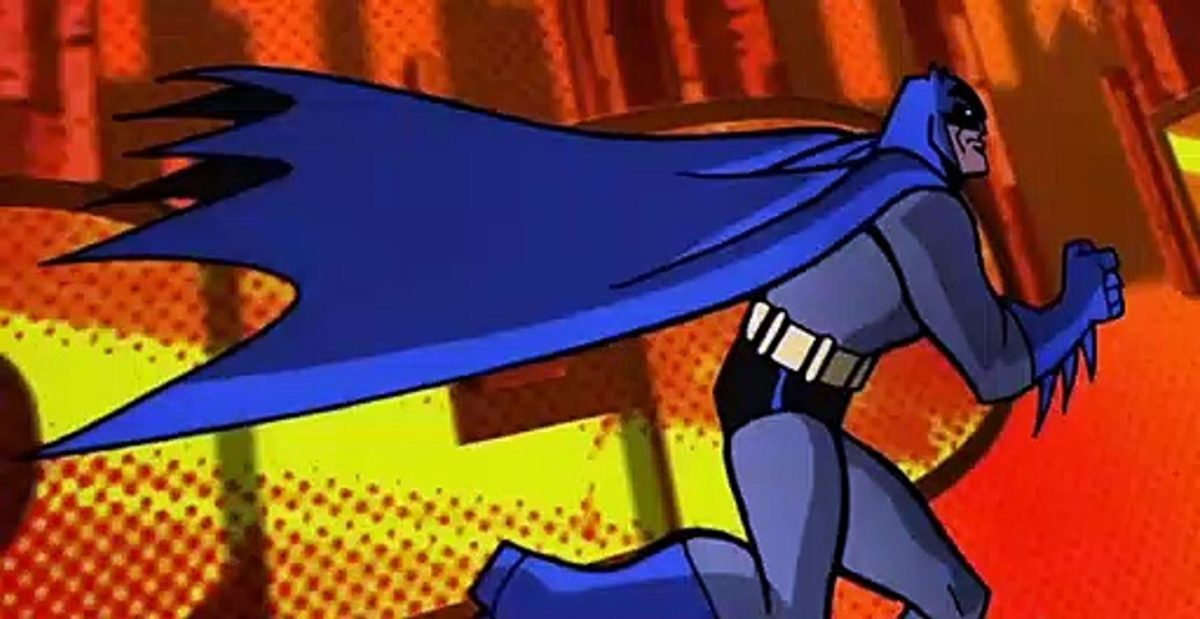
It allows audiences to return to familiar characters with the reassurance that another film will revisit them, sometimes even by rewinding the clock to an earlier phase of their lives. Matt Reeves’s 2022 film “The Batman” exemplifies this impulse, reintroducing the character as a younger, rawer figure, played by Robert Pattinson, and reframing Batman not as a finished myth but as a work in progress.
Running parallel to this, James Gunn is developing a separate vision for the character within his rebooted DC Universe. His upcoming film, “The Brave and the Bold,” is set to introduce a new Batman alongside Robin—specifically his son, Damian Wayne—marking a decisive shift in tone and generational focus. Rather than existing in isolation, these reinventions inevitably echo one another, inviting viewers to measure different versions of the same figure across time, continuity, and creative intent.
That layering carries an emotional pull beyond franchise mechanics. Seeing the same character reborn in multiple forms taps into a distinctly human habit: reflecting on past choices, imagining alternate paths, and wondering how different decisions might have reshaped one’s life. These repeated returns to Batman are not just about novelty or brand renewal; they mirror a quiet desire to revisit the past, examine its mistakes, and momentarily entertain the fantasy of starting again with better knowledge than before.
Are Standalone Stories Disappearing?
Several recent high-profile films demonstrate that critical acclaim and box-office success do not depend on sequels, spin-offs, or shared universes. Films such as “Get Out” (2017), “Parasite” (2019), “Everything Everywhere All at Once” (2022), and “Oppenheimer” (2023) stand as clear examples of audience appetite for original, self-contained storytelling. Their success suggests that viewers continue to value narratives that arrive fully formed and resolve themselves within a single viewing, without dangling threads or future obligations.
Self-contained films ask for a different kind of engagement. Freed from the burden of crossovers or franchise planning, they often feel lighter and more immediate, allowing audiences to enter and exit the story on their own terms. The absence of promised continuations becomes a strength rather than a limitation, lending these films a sense of completion and artistic finality that lingers beyond the runtime.
Standalone storytelling, then, is far from obsolete. Yet the industry’s growing preference for cinematic universes reflects a different economic and cultural logic. A single film can satisfy deeply, but its impact is finite.
A universe, by contrast, is designed for endurance, encouraging repeated investment and long-term loyalty while spreading creative and financial risk across multiple entries. The tension between these two models continues to shape contemporary cinema, framing the debate less around artistic merit or profit and more around the contrast between immediacy and permanence.




![Slightly Overrated Films: The Dark Knight [2008]](https://www.highonfilms.com/wp-content/uploads/2017/04/Greatest-Superhero-Films-The-Dark-Knight-768x384.jpg)