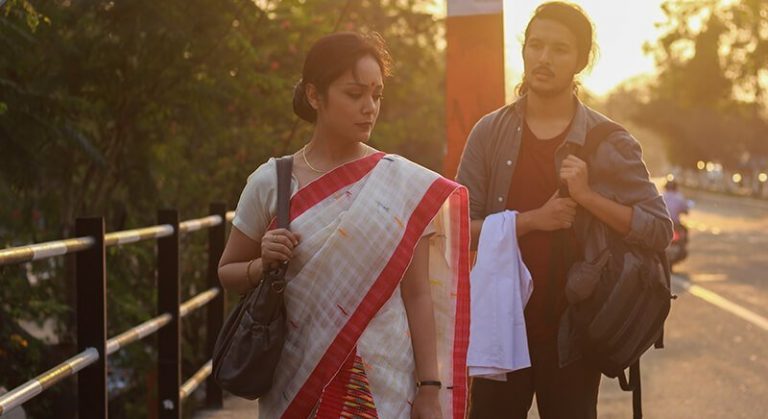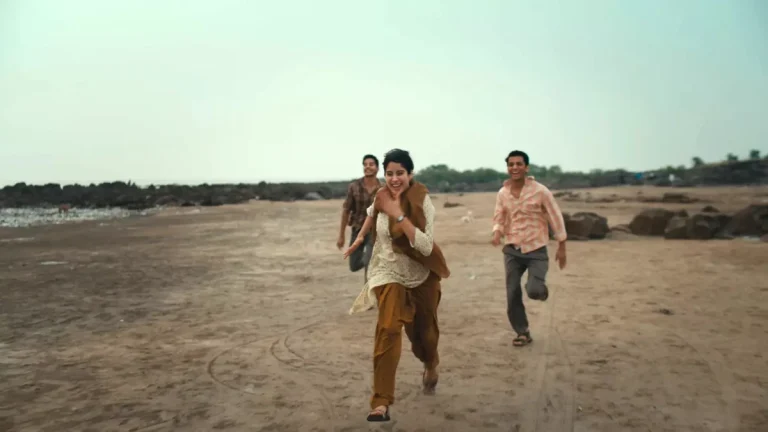
Women written by Anurag Kashyap arrive on screen with a striking independence from the need to be liked, explained, redeemed, or fitted into familiar moral frames, and this independence becomes the first and most defining gesture of his cinema. What becomes apparent almost immediately, while moving through his films from “Black Friday” to “Dev D,” from “Gangs of Wasseypur” to “That Girl in Yellow Boots,” from “Ugly” to “Raman Raghav 2.0,” is that Kashyap treats women as living presences rather than symbolic stand-ins for purity, sacrifice, national honour or emotional reassurance.
They are written as beings who share the same brutal, compromised, and contradictory reality that men inhabit, shaped by its pressures, bruised by its violence, sometimes complicit in its systems, sometimes quietly resisting them, and sometimes simply surviving without the film drawing attention to the act. His women function as participants rather than corrective forces, moving through chaotic worlds without the responsibility of stabilising them or softening the men within them.
They exist without the burden of teaching lessons, and it is precisely this freedom from instruction that allows them to feel unsettlingly real. They swear, desire, manipulate, endure, collapse, negotiate, fail, and continue. The narrative often observes instead of intervening, letting their actions exist without justification or condemnation. In that space, they come to embody a lived sense of tragedy, one that emerges organically rather than feeling imposed.
Relatable Read: 10 Most Abusive Women in Movies
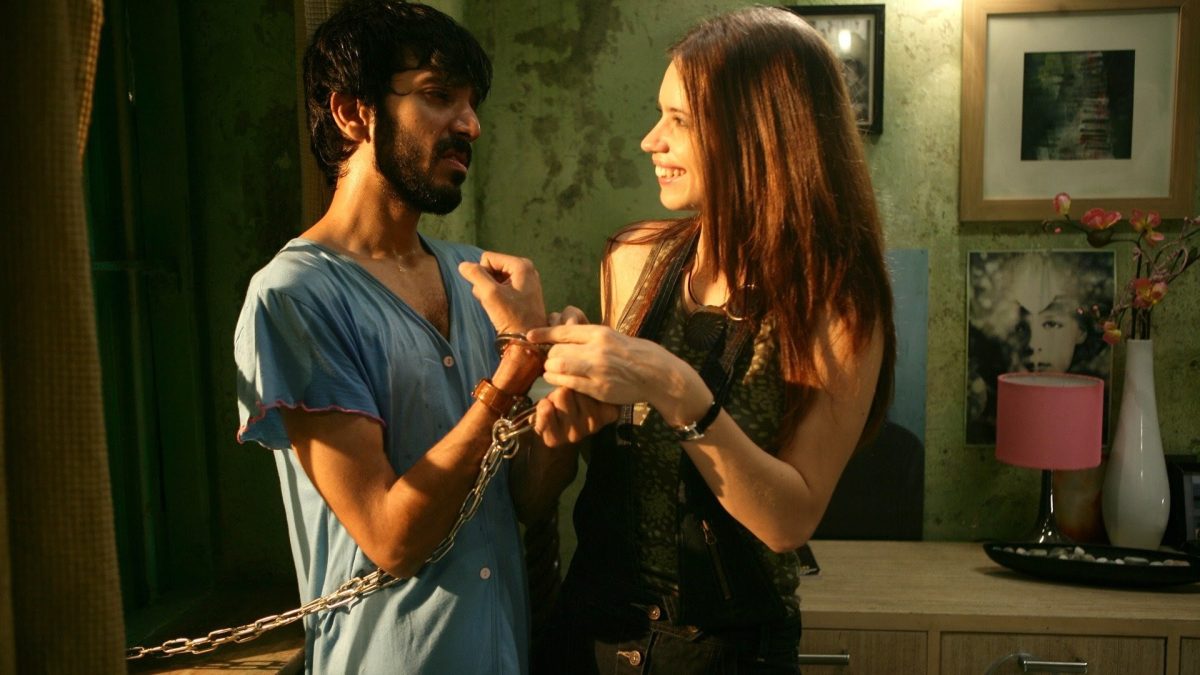
In “Dev D,” the writing of Paro and Chanda quietly dismantles one of the most stubborn habits of Indian cinema, the habit of arranging women into moral opposites so that one may be preserved while the other is sacrificed, and what makes Kashyap’s approach compelling is the way this dismantling unfolds without announcement or declaration. Paro is shaped as a woman whose emotional world is altered by love without being reduced to innocence, while Chanda is written as someone who arrives at self-awareness without being defined by fall or redemption, and the film allows both to exist without steering the viewer toward sympathy for one and suspicion toward the other.
This narrative invites us to see them as parallel outcomes of the same social ecosystem that regulates female desire with ruthless efficiency, rewarding silence, punishing visibility, forgiving secrecy, and condemning exposure. Paro’s heartbreak unfolds as a deeply human experience, carrying weight without sanctification, without martyrdom, without fragility. Chanda’s sexuality, meanwhile, is presented as a lived condition shaped by choice and circumstance, observed without embellishment or diagnosis. Both women move through emotional damage with a clarity that resists melodrama, allowing their pain to feel inhabited rather than performed, and giving their journeys a texture that feels intimate, raw, and unmistakably real.
What becomes visible here is Kashyap’s larger understanding of empowerment beyond its use as a cinematic slogan, where empowerment in his films takes shape less as liberation or victory and more as navigation, adjustment, and the quiet ability to keep moving within structures that resist change. The element of agency in this universe settles into decisions that appear ordinary on the surface yet carry immense consequences beneath, shaping lives in ways that are truly felt and not declared. This pattern unfolds across his filmography with an uneven rhythm, moving through moments of precision and moments of limitation, yet remaining consistently revealing in how it approaches women, choice, and survival.
In “That Girl in Yellow Boots,” Shweta Basu’s character is presented with a quiet restraint that resists both heroic elevation and victimhood, allowing her to exist within the city as a figure shaped by movement, labour, and endurance. Her choice to prioritise economic independence over emotional security unfolds as a lived necessity. It’s not a symbolic gesture, shaped by precarity and by the understanding that survival often requires emotional compromise. The film treats this choice with observational calm, neither lifting it into triumph nor sinking it into loss, allowing it to remain grounded in circumstance. Its narrative finds resonance in the absence of comforting resolution, reflecting how such choices rarely conclude cleanly and instead continue to gather weight over time.
Similarly, in “Gangs of Wasseypur,” Nagma Khatoon exists within extreme patriarchy, violence, and domestic terror, and her strength takes shape through a form of endurance that operates beyond conventional cinematic bravery. She engages with power by learning its rhythms and constraints, using sharpness, silence, and timing as tools, allowing survival to emerge through strategy rather than spectacle. Her intelligence operates on a tactical plane, not an ideological one, a distinction that carries weight because Kashyap’s women tend to engage with systems through reading and negotiation, sometimes sustaining them, sometimes quietly resisting them, and often doing both simultaneously.
Read More: From A-Listers to Crew Women, How Hindi Film Industry’s Feminism Rings Hollow Without Basic Dignity
The tendency of survival in this world unfolds as a procedural process, built from small, calculated acts that may appear unremarkable yet carry deep necessity. When Kashyap turns his attention to women positioned within moral or social margins, sex workers, mistresses, addicts, or accomplices, he approaches them as lived presences rather than symbolic figures.
They appear as individuals, and their journeys resist the shape of predetermined redemption. The camera maintains an observational distance that avoids pity and spectacle, allowing these women to occupy the frame with an unsettling steadiness that withholds emotional instruction. This deliberate openness in perspective creates a space where meaning is neither assigned nor withheld, inviting the viewer to remain with ambiguity instead of reaching for easy clarity.
In “Ugly,” this discomfort moves to the centre of the film, as women are released from their habitual cinematic functions and allowed to exist without inherited roles. They appear without the expectation of serving as emotional anchors, moral guides, or embodiments of unconditional care, and this absence reshapes how they are seen. Motherhood, a role frequently sanctified in Indian cinema, unfolds here as fractured, resentful, exhausted, and deeply entangled in ego and guilt, revealing its human weight rather than its myth.
The film presents motherhood without turning it into a site of redemptive suffering, and in doing so, it opens a view into how even the most glorified female roles can quietly harbour forms of violence. The women in “Ugly” move through the narrative as complicit, manipulative, wounded, and tired, their suffering and their flaws held together as a single condition. From this convergence emerges a form of humanity that is unsettling yet impossible to deny.
This commitment to presenting pain without romantic excess emerges as one of Kashyap’s most consistent gestures, allowing his women to occupy a wide emotional range where unpleasantness, vulnerability, sexuality, and ambition coexist as parts of a complete human spectrum. They move through narratives with the freedom to be difficult, fragile, desiring, and driven, without these traits being transformed into moral markers or narrative penalties.
Even in films where the writing feels uneven or less assured, this impulse continues to surface, sometimes with a visible awkwardness. In “Bombay Velvet,” for instance, the writing of Rosie appears suspended between intention and execution, as the film reaches toward complexity yet drifts into stylisation that compresses her interior life. Yet this slippage itself becomes revealing, pointing to how challenging it is to maintain Kashyap’s observational ethics within more conventional narrative frameworks.
The contrast between his strongest and weakest portrayals only sharpens the understanding that what defines his writing of women lies in a steadfast consistency of refusal rather than uniform success. He chooses to observe without moralising, to depict without idealising, and to present suffering without offering closure as compensation. In films like “Raman Raghav 2.0,” women exist on the edges of extreme male violence, yet they occupy the narrative as active presences, not mere triggers or symbolic casualties. Their presence feels deliberate—sometimes abrupt, sometimes devastatingly ordinary—and the film’s restrained cinematic emphasis mirrors how such violence seeps into everyday life, absorbed into routine instead of framed as an exceptional tragedy.

While You’re Here, Also Check: 10 Great Female Character Actors Who Elevate A Film With Their Performance
Kashyap’s camera leans toward observation, denying catharsis, and his writing invites reflection instead of chasing emotional payoff. Oppression in these films is treated as a lived condition, something ongoing and ambient, not a single defining event. Women move through their lives in fragments, pauses, negotiations, and compromises, finding texture in moments that resist tidy closure.
It is here that Kashyap’s writing reaches its clearest expression, suggesting that endurance can be quiet and formidable, and that resistance often exists outside the language of overt victory. Even silence in his films carries intention, functioning as a strategy, a mode of survival rich with intelligence and deliberation. Many of his women speak less because their words are deliberate and measured, understanding the weight and risk of speech, and this careful communication reveals depth rather than absence.
Across his body of work, what emerges is a complex, messy constellation of experiences. These lives are shaped by class, geography, language, and labour as much as by gender, resisting any single, unified image of womanhood. Urban women navigate alienation in distinct ways compared to small-town women; economic independence opens different possibilities alongside emotional dependence, and desire becomes a space for both agency and consequence depending on perception and context. Kashyap values each of these experiences equally, framing them with authenticity rather than hierarchy.
This refusal to universalise is crucial because it keeps representation alive and dynamic, avoiding the comfort of easy reassurance. His women are written to exist fully on their own terms, holding progress and complexity without performing feminism for approval. They move through the narrative alongside men, never positioned in service to them, and are equally capable of harm and tenderness, calculation and care. The lack of narrative protection leaves them exposed, yet it is precisely this exposure that gives them a striking sense of reality. When the films end, these women feel as though they continue beyond the frame, carrying the viewer with them into the unresolved, unfolding space of their lives.
What remains is a lingering sense that their lives continue beyond the frame, unfolding freely, uncontained, shaped by forces that resist tidy closure. In allowing this complex humanity to exist with full presence and without explanation or apology, Kashyap’s writing honours women’s experiences, giving them space rather than speaking for them as a universal truth. It places them within the same brutal, compromised world as everyone else and allows them to live there with unflinching honesty. And it is within this embrace of reality, this refusal of comfort, that the most unsettling and profoundly truthful portrait of women in his cinema quietly takes shape.
Within this broader understanding of Kashyap’s women, “Nishaanchi” becomes a precise point of rupture where his otherwise patient and observational approach thins out, most clearly visible in how its female characters are staged within specific scenes rather than allowed to accumulate interiority over time. In moments where confrontation unfolds, particularly in domestic or intimate spaces, the camera lingers on the male character’s agitation and moral conflict while the woman’s emotional register settles into recognisable responses, fear, endurance, muted resolve, without the quiet slippages that suggest inner contradiction.
Also Read: The Representation of Women in Film Noir
A scene built around emotional revelation moves decisively toward narrative clarity, allowing the woman’s role to stabilise the moment and anchor its meaning. This sense of stability signals a departure from Kashyap’s usual resistance to comforting the viewer. Even when women inhabit spaces of suffering or decision, their gestures carry a clear narrative purpose: glances are legible, dialogue resolves emotional tensions, and meaning is delivered rather than deferred.
In sequences shaped by moral compromise or survival, women operate as emotional markers that steer the audience’s understanding of consequence, a function Kashyap’s cinema has historically avoided assigning to them. Their closeness to violence or wrongdoing is framed to mirror the male psyche, folding their presence into his interior struggle instead of allowing it to unfold as a separate negotiation with fear and power.
The social textures that typically complicate Kashyap’s women, class pressure, economic precarity, and sexual negotiation, are present but compressed. It’s referenced but not embodied through behaviour and silence. Where earlier films would allow a woman’s stillness to stretch into discomfort, “Nishaanchi” moves swiftly toward narrative resolution, and the woman’s presence becomes part of that movement. So, the women feel emotionally present yet structurally contained, held within the architecture of the story without being allowed to spill beyond it. This containment emerges from an impatience that prioritises momentum over accumulation.
“Nishaanchi” exposes how the strongest women written by Kashyap women are born from delay, from narrative hesitation, and from a willingness to let scenes breathe without explanation. When that hesitation recedes, as it does here, women shift subtly from being lived realities to being narrative positions. The film becomes instructive precisely because it shows how easily complexity collapses when observation gives way to intention, and how Kashyap’s most enduring women require time, restraint, and the courage to leave meaning unresolved.
Anurag Kashyap’s writing of women achieves a rare and remarkable balance between observation and empathy, allowing his female characters to exist fully as human beings within the complexity of their worlds. Rather than simplifying their experiences into moral categories or conventional narrative arcs, he presents women with rich interiority, agency, and contradictions, letting them act, endure, and make choices on their own terms. Across his films, women occupy spaces of power, vulnerability, desire, resilience, and failure simultaneously.
And these dimensions are shown as natural outcomes of social, economic, geographic, and personal contexts instead of being imposed lessons or symbolic gestures. Their strength emerges quietly through strategy, endurance, and negotiation. Their suffering is neither sensationalised nor moralised, making their lives feel authentic and immediate.
By positioning women alongside men as equally capable of tenderness, harm, calculation, and care, Kashyap affirms their presence as fully human, refusing to reduce them to instruments of plot or mirrors of male morality. Even when his films explore extreme violence, marginality, or societal oppression, women are depicted as active participants in their worlds, navigating risk, desire, and survival with intelligence and courage.
This consistency of refusal to romanticise, moralise, or tidy their lives, coupled with the careful observational lens he maintains, creates a cinema in which women feel vivid, enduring, unresolved, and profoundly real. This is the quiet genius of Kashyap’s storytelling, where he allows the complexity of womanhood to breathe without explanation, apology, or simplification, leaving a lasting impression that is both unsettling and deeply truthful.