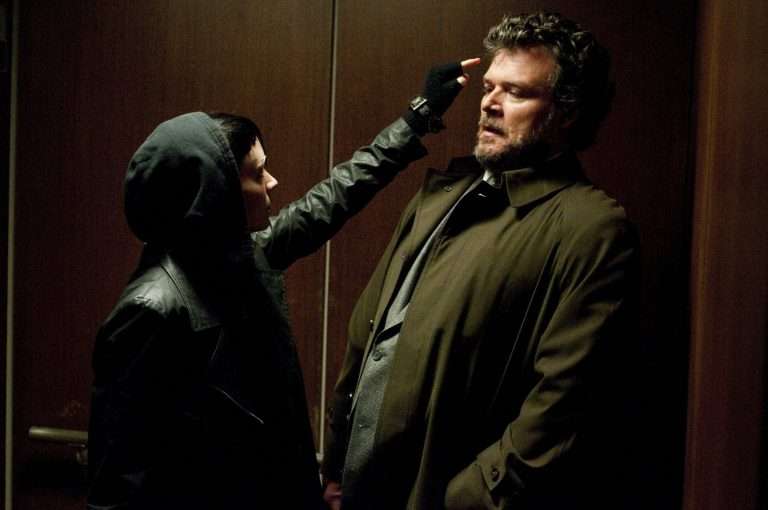
In “Sentimental Value,” Joachim Trier constructs a house of mirrors where personal history and cinematic legacy reflect endlessly upon one another. The film, a powerful drama about an estranged director father (Stellan Skarsgård) and his actress daughter (Renate Reinsve) attempting to bridge their distance through art, has been hailed as a masterpiece of emotional precision.
It is a film that dares to ask if a camera can capture the things we cannot say—the grief held in the walls of a childhood home, the panic behind a stage performer’s eyes, and the quiet tragedy of missed connections. In a wide-ranging conversation with Isaac Feldberg for Roger Ebert.com, Trier peels back the layers of this “polyphonic” story, revealing the specific films and filmmakers that guided his hand.
How Bergman’s Wild Strawberries Shapes the Emotional Core of Sentimental Value

To understand the soul of “Sentimental Value,” one must first look to the gentle melancholy of Ingmar Bergman. Trier specifically cites Wild Strawberries (1957) as a guiding star for Gustav’s journey. Bergman’s film follows an elderly professor confronting the coldness of his past and his strained relationships during a car trip. Similarly, Gustav in Sentimental Value is an aging artist forced to reckon with the “woundedness” of his own history—specifically the suicide of his mother—while trying to connect with a daughter he barely knows.
In Sentimental Value, this influence manifests in the haunting sequences within the Borg family home. Just as Isak Borg wanders through dreamlike re-enactments of his childhood, Gustav walks through the empty rooms of his estate, staring at a crack in the wall that resembles an unhealed wound. He attempts to film a recreation of his mother’s death in the very spot it happened, a desperate bid to fix the past by capturing it.
But the true Bergmanesque moment arrives in the film’s finale. On a soundstage, stripped of the original house, Gustav and Nora share a silent, lingering gaze. It is a moment of pure, “gentle yet deeply melancholic” connection, echoing Trier’s sentiment that sometimes, you just have to “feel it” and move on.
Haneke’s Brutal Intimacy: How The Piano Teacher Informs Trier’s Most Tense Moments
If Bergman provides the soul, Michael Haneke provides the nerve. Trier speaks with fascination about the “unforgettable close-up shots” in Haneke’s The Piano Teacher (2001), particularly the visceral ending involving a knife. He admires Haneke’s ability to maintain an uncomfortable proximity to his actors, trapping the audience in their internal crisis.
Trier channels this intensity into the character of Nora. In one of the film’s most harrowing sequences, we find Nora backstage before a performance of Medea. She is paralyzed by a panic attack, her chest tight, her breath shallow. Instead of cutting away, Trier’s camera stays dangerously close to her face, scrutinizing every bead of sweat and twitch of fear.
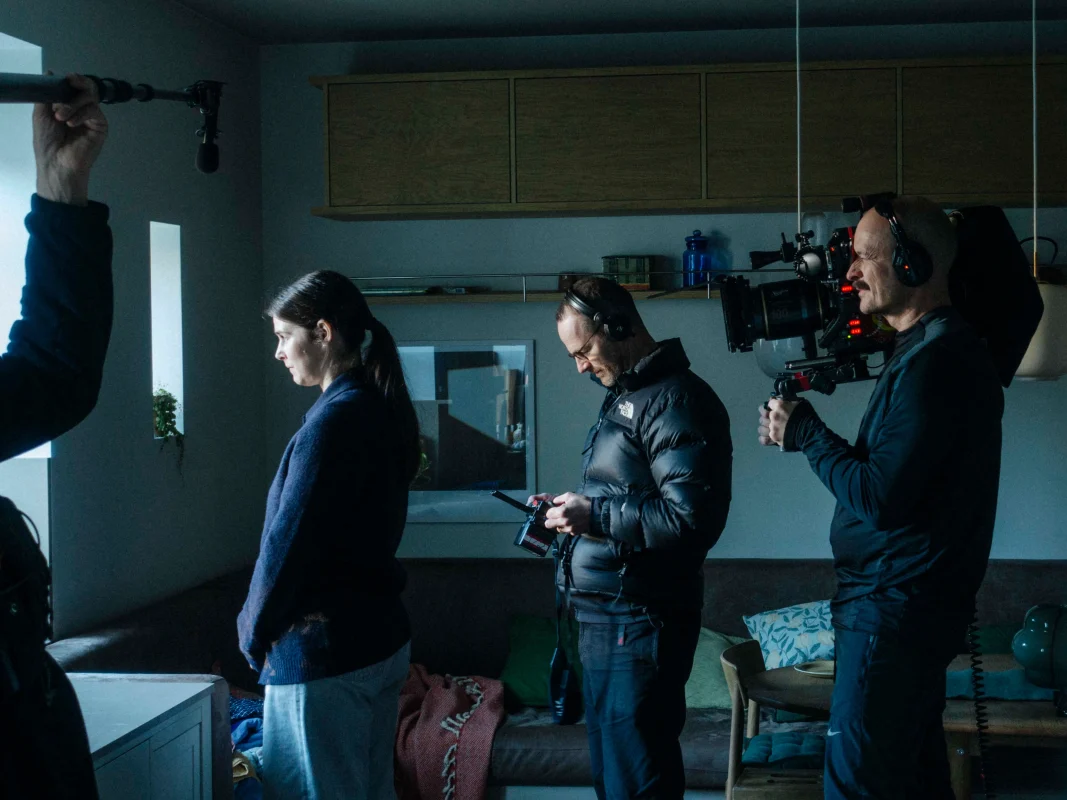
“I sit next to the camera and have a handheld monitor… but I look at them with my eyes,” Trier explains to Feldberg.
He trusts his gut to know when the actor has reached that peak of vulnerability. This influence is even acknowledged with a touch of dark humor in the film itself: Gustav, in a misguided attempt to bond, gifts his grandson a DVD of The Piano Teacher, a meta-nod to the “bad vibes” that fuel his artistic fire.
A Legacy Revisited: The Influence of Erik Løchen’s The Hunt on Trier’s Vision
Perhaps the most poignant influence in “Sentimental Value” is the one that flows through Trier’s own blood. The film features narration by Bente Børsum, a 93-year-old Norwegian actress who starred in The Hunt (1960), the debut film of Trier’s grandfather, Erik Løchen. Børsum’s presence is not merely a casting choice; it is an act of historical reclamation.
In the film, Agnes (Gustav’s other daughter) visits the National Archive to read a statement her grandmother gave about being tortured during WWII—a trauma she never spoke of while alive. Børsum voices this narration, bringing with her the “authority of grief” from her own life, as her mother was also a resistance member captured during the war.
“I went there and suddenly felt very young amongst all the old people,” Trier says of rediscovering Børsum at his local gym.
By blending his grandfather’s leading lady with his own narrative, Trier collapses time, allowing the real “grief and woundedness of the war” to echo through a story set in 2025.
Ozu’s Visual Precision: The Quiet Architectural Language of Sentimental Value
Finally, Trier credits the Japanese master Yasujirō Ozu for the “programmatic” precision of his domestic scenes. Ozu is famous for his “tatami shots”—low, static camera angles that frame family life through doorways and corridors.
In Sentimental Value, this influence is felt in the architecture of the scenes. The camera often observes the sisters, Nora and Agnes, through the frames of the house itself—looking past a doorjamb or through a window. These shots are not just aesthetic; they emphasize the distance between family members even when they are in the same room. It is a quiet, geometric style that balances the high emotional stakes, grounding the melodrama in a rigorous visual structure.
Through these influences, “Sentimental Value” becomes more than a family drama; it becomes a conversation with cinema itself.
As Trier told Feldberg, “It’s just the ongoing process of being a film lover and seeing what film is capable of.”